
What Is Commercial Investigation Intent, and Why It Converts Best
Commercial investigation intent is when a searcher already knows what they need and is comparing options before choosing one. The queries use words like best, top, vs, review, alternatives and price. It sits between informational and transactional intent, so the page that wins is a fair comparison, review or buying guide, not a sales page.
What is commercial investigation intent?
Commercial investigation intent describes a search made to compare and choose. The person has a defined need, a rough budget and a shortlist forming in their head. They want help deciding, not a lesson and not a checkout button.
Three quick examples from Dubai:
- best accounting software for small business uae: the need is clear, the choice is not.
- hubspot vs zoho crm: two options on the table, one to pick.
- seo agency dubai reviews: the buyer wants proof before they make contact.
Each of these people is likely close to a buying decision. They have not yet decided where to spend.
Where it sits among the four search intents
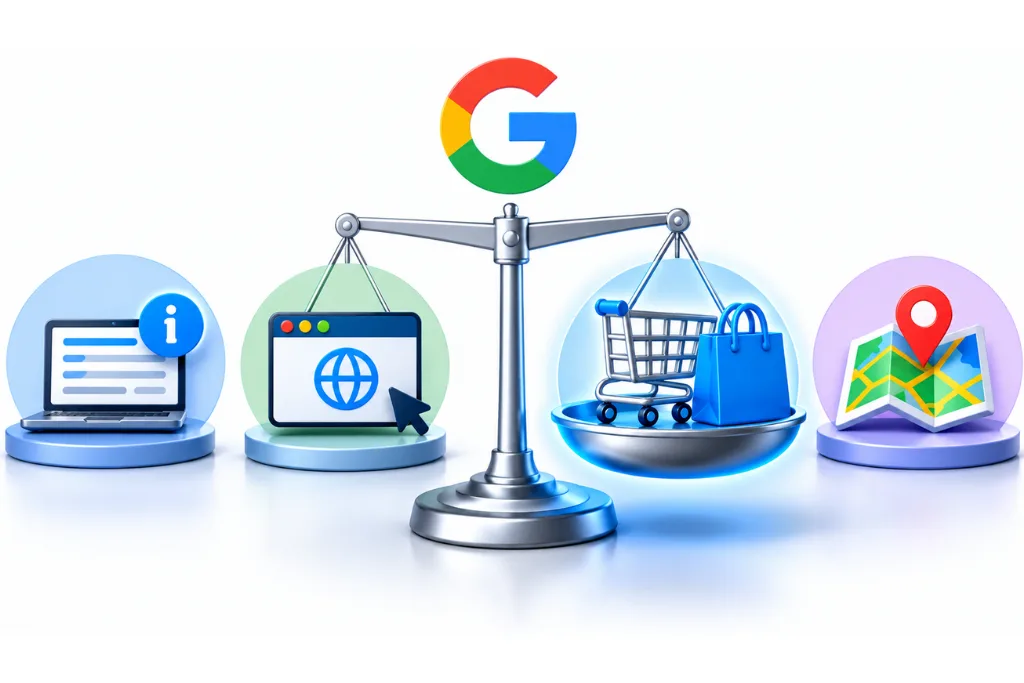
Many SEO guides now sort searches into four intents: informational, navigational, commercial investigation and transactional. Commercial investigation is the third step in a simple path: learn, compare, buy. The table shows what each searcher wants and which page fits.
|
Intent |
What the searcher wants |
Example query in Dubai |
Best page type |
|
Informational |
To learn or understand something |
what is corporate tax uae |
Guide or blog post |
|
Navigational |
To reach a known site or brand |
emirates nbd login |
Home page or login page |
|
Commercial investigation |
To compare options before choosing |
best crm for small business uae |
Comparison page, review or buying guide |
|
Transactional |
To buy, book or sign up now |
book seo audit dubai |
Service, product or pricing page |
If you want the full picture of all four, our guide to the types of search intent covers each one with examples. For how Google reads meaning and context behind a query, see our pillar post on how search engines understand search queries.
Commercial investigation vs commercial intent vs transactional intent
Commercial investigation means comparing before choosing. Commercial intent is a looser label for any search with money behind it. Transactional intent means the choice is made and the person wants to act now.
Where the names came from
The first well-known model of search intent came from Andrei Broder in 2002. His paper, A taxonomy of web search, had three types: informational, navigational and transactional. There was no commercial type. The industry added “commercial investigation” later to describe the research step before a purchase.
That history explains the confusion. Some tools and blogs say “commercial intent” when they mean any keyword that can make money. Semrush and Moz both use the broad term. Moz, for example, splits commercial keywords into investigative, buy now, local and product types.
Commercial vs transactional search intent
The simplest test is the next click. A commercial investigation searcher clicks to read, compare and shortlist. A transactional searcher clicks to buy, book or call.
- best payroll software uae is commercial investigation. The person still needs to pick.
- zoho payroll pricing sits on the line. The person has picked a brand and is checking cost.
- buy zoho payroll or zoho payroll sign up is transactional. The choice is made.
The same split applies when you plan commercial vs transactional keywords. Use commercial investigation keywords for comparison and review pages. Keep transactional keywords for service, pricing and booking pages. Our post on informational vs navigational vs transactional queries goes deeper on the other three types.
The words that give it away: English and Arabic modifiers
Commercial investigation queries almost always carry a modifier. These are small words that show the person is weighing options. Once you know them, they are easy to spot in a keyword list.
English modifiers
- Best and top: best, top, top rated, cheapest, for small business
- Comparison: vs, versus, compare, comparison, difference between
- Proof: review, reviews, rating, pros and cons
- Options: alternative, alternatives to, similar to
- Cost: price, pricing, cost, packages
Arabic modifiers
Many UAE buyers search in Arabic, or switch between Arabic and English. The same intent shows up with these words:
- افضل means best, as in a search for the best clinic or company in Dubai.
- مقارنة means comparison.
- مراجعة means review.
- سعر means price.

Price words need care. A price search can be a late comparison or the last step before buying, so check the results page.
How to confirm it from the Google UAE results page
The results page is the best test of intent, because it shows what Google thinks the searcher wants. If page one is full of lists, reviews and comparisons, the intent is commercial investigation. If it is full of product, booking and pricing pages, it is transactional.
When we checked Google UAE in November 2026, the query commercial investigation intent showed an AI Overview, People Also Ask, a video row and an image pack. There was no featured snippet, no ads and no local pack. Only seven organic results appeared on page one. For the broader query commercial intent keywords, the AI Overview grouped modifiers into comparisons, evaluations, value and price, and local searches.
For a real commercial query, look for these signs:
- An AI Overview that groups options or lists criteria
- Best-of lists and roundup articles
- Review sites and directories
- Comparison videos
- People Also Ask questions such as “Which is better?” or “Is it worth it?”
Tool labels are a useful start, but they are estimates. Always confirm the intent against the live Google UAE results before you plan a page.
Why commercial investigation traffic converts
This traffic tends to convert well because the searcher has a defined need and is choosing between options. What still stands in the way is fit, risk, proof and price. A page that answers those four points helps the person decide while they are close to acting, which is why this traffic is worth testing.
What the searcher still needs
- Fit: Is this option right for my size, sector and location?
- Risk: What can go wrong, and what happens if it does?
- Proof: Who else uses it, and what do they say?
- Price: What will it cost in AED, and what is included?
An informational searcher is not ready for those answers yet. A transactional searcher has already found them. The person in the middle still has open questions, and a good page can answer them.
What the evidence does and does not show
Many blogs say commercial keywords “convert best”, but few back it up. We have not found a published study that gives a reliable conversion rate for commercial investigation traffic. The claim rests on reasoning about buyer stage, not on a shared benchmark.
So treat it as a hypothesis to test on your own site. The measurement section below shows how to separate this traffic in Search Console and track the enquiries it brings in Google Analytics.
What content wins: comparison pages, alternatives pages, reviews and buying guides
The content that wins helps the reader choose, even when the best choice is not you. That means honest comparison pages, alternatives pages, reviews and buying guides. Google has guidance on what they should contain.
Google’s guidance on reviews
Google’s Write high quality reviews guide asks review content to do the following:
- Evaluate the product from the user’s point of view.
- Show expertise and evidence that you used or tested it.
- Give quantitative measurements where they help.
- Explain what makes it stand out from competitors.
- Cover comparable alternatives.
- Discuss benefits and drawbacks.
Google’s page on the reviews system says the system looks at recommendations, opinions and analysis about products, media, services and businesses. Services are named, so service businesses are in scope too.

Page types that fit this intent
- Head-to-head pages: one option against another, with a clear verdict for each type of buyer.
- Alternatives pages: for people who want to leave a tool or provider they already use.
- Best-of lists: only when you have real criteria and real experience with each option.
- Buying guides: the questions to ask, the costs to expect and the mistakes to avoid.
In 2021, Google’s overview of its rater guidelines said more than 10,000 raters use guidelines of over 170 pages, and that their ratings do not directly change rankings. The guidelines do show how Google thinks about meeting a searcher’s need, which is a useful frame for any comparison page.
Commercial investigation for UAE service and B2B businesses
UAE service and B2B buyers compare providers, setups and costs, not laptops. In many B2B deals, several people sign off. That changes what a good comparison page needs.
Common UAE comparison searches
- Agency vs in-house: a business weighs hiring an SEO agency against building its own team.
- Mainland vs free zone: a founder compares company setup options before choosing a licence.
- Provider vs provider: two accounting firms, two CRM partners or two clinics in the same area.
What UAE buyers look for
A UAE comparison page should show prices in AED and make clear whether the 5% VAT is included. Local proof helps too, such as work for companies the reader recognises or reviews from the same emirate. It also helps to say who the client will deal with after signing.
Pages for several decision makers
In B2B deals, the owner, the finance lead and the IT or operations lead all compare options. Each one asks a different question. The owner asks about results, finance asks about total cost and IT asks about setup and support. One sales page rarely answers all three, so consider a comparison page with a section for each role.
How AI Overviews and ChatGPT are changing comparison searches
Comparison research increasingly happens inside AI tools as well as on the results page. People ask ChatGPT, Gemini or Google’s AI Overviews to compare two options and suggest a shortlist. Those tools draw on web pages, so your content needs to be clear and easy to quote.
Google says its AI features may use a “query fan-out” method, running several related searches across subtopics to build a response, according to its AI features and your website page. The same page says there are no extra requirements to appear in AI Overviews beyond normal Search eligibility. In practice, we recommend the basics: clear headings, a direct answer near the top, honest pros and cons, and a comparison table that a tool can read.
How to find and measure your commercial investigation queries
You can find these queries in Search Console, judge their value in Keyword Planner and measure their results in Google Analytics. Together, they let you test whether this traffic converts better on your own site.
Search Console regex filter
In the Search Console Performance report, add a query filter and choose Custom (regex). Google’s help page on advanced filtering in Search Console says the filter uses RE2 syntax and works for queries or pages. A simple pattern to start with is:
best|top|vs|review|alternative|compare|price
This shows every query that contains one of those words. Add Arabic modifiers if your site has Arabic pages. If these queries land on blog posts or the home page, you have a gap to fill.
Keyword Planner top of page bid
In Google Ads Keyword Planner, look at the top of page bid for each commercial keyword. Google Ads Help describes the top of page bid estimate as what advertisers likely need to pay to show at the top for that search. A high bid is a useful money signal, because advertisers find the keyword worth paying for. It helps most when UAE search volume is too low to judge.
GA4 key events
In Google Analytics 4, mark the actions that matter as key events. Good candidates are form submissions and clicks on call or WhatsApp buttons, once you track them as events. Then compare key events from comparison pages with those from informational posts. Over a few months, this gives you your own answer on whether commercial investigation traffic converts best.
Common mistakes with commercial search intent
Most mistakes come from treating a researcher like a buyer, or from comparison content that is not honest. Good practice for commercial search intent is to match the page to the stage, stay fair and cover both languages. Watch for these common errors.
- Sending researchers to a sales page. Someone searching best seo agency dubai wants to compare. A service page with a contact form skips the step they are on.
- Fake best lists. A list that ranks your own business first with no criteria will not earn trust. It also goes against Google’s reviews guidance.
- Ignoring Arabic queries. If your buyers search with افضل or سعر and you have no Arabic content, a competitor gets that click.
- Chasing volume only. A low volume comparison query can bring better leads than a broad informational one.
- Hiding prices. A page that only says “contact us for a quote” leaves the price question open, and the buyer may keep searching elsewhere.
To tie these keywords to revenue, our step by step guide to keyword research for UAE businesses shows how to sort them by stage and value. When you are ready to build comparison pages that bring in qualified enquiries, our SEO services team can help you plan and write them.
FAQ
Commercial investigation intent means the person is still comparing options before choosing one. Transactional intent means the choice is made and they want to buy, book or sign up now. A query like best crm for small business is commercial, while buy hubspot starter is transactional.
Commercial intent is a broad label for any search with a likely purchase behind it. Commercial investigation is the narrower part of it, where the searcher is comparing and shortlisting before they decide. Many tools use the two terms as if they were the same.
The query what is a free zone company is informational, because the person wants to learn. The query mainland vs free zone company setup is commercial investigation, because they are comparing. The query free zone company setup packages Dubai price is close to transactional, because they are ready to act.
The four types are informational, navigational, commercial investigation and transactional. Each one needs a different type of page to rank and convert.
It can work when the two intents are close, such as a buying guide that explains a topic and then compares options. If the results page for each keyword looks very different, build two pages and link them. Mixing a lesson and a sales pitch on one page often serves neither reader well.
Often yes, because a small number of people close to a decision can bring more enquiries than a large number of casual readers. Low volume is common for UAE and Arabic queries. Use the top of page bid in Keyword Planner and your own enquiry data to judge the value.
Sources
- Broder, A. (2002). A taxonomy of web search. SIGIR Forum 36(2)
- Google Search Central: Write high quality reviews
- Google Search Central: Google Search’s reviews system and your website
- Google Search Central: AI features and your website
- Google: An overview of our rater guidelines for Search
- Search Console Help: Performance report advanced filtering and comparison
- Google Ads Help: Get your ads to show on the first page
- Google Analytics Help: Key events
- Semrush: Commercial intent keywords
- Moz: Commercial keywords