
Pricing, Forecasting & Inventory
AI Services > Pricing, Forecasting & Inventory
Pricing, Forecasting & Inventory Optimization
Use AI to optimize pricing, forecast demand, and balance inventory in real time.
Enable Retail Pricing Automation , leverage Demand Forecasting, and streamline Inventory Replenishment to reduce stockouts, prevent overstock, and grow margins
AI-Powered Demand Forecasts
Anticipate demand with precision using time-series models trained on your sales, seasonality, and market shifts
Price Elasticity Insights
Find the sweet spot for pricing—maximize revenue without losing volume using real-time elasticity tracking
Inventory Flow Clarity
Track inventory health across locations and SKUs to optimize stock levels and prevent capital lockup
Why Choose Us
Smarter Margins, Leaner Stock
We help you sell the right product at the right price—while keeping inventory lean. Forecast demand, optimize pricing, and unlock working capital with precision AI
“We finally aligned inventory with demand—and profits followed. Octopus made pricing, forecasting, and stock control feel easy”
Sara Mehta
― Retail Ops Director
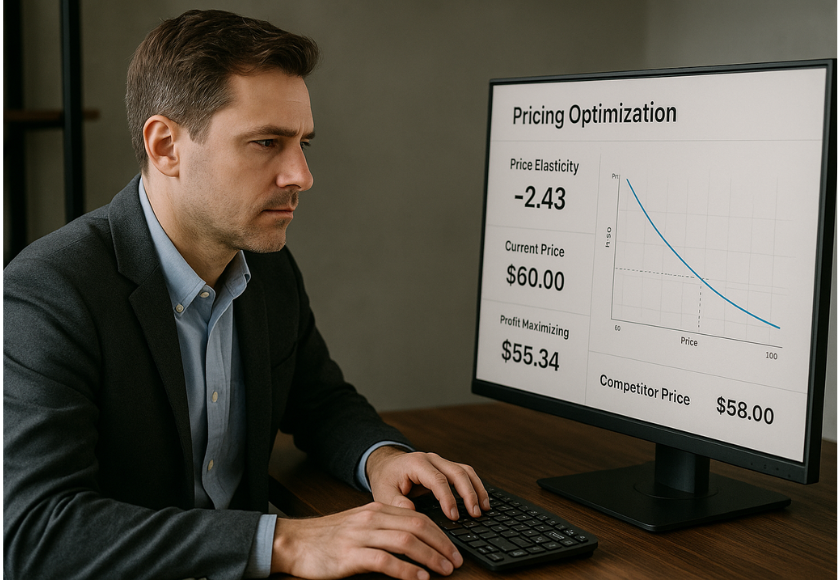
Dynamic Pricing Intelligence Engine
We build pricing models that adapt to market trends, competitor moves, and demand shifts. Sell smarter, test pricing strategies, and grow revenue across SKUs
- Elasticity modeling
- Competitive price scan
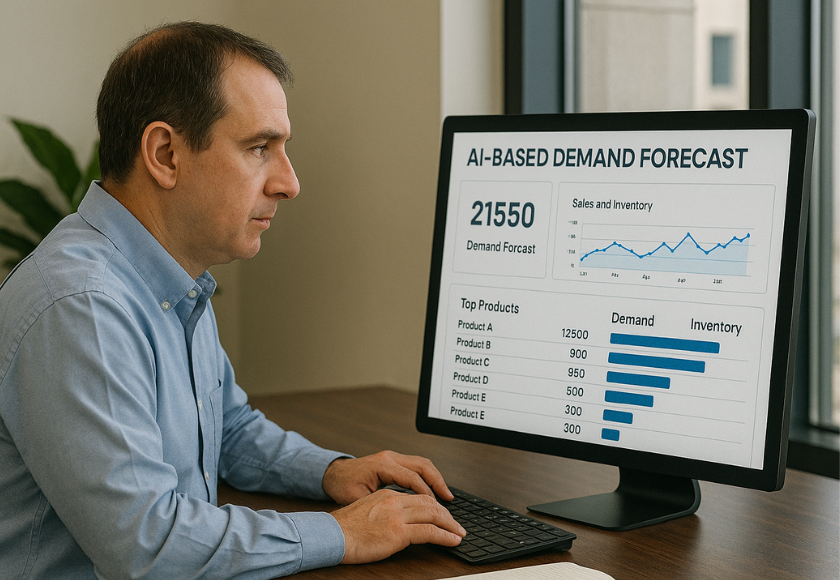
AI-Driven Inventory Forecasting
Predict stock demand by product, region, and time—down to the SKU. Our models optimize reorders, safety stock, and shelf strategy to reduce waste and improve turnover
- SKU-level demand trends
- Auto-replenishment triggers
Our Services
End-to-End Pricing, Forecasting & Inventory AI
Explore our AI-based solutions across pricing, forecasting, and inventory—designed to improve profit margins, planning accuracy, and supply chain responsiveness

Dynamic Pricing Engine
Automate price changes based on demand, seasonality, and competitor pricing in real time

Price Elasticity Modeling
Understand how price affects demand across categories and customer segments to fine-tune revenue

AI Demand Forecasting
Use time-series and external factor models to forecast sales down to individual SKUs or regions

Multi-Channel Stock Planning
Plan inventory across retail, e-commerce, and wholesale channels in one unified view
Auto Replenishment Rules
Trigger automated reorders based on AI-driven stock thresholds, delivery lead times, and past trends

Perishable Goods Optimization
Forecast and rotate perishable inventory based on shelf life and localized demand patterns
Pricing, Forecasting & Inventory Optimization
Pricing too high leads to lost sales. Too low, and you lose margin. Overstock drains capital. Stockouts destroy customer trust. In today’s omnichannel, high-velocity retail and distribution landscape, businesses can’t afford to make gut-based decisions. That’s where Octopus comes in.
We build AI-powered systems that bring intelligence to every decision around pricing, demand forecasting, and inventory planning. Whether you’re a retail chain, an e-commerce brand, or a product distributor, our platform transforms your core operations into a precision-driven engine—one that improves profit margins, reduces waste, and delivers availability where it matters most.
Smarter Pricing, Down to the SKU
At the heart of our pricing engine is elasticity modeling. We help you understand how price changes impact sales volume across different SKUs, regions, and channels. By analyzing transaction data, seasonality, competitor moves, and promotion history, we train AI models that dynamically recommend price points that maximize revenue or margin based on your strategy.
Our platform supports:
- Price testing across multiple channels
- Rule-based automation for price updates
- AI suggestions for markdowns or surcharges
- Real-time alerts when prices fall out of bounds
We connect to POS systems, ERP platforms, and competitor price feeds—creating a centralized pricing intelligence hub. Whether you’re running 50 SKUs or 50,000, we give your pricing team the control and visibility they need.
AI-Driven Demand Forecasting
Forecasting is both science and art—but with AI, it becomes precision. Our forecasting models use:
- Time-series analytics
- Promotion and campaign data
- External signals like weather, holidays, or events
- Sales velocity, product lifecycle, and seasonality
Down to the SKU and store level, we predict what will sell, where, and when. Forecasts update in real time as conditions shift. This means you’re no longer forecasting once per quarter—you’re forecasting continuously.
Benefits include:
- Improved allocation decisions
- Accurate buying plans
- Better cash flow planning
- Reduction in surplus and out-of-stock events
Unified Inventory Visibility & Planning
Inventory should be lean—but never unavailable. Octopus gives you complete visibility across your stock locations, whether they’re in warehouses, stores, fulfillment centers, or supplier transit.
Our inventory engine helps you:
- Set smart safety stock levels
- Determine reorder points based on demand forecasts and lead times
- Manage shelf strategies and store replenishment
- Balance inventory across geographies
All planning is centralized, so teams across supply chain, merchandising, and operations work off the same real-time insights.
Auto-Replenishment & Supplier Forecasting
Our system doesn’t just tell you what to reorder—it helps you do it. Based on projected demand and vendor lead times, we auto-generate replenishment signals. You can choose to:
- Auto-send purchase orders to vendors
- Trigger restocking between locations
- Receive alerts when thresholds are near breach
We also forecast supplier needs by predicting purchase volume across timelines. This helps suppliers plan better and improves collaboration across the value chain.
Markdown Optimization & Promotion Planning
Markdowns are a powerful lever—but they need to be data-driven. Our AI identifies which products to mark down, by how much, and when—based on sell-through rates, current inventory, lifecycle phase, and competitive pressure.
During campaigns or seasonal promotions, we model uplift in advance and help you:
- Adjust pricing based on predicted lift
- Pre-position inventory where demand will surge
- Set performance targets for each promotion
Channel-Aware Planning for Retail & E-Commerce
Inventory and pricing should adapt based on where the customer is. Our platform integrates with in-store, online, and marketplace systems, enabling channel-specific planning.
We help you:
- Set regional prices for physical stores
- Adjust stock forecasts for online flash sales
- Coordinate with marketplace logistics to prevent duplication or delay
All channels feed into a centralized demand and inventory engine that sees everything in one place.
Warehouse Load Forecasting & Space Planning
Logistics is only efficient when inventory flows are predictable. We forecast inbound and outbound warehouse loads based on stock movements, seasonal patterns, and planned promotions.
This helps your operations team:
- Schedule labor more efficiently
- Reduce peak congestion
- Plan racking and slotting proactively
- Improve pick-pack efficiency during rushes
Product Lifecycle Management
Every product goes through stages—launch, growth, maturity, and decline. Our system models each product’s lifecycle stage and adjusts forecasts, pricing, and inventory strategies accordingly.
For new products:
- Early velocity detection for scaling
- Initial stocking guidance
- Region-specific testing support
For mature or declining items:
- Markdown triggers
- Clearance planning
- Exit strategy forecasting
Inventory Health Dashboards
We bring all your critical stock metrics into one command center. Our dashboards show:
- Stock cover by SKU and location
- Inventory turnover and stock velocity
- Days of supply remaining
- Overstock and understock alerts
You get both a top-down view and the ability to drill into any SKU or location.
Mobile Access for On-the-Go Teams
Buyers, merchandisers, and operations leaders don’t sit still. Our dashboards and insights are available on mobile apps, tablets, and cloud portals—giving your team access wherever they are.
They can:
- Check forecasts before placing an order
- Approve pricing changes on the move
- Review daily sell-through performance
This keeps decisions flowing without bottlenecks or delays.
Reporting, Audit, and Compliance Support
Every recommendation—pricing, forecast, or inventory—is traceable. We provide:
- Full change history and data sources
- Audit trails for pricing approvals
- Configurable reporting by user or function
For teams under regulatory or franchise compliance, we ensure all decisions are logged and defensible.
Why Octopus for Pricing, Forecasting & Inventory?
Because we bring together every piece of the puzzle. Our platform connects pricing strategy, sales forecasting, and inventory execution into one AI-powered system. No more disconnected spreadsheets or manual guesswork—just smarter decisions, real-time visibility, and operational alignment.
Whether you’re managing 10 stores or 1,000 SKUs—or both—we help you:
- Optimize pricing without hurting volume
- Forecast demand with precision
- Keep stock lean, not risky
- Align supply with customer behavior
It’s not just better planning. It’s intelligent retail, built to move with your market.
Pricing, Forecasting & Inventory: Balancing Demand, Supply & Profitability
The Problem: Static Pricing & Reactive Inventory Management
Many businesses still rely on manual spreadsheets, gut-feel pricing, or static forecasts to manage demand and stock levels. This creates several challenges:
- Overstocking → tying up working capital in slow-moving products.
- Stockouts → missed sales and frustrated customers when demand spikes unexpectedly.
- Inefficient pricing → discounts applied too broadly or too late, eroding margins.
- Reactive planning → decisions made after issues arise instead of anticipating shifts.
These issues are especially costly in retail, e-commerce, consumer goods, and manufacturing, where margins are thin and demand patterns shift rapidly.
The Solution: AI-Powered Pricing & Predictive Forecasting
Automation and AI bring real-time intelligence to pricing, forecasting, and inventory planning.
Key capabilities include:
- Dynamic pricing models → automatically adjust prices based on demand, competition, seasonality, and margin targets.
- Predictive demand forecasting → machine learning models analyze historical sales, promotions, and external signals (holidays, weather, events) to anticipate future demand.
- Inventory optimization → smart replenishment ensures the right stock at the right location, reducing both stockouts and excess inventory.
- Scenario planning → simulate the impact of pricing or inventory changes on revenue, margins, and cash flow.
- Integrated decisioning → connects pricing and inventory with procurement, supply chain, and marketing systems for holistic alignment.
Instead of reacting to market fluctuations, businesses act with foresight and agility.
The Impact: Higher Margins & Smoother Operations
Companies adopting AI-driven pricing and forecasting typically see:
- 10–20% improvement in gross margins, as prices adapt dynamically to market conditions.
- 20–40% reduction in stockouts, ensuring customers find what they need.
- 15–30% lower excess inventory, freeing up working capital.
- Faster decision-making, with real-time dashboards replacing static reports.
- Stronger customer loyalty, thanks to consistent product availability and fair pricing.
For fast-moving industries, optimized pricing and forecasting transform inventory management from a guessing game into a strategic growth driver.
Conclusion: Precision That Pays Off
In today’s market, reacting isn’t enough—you need to anticipate. Octopus brings clarity to your pricing, forecasting, and inventory decisions through AI-driven intelligence that scales with your business. We help you strike the perfect balance: sell smarter, stock leaner, and plan sharper.
Whether you’re growing across channels or optimizing margins at scale, our system ensures every unit, every price, and every order drives measurable value. Let’s build an inventory and pricing strategy that doesn’t just perform—but outperforms.
Let's get started
Be part of the future
Outpace your rivals with Octopus Marketing Agency – be the brand that leads, not follows

Ask Us Anything We’re Ready To Help
Looking for answers? Browse our quick FAQs. Need more details? Explore our comprehensive guide
01. How do you address the cold-start problem in dynamic pricing for new products with no historical data?
The cold-start problem is a classic challenge for data-driven pricing models.
Proxy Data: Use data from similar or proxy products with established sales history. An advanced approach involves using clustering or similarity matching techniques to identify products with comparable attributes (e.g., brand, features, category) to a new product.
Initial Pricing Strategy: Implement a rules-based or cost-plus strategy initially, which can be derived from market research and competitor pricing. This provides a starting point for the AI model to begin learning from new sales data as it is collected.
Price Exploration: Use multi-armed bandit (MAB) algorithms to explore different price points and learn customer price elasticity. The model can dynamically allocate a portion of traffic to experiment with new prices, maximizing long-term revenue.
Demand Sensing: Incorporate external data such as market trends, social media sentiment, and search query volume to sense initial demand even without sales history.
02. Explain the ethical considerations and potential biases in AI pricing models and how to mitigate them.
AI pricing can inadvertently lead to discriminatory outcomes or create unfair market practices if not managed carefully.
Sources of Bias: Bias can be introduced through historical training data that reflects existing socioeconomic disparities. For example, if a model is trained on past data showing different price points based on location or demographics, it may perpetuate discriminatory pricing. A feedback loop bias can occur when an algorithm’s own biased outputs are used for retraining, reinforcing the initial bias.
Mitigation Strategies:
Fairness Metrics: Implement fairness metrics during model evaluation to ensure the system does not disproportionately impact specific demographic or geographic groups.
Auditing and Monitoring: Regularly audit the pricing algorithms to detect and correct biases. Maintain transparency by explaining how decisions are made, moving away from a “black box” approach.
Data Diversity: Use a comprehensive dataset that is representative and does not include sensitive information as a proxy for factors like income.
Ethical Guidelines: Establish clear ethical guidelines, such as limiting surge pricing during emergencies, to balance profitability with fair consumer treatment
03. How would you design a dynamic pricing strategy using reinforcement learning, rather than traditional supervised learning?
Reinforcement learning (RL) frames pricing as a sequential decision-making problem, allowing the model to learn the optimal long-term pricing policy.
Supervised vs. RL: While supervised learning predicts a single optimal price based on historical data, it doesn’t account for the cumulative impact of pricing decisions over time. RL, on the other hand, is goal-oriented, aiming to maximize a long-term reward, such as total revenue.
RL Model Design:
Agent, Environment, and States: The AI model is the agent, which interacts with the market environment. The state would include features like inventory levels, competitor prices, time of day, and current sales velocity.
Actions: The agent’s action is to set a price. This could be a discrete set of price changes (e.g., +5%, -5%) or a continuous range.
Reward: The reward function is based on the outcome of the pricing action, such as revenue generated. The agent learns which actions (prices) in different states (market conditions) lead to the highest cumulative reward.
04. How can Generative AI be applied to enhance demand forecasting beyond traditional predictive models?
Generative AI’s ability to create novel, realistic data can overcome limitations of traditional models that rely on historical patterns.
Simulating Scenarios: GenAI can generate realistic data simulations for complex or unseen scenarios, such as the impact of a new marketing campaign, a competitor’s strategic move, or an economic shift. This helps evaluate strategies and mitigate risks before deployment.
Synthetic Data Generation: For product launches with no sales history (cold-start problem), Generative Adversarial Networks (GANs) can generate synthetic demand data based on similar products. This synthetic data can then be used to train or augment traditional forecasting models.
Incorporating Unstructured Data: GenAI can analyze unstructured data from sources like customer reviews, social media sentiment, and market news to extract deeper insights that traditional models often miss. For example, it could detect emerging trends or shifts in consumer behavior by summarizing customer feedback.
05. Describe how you would handle model drift in a production forecasting system. What techniques would you use?
Model drift occurs when the relationship between input variables and the target variable changes over time, causing a production model’s accuracy to degrade.
Monitoring: Implement continuous monitoring of model performance metrics (e.g., MAPE, RMSE) and compare them to a baseline. Also, track the distribution of input data and look for changes in feature importance.
Automated Retraining: Automate the model retraining process, scheduling regular retraining on a rolling window of recent data. This allows the model to adapt to new trends and patterns as they emerge.
Adaptive Models: Use online learning techniques where the model is updated incrementally as new data streams in, rather than waiting for large batch retraining.
Root Cause Analysis: When drift is detected, perform root cause analysis by comparing recent feature data with the training data distribution to identify which inputs have changed. This helps determine if the model needs retraining or if the features themselves require re-engineering.
06. Compare and contrast LSTM (Long Short-Term Memory) and ARIMA for time-series demand forecasting
This question assesses your knowledge of both classic statistical and modern deep learning methods for time-series data
ARIMA:
Pros: Well-established, interpretable, and computationally inexpensive. Excellent for stationary data with clear, linear historical patterns and seasonality.
Cons: Assumes linearity and requires manual tuning of parameters. It struggles with non-linear relationships and external factors.
LSTM:
Pros: A type of Recurrent Neural Network (RNN) that excels at capturing complex, non-linear patterns and long-term dependencies in data. LSTMs can natively handle multiple features (e.g., promotions, weather) in addition to time-series data.
Cons: Requires large datasets and significant computational power. It is more of a “black box” model, making it less interpretable than ARIMA.
Conclusion: The choice depends on the dataset and problem complexity. ARIMA is a solid, simple baseline. LSTM is better suited for highly complex, multi-variable, and non-linear forecasting problems.
AI Inventory Management
07. How would you design an AI system to manage and liquidate obsolete inventory effectively?
Obsolete or deadstock inventory is a significant cost to businesses.
Identification: Use AI to identify obsolete inventory by analyzing product age, sales velocity, profitability, and last order date. The model should categorize items based on the risk of becoming obsolete.
Liquidation Strategy: Based on the analysis, the system can recommend liquidation strategies. This could include targeted discounts (dynamic pricing), bundling with other products, or suggesting promotions to marketing.
Multi-Channel Coordination: The AI system should communicate across all sales channels (e-commerce, physical stores) to ensure a consistent strategy. It can track the effectiveness of promotions in real-time and adjust as needed.
Automated Recommendations: Automate the process by having the AI suggest liquidation tactics or even create discounted product pages. Human oversight is still necessary for strategic approval
08. Explain the role of Generative AI in enhancing supply chain resilience and visibility.
GenAI can move beyond simple prediction to provide more dynamic and proactive supply chain management.
Simulation and Scenario Planning: Use GenAI to run simulations of various supply chain disruptions (e.g., port delays, natural disasters, supplier issues). The models can generate and evaluate “what-if” scenarios, suggesting mitigation strategies that traditional systems cannot anticipate.
Enhanced Visibility: GenAI integrates and synthesizes data from multiple disparate sources—suppliers, warehouses, real-time weather feeds, and traffic data—to provide a single, holistic view of the supply chain. It can proactively generate alerts or “predictive alerts” for potential disruptions.
Supplier Relationship Management: GenAI can analyze supplier performance across multiple factors (lead time, cost, reliability) and even help automate procurement document generation. A leading US retailer has even used GenAI bots to negotiate terms with vendors.
09. How can an AI-driven inventory system optimize for sustainability and waste reduction?
Sustainable inventory management is increasingly important for both cost and environmental impact.
Waste Reduction for Perishable Goods: For products with short shelf lives (e.g., food, cosmetics), AI can provide highly accurate demand forecasts to enable just-in-time (JIT) inventory management. This minimizes spoilage and reduces waste.
Optimized Transportation: AI can optimize transportation routes and minimize fuel consumption. When integrated with logistics systems, it can plan the most eco-efficient delivery schedules and consolidate shipments.
Reduced Overproduction: By improving forecasting accuracy, AI directly reduces overproduction. This decreases the energy and raw materials needed for manufacturing, as well as the waste from unsold or obsolete items.
Packaging Optimization: AI can analyze product dimensions and shipping routes to recommend the most efficient packaging, reducing material usage and shipping volume.