
Customer Engagement in Dubai: Strategies, Channels, and Key Metrics

Customer engagement Dubai goes beyond attracting attention or generating a single purchase. Customer experience, personalization, digital communication, customer loyalty, omnichannel marketing, and lifecycle marketing work together to shape how customers discover, evaluate, purchase from, and remain connected with businesses.
A strong engagement strategy focuses on useful and relevant experiences rather than excessive promotional messages. New customers may need education and reassurance, while existing customers may respond better to personalized recommendations, loyalty benefits, exclusive experiences, or timely support. Businesses working with customer retention agencies can also use these insights to develop stronger retention and re-engagement strategies.
Customer engagement in Dubai is the process of building ongoing relationships with customers through relevant interactions across WhatsApp, social media, email, websites, mobile apps, physical stores, and customer service. Effective engagement combines personalization, lifecycle marketing, omnichannel marketing, customer loyalty, and customer retention to move customers from awareness to purchase, repeat business, and advocacy.
The most effective approach is to understand customer behavior, segment audiences, personalize communication, choose the right customer engagement channels, and maintain an appropriate engagement cadence. Businesses can also work with customer retention agencies to improve retention, reactivation, loyalty, and lifecycle journeys.
For Dubai’s diverse market, successful engagement requires cultural awareness, relevant communication, responsible use of customer data, and a balance between AI automation and human support. Key customer engagement metrics include engagement rate, conversion rate, retention rate, repeat purchase rate, customer lifetime value, churn, reactivation, customer satisfaction, and response time.
In simple terms, successful customer engagement Dubai means delivering the right message, through the right channel, at the right time, while providing genuine value to the customer.
Dubai’s diverse customer environment makes relevance especially important. Differences in language, culture, purchasing behavior, digital habits, and expectations mean businesses need to understand customer needs and deliver experiences that are timely, useful, and consistent.
The goal is not simply to increase interactions but to strengthen the entire customer journey—from awareness and consideration to purchase, retention, loyalty, and advocacy. When businesses connect customer data, personalization, lifecycle marketing, relevant content, responsive service, and measurable outcomes, customer engagement becomes a long-term growth strategy rather than a short-term marketing campaign.
What Is Customer Engagement in Dubai?
Customer engagement describes the ongoing relationship between a customer and a business through meaningful interactions before, during, and after a purchase. Those interactions can happen through a website, social media post, WhatsApp conversation, email, mobile application, physical store, customer-service team, loyalty program, or even a customer review. The important factor is not simply the existence of an interaction but whether the interaction provides value and helps the customer accomplish something.
For a Dubai business, customer engagement can therefore take many forms. A customer might discover a restaurant through Instagram, visit its website to examine the menu, send a WhatsApp message to ask about reservations, visit the physical location, receive a post-visit message, and later return because the brand remembered a preference or provided a relevant offer. Each touchpoint contributes to the broader relationship. When those touchpoints feel disconnected, engagement becomes fragmented. When they work together, the customer experiences a coherent journey.
Customer Engagement vs. Customer Acquisition
Customer acquisition answers the question, “How do we attract and convert a new customer?” Customer engagement asks a broader question: “How do we keep the customer interested, satisfied, and connected after the initial interaction?”
The distinction matters because acquisition alone does not guarantee loyalty. A business can spend heavily on advertising, generate website traffic, collect leads, and achieve first purchases while still struggling with repeat business. Engagement extends the relationship beyond the first conversion by creating reasons for customers to continue interacting with the brand.
A useful engagement strategy might educate a new customer after purchase, provide helpful product information, invite feedback, recommend relevant products, recognize loyalty, or offer responsive customer service. These activities can make the relationship feel more valuable than a simple buyer-seller transaction.
Customer Engagement vs. Customer Experience
Customer engagement and customer experience are closely connected but are not identical. Customer experience describes the broader perception formed across the customer’s journey, while engagement focuses more specifically on interactions and participation between the customer and business.
A slow website, confusing checkout process, poor customer support, or inconsistent information can weaken engagement because the overall experience makes continued interaction less appealing. Conversely, useful content, responsive communication, personalized recommendations, and smooth service can encourage customers to remain active.
The Search Quality Evaluator Guidelines similarly emphasize that content should be judged according to how well it fulfills its purpose and whether it provides a satisfying experience. The same customer-centered principle is valuable when designing engagement strategies: every interaction should have a clear purpose from the customer’s perspective.
Why Engagement Matters in Dubai’s Diverse Market
Dubai presents businesses with a customer environment in which cultural relevance and contextual understanding can make communication more effective. A generic campaign may reach thousands of people but still feel irrelevant if the message does not reflect customer needs or circumstances.
This creates a practical challenge for marketers. The goal is not to create a completely different strategy for every individual customer. Instead, businesses can use sensible segmentation to recognize meaningful differences between groups and then personalize communication where it adds genuine value.
Customer engagement becomes stronger when businesses understand the customer’s journey, respect communication preferences, respond appropriately, and provide useful reasons to return. That approach can reduce the frustration associated with irrelevant promotions while creating a more natural relationship between customer and brand.
Why Customer Engagement Matters for Businesses in Dubai
The commercial value of customer engagement becomes clearer when businesses stop viewing every customer interaction as an isolated campaign. A customer relationship develops over time, and each useful interaction can influence whether the customer returns, recommends the business, provides feedback, or eventually becomes disengaged.
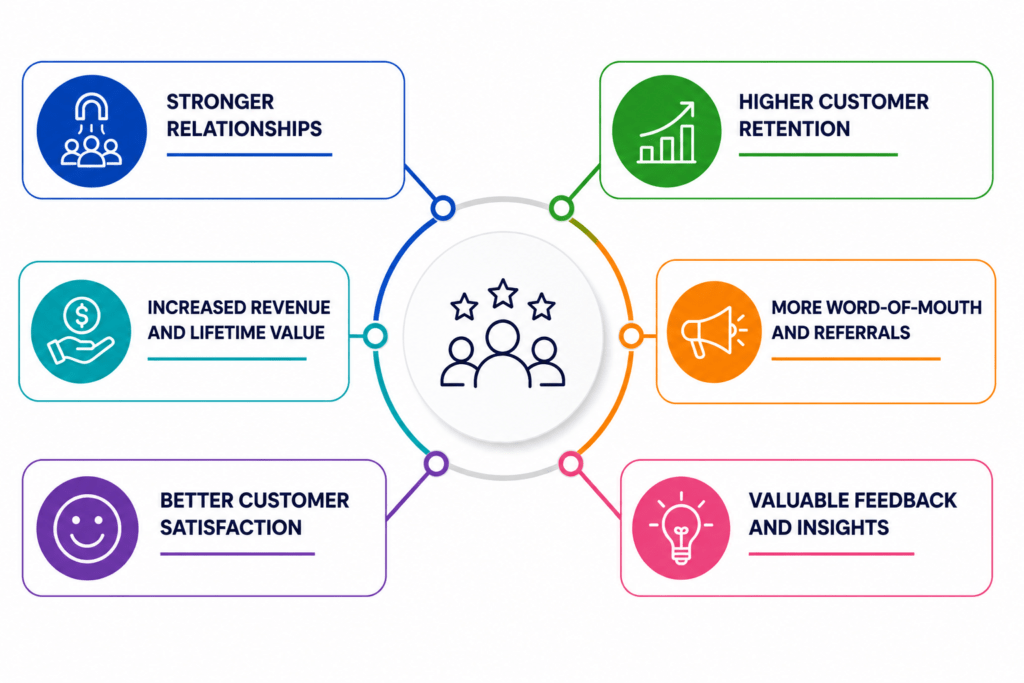
For businesses operating in Dubai, this means engagement should connect marketing with the wider customer experience. A social media campaign may create awareness, but customer service determines what happens when someone has a question. A promotional email may generate a purchase, but the post-purchase experience influences whether the customer buys again. A loyalty program may provide rewards, but recognition and convenience can determine whether customers actually value the relationship.
Customer Retention and Repeat Purchases
Retention is one of the clearest outcomes of effective engagement. When customers receive useful communication and consistent service, they have more reasons to remain connected with a business.
Retention does not necessarily require constant promotional incentives. A customer may return because the business makes purchasing convenient, remembers relevant preferences, provides reliable support, offers useful information, or creates an experience that feels distinctive. The more valuable the relationship becomes, the less dependent the business may be on continually winning customers through advertising.
For customers who have already purchased, engagement can include product education, usage guidance, personalized recommendations, feedback requests, loyalty recognition, and timely service updates. These interactions demonstrate that the relationship continues after the transaction.
Customer Loyalty and Brand Advocacy
Loyal customers can contribute value beyond their own purchases. Satisfied customers may leave reviews, recommend a business to friends, share content on social media, participate in communities, or voluntarily discuss their experiences.
However, loyalty should not be confused with repeated discount usage. A customer who purchases only when a large discount appears may not have a strong relationship with the brand. Deeper loyalty can develop when customers associate a business with reliability, convenience, recognition, relevance, quality, and positive experiences.
This distinction is particularly important when designing loyalty programs. Rewards can encourage behavior, but engagement strategies should also provide emotional and practical reasons for customers to stay connected.
Building Trust Through Consistent Interactions
Trust is fundamental to any long-term relationship. The Search Quality Evaluator Guidelines specifically identify trust as the most important component of E-E-A-T and explain that a page can have experience, expertise, or authority yet still have low E-E-A-T if it is untrustworthy.
The same principle applies to customer communication. Businesses build trust when information remains accurate, customer-service channels are accessible, policies are clear, and promises are fulfilled. A business that communicates aggressively but fails to provide reliable support can undermine its own engagement efforts.
For customers, the most frustrating experience is often not receiving fewer messages—it is receiving messages that create expectations the business cannot meet. Strong engagement therefore combines relevance with reliability. The objective is to make every interaction feel like evidence that the business understands and values the customer.
This customer-first approach also helps distinguish useful engagement content from filler. High-quality content should provide meaningful information and demonstrate genuine effort and originality rather than simply expanding word count.
The result is a more sustainable model: attract the customer, understand the customer, serve the customer, learn from the customer, and continually create reasons for the customer to return.
The Most Effective Customer Engagement Channels in Dubai
Choosing the right customer engagement channels in Dubai is less about being present everywhere and more about understanding where customers naturally prefer to discover information, ask questions, make decisions, and interact with a brand. A business can have an impressive presence across multiple platforms and still create a poor experience if those channels operate independently. Effective customer engagement in Dubai connects the channel with the customer’s intent, making each interaction useful rather than simply increasing the volume of communication.
WhatsApp and Conversational Messaging
Messaging can become one of the most valuable engagement environments when customers need quick answers, personalized assistance, reminders, or transactional information. Unlike a conventional advertising channel, conversational messaging creates an opportunity for two-way interaction. A customer can ask a question, receive an answer, request additional information, and continue toward a purchase or service without necessarily leaving the conversation.
For businesses, the challenge is maintaining relevance. Sending repeated promotional messages can quickly make a messaging channel feel intrusive. A better approach is to use customer context to determine what communication is genuinely useful. A new customer may need onboarding information, while an existing customer may need order updates, appointment reminders, product assistance, or personalized recommendations. The objective is to make messaging feel like a service rather than an interruption.
Social Media Engagement
Social media provides businesses with an opportunity to combine discovery, entertainment, education, interaction, and community building. Platforms such as Instagram, TikTok, Facebook, and LinkedIn can serve different audiences and purposes, so businesses should avoid assuming that one content format works equally well everywhere.
The strongest social engagement is usually participatory rather than purely promotional. Customers can comment on content, respond to questions, share experiences, participate in polls, interact with competitions, send direct messages, or create their own content around a brand. This two-way relationship can make social media more valuable than simply using the platform as a digital billboard.
Content quality also matters. The Search Quality Evaluator Guidelines explain that quality Main Content depends on factors such as effort, originality, talent or skill, and—where appropriate—accuracy. Those principles reinforce an important content strategy lesson: publishing more posts does not automatically create better engagement. Businesses need content that gives customers a reason to stop, understand, participate, or respond.
Email remains useful when communication requires more space, structure, or continuity than a short social post or message can provide. Businesses can use email for onboarding sequences, educational content, product recommendations, loyalty communication, announcements, newsletters, and reactivation campaigns.
The key is segmentation. Sending every customer the same email can quickly reduce relevance, particularly when customers are at different stages of the buying journey. A first-time customer, a frequent purchaser, and an inactive customer may all require completely different communication.
Effective email engagement therefore begins with customer intent. Someone who has recently purchased may benefit from product guidance or complementary recommendations, whereas an inactive customer may need a carefully designed reactivation message. Personalization should add genuine usefulness rather than simply inserting a customer’s first name into a generic template.
Websites and Mobile Apps
A website or mobile application often becomes the central destination where customers move from interest to action. Social media may introduce the brand, email may bring the customer back, and messaging may answer questions, but the website or application frequently provides the information, functionality, or transaction required to complete the journey.
This makes usability an important part of engagement. Customers should be able to find relevant information, understand products or services, complete important actions, and obtain support without unnecessary friction. Personalization can strengthen this experience through relevant recommendations, saved preferences, personalized offers, customer accounts, and contextual content.
The Search Quality Evaluator Guidelines emphasize that Main Content includes not only written material but also useful page features and functionality. This is particularly relevant to digital customer engagement: an interactive tool, calculator, account area, recommendation system, or functional checkout can be part of the value a page provides.
Physical Stores and Experiential Engagement
Digital communication does not eliminate the importance of physical customer experiences. In Dubai, businesses across retail, hospitality, events, entertainment, and other sectors can combine digital engagement with physical experiences to create a more complete relationship.
For example, social content can encourage a customer to visit a physical location, a mobile experience can support an in-store interaction, and a loyalty program can connect purchases across physical and digital environments. The customer should not feel that the business has separate identities online and offline.
This is where omnichannel customer engagement becomes particularly important. The customer journey may cross several environments, but the experience should still feel like one relationship. Information should remain consistent, service should remain recognizable, and customers should not have to repeatedly explain their history simply because they changed channels.
The strongest channel strategy therefore does not begin with the question, “Which platforms should the business use?” It begins with, “Where does the customer need help, information, interaction, or convenience?” Once that question is answered, businesses can select channels according to customer intent and connect them into a coherent journey.
How to Build an Omnichannel Customer Engagement Strategy
A strong omnichannel customer engagement strategy connects interactions across social media, WhatsApp, email, websites, apps, and physical locations. The goal is not to make every channel identical, but to create a consistent and relevant customer experience as customers move between touchpoints.
Create a Unified Customer Journey
Start by mapping the customer journey from awareness and consideration to purchase, service, retention, and advocacy. A customer may discover a brand on social media, research through a website, ask questions on WhatsApp, and complete a purchase through an app. Connecting these interactions prevents customers from having to repeat information or restart conversations when changing channels.
Connect Online and Offline Experiences
Dubai businesses should connect digital and physical experiences rather than treating them as separate campaigns. Social media can introduce a product or event, a physical store can deliver the experience, and follow-up communication can continue the relationship. This creates a smoother online-to-offline customer journey.
Use Customer Data Across Touchpoints
Relevant customer data such as purchase history, browsing behavior, preferences, loyalty activity, and previous interactions can improve personalization. When information is connected across channels, businesses can provide more relevant recommendations and communication instead of sending generic messages. Customer data should always be used responsibly to maintain trust.
Deliver Consistent but Channel-Specific Experiences
Each channel has a different purpose. Social media can create awareness, websites can provide detailed information, WhatsApp can support conversations, email can nurture relationships, and customer service can resolve issues. The message may change by channel, but the information and overall brand experience should remain consistent.
Ultimately, successful customer engagement in Dubai depends on continuity. Customers should be able to move between channels without feeling that they are starting a new relationship each time. Connecting customer data, communication, service, and physical experiences creates a smoother and more satisfying customer journey.
Personalization Strategies for Dubai Customers
Personalization helps businesses make customer communication more relevant and useful. In Dubai, customer personalization is particularly valuable because customers differ in language, culture, preferences, purchasing behavior, and expectations. Effective personalization does not require creating a completely different message for every individual. Instead, businesses can use customer context to determine which content, offer, or experience is most appropriate at a particular moment.
Segment Customers by Behavior
Effective personalization begins with meaningful customer segmentation. Businesses can group customers according to purchase history, browsing behavior, engagement level, loyalty status, or periods of inactivity. A new customer may need onboarding information, while a repeat customer may respond better to personalized recommendations or loyalty benefits. The objective is not to create hundreds of complicated segments but to identify clear customer groups with different needs and behaviors.
Personalize by Language and Culture
Dubai’s multicultural environment makes cultural localization an important part of customer engagement. Personalization should consider language preferences, tone, imagery, timing, and cultural context rather than relying only on translation. Occasions such as Ramadan, Eid, and Dubai Shopping Festival can create opportunities for relevant communication when businesses provide genuine value. Thoughtful localization helps prevent the frustration of receiving messages that feel generic or disconnected from the customer’s background.
Personalize Content and Offers
Customer data can help businesses determine which content, recommendation, or offer is most relevant. Purchase history, browsing activity, previous interactions, and loyalty behavior can guide personalized communication. For example, a recent customer may benefit from product guidance or complementary recommendations instead of receiving the same acquisition promotion as a new prospect. Effective personalization focuses on customer value rather than simply increasing the number of promotional messages.
Use AI Without Losing the Human Touch
AI can help businesses analyze customer behavior, identify patterns, recommend content, and automate personalized communication at scale. However, automation should not replace human understanding. Customers with complex questions, complaints, or unusual requests may require direct assistance. The strongest approach combines AI-powered personalization with human support, allowing technology to manage routine interactions while employees handle situations requiring empathy and judgment. Before sending any personalized message, businesses should ask whether the customer will genuinely find the communication useful at that moment. When the answer is clear, personalization can strengthen engagement; when there is no customer benefit, it can simply create noise.
How Often Should You Engage Customers?
The right customer engagement frequency depends on customer needs, lifecycle stage, communication channel, and the value provided by each interaction. Communicating too rarely can reduce brand visibility, while communicating too frequently can create notification fatigue, unsubscribes, and negative perceptions. The goal should therefore be to maintain useful communication rather than maximize the number of messages sent.
There Is No Universal Engagement Frequency
Different businesses require different communication schedules. A restaurant may communicate around reservations, events, and new menus, while an ecommerce business may use product recommendations, order updates, and loyalty communication. A professional services company may require far fewer commercial interactions. The appropriate frequency should reflect customer expectations and the usefulness of the communication. Communication frequency should follow customer value, not the marketer’s content calendar.
Match Frequency to the Customer Lifecycle
Customers require different types of communication at different stages of their relationship with a business. New customers may need more frequent onboarding and reassurance, while repeat customers may respond better to personalized recommendations, loyalty benefits, or exclusive access. Inactive customers may require a carefully designed reactivation journey. Lifecycle-based communication ensures that customers receive messages appropriate to their current relationship with the brand rather than being treated as one large audience.
Behavioral triggers make communication more timely because messages are connected to actual customer actions. Purchases, product views, abandoned actions, loyalty milestones, and periods of inactivity can all provide legitimate reasons to engage. A customer who has just purchased may receive useful post-purchase guidance, while a customer who abandons an important action may receive a relevant reminder. This approach makes communication feel more natural because customers can understand why the business is contacting them.
Avoid Customer Engagement Fatigue
Customer engagement becomes frustrating when communication frequency increases without a corresponding increase in value. Repeated promotions, irrelevant recommendations, and messages across multiple channels can lead to declining response rates, unsubscribes, muted conversations, and complaints. Businesses should monitor these negative signals alongside positive engagement metrics and adjust their communication accordingly. The best customer engagement strategy in Dubai balances consistency with restraint, ensuring that businesses remain visible and useful without overwhelming customer attention.
Customer Engagement Strategies That Work in Dubai
Effective customer engagement strategies in Dubai focus on giving customers reasons to participate, return, respond, and recommend a brand. The strongest approaches combine personalization, interactive experiences, loyalty, cultural relevance, useful content, and consistent communication across channels.
Create Interactive Customer Experiences
Interactive experiences such as polls, quizzes, competitions, product selectors, and personalized tools can turn passive audiences into active participants. For example, a retailer can use a product quiz to recommend suitable products, while a hospitality business can help customers choose experiences or packages. The interaction should provide genuine value rather than simply generate clicks.
Build Loyalty Through Recognition and Value
Strong loyalty programs offer more than discounts. Businesses can provide exclusive access, personalized recommendations, priority service, rewards, and milestone recognition to make customers feel valued. When customers see increasing benefits from maintaining a relationship with a brand, loyalty becomes more sustainable.
Use Seasonal and Cultural Moments
Dubai businesses can use occasions such as Ramadan, Eid, Dubai Shopping Festival, and major local events to create relevant engagement. Effective cultural localization goes beyond seasonal graphics by adapting communication, offers, services, and experiences to the context of the occasion.
Turn Campaigns Into Experiences
Campaigns become more memorable when customers can actively participate. Businesses can combine social media, storytelling, digital experiences, physical locations, rewards, and loyalty programs to create connected omnichannel experiences rather than isolated advertisements.
Build Customer Communities
Customer communities encourage people to interact with a brand and with other customers. User-generated content, customer stories, events, ambassador programs, exclusive groups, and educational content can strengthen participation and trust. The business should provide genuine value rather than making every community interaction promotional.
Ultimately, successful customer engagement in Dubai is based on creating value before asking customers for value in return. Useful experiences, recognition, convenience, education, and meaningful participation can build stronger relationships and long-term loyalty.
The 4A Framework for Customer Engagement
The **4A framework—Acknowledge, Anticipate, Act, and Acquaint—**provides a simple way for businesses to turn customer information into relevant engagement. Instead of treating engagement as separate campaigns, the framework connects customer understanding, predictive insights, timely action, and ongoing education.
Acknowledge
The first step is understanding who the customer is and how the customer interacts with the business. Purchase history, preferences, browsing behavior, loyalty activity, and communication preferences can help businesses create meaningful customer segments. For Dubai businesses, this understanding is particularly useful because customers can differ in language, culture, behavior, and expectations. The goal is not to collect excessive data but to use relevant information to improve the customer experience.
Anticipate
The second step is predicting what customers may need next. Behavioral signals such as repeated product views, purchasing patterns, or declining engagement can help businesses identify opportunities for recommendations, reactivation, or retention. Predictive analytics should make communication more useful without becoming intrusive or making assumptions that customers have not authorized.
Act
The third step is turning customer insight into relevant action. This could include a personalized recommendation, reminder, service response, loyalty benefit, educational message, or targeted offer. Timing and channel are important because the right message can lose value if delivered at the wrong moment. Businesses should also recognize completed actions so customers do not continue receiving irrelevant messages.
Acquaint
The final step focuses on building longer-term relationships through useful information and education. Businesses can provide guides, tutorials, FAQs, expert insights, product information, or customer stories that help customers gain more value. This creates engagement beyond promotional communication and can strengthen customer trust.
Together, the 4A framework creates a practical approach to customer engagement in Dubai: Acknowledge the customer, Anticipate needs, Act with relevance, and Acquaint customers through continued value.
Customer Engagement Metrics: What Should Dubai Businesses Measure?
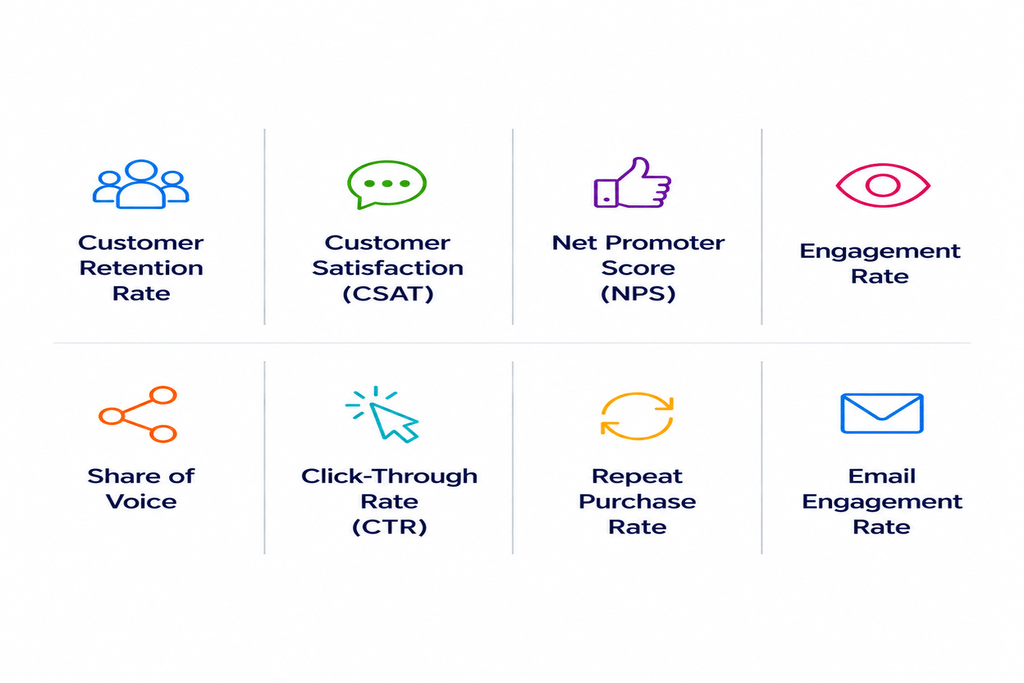
Customer engagement metrics help Dubai businesses understand whether customer interactions are creating meaningful business results. Instead of focusing only on likes, views, messages, or website visits, businesses should connect engagement with outcomes such as conversions, retention, repeat purchases, satisfaction, loyalty, and customer lifetime value.
Engagement Rate
Engagement rate shows how actively customers respond to content or communication through actions such as comments, shares, replies, saves, and clicks. The metric should be measured according to the channel and campaign objective rather than using the same definition everywhere.
Click-Through Rate and Conversion Rate
Click-through rate shows whether customers take the next step after receiving communication, while conversion rate measures whether that action produces a desired outcome such as a purchase, enquiry, booking, or registration. Together, these metrics help businesses distinguish customer attention from meaningful action.
Customer Retention Rate
Retention rate shows whether customers continue their relationship with a business over time. Strong customer engagement should contribute to longer-lasting relationships, so businesses can compare retention among customers who interact with loyalty programs, personalized content, customer service, or lifecycle campaigns.
Repeat Purchase Rate
Repeat purchase rate measures whether customers return to buy again. Relevant recommendations, post-purchase communication, loyalty benefits, and responsive service can encourage repeat behavior. Comparing repeat purchases across customer segments can also reveal which engagement strategies create stronger relationships.
Customer Lifetime Value
Customer lifetime value looks beyond individual transactions and measures the longer-term value of a customer relationship. A campaign with modest immediate results may still be valuable if it attracts customers who purchase repeatedly, remain loyal, or generate referrals.
Churn Rate and Reactivation Rate
Churn measures customers who stop purchasing or engaging, while reactivation measures how successfully inactive customers return. Declining engagement, reduced purchase frequency, or lower response rates can signal weakening relationships and create opportunities for targeted reactivation.
Customer Satisfaction and Response Metrics
Customer engagement also includes service interactions. Response time, resolution rate, customer satisfaction, and repeat contacts can reveal whether businesses are actually helping customers. High interaction volume is not always positive if customers repeatedly contact support because the same problem remains unresolved.
For customer engagement in Dubai, the strongest measurement approach combines engagement, behavioral, commercial, and relationship metrics. The goal is not to track every available number but to identify the measurements that show whether customer interactions are becoming more useful, valuable, and sustainable over time.
How to Create a Customer Engagement Measurement Framework
A strong customer engagement measurement framework helps Dubai businesses understand whether customer interactions are creating real business value. Instead of focusing only on likes, clicks, or message responses, businesses should connect engagement data with outcomes such as conversions, retention, repeat purchases, customer satisfaction, and customer lifetime value.
Start With a Clear Business Objective
Every measurement framework should begin with a clear business goal. A retailer may focus on repeat purchases, a hospitality business on repeat bookings, and a service company on customer satisfaction. Once the objective is defined, businesses can choose customer engagement metrics that directly show progress rather than collecting unnecessary data.
Establish Channel-Specific KPIs
Each customer engagement channel should have relevant KPIs. WhatsApp can be measured through response rates and assisted conversions, while social media can focus on meaningful interactions and website actions. Email can track clicks and conversions, while websites and apps can measure returning users and completed actions. The goal is to measure the quality and business impact of engagement, not simply its volume.
Track the Complete Customer Journey
Customers often move between social media, websites, WhatsApp, apps, stores, and customer service. Connecting these interactions provides a clearer picture of the customer journey. For example, a customer may discover a business on Instagram, ask questions on WhatsApp, purchase through the website, and later return as a repeat customer. Measuring these interactions together helps identify what drives conversion and retention.
Test, Learn, and Optimize
Customer engagement measurement should be an ongoing process. Businesses can test message timing, content, offers, personalization, and communication frequency, then compare results against the original business objective. A successful customer engagement strategy uses these insights to improve future campaigns rather than relying on one-time reports.
Ultimately, the best measurement framework is not the one with the most numbers. It is the one that clearly shows which customer behaviors matter, what is influencing those behaviors, and what the business should do next.
Common Customer Engagement Mistakes in Dubai
Customer engagement can fail when businesses focus on sending more messages instead of creating meaningful customer relationships. In Dubai, effective customer engagement in Dubai requires relevance, cultural awareness, appropriate timing, consistent experiences, and a clear understanding of customer needs.
Treating Every Customer the Same
Dubai’s diverse market means customers have different preferences, behaviors, languages, and expectations. Sending the same message to new customers, loyal customers, and inactive customers can make communication feel irrelevant. Effective customer segmentation allows businesses to use purchase history, engagement, preferences, and lifecycle stage to deliver more appropriate messages without overcomplicating the strategy.
Sending Too Many Promotional Messages
Frequent WhatsApp messages, emails, notifications, and advertisements can create engagement fatigue. Customers may ignore messages, unsubscribe, or lose interest when every interaction focuses on selling. Businesses should prioritize relevant communication and use customer behavior to determine when a message provides genuine value.
Ignoring Cultural Context
Dubai’s multicultural audience requires more than simple translation. Cultural localization should consider language, tone, imagery, timing, and important occasions such as Ramadan and Eid. Businesses should ensure that cultural campaigns feel authentic and useful rather than simply adding seasonal references to promotional content.
Relying Too Heavily on Automation
Automation and AI can improve speed and personalization, but excessive automation can create frustrating experiences. Chatbots may struggle with complex questions or emotional situations. A strong engagement strategy combines automation for routine interactions with a clear human handoff when customers need personal assistance.
Measuring Vanity Metrics
Likes, followers, impressions, and views can show attention but do not always demonstrate business value. Businesses should connect engagement metrics with meaningful outcomes such as conversions, retention, repeat purchases, customer lifetime value, satisfaction, and reactivation.
Disconnecting Marketing From Customer Service
Customers experience marketing and customer service as one relationship. If marketing promises fast service but support responds slowly, trust can decline. A strong customer engagement strategy connects marketing, sales, and service so customers receive consistent information and support across every channel.
A Step-by-Step Customer Engagement Strategy for a Dubai Business
A successful customer engagement strategy does not have to begin with sophisticated technology. It begins with a clear understanding of customers, their journeys, their expectations, and the business outcomes the organization wants to influence. For a Dubai business, the most effective approach is usually to build a practical system first and add complexity only when customer behavior justifies it.
Step 1: Identify Priority Customer Segments
The first step is deciding which customer groups deserve the greatest attention. Segmentation can be based on purchase frequency, customer value, product interest, lifecycle stage, engagement behavior, or other meaningful signals.
A business might identify new customers, active customers, high-value customers, inactive customers, and customers at risk of churn. These groups can then receive different forms of communication.
The purpose is not to create hundreds of micro-segments. Excessive segmentation can become difficult to manage and can reduce the clarity of the strategy. The objective is to identify groups with genuinely different needs or behaviors.
For a customer engagement company in Dubai, this segmentation layer can become the foundation for campaign design, CRM workflows, personalization, and reporting.
Step 2: Map the Customer Journey
The next step is to understand how customers move from discovery to purchase and beyond. Mapping the journey reveals the channels, questions, emotions, and friction points that influence customer behavior.
A Dubai customer might discover a product on Instagram, visit a website, compare alternatives, ask a question through WhatsApp, purchase through an app, and later contact customer support. If each department measures only its own interaction, the business misses the complete journey.
Journey mapping should therefore identify major touchpoints and the purpose of each interaction. The map should also highlight moments where customers may become confused, abandon an action, or require additional assistance.
Step 3: Select the Right Channels
Not every business needs to dominate every channel. The right customer engagement channels are those that customers actually use and that the business can manage consistently.
WhatsApp can support conversational engagement and service. Social media can support discovery, community, and interaction. Email can support lifecycle communication. Websites and mobile apps can support self-service, purchasing, and personalized experiences. Physical locations can create high-touch experiences that digital channels cannot completely reproduce.
Channel selection should therefore follow customer behavior rather than technology trends.
Step 4: Build Personalized Engagement Journeys
Once segments and channels are established, businesses can create journeys around meaningful customer events.
Examples include welcome journeys, post-purchase follow-ups, abandoned-cart reminders, loyalty recognition, product recommendations, service reminders, birthday or milestone communication, and reactivation campaigns.
Personalization should provide useful context rather than simply inserting a customer’s name into a message. The strongest personalization answers a customer question: “Why am I receiving this, and why is it useful to me?”
Step 5: Establish Communication Rules
Communication rules prevent engagement programs from becoming intrusive. Rules can determine how frequently customers receive promotional messages, which channels are prioritized, when customers are suppressed from campaigns, and when a human employee should intervene.
These rules become particularly valuable when several campaigns operate simultaneously. Without centralized frequency management, one customer can unintentionally receive multiple messages from different teams on the same day.
A well-designed engagement cadence protects both customer attention and brand reputation.
Step 6: Measure Business Outcomes
The measurement framework should connect communication activity to meaningful outcomes. Depending on the business model, this could include retention, repeat purchases, customer lifetime value, conversion, satisfaction, response time, or reduced churn.
The goal is not to prove that every interaction generated immediate revenue. Some interactions build trust or reduce future service costs. Instead, businesses should identify the role each engagement activity plays within the customer lifecycle.
Step 7: Improve Continuously
The final step is continuous optimization. Customer engagement should operate as a learning system rather than a fixed campaign calendar.
Businesses can test message timing, content, offers, channel combinations, personalization, and service experiences. Results can then inform the next iteration.
This continuous cycle is particularly important in a dynamic market such as Dubai, where customer expectations, digital behavior, competition, and cultural moments can change quickly. A strategy that worked six months ago should not automatically be treated as the best strategy today.
The Future of Customer Engagement in Dubai
The future of customer engagement in Dubai will be defined less by the number of channels a business operates and more by how intelligently those channels understand context. AI, conversational commerce, immersive experiences, loyalty communities, and human-centered automation are increasingly converging into a single customer relationship ecosystem.
AI-Powered Personalization
Artificial intelligence can analyze large quantities of customer behavior and identify patterns that would be difficult for a marketing team to detect manually. Recommendation systems can identify relevant products, predictive models can identify customers who may disengage, and automated systems can adapt communication based on behavior.
However, AI personalization should not become personalization for its own sake. The strongest applications use AI to make customer experiences more useful.
The competitor insights in the brief point toward this balance: AI can increase speed and personalization, while human interaction remains valuable for situations requiring judgment, empathy, or explanation.
The future therefore belongs to human-centered AI, where automation handles scale while people remain available when customers need understanding rather than simply information.
Conversational Commerce
Messaging is likely to become increasingly important as discovery, consultation, purchasing, and support become more conversational.
Instead of moving from advertisement to website to checkout as separate experiences, customers may increasingly ask questions, compare products, receive recommendations, complete transactions, and obtain support within conversational environments.
For Dubai businesses, this creates an opportunity to make conversational customer engagement more useful. A customer should be able to move from “Tell me about this product” to “Is it available?” to “Can I order it?” without repeatedly restarting the interaction.
Interactive and Immersive Experiences
Customer engagement will also increasingly involve interactive content rather than passive advertising. Augmented reality, virtual experiences, interactive product demonstrations, quizzes, personalized interfaces, and immersive retail experiences can create stronger participation.
Dubai’s emphasis on technology, hospitality, retail, tourism, and experiential environments makes this particularly relevant. Yet immersive technology should still solve a customer problem. A visually impressive experience that makes purchasing or service more difficult is not necessarily effective engagement.
Community-Led Loyalty
Loyalty is moving beyond points and discounts. Customers increasingly want recognition, access, belonging, and meaningful experiences.
Businesses can build communities around shared interests, customer events, exclusive experiences, educational content, early access, or user-generated content. Community creates a form of engagement that does not require a promotional offer every time.
A strong community can also transform satisfied customers into brand advocates. Customer stories, recommendations, reviews, and referrals can become extensions of the company’s engagement ecosystem.
Human-Centered Automation
The most important future trend may ultimately be balance. Automation can increase speed, consistency, and scalability, but human interaction remains essential when customers encounter uncertainty, frustration, or complex decisions.
A mature engagement system should know when automation is appropriate and when a person should take over. That distinction can become a competitive advantage.
The future customer experience will therefore not be “AI versus humans.” It will be AI performing repetitive and predictive work while human employees concentrate on situations where judgment, creativity, empathy, and relationship-building create the greatest value.
For Dubai businesses, this creates a powerful strategic opportunity: build technology around customers rather than forcing customers to adapt to technology.
FAQ
1. What is customer engagement in Dubai?
Customer engagement in Dubai refers to the ongoing interactions between businesses and customers across social media, WhatsApp, email, websites, apps, stores, customer service, and loyalty programs. Effective engagement goes beyond communication by providing value, building trust, improving customer experience, and strengthening long-term relationships. Dubai’s diverse customer base also makes cultural awareness, personalization, and relevance important.
2. What are the best customer engagement channels in Dubai?
The best customer engagement channels depend on the business, audience, and customer journey. WhatsApp can support conversations and customer service, social media can build awareness and community, email can support lifecycle marketing, while websites, apps, and physical stores can support research, purchases, and experiences. Combining channels effectively creates a connected customer journey.
3. How often should a business communicate with customers?
There is no universal communication frequency. The right engagement cadence depends on customer expectations, lifecycle stage, industry, and the value of each message. Businesses should avoid excessive promotional communication and instead use customer behavior and relevant triggers to determine when customers have a genuine reason to hear from the brand.
4. How can businesses personalize customer engagement without annoying customers?
Personalization should make communication more useful rather than make customers feel monitored. Businesses can use purchase history, preferences, previous interactions, and lifecycle stage to provide relevant recommendations, content, or support. Clear communication preferences and thoughtful cultural personalization can help maintain customer trust while avoiding irrelevant messages.
5. What customer engagement metrics should businesses track?
Businesses should track metrics that connect directly to their objectives, including engagement rate, conversion rate, retention, repeat purchases, customer lifetime value, churn, reactivation, satisfaction, and response time. The most useful measurement framework should explain what happened, why it happened, and what action the business should take next.
Conclusion
Customer engagement in Dubai is ultimately about building meaningful relationships, not simply using more technology or sending more messages. Businesses can strengthen these relationships by understanding customer needs, selecting the right customer engagement channels, and delivering personalized, culturally relevant experiences across the customer journey.
Dubai’s diverse market makes relevance especially important. Businesses should consider customer preferences, cultural context, behavior, and communication habits while using AI and automation to improve efficiency without losing the human touch.
A successful strategy also requires measurement. Tracking engagement, conversion, retention, repeat purchases, customer lifetime value, churn, and satisfaction helps businesses understand what is working and where improvements are needed.
The goal is simple: deliver the right message, through the right channel, at the right time, while providing genuine value. This approach can turn customer engagement from short-term marketing activity into long-term loyalty and business growth.