
Crafting a Brand Relationship Blueprint for Deeper Customer Connections
Introduction
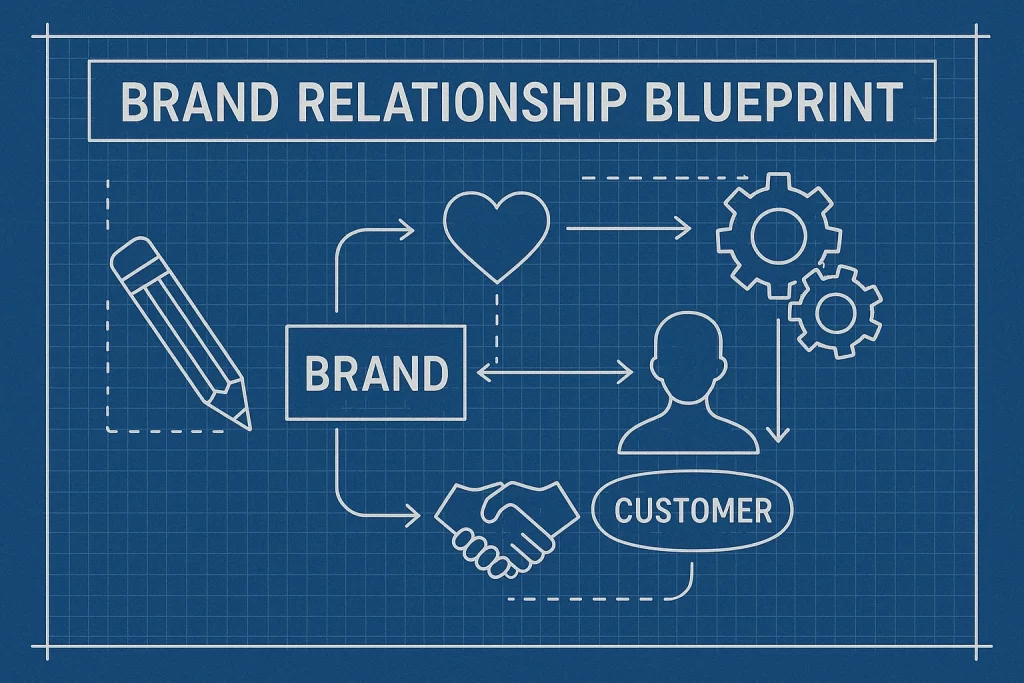
In a digital landscape oversaturated with brand messages, the challenge is no longer visibility—it’s resonance. Customers crave connection, not just content. They want brands that reflect their values, validate their emotions, and evolve with their needs. Enter the Brand Relationship Blueprint: a strategic and psychological framework that maps how brands build, sustain, and deepen emotional relationships with their audiences.
Backed by behavioral science, identity psychology, and customer lifecycle insights, this blueprint helps brands move beyond campaigns and into connection. From the first touchpoint to long-term loyalty, it provides the architecture to foster trust, empathy, and commitment. As competition intensifies and customer attention spans shrink, brands that focus on emotional bonds—not just transactions—gain the edge in loyalty, advocacy, and lifetime value.
Understanding the Brand Relationship Blueprint
What is a Brand Relationship Blueprint?
At its core, a Brand Relationship Blueprint is a structured strategy for cultivating meaningful connections between a brand and its customers. It goes far beyond the surface-level elements of branding—like colors, logos, or slogans. Instead, it dives into the psychological and emotional layers that underpin why people feel connected to a brand and how that relationship matures over time. Just like a blueprint in architecture provides the framework for a physical structure, a brand relationship blueprint lays out the emotional and communicative scaffolding needed to build trust, empathy, and long-term commitment.
One of the most common questions from new brand owners is: “What is a relationship blueprint, and how do I actually build one?” The answer lies in shifting your mindset from short-term conversions to long-term relationships. Many marketers fall into the trap of optimizing for click-through rates without ever considering the emotional aftermath. A brand that merely advertises a product will be forgotten. A brand that makes someone feel understood, empowered, or inspired will be remembered.
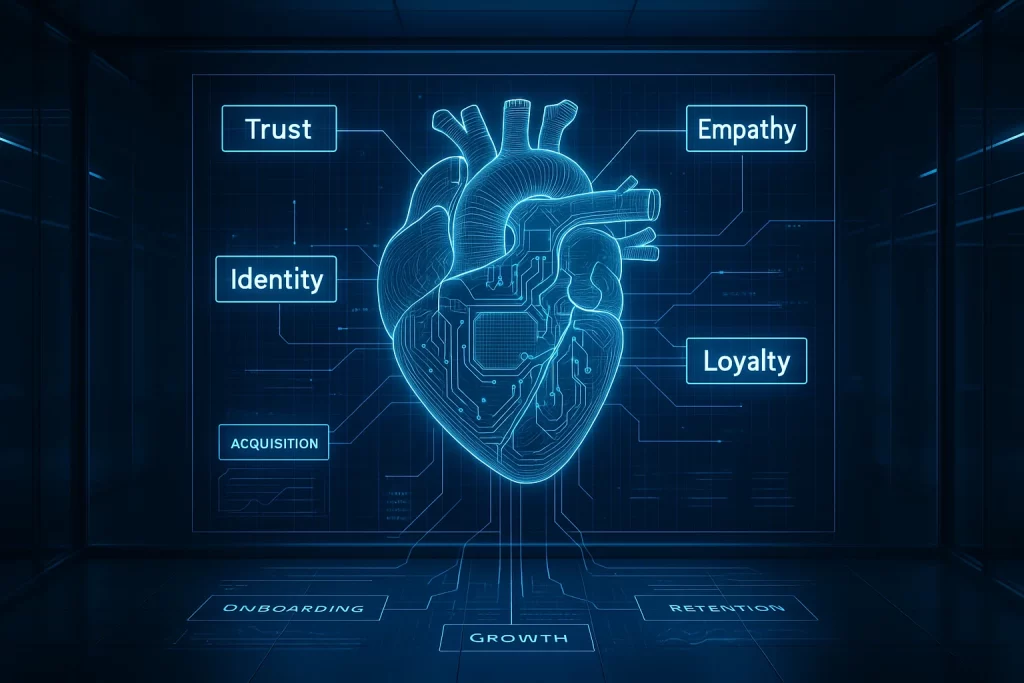
The relationship blueprint maps out emotional triggers, lifecycle messaging, brand values, and feedback loops—turning a scattered marketing effort into an intentional relational journey. According to research from the Journal of Consumer Psychology, emotional connections drive customer loyalty more than satisfaction or convenience. When implemented correctly, a relationship blueprint can improve customer lifetime value, reduce churn, and turn passive users into vocal advocates.
Why Emotional Branding Matters for Customer Loyalty
In the age of social media and influencer marketing, it’s easy to confuse brand visibility with brand connection. But high reach doesn’t always equate to high resonance. Emotional branding bridges that gap. It’s the practice of appealing to a customer’s feelings, identity, and aspirations—so the brand becomes part of their story, not just their shopping list.
Brands that invest in emotional connection see exponential returns. A 2023 Nielsen study revealed that 83% of customers who feel emotionally connected to a brand are more likely to repurchase, and 70% will recommend that brand to others. That kind of advocacy isn’t driven by product specs—it’s powered by emotional trust, shared values, and consistent narrative.
When you design a brand relationship blueprint, emotional branding becomes part of the architecture. Each interaction—whether it’s a social post, email campaign, or customer support reply—is crafted to reinforce belonging, empathy, or inspiration. Think of how brands like Glossier use everyday language to connect with their audience, or how Patagonia embeds activism into their messaging. These aren’t random content choices; they’re deliberate emotional blueprints in action.
Building loyalty isn’t about convincing someone to buy. It’s about convincing them they belong. Emotional branding ensures that your customers don’t just remember your name—they remember how you made them feel.
The Psychology Behind Brand–Customer Bonds
Brand Identity Psychology & Consumer-Brand Attachment
Humans seek meaning through connection, and the brands they choose often reflect or reinforce their personal identity. This is the foundation of brand identity psychology—a concept that examines how consumers attach symbolic value to brands. When a brand embodies the ideals, aspirations, or lifestyle of a consumer, it becomes more than a product—it becomes part of the self.
This psychological phenomenon is known as consumer-brand attachment, and it’s rooted in three emotional drivers: affection, connection, and passion. These are not abstract marketing terms; they’re measurable psychological constructs. Brands that score high in these dimensions build emotional equity that withstands pricing wars, market disruption, and shifting trends.
Imagine someone who buys Apple products not just for functionality, but because it reflects their identity as a creator, innovator, or minimalist. Or consider Nike, whose messaging speaks directly to resilience and ambition. These are identity-driven emotional hooks that go far beyond utility. In fact, a study published in the Journal of Consumer Research found that consumers are more loyal to brands that reinforce their self-concept, even if those brands are more expensive or less convenient.
Incorporating identity psychology into your brand relationship blueprint helps you speak to the deeper motivations of your audience. You’re not just addressing needs—you’re affirming who they are or who they want to become. And that is the root of lasting loyalty.
How Emotional Branding Frameworks Prevent Churn
One of the most overlooked causes of customer churn is emotional disconnection. While many marketers focus on metrics like conversion rates or funnel drop-offs, they often neglect the underlying emotional signals that influence whether a customer stays loyal—or silently disappears. An effective emotional branding framework prevents this by proactively nurturing emotional resonance at every stage of the customer journey.
Many brands invest heavily in acquiring new users, only to lose them due to generic, impersonal messaging. This frustration is echoed in forums like Reddit’s r/marketing, where creators often lament, “People sign up, but no one stays engaged—what am I doing wrong?” The answer usually lies in the lack of a relational strategy. Without emotional reinforcement, customers don’t feel compelled to continue the relationship.
This is where the brand loyalty blueprint becomes essential. Instead of treating loyalty as a byproduct of a good product or service, the blueprint frames it as an intentional outcome of emotional consistency. For example, onboarding emails become more than transactional—they become welcoming gestures. Loyalty programs evolve from discounts to recognition platforms. Retargeting ads shift from reminders to empathy-driven content that says, “We get you. Here’s what you need next.”
According to a report from Forrester, companies that lead in emotional connection outperform their competitors by 85% in sales growth. That’s because emotional loyalty is less volatile than rational loyalty. When customers feel emotionally safe, seen, and inspired by a brand, they stick around—often for years.
Building the Blueprint: A Step-by-Step Framework
Mapping Customer Relationship Lifecycle Stages
To build a meaningful relationship with your customers, you first need to understand where they are in their journey—and what they emotionally need at each stage. This is the essence of customer relationship lifecycle mapping, a method that segments users based on their level of engagement, trust, and emotional readiness. It’s not just a funnel—it’s a relationship map.
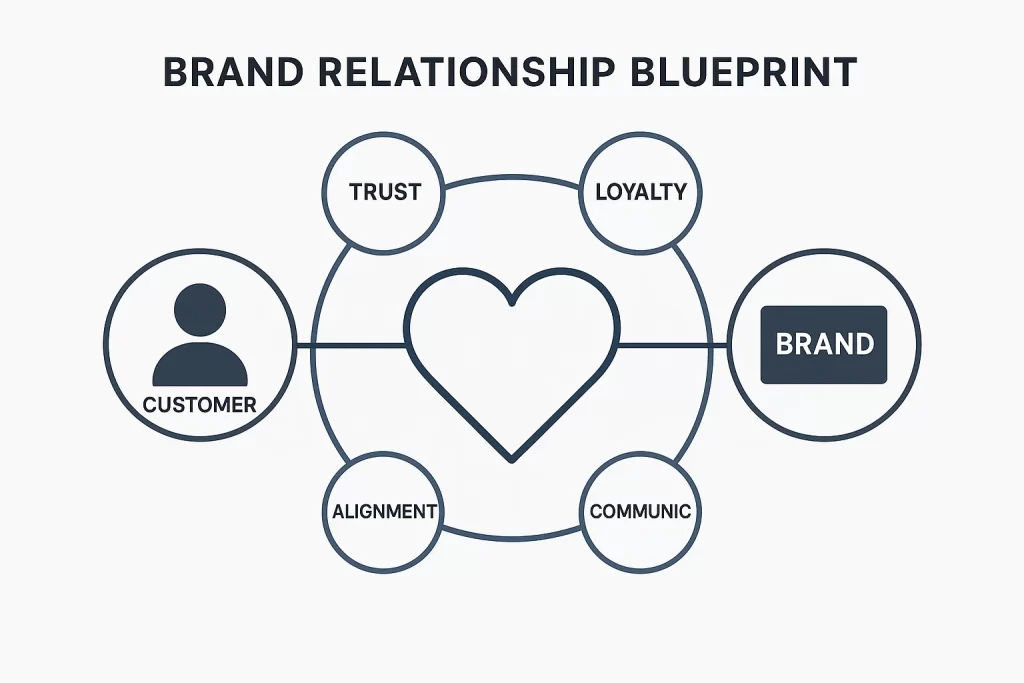
One of the most effective models is the RSL framework: Reason, Season, and Lifetime. This segmentation, originally used in personal development and therapy, is now being applied to brand strategy to powerful effect. Here’s how it works:
- Reason customers are short-term visitors. They come to your brand for a specific purpose—like solving a problem or exploring an offer. Your goal is to deliver clarity and build trust quickly.
- Season customers stay for a while. They’re evaluating your brand, enjoying the experience, and might be considering commitment. Your role here is to reinforce value and deepen emotional engagement.
- Lifetime customers are emotionally bonded advocates. They buy regularly, refer others, and see your brand as part of their identity. With them, your focus is on nurturing the relationship and providing personalized, high-value experiences.
This approach addresses a major user pain point: “I don’t know how to talk to my customers at different stages.” With a mapped relationship lifecycle, you can craft content, offers, and interactions that feel tailored and timely. For example, Reason customers might receive welcome guides and brand origin stories, while Lifetime customers are offered community events or exclusive content drops.
Ultimately, mapping the emotional journey empowers you to serve your audience not as transactions, but as relationships in evolution.
Designing Offers & Communication per Lifecycle Stage
Every successful relationship—whether personal or professional—relies on communication that matches the moment. The same principle applies to branding. To create lasting emotional bonds, your offers and messaging must evolve with the customer’s emotional readiness. That’s why aligning your communication strategy with lifecycle stages isn’t just a marketing tactic—it’s a relationship-building necessity.
Customers in the Reason stage are new and unsure. They need clarity, simplicity, and reassurance. Your messaging here should be focused on establishing credibility: testimonials, transparent pricing, or a clear brand story. Offers might include welcome discounts, free trials, or value-packed lead magnets. These aren’t just conversion tools—they’re trust-building bridges.
In the Season stage, customers are exploring your consistency and depth. They’re comparing you to competitors and trying to decide whether you’re worth their continued attention. Messaging here should deepen emotional connection. Think storytelling campaigns, founder videos, or user-generated content that showcases real people loving your brand. Offers might involve bundle deals, early access, or social proof-driven experiences.
Finally, Lifetime customers already believe in your brand. They don’t need convincing—they need recognition. Communication here should focus on gratitude, personalization, and exclusivity. Email campaigns might start with “We noticed you’ve been with us for a year…” or “As one of our most loyal members…” Offers can include VIP previews, behind-the-scenes content, or surprise gifts.
This tiered approach transforms generic marketing into a blueprint for trust-building. It addresses one of the biggest fears voiced by brand owners: “I don’t want to overwhelm new users, but I don’t want to bore my loyal ones either.” Lifecycle-aligned communication solves this by delivering the right emotion at the right time. When customers feel understood, they stay—and they talk about it.
Crafting Messaging That Resonates Emotionally
Words carry weight. In branding, they either build bridges or break trust. Messaging that resonates emotionally is not just about clever copywriting—it’s about crafting language that echoes the inner world of your audience. When done well, this kind of messaging feels less like marketing and more like affirmation.
To build this emotional resonance, you need to ground your messaging in identity psychology and relational storytelling. Begin by asking: What values does my audience hold? What emotions do they associate with my product or service? What fears or aspirations can I help them navigate?
For instance, a wellness brand targeting women in midlife might use language like “You’re entering a new chapter—let’s thrive together.” A fintech startup speaking to young professionals could say, “Build the future you deserve—starting with your first paycheck.” These are not just taglines—they’re emotional entry points.
The brand narrative blueprint should also reflect consistency in tone, rhythm, and metaphor. If your brand voice is nurturing and warm, that needs to echo across emails, web copy, and even error messages. If it’s bold and disruptive, your language should challenge, provoke, or energize.
Real emotional connection comes from mirroring and validation. Customers want to feel seen, not sold to. That’s why brands like Dove or Nike don’t just promote products—they promote identity, purpose, and self-expression. Their messages resonate because they reflect lived experiences, not just market needs.
One creator once shared, “I started writing my emails like I was writing to a close friend—and suddenly, people started replying.” That’s the power of emotional messaging. It makes the brand feel human, the communication feel safe, and the relationship feel real.
Measuring & Optimizing the Blueprint Strategy
Brand Relationship Metrics & KPIs
Emotional branding is powerful, but it’s only as effective as your ability to measure and improve it. The fear many marketers have is, “This all sounds great—but how do I know it’s working?” The answer lies in selecting the right Brand Relationship Metrics and KPIs that go beyond vanity metrics like likes or impressions. These metrics measure depth, not just reach.
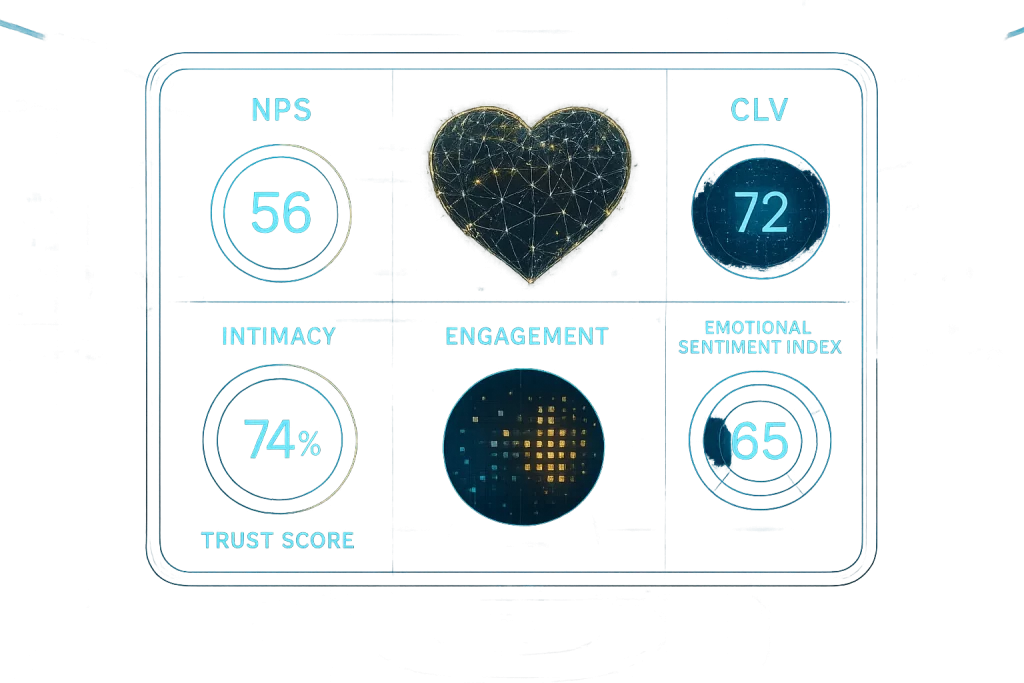
Start with Net Promoter Score (NPS)—a widely used metric that asks customers how likely they are to recommend your brand to others. While simple, it reveals a lot about emotional loyalty and satisfaction. Pair this with customer retention rate, repeat purchase ratio, and customer lifetime value (CLV) to get a data-backed view of loyalty in action.
But emotional branding requires more nuanced indicators. That’s where the Brand Relationship Quality (BRQ) Index comes in. This framework measures core relational elements like trust, intimacy, commitment, and emotional attachment. These factors can be assessed through surveys, sentiment analysis, or qualitative feedback loops. For instance, are your emails sparking replies? Are customers using emotional language in testimonials? Do they speak about your brand like they would a friend?
Behavioral data is also key. How long do users stay on your content? Do they engage with value-driven content, not just promotional material? Heatmaps, time-on-page, scroll depth, and retention analytics can reveal how emotionally invested users are in your brand story.
By defining and tracking these emotional KPIs, you create a feedback-rich system. Not only can you validate that your Brand Relationship Blueprint is working, but you can also identify which areas need deeper connection and care.
Iterating Based on Feedback & Analysis
A relationship is never static—and your brand blueprint shouldn’t be either. As your audience grows, shifts, or changes, your emotional strategy must evolve in response. Iteration isn’t just about fixing what’s broken; it’s about deepening what already works and adapting to new emotional needs.
The key to effective iteration is feedback analysis. This includes reviewing your metrics, but also collecting direct and indirect user insights. Read your product reviews. Rewatch customer interviews. Monitor recurring phrases in support chats or social media mentions. What are people consistently praising—or questioning?
Once you’ve gathered this emotional data, use it to reframe parts of your blueprint. If Reason-stage users are bouncing quickly, your onboarding sequence might lack emotional warmth or clarity. If Lifetime users are disengaging, perhaps they’re craving fresh content or recognition.
Tools like Hotjar, Typeform, and Google Analytics allow you to test hypotheses and iterate fast. You can also run A/B tests for different storytelling tones or loyalty triggers. Try comparing two subject lines: “Your Monthly Update” vs. “We’re Grateful You’re Here—Here’s Something Special.” Track the emotional difference in response.
Remember: iteration is a form of relationship care. It signals that you’re listening, adapting, and willing to grow. As one Reddit user wrote in a thread about emotional marketing, “The brands I love are the ones that evolve with me—not the ones that ignore me.” That’s the mindset behind an emotionally intelligent brand blueprint—it lives, learns, and improves with your audience.
Real-World Examples & Case Studies
Influencer Brands Using RSL-like Framework
For creators and personal brands, emotional connection is often their strongest asset—but also their most under-leveraged. Many influencers focus on aesthetics, reach, and engagement without realizing that what truly differentiates a brand is emotional architecture. That’s where the Reason, Season, Lifetime (RSL) framework becomes especially powerful.
Emma Brooks, a brand strategist and creator behind Chatterbox, introduced this framework to help influencers map emotional brand strategy more like a relationship, and less like a content calendar. The idea is simple: not all followers are meant to stay forever. Some come for a reason (e.g., one offer), some for a season (e.g., a campaign or theme), and some become lifetime members of your brand’s universe.
Influencers who use this blueprint stop chasing virality and start building intentional customer paths. One Instagram-based skincare creator began segmenting her audience using this model. She tailored messaging to Reason-stage followers with intro guides and welcome videos, served Season-stage followers with product how-tos and values-based stories, and offered Lifetime followers exclusive behind-the-scenes content and co-creation opportunities.
This strategy answered her pain point: “I don’t know who to prioritize in my audience.” By mapping emotional readiness, she didn’t have to guess—she knew exactly how to speak to each group. And the results followed: her retention rate increased by 27% in three months, and her DMs were flooded with stories, not just product questions.
For influencers and small businesses alike, the RSL model brings order, empathy, and emotional scalability to what often feels like chaotic growth. It humanizes audience strategy and offers a relationship-first path to brand maturity.
Brand Case Studies Building Emotional Loyalty
Major brands aren’t just riding the wave of emotional branding—they’re investing in it at scale. Take Patagonia, for example. Their brand isn’t just about outdoor gear—it’s about environmental activism, identity, and shared purpose. Customers don’t just buy from Patagonia; they belong to a movement. Their loyalty is not transactional—it’s existential.
Patagonia uses storytelling across channels to consistently reinforce their customer-brand bonding plan. Every newsletter, product tag, and community campaign echoes their core mission. This is no accident—it’s their blueprint. In 2022, they donated the entire company to a climate nonprofit, solidifying their place in customers’ hearts as a values-driven brand.
Another great example is Glossier, the beauty brand born from blog readers and co-created with its community. Their loyalty pathway focuses on recognition, personalization, and emotional inclusion. Customers are featured in campaigns, products are named after user suggestions, and tone-of-voice mirrors friendly text messages. It feels less like a brand and more like a best friend giving beauty advice.
These brands demonstrate that emotional loyalty isn’t a byproduct—it’s the strategy. They use relationship blueprints to guide everything from product development to customer support. And in doing so, they create a loyalty so strong, customers will defend them in public forums, forgive occasional mistakes, and remain engaged for years.
These case studies also confirm something every brand owner instinctively knows: people don’t buy products—they buy meaning, identity, and connection. The blueprint simply turns that intuition into repeatable, scalable strategy.
FAQ
1. What is a relationship blueprint in branding?
A relationship blueprint is a strategic framework that maps how a brand emotionally connects with customers throughout their journey. It includes elements like messaging cadence, emotional tone, identity psychology, and lifecycle-based communication. It’s not just about what your brand says—but how, when, and why it says it.
2. How do I measure success of a brand relationship blueprint?
Key performance indicators include emotional metrics like Net Promoter Score (NPS), Brand Relationship Quality (BRQ), customer lifetime value (CLV), and sentiment analysis from reviews or social mentions. Behaviorally, look at engagement rates across lifecycle stages, repeat purchases, and depth of community participation.
3. Can small creators implement this strategy alone?
Absolutely. In fact, creators often have the advantage of intimacy and direct access to their audience. With tools like Notion or even a Google Sheet, you can map out your Reason/Season/Lifetime segments, craft content for each, and monitor emotional responses. Relationship strategy isn’t about budget—it’s about empathy and intentionality.
4. How long before emotional loyalty kicks in?
It varies by brand and audience. Some customers feel connected after one powerful story. Others need weeks or months of consistency. Generally, emotional loyalty begins forming within 3–6 months of high-touch, values-aligned interaction. It accelerates when your messaging consistently reflects who they are and how they feel.
5. What if the brand evolves—does the blueprint change?
Yes, and it should. A brand relationship is a dynamic, evolving system. As your audience, products, or identity shift, your blueprint should reflect those changes. Regular audits—quarterly or biannually—help ensure your messaging and strategy remain aligned with your brand’s current values and your audience’s emotional needs.
Conclusion
In a world where digital noise overwhelms, brands that connect emotionally rise above. The Brand Relationship Blueprint is your tool to make that connection intentional, measurable, and enduring. It’s not about hacking loyalty—it’s about earning it through empathy, identity alignment, and trust.
By using this blueprint, you move from simply speaking at your audience to speaking with them. You become a partner in their journey—not just a product in their feed. Whether you’re a creator, a small brand, or a Fortune 500 company, emotional connection is the true competitive advantage—and the blueprint is how you build it.