
Demand Forecasting at SKU × Store Level
AI Services > Pricing, Forecasting & Inventory > Demand Forecasting at SKU × Store Level
Demand Forecasting at SKU × Store Level
Predict sales by product and store with precision. Use AI-powered SKU × store demand forecasting to reduce stockouts, improve planning, and drive smarter replenishment
Forecast by Product & Location
Our AI predicts exact demand by SKU and store, not general trends—so every shelf is accurately stocked
Smarter Replenishment Triggers
Tie forecasts directly to auto-replenishment—no more manual guessing or uniform restocks
Event & Local Signal Aware
Incorporate regional events, climate, and trends to fine-tune store-level demand spikes
Why Choose Us
Forecast What You’ll Actually Sell
We don’t do averages—we forecast demand for every SKU at every store, so your shelves stay stocked with what customers really want, when and where they want it
“ We’ve cut stockouts and overstock drastically since going store-level. The demand signals are now razor sharp”
Ayaan Rivera
― Inventory Director
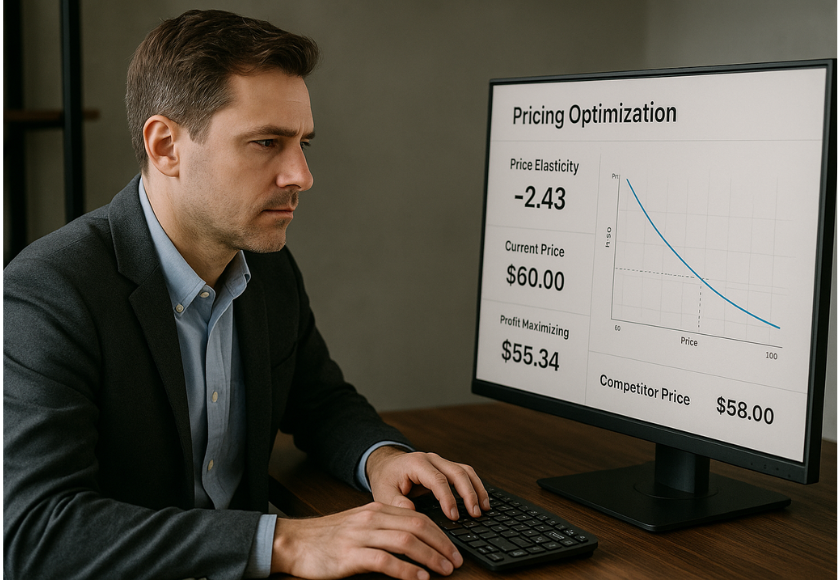
Granular AI Demand Models
Our models forecast each SKU at each store using real sales, seasonality, footfall, and trends. Replace averages with actionable local signals to avoid overstock and gaps
- SKU-level precision
- Store-specific tuning
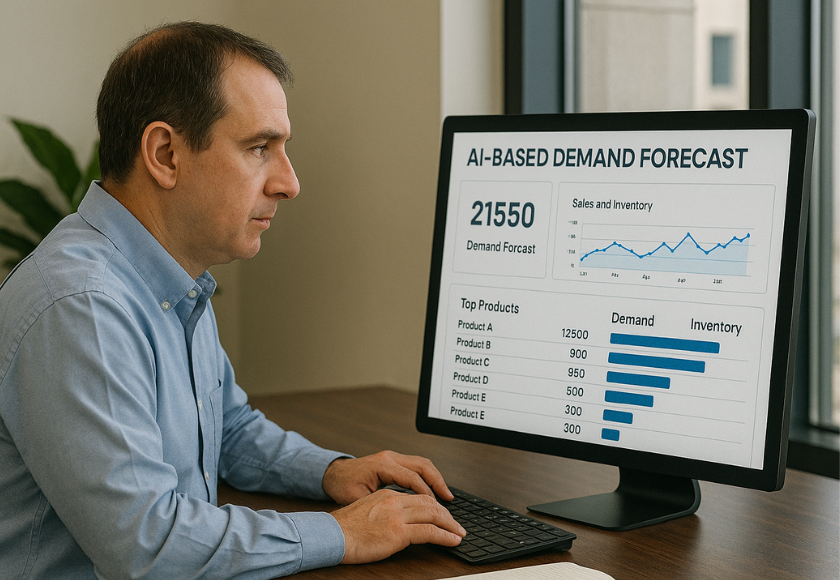
Auto-Forecast to Replenishment
Connect forecasts directly to your replenishment engine. Our system suggests restock amounts and timing per SKU/store, optimizing supply chain and shelf availability
- Smart refill triggers
- Safety stock buffers
Our Services
AI Forecasting Built Store by Store
Explore our granular forecasting tools—from SKU-store modeling to real-time restock triggers. Designed for multi-location retailers who need precision at scale

SKU × Store Forecasting
Generate demand forecasts for every SKU by store, using local data and historical trends

Time-Series Forecast Models
Use AI to model sales curves by day, week, and season for every product-location pair

Store Segmentation Clusters
Group similar stores to train better models while retaining individual performance signals

Event & Seasonality Adjustments
Incorporate holidays, regional events, and weather into demand patterns dynamically
Auto-Replenishment Sync
Link forecasts to restocking systems with suggested order volumes per store/SKU

Shelf Availability Optimization
Ensure on-shelf availability by syncing demand signals with planograms and stocking rules
Demand Forecasting at SKU × Store Level
Retail success depends on one simple principle: have the right product, in the right place, at the right time. Yet, most forecasting systems still rely on generalized trends, rolling averages, or aggregate-level planning. This leads to stockouts in high-demand stores, overstock in slow movers, and capital tied up in the wrong locations.
At Octopus, we change that. Our AI-driven demand forecasting platform works at the most granular level possible—by SKU and store. We help you predict, plan, and replenish with precision, so you meet local demand accurately and operate with maximum inventory efficiency.
Whether you manage 10 stores or 1,000, our system scales to deliver forecast insights tailored to each product-location pair. The result: optimized shelf availability, reduced waste, improved sell-through, and better customer satisfaction.
Why SKU × Store Forecasting Matters
Most forecasting platforms are built for convenience, not accuracy. They project average sales across stores or regions, applying bulk logic to individual locations. But every store has its own sales rhythm, foot traffic, regional preferences, and promotional response. A best-seller in downtown Dubai may sit idle in a mall in Sharjah.
Our SKU × store approach recognizes these nuances. We forecast demand not by guessing—but by analyzing:
- Historical sales at that exact store for that exact product
- Day-of-week, seasonality, and event trends
- Weather and footfall correlations
- Promotional impact and halo effects
- Shelf space, stockouts, and planogram changes
Each forecast is tailored to its context, delivering planning accuracy that legacy tools can’t match.
Granular AI Models Trained on Real Behavior
Our models are built using time-series forecasting, regression, and neural networks. We train models per SKU/store pair and calibrate them with localized signals. Each model understands:
- Peak selling days and hours
- Seasonality patterns unique to location
- Impact of price changes, campaigns, and competitor actions
We also cluster similar stores to share learnings without losing specificity. The result: forecasts that are smarter, more adaptive, and tuned to your real-world operations.
Real-Time Forecasting with Continuous Updates
Demand isn’t static. New events, shifts in traffic, or sudden trends can skew forecasts. That’s why our system updates continuously. As new sales, weather, and promotional data flows in, forecasts are re-run automatically.
You can set:
- Daily, weekly, or rolling forecast cycles
- Replenishment lead times per location
- Alert thresholds for deviation from baseline
This ensures your teams aren’t working off stale predictions—but acting on live signals.
Forecast-Driven Replenishment Logic
Forecasting isn’t enough unless it ties to action. Our platform connects directly to your replenishment systems, suggesting:
- Reorder quantities per SKU and store
- Safety stock levels based on volatility
- Replenishment timing based on lead time and shelf rules
You can auto-generate purchase orders or internal transfers, reducing the manual burden on planners and buyers.
Event, Weather & Promotion-Aware Forecasts
Our forecasting models don’t operate in isolation. We integrate:
- Event calendars (holidays, school breaks, national days)
- Local weather forecasts
- Promotional calendars
- Store-specific footfall data
This allows the forecast engine to pre-empt spikes or drops with precision. For example:
- Expect higher bottled water sales ahead of a heatwave
- Project a surge in electronics during Eid promotions
- Reduce bakery orders on rainy weekdays with low traffic
The more localized the signal, the more accurate the forecast.
Perishable Goods and Shelf-Life Sensitive SKUs
For fresh, frozen, or dated goods, forecasting is even more critical. Overstocking perishable items leads to direct waste; understocking leads to lost sales. We apply:
- Shorter cycle forecasts for fast-moving SKUs
- Decay models to estimate spoilage risk
- Optimal shelf replenishment frequencies
You avoid spoilage without risking empty shelves.
Unified Dashboard Across Stores & Products
Octopus provides a centralized forecasting dashboard with:
- Forecast accuracy by store and SKU
- Stock vs. demand variance maps
- Replenishment status and backlog alerts
- Footfall and weather overlays
Filters let you zoom in on specific brands, product categories, or geographic zones. From corporate planners to store managers, everyone sees insights tailored to their decisions.
Promotion-Adjusted Forecasting Models
Campaigns distort demand—but that distortion can be predicted. We build uplift models based on past promotions by:
- Store type
- Campaign type (discount, bundle, feature placement)
- Duration and lead time
This allows accurate pre-campaign planning and post-campaign evaluation. You can forecast:
- Baseline sales vs. campaign impact
- Cannibalization of other SKUs
- Stock needed to avoid runouts
Forecasts adapt mid-campaign based on actual uplift.
Regional Trends, Cluster Insights, and Footprint Scaling
If you operate across multiple regions, we group stores by:
- Customer behavior patterns
- Economic indicators
- Local product preferences
This enables centralized teams to apply broader demand signals—while still delivering SKU-store forecasts per location.
Forecast Accuracy Measurement & Tuning
Our platform tracks actuals vs. forecasts at a daily, weekly, and rolling level. We calculate:
- Mean Absolute Percentage Error (MAPE)
- Forecast bias
- Stockout impact from forecast variance
Models are retrained periodically and tuned based on store performance. Forecasts become smarter with every cycle.
Integration with Inventory, Replenishment & POS
We ensure seamless data flow between demand forecasting and your existing tools:
- POS for real-time sales data
- Inventory systems for current stock and movement
- Replenishment engines for order generation
- Planogram tools for shelf space constraints
This builds a closed-loop ecosystem where forecasting informs action—and actions refine forecasts.
Why Octopus for SKU × Store Forecasting?
Because we believe precision isn’t optional—it’s operational. Our forecasting system gives you SKU-level insights per location, making replenishment faster, shelf availability higher, and working capital more efficient.
With Octopus, you:
- Reduce stockouts and overstock simultaneously
- React faster to trends and local events
- Automate restocking with confidence
- Align planning, execution, and performance tracking
If your customers shop at the store level, your forecasting should work that way too. Let’s bring intelligence to every shelf.
Demand Forecasting at SKU × Store Level: Precision Planning for Retail & Distribution
The Problem: Generic Forecasts, Local Stockouts
Many retailers and distributors forecast demand at a category or regional level, but fail to predict accurately at the SKU × store granularity. This leads to:
- Stockouts → popular SKUs run out at specific stores, frustrating customers and causing lost sales.
- Overstocking → excess inventory of slow movers eats up working capital.
- Inefficient replenishment → “one-size-fits-all” planning ignores store-level variations in demand.
- Poor promotional alignment → local events, weather, or demographics aren’t factored into forecasts.
The result is higher costs, weaker margins, and inconsistent customer experiences across store networks.
The Solution: AI-Powered Forecasting at SKU × Store Level
Modern demand forecasting engines use machine learning and external signals to predict demand at the most granular level—every SKU, in every store, for every day.
Key capabilities include:
- Granular forecasting → SKU × store × day demand predictions, updated in real time.
- External data integration → incorporates weather, holidays, promotions, and local events.
- Pattern recognition → AI detects seasonality, product cannibalization, and new-item adoption curves.
- Dynamic replenishment → automated POs and transfers triggered based on forecast thresholds.
- Scenario simulation → “What if” modeling for promotions, price changes, or supply delays.
- Multi-channel alignment → forecasts extend to e-commerce and click-and-collect demand.
This enables retailers to move from reactive replenishment to predictive inventory optimization.
The Impact: Higher Sales, Lower Waste
Organizations adopting SKU × store forecasting typically achieve:
- 20–40% reduction in stockouts, improving customer satisfaction and loyalty.
- 10–30% lower excess inventory, freeing up working capital.
- Improved promotional ROI, with the right stock in the right store during campaigns.
- More accurate labor and logistics planning, as store traffic and replenishment needs become predictable.
- Higher revenue uplift, from consistently meeting customer demand at the shelf.
For retailers, consumer goods companies, and wholesalers, SKU × store demand forecasting is the difference between guessing demand and orchestrating supply with precision.
Conclusion: Forecast Smarter, Store by Store
Precision forecasting at the SKU × store level is no longer a luxury—it’s a necessity for modern retail. Octopus helps you replace guesswork with granular intelligence, ensuring every shelf holds exactly what your customers want. With AI-driven forecasts that adapt to local trends, seasonality, and demand signals, you reduce waste, boost availability, and drive smarter replenishment at scale.
Forecasting shouldn’t be about averages. It should be about accuracy—every product, every store, every day. Let’s put that power in your hands.
Let's get started
Be part of the future
Outpace your rivals with Octopus Marketing Agency – be the brand that leads, not follows

Ask Us Anything We’re Ready To Help
Looking for answers? Browse our quick FAQs. Need more details? Explore our comprehensive guide
01. What are the major limitations of traditional forecasting methods for SKU and store level demand, and how does AI overcome them?
Traditional limitations: Traditional methods often rely on historical sales data, time series analysis, or basic regression models. They struggle to accurately capture:
Non-linear relationships: The complex interplay of various factors influencing demand is often missed.
Dynamic market conditions: Traditional methods are static and don’t adapt well to rapidly changing consumer behavior, market trends, or external disruptions like supply chain breakdowns.
Granularity: They often lack the ability to forecast at the individual SKU and specific store level, leading to suboptimal inventory decisions.
AI’s advantage: AI-driven models, particularly those leveraging machine learning and deep learning, offer significant improvements by:
Processing vast and diverse data: AI analyzes structured data (sales history, pricing, promotions) and unstructured data (social media sentiment, weather, economic indicators, competitor pricing) to identify intricate patterns and correlations that traditional methods might miss.
Continuous learning and adaptability: AI models constantly learn from new data, adjusting their predictions in real-time to reflect evolving market conditions and consumer behavior.
Granular forecasting: AI enables forecasting at the SKU, store, regional, and even daily level, allowing for localized inventory management and replenishment strategies.
02. What types of data are crucial for effective AI-driven SKU and store level demand forecasting?
To achieve highly accurate and granular forecasts, AI models require a rich and diverse dataset, including:
Internal Data:
Sales History: Detailed transaction records, including sales volume by SKU, store, and date.
Product Characteristics: Metadata, attributes (e.g., color, size, material for clothing), and even images of the products.
Marketing & Promotional Activities: Information on past campaigns, discounts, and their impact on sales.
Inventory Levels: Historical inventory data, current stock levels, and incoming shipments.
Customer Information: Demographics and purchase behavior, used for personalized predictions.
External Data:
Market Trends & Competitor Activity: Industry reports, market research, and insights into competitor pricing and product launches.
Economic Indicators: Inflation, market uncertainty, and other factors that influence purchasing power.
Weather Patterns: Important for products with weather-dependent demand, like seasonal clothing or beverages.
Contextual Data:
Demographic & Geographic Data: Understanding the local population’s purchasing power and preferences.
Seasonal Trends: Identifying predictable demand fluctuations associated with holidays or specific times of the year.
Social Media Sentiment & Online Behavior: Gauging public opinion and emerging trends.
03. How does AI specifically enhance inventory management and reduce costs at the SKU and store level?
AI-driven demand forecasting offers tangible benefits in inventory management, significantly reducing costs and enhancing efficiency
Optimized Stock Levels: By providing accurate predictions at the SKU and store level, AI ensures retailers stock the right amount, preventing both overstocking (which ties up capital and storage space) and stockouts (which result in lost sales and customer dissatisfaction). This can lead to a 15-25% reduction in inventory carrying costs.
Automated Replenishment: AI can trigger automatic reorders and allocate stock based on real-time data and demand forecasts, streamlining the replenishment process.
Dynamic Inventory Allocation: AI models can recommend optimal stock placement across stores and distribution centers, considering regional preferences and logistical factors.
Reduced Waste and Spoilage: Particularly beneficial for perishable goods, AI minimizes waste by optimizing inventory levels based on demand forecasts.
Scenario Planning: AI simulates different scenarios (e.g., promotional campaigns, market disruptions) to help plan inventory and resource allocation proactively.
04. What are the key challenges in implementing and scaling AI demand forecasting solutions across an entire retail network?
Implementing AI-driven demand forecasting, especially at a granular level across a large retail network, presents several hurdles
Data Quality and Integration: Siloed data systems, inconsistent formats, and data accuracy issues are common. Building a centralized data warehouse and robust data governance are crucial.
Integration with Legacy Systems: Integrating new AI solutions with existing ERP, inventory management, and other systems can be complex and require significant effort, according to HSO.
Talent and Capability Gaps: Organizations need data science expertise for model development, tuning, and ongoing maintenance, often requiring investment in training or partnerships with specialized firms.
Change Management: Resistance to new technology and fear of job displacement can be addressed through education, involving end-users in the process, and demonstrating clear benefits.
Bias and Ethical Concerns: AI models can inherit biases from historical data, potentially leading to unfair or inaccurate predictions. Regular audits and careful monitoring are needed to address these issues.
Scalability and Performance: Ensuring the system can handle large volumes of data and scale with business growth, especially during peak seasons, requires a robust architecture, notes ResearchGate.
05. What are some of the advanced AI techniques and technologies used for SKU and store level demand forecasting?
Beyond basic machine learning algorithms, advanced AI techniques and technologies are used to further enhance forecasting capabilities
Deep Learning (Neural Networks): Multi-layered neural networks can capture complex, non-linear relationships in data, outperforming traditional methods in accuracy.
Temporal Fusion Transformer (TFT): An attention-based model for high accuracy and interpretability in time series forecasting, allowing visualization of feature importance.
Time Series Dense Encoder (TiDE): A deep neural network (DNN)-based encoder-decoder optimized for high-throughput training and rapid retraining cycles, suitable for real-time retail use cases.
Reinforcement Learning (RL): RL algorithms enable AI agents to learn and adapt forecasting strategies through continuous feedback, suitable for dynamic environments like supply chain management.
Generative AI: Can simulate future scenarios and even create synthetic sales histories for new products, aiding in forecasting for items with limited or no historical data.
Demand Sensing and Shaping: These involve analyzing real-time signals from various sources to predict demand shifts and proactively influence it through pricing strategies or promotions.
Digital Twins: Creating virtual replicas of the entire supply chain, combined with AI, enables detailed simulations of different scenarios and identification of optimal strategies.
IoT and Blockchain Integration: IoT sensors can provide real-time data on inventory levels and conditions, while blockchain can ensure data security and traceability in the supply chain