
The Brand Innovation Blueprint: Driving Disruption & Future-Readiness
Introduction
In a world where markets evolve faster than business cycles, traditional branding models are no longer sufficient. Today’s most resilient companies view Brand Innovation not as a marketing initiative but as a Brand Strategy—an intentional, systematic evolution of how value is created, communicated, and experienced.
Brand Innovation now sits at the intersection of technology, creativity, and cultural intelligence. It’s not only about standing out—it’s about staying relevant. Executives are realizing that the execution of branding ideas must match the pace of innovation. As outlined in this comprehensive guide on executing winning brand strategies from planning to performance, success lies in aligning brand execution with long-term vision and iterative feedback.
This article offers a practical and strategic blueprint for future-proofing your brand through innovation execution. Backed by expert opinions, competitive insights, and scalable models, it is designed for leaders ready to disrupt before being disrupted.
The 5 Core Pillars of Brand Innovation
True Brand Innovation is never accidental. It stems from a deliberate framework that rethinks how brands deliver value. This section unpacks the five core pillars driving innovative brand transformations in 2025—each built to solve a distinct set of challenges faced by today’s brand leaders.
1. Consumer-Centric Design Thinking
Design Thinking puts humans—not products—at the center of branding. In a world flooded with choice, it’s the emotional clarity and relevance of a brand that drives loyalty. This pillar reframes brand development around empathy, iterative testing, and real-time customer feedback.
Modern branding labs mimic startup culture—rapid prototyping, fail-fast mentalities, and design sprints that focus on solving for friction in the customer journey. Brands like Spotify use real-time behavioral data to shape UX updates that feel intuitive, not instructional.
Customer Challenges: Many legacy companies fail because they still design for customers instead of with them.
2. Technology-Driven Disruption
Technology is no longer an enabler—it’s a creative partner in brand innovation. AI can now generate brand assets, simulate emotional resonance, and power entire content ecosystems. Brands that fail to embed technology into their DNA risk obsolescence.
Key technologies shaping brand strategy today:
- AI and machine learning for predictive CX
- Blockchain for verified authenticity
- AR/VR for immersive storytelling
- Voice interfaces for accessibility and real-time interaction
According to a 2024 study by Deloitte, 72% of brand leaders say AI has transformed how they think about personalization.
Customer Challenges: Many brands fear the complexity or cost of tech innovation, when in fact tools like GPT, Midjourney, and Canva have lowered the barrier to experimentation.
3. Culture of Intrapreneurship
Innovative brands don’t just empower customers—they unleash their own people. A culture of intrapreneurship fosters internal creativity, rewarding teams that test and own bold new ideas.
Brands like Adobe and 3M dedicate time for employees to pursue innovation projects. At Adobe, the “Kickbox” initiative gave staff a literal red box with resources to test new ideas. The result? Breakthrough products like Adobe Spark.
“Employees are your first innovators—not your last mile,” said Tan Le, founder of EMOTIV, in a 2024 TEDx Talk.
Customer Challenges: Siloed hierarchies and fear-based leadership discourage the risk-taking essential to brand evolution.

4. Sustainability as Strategy
No modern brand can ignore the environmental and social cost of their existence. Sustainability isn’t just a compliance issue—it’s a strategic lever for differentiation.
From regenerative packaging to carbon-negative processes, the most respected brands treat ESG not as a PR checkbox, but as core to the brand promise.
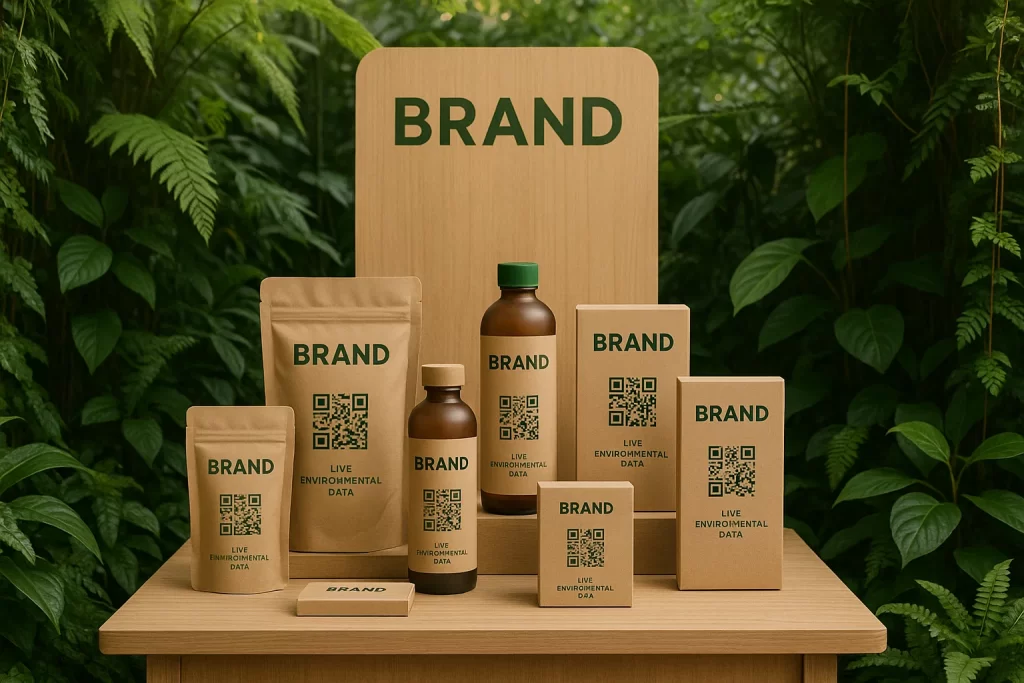
Example: Allbirds shares full carbon footprints on each product. Unilever is restructuring its entire supply chain for circularity.
“Consumers don’t trust green labels. They trust proof,” says Ali Goldsworthy, founder of The Depolarization Project.
Customer Challenges: Brands fear accusations of greenwashing unless they show credible transparency.
5. Brand Storytelling & Sensory Branding
The most iconic brands today aren’t just seen—they’re felt. They tell stories that resonate visually, emotionally, sonically, and even tactically.
Case in point: Apple’s retail stores are choreographed like performances, while IKEA’s scent strategy (yes, that cinnamon bun smell) deepens emotional attachment.
“We remember 5% of what we hear, 35% of what we see, and 100% of what we feel,” says Martin Lindstrom, sensory branding expert.
How Leading Brands are Innovating: Case Studies
While frameworks are essential, nothing inspires action like real-world brand innovation in motion. The following case studies showcase how brands across industries are using creativity, data, purpose, and bold design to future-proof their identity.
Nike: The Ecosystem of Wellness
Nike’s brand journey is no longer centered solely on athletic gear—it’s about enabling a lifestyle of health, empowerment, and community. The pivot toward becoming a holistic health ecosystem is a textbook case of brand transformation.
What Nike Did
- Introduced Nike Training Club and Nike Run Club as digital ecosystems
- Launched wellness partnerships with Headspace for mindfulness integration
- Built personalized fitness experiences via app-based behavior learning
- Shifted campaigns from performance to purpose and self-expression
According to Nike CEO John Donahoe, “We are evolving to meet people where they are—not just physically, but emotionally and mentally.”
Innovation Blueprint Tactics
- Customer-centric brand evolution based on behavioral data
- Platform thinking to create continuous engagement beyond products
- Leveraging brand purpose (e.g., “Just Do It”) as a cultural platform for social impact
Patagonia: From Product to Activist Platform
Few brands embody sustainability-led innovation as deeply as Patagonia. From its activist stance to its internal governance, every facet of the brand screams alignment between values and actions.
What Patagonia Did
- Donated 100% of profits to environmental causes via trust restructuring
- Created the Worn Wear program to encourage product longevity
- Uses product tags to call out overconsumption
- Embeds activism in its core marketing DNA
“We’re in business to save our home planet.” — Patagonia’s official brand statement
Innovation Blueprint Tactics
- Deep integration of ESG frameworks into product and storytelling
- Creating value-based differentiation by standing for something bigger than profit
- Reframing “profitability” around impact metrics
Apple: Mastering Minimalist Innovation
Apple’s approach to brand innovation blends restraint with precision. Every product release, store redesign, and brand interaction is meticulously curated—not to shout louder, but to create clarity amid noise.
What Apple Did
- Simplified product ecosystems under unified design principles
- Made privacy a cornerstone of the brand promise
- Integrated AR tools and LiDAR into everyday devices
- Created iconic retail and event experiences, e.g., Apple Park, WWDC
“Innovation at Apple isn’t about being first—it’s about being best,” said Tim Cook in a 2023 address.
Innovation Blueprint Tactics
- Focus on design consistency and emotional resonance
- Execution of minimalist storytelling across all touchpoints
- Consistently leading in experiential retail innovation
Future Forecast: Where Brand Innovation is Headed by 2030
If brand strategy in the 2010s was about digital transformation, the decade ahead will be about adaptive evolution. By 2030, brand innovation will center not just on aesthetics or channels—but on how brands sense, learn, and evolve alongside consumers in real time.
Here’s what the next five years hold for bold brand builders.
1. AI-Generated Brand Ecosystems
Imagine a brand whose identity morphs daily based on audience sentiment, platform dynamics, and cultural moments. With tools like generative AI, emotion engines, and neuro-marketing data, we’re approaching an era of programmable brands.
- AI-created personas that shift tone for different communities
- Real-time brand content adaptation based on user interaction
- Voice models and digital twins that carry brand essence across media
“Brands of 2030 will think, feel, and adapt in milliseconds,” says Jared Spool, UX futurist.
2. Hyper-Personalized Consumer Worlds
With deep consumer data from wearables, smart homes, and behavioral tracking, brands will shift from mass messaging to micro-experiences. Expect dynamic personalization not just in content—but in product formulation, delivery, and pricing.
- A coffee brand that changes taste profiles based on your health vitals
- Subscription kits that adapt to mood states and weather
- Web3 and blockchain to create secure, co-owned experiences
Customer Challenges : “I want products made for me, not for a persona I don’t relate to.”
3. Biodegradable Smart Packaging
The packaging of 2030 will be both eco-conscious and intelligent—designed to decompose and interact with consumers.
- Edible QR codes delivering brand stories or AR experiences
- Biodegradable chips that log freshness or sustainability stats
- Smart wraps that dissolve after use, embedded with blockchain for traceability
“Packaging will become the silent spokesperson of the brand,” predicts Annie Leonard, Executive Director, Greenpeace USA.
4. Purpose-Led Brand Operating Systems
Tomorrow’s brands won’t just declare purpose—they’ll operationalize it. Stakeholders, not shareholders, will define success.
- Brand DAOs (Decentralized Autonomous Organizations) for community-led decision-making
- AI ethics boards baked into marketing ops
- Transparent supply chains visible to consumers in real time
5. The Rise of Living Brands
Brands are moving from being static messages to living entities—organic, responsive, and even co-conscious with users.
“2030 brands will feel like organisms—learning, sensing, evolving,” says Kate Darling, MIT Media Lab.
- Brand behavior changes with collective mood or market shocks
- Products that heal, learn, or respond to emotion
- Brand identities that age, grow, or reset seasonally
Building Your Own Brand Innovation Blueprint
Creating an innovative brand isn’t about copying what’s trendy—it’s about defining a repeatable, adaptable system for brand-led growth. This section outlines a practical process for building your own brand innovation engine, whether you’re a solo founder or leading a global enterprise.
1. Audit Your Current Brand Innovation Score
Before mapping your future, assess where your brand stands today. This isn’t a vague “brand perception” exercise. It’s a forensic self-analysis across innovation metrics.
Checklist Includes
- Is your brand strategy tightly aligned with current consumer behavior?
- Do you measure emotional connection, not just awareness?
- Can your team launch small experiments monthly without red tape?
- Is your purpose operationalized, or just performative?
- Are you leveraging emerging tools (e.g., AI, AR, customer co-creation)?
Tool Suggestion: Use innovation audits like those from Innosight or create a custom radar chart rating innovation across design, culture, tech, sustainability, and storytelling.
Customer Challenges Solved: “We don’t even know where we stand anymore.”

2. Craft Your Innovation Mission Statement
Forget the classic mission statement template. An Innovation Mission is aspirational yet actionable. It defines what your brand wants to become, change, or invent—and who it’s for.
Example: “To design financial tools that make money feel human.” (Brand: Monzo)
Ask:
- What systemic pain do we solve better than anyone else?
- What transformation are we promising the customer?
- How do we reinvent our category—not just play in it?
Insight
I“We were stuck pitching features until we realized our product was actually giving parents peace of mind. That became our innovation mission.”
3. Design Experiments, Not Just Campaigns
Innovation thrives not in big bets—but in micro-experiments that generate real user feedback. Instead of investing months into a campaign, brands now build like product teams:
- Run a 5-day design sprint to test a new brand message
- Launch a co-branded TikTok challenge to evaluate audience resonance
- Test packaging ideas using virtual AR samples with loyalty members
“Fast, frequent experiments beat flawless launches,” notes Ash Maurya, Lean Brand pioneer.
Customer Challenges : Brands are afraid of testing because failure feels final. But with controlled experiments, failure is feedback.
FAQ
1. What is the difference between brand innovation and rebranding?
Rebranding typically focuses on visual identity—logos, colors, taglines. It’s often reactive: new leadership, acquisitions, or reputation issues.
Brand Innovation, on the other hand, is proactive. It reshapes the entire brand ecosystem: products, experiences, voice, platforms, and even the business model. It addresses what the brand stands for and how it operates in a changing world.
“Rebranding is makeup. Innovation is surgery,” quipped one user on Reddit’s r/branding.
2. How can small businesses afford brand innovation?
Innovation isn’t about budget size—it’s about mindset and structure. Small businesses often have an agility advantage. Here’s how they do it:
- Start with low-cost prototyping: Canva mockups, GPT-generated ideas
- Involve customers directly via surveys or TikTok duets
- Iterate weekly using lean tools like Miro, Notion, or Typeform
“You don’t need an agency to innovate. You need courage and feedback.”
3. What tools help with brand innovation?
Whether you’re a startup or a Fortune 500 brand, these tools help execute innovation fast:
- Figma: Interface and prototyping
- Notion: Internal documentation and idea wikis
- ChatGPT: Creative copy, research synthesis, and ideation
- Miro: Design sprints and collaborative mapping
- Tally/Typeform: Instant consumer feedback
- Lumen5: AI-generated brand videos
4. Is innovation measurable?
Absolutely. Here are KPIs top CMOs use:
- Innovation-to-revenue ratio: % of revenue from new initiatives
- NPS Delta: Net Promoter Score shift after innovation rollout
- Time-to-market velocity: Idea to launch in weeks, not quarters
- Brand Salience Uplift: Are you being recalled faster and more positively?
Conclusion
In the age of hyperchange, brand innovation is no longer a competitive advantage—it’s a foundational necessity. Brands that succeed in 2025 and beyond will be those that think beyond marketing to reimagine business, behavior, and belief systems.
This blueprint provides not just a roadmap, but a mindset. It equips you to:
- Embrace experimentation over perfection
- Empower internal intrapreneurs
- Embed purpose into every touchpoint
- Use technology as a creative amplifier, not just a tool
- Build brands that listen, learn, and evolve
Whether you’re repositioning a legacy enterprise or launching a disruptive startup, remember this: innovation isn’t a destination. It’s a brand operating system. Your future relevance depends on how fast and how meaningfully you install it.