
Owning the Search Season: Black Friday SEO & Brand Authority in the GCC
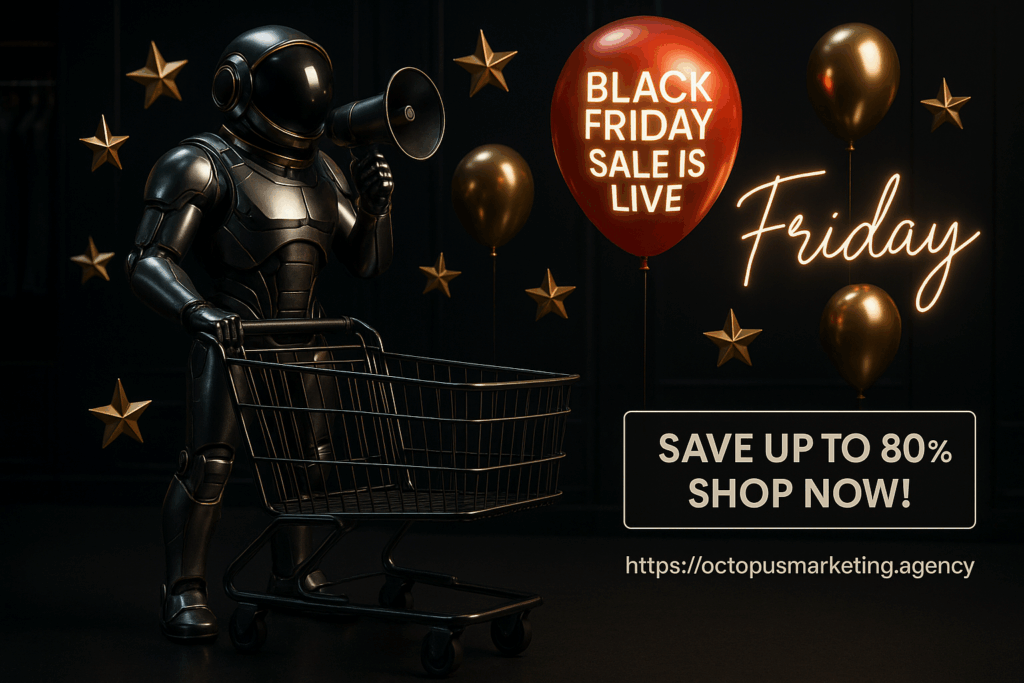
Introduction: Why SEO and Brand Storytelling Must Unite in GCC Markets
In many mature markets, “brand awareness” and “SEO” still operate in silos — SEO experts chase clicks and volume, while branding teams chase meaning and emotional connection. But in the fast-evolving digital economies of the UAE, Saudi Arabia, and the wider GCC, that separation is a luxury few can afford.
Here, consumers don’t just find brands through search — they experience them there. Every Google query is a first impression. That means a brand must be both discoverable and distinctive at the same moment. For Dubai-based agencies working across luxury, retail, hospitality, or tech, the challenge isn’t just to grow traffic — it’s to attract the right visitors to the right pages. These pages should echo the brand’s voice, values, and promise — not feel like generic, keyword-stuffed templates.
This alignment becomes especially critical during high-stakes periods like Black Friday (or “White Friday” in the Gulf), when competition skyrockets and search volumes surge. A weak or off-brand landing page in November doesn’t just miss conversions — it chips away at trust, raises bounce rates, and quietly erodes brand equity built over years.
In short, success in the GCC’s digital landscape means blending performance with perception — where SEO isn’t just a numbers game, but a stage for brand storytelling.
Black Friday SEO Optimizing Brand Landing Pages for Seasonal Keywords
Why Black Friday SEO Must Be Treated as a Brand Equity Exercise
In a typical SEO playbook, teams might quickly spin up a “Deals 2025” microsite or launch a keyword-heavy page optimized for “Black Friday electronics.” But in the GCC, where the most valuable clients are brands, not discount platforms, that approach falls short. Here, your landing page can’t just chase conversions — it has to embody your brand. Every pixel, from logo placement to tone of voice, should reinforce who you are while still tapping into seasonal search demand.
Search engines, too, reward forethought. They expect seasonal pages to build credibility and authority over time — through strong internal linking, structured data, and consistent freshness signals. As one SEO academy reminds us, “Search engines need time to crawl, index, and rank your content, so you should begin preparing your SEO campaigns at least 2–3 months in advance.”
From a regional perspective, “White Friday” — the GCC’s cultural adaptation of Black Friday — has grown into more than just a sales event. It’s a moment charged with energy, urgency, and trust. It’s also deeply local, often incorporating Arabic-language messaging, religious or national holidays, and regionally specific urgency cues.
To bring structure to this, think of a “Seasonal Brand Landing Page Equation” — a framework that balances both brand and SEO imperatives:
Brand Signal + Seasonal Signal + Trust Mechanics + Link Equity = SEO-Branded Authority
Each component has a clear purpose:
- Brand Signal — your logo, color palette, navigation menus, and the tone that carries your brand personality.
- Seasonal Signal — elements like “White Friday 2025,” “العروض البيضاء,” countdowns, or promotional banners that create excitement.
- Trust Mechanics — customer reviews, FAQ schema, original product descriptions, and proof points that inspire confidence.
- Link Equity & Internal Anchors — blogs, PR links, newsletters, and category pages that connect and reinforce this seasonal hub well in advance.
Miss one of these pillars, and your campaign risks being incomplete — strong on SEO but hollow on brand, or rich in branding but invisible in search. The real win happens when both work together, building authority that lasts long after the sales season ends.
Implementation Steps (Months Ahead)
Building a high-performing Black Friday / White Friday SEO strategy isn’t just about ticking technical boxes — it’s about orchestrating timing, relevance, and brand emotion in a way that feels both human and intelligent. The following phased approach helps Gulf-based brands merge SEO precision with storytelling depth, ensuring each stage of preparation amplifies both visibility and brand resonance.
1. Build or Refresh an Evergreen “White Friday / Black Friday” URL
Instead of starting from scratch each year, develop a single, evergreen landing page (for example, /white-friday-deals) and nurture it like a long-term digital asset. This page becomes your brand’s “seasonal home” — continuously refreshed with updated visuals, offers, and copy, yet structurally consistent. By maintaining the same URL, you preserve link equity and domain authority, signaling to Google that your page is a trusted annual destination for seasonal shoppers. For consumers, this page becomes familiar and reliable — a space that evolves, but never disappears. It’s where brand trust and SEO longevity meet.
2. Pre-Event Content Seeding and Internal Linking
By August or September, your content calendar should already be humming. Start publishing teaser blogs, product forecasts, and early-access previews that organically link back to your main landing page. Use natural anchor text such as “White Friday preview 2025 – [Brand Name]” to build authority and anticipation simultaneously. Share this content through newsletters, social media snippets, and influencer mentions. This phase is less about “selling” and more about warming up both the algorithm and your audience. Early buzz signals to Google that your domain deserves to rank for seasonal intent — while giving customers the sense that they’re in on something early, exclusive, and exciting.
3. Meta and On-Page Optimizations
When optimizing for search, don’t lose the human tone that makes a brand memorable. Integrate seasonal keyword modifiers (“2025,” “Dubai,” “GCC offers,” “exclusive deals”) thoughtfully into your metadata and headings — but let your copy still sound like you. For example, a premium fashion brand might headline with:
“White Friday 2025 Offers – [BrandName] Exclusive Collection & Gifts.”
And follow with a human-centered subtext like:
“Enjoy up to 25% off select couture pieces — crafted for you, curated by [BrandName].”
Enhance this authenticity with structured data (Product, FAQ, Review schemas), which helps your listings stand out with rich snippets. Adding practical FAQs like “When does White Friday start in the UAE?” not only boosts SEO but reassures customers — demonstrating that your brand anticipates their needs before they ask.
4. Technical Readiness and Performance Testing
During peak shopping periods, even a two-second delay can cost a sale — and a loyal customer. Ensure your site is ready for the surge. Conduct stress testing for load times, caching, and mobile UX, and optimize imagery without compromising aesthetic quality. Deploy a content delivery network (CDN) and simulate live checkout scenarios across devices. Remember, in the GCC, over 80% of e-commerce activity happens on smartphones, so mobile responsiveness isn’t optional — it’s existential. Think of this as your brand’s digital storefront: clean, fast, and dependable, even under pressure.
5. Launch and Daily Refresh Cycle During the Event
Once live, your landing page becomes a living campaign — not a static one. Treat it like a newsroom. Update banners, product availability, and countdown timers daily. Monitor trending keywords in real time using tools like Google Search Console or Ahrefs, and naturally weave new long-tail phrases (such as “White Friday 2025 smartwatches UAE” or “Dubai perfume offers online”) into your copy or FAQ sections. These micro-adjustments show Google that your content is fresh — but more importantly, they show users that you’re listening, reacting, and evolving with the moment. This kind of agility transforms a transactional campaign into a dynamic brand experience.
6. Post-Event Reversion and Evergreen Repositioning
When the rush subsides, resist the urge to archive. Transform your campaign page into a “Post-Black Friday Clearance” or “Off-Season Deals” hub to maintain relevance. Adjust your meta tags, CTAs, and visuals for upcoming campaigns — such as UAE National Day, Ramadan, or Cyber Monday — keeping the page active in both search and memory. This continuity builds a year-round SEO rhythm while signaling brand consistency. The goal is to make your White Friday destination synonymous with reliability, so when next year arrives, your page already has history, backlinks, and trust on its side.
Case Study: Black Friday SEO in Practice – Krazy Coupon Lady (Outside GCC)
A compelling example of this agility in action comes from Masthead’s work for Krazy Coupon Lady (U.S.). Their team performed deep content audits, trained internal writers, and rolled out weekly optimization cycles during Black Friday and Cyber Monday. The results were remarkable: 887% year-over-year growth in top-three keyword rankings and a 63.8% month-over-month traffic surge during peak season. While their audience differs from the GCC’s, the principle is universal — success stems from content agility, early authority building, and structured, refreshable pages that evolve in rhythm with user behavior.
GCC Context Note: Branding Over Discount
In Dubai and the Gulf, branding often matters more than the discount itself. Consumers here are discerning and status-driven; they buy stories, not just savings. That’s why Souq.com famously rebranded “Black Friday” as “White Friday” — transforming what could have been a purely commercial event into a culturally resonant moment that aligned with regional sensibilities and religious context.
For Gulf-based brands, this lesson is timeless: urgency must coexist with elegance. Your landing page shouldn’t scream “cheap”; it should whisper “exclusive.” Use language that evokes privilege and belonging — phrases like “members-only,” “private sale,” or “limited access”. By doing so, you maintain brand dignity while still activating consumer excitement.
Ultimately, the heart of effective Black Friday branding and SEO in Dubai and the GCC lies in balance — between visibility and voice, between data and design, between what algorithms favor and what humans feel. When your campaign achieves that harmony, your brand doesn’t just win clicks — it earns credibility, loyalty, and cultural relevance season after season.
Content Marketing & Blogs to Strengthen Brand Authority During Black Friday
The landing page is the hero, but the surrounding content ecosystem is the scaffolding. High-performing SEO + content branding strategies during Black Friday don’t begin in November they unfold months prior.
Role of Content During Seasonal Peaks
- Keyword capture & funneling
Users start their seasonal search journey weeks ahead: “when does White Friday start in UAE,” “best deals 2025 electronics,” “White Friday vs Cyber Monday UAE.” If your content isn’t already ranking for those, they slip away. Use blogs and guides to capture early-stage intent and funnel users into your landing pages. - Authority amplification & internal linking
Each blog post or guide is a node. If well-crafted and SEO-optimized, it passes internal link equity to the landing page, enriching its authority. - Brand positioning, not discount messaging
These posts are your brand’s voice in the conversation. They allow storytelling: what makes your deals unique, who manufactured them, the craftsmanship, guarantee, etc. This gives you differentiation in a sea of “50% off” noise. - Social and PR magnet
Branded content that offers insight (e.g. “How we source deals ethically in GCC”) can be pitched to the media, featured in newsletters, or amplified via social media. That can generate external links and impressions back to your landing page.
Editorial Themes and Timeline
A strong editorial calendar is the heartbeat of every successful seasonal SEO and content branding strategy. It’s what ensures your brand doesn’t just show up during the sale — it stays consistent, builds anticipation, and keeps your audience engaged long after the discounts end. The goal is simple but powerful: create a natural content rhythm that mirrors how people actually shop — from early curiosity and research, to the urgency of buying, and finally, to post-purchase reflection. Done right, this rhythm not only keeps your brand top of mind, it also sends vital freshness signals to search engines.
July–August: The Anticipation Phase — Building Intent and Authority
This is when the story begins. Use July and August to set the stage with thought leadership and trend-based storytelling — not hard selling. Publish market insights and forecasts that position your brand as a voice of authority before the seasonal rush. Think along the lines of:
- “White Friday Gadget Trends UAE 2025: What Shoppers Will Want”
- “How Dubai’s Shoppers Are Redefining Black Friday 2025”
Target discovery-oriented keywords like “White Friday 2025 trends,” “UAE Black Friday insights,” and “Dubai shopping forecasts.” Pair them with rich visuals, infographics, and teaser content for your upcoming collections. The goal at this stage isn’t conversion — it’s credibility. You’re signaling to audiences (and algorithms) that your brand understands what’s coming before it happens.
September: Educate, Empower, and Build Trust
By September, consumers start planning their spending — and this is your chance to help them do it wisely. Publish long-form guides and resourceful content that educate while subtly building trust. Try articles like:
- “How to Get the Best White Friday Deals Without Being Scammed”
- “White Friday vs. National Day Sales: What UAE Shoppers Should Know”
- “Smart Budget Planning for Dubai’s 2025 Deal Season”
Include real data points, expert commentary, and actionable insights. Strategically interlink these pieces with your upcoming Black Friday landing page using contextual phrases like “see our 2025 deals preview.” This strengthens your internal SEO architecture while establishing your brand as the trusted voice before competitors even begin publishing.
October: Showcase Products and Spark Excitement
In October, shoppers shift from research to intent. They’re searching with precision — “best smartwatch offers UAE,” “perfume deals Dubai,” and so on. This is the time to release product-specific stories, early reveals, and editorial previews. Consider:
- Comparison guides or “best of” lists
- Downloadable checklists or buying guides
- Blog-style exclusives introducing new bundles or limited editions
Integrate category-level keywords and link everything back to your central landing page. For luxury and lifestyle brands, elevate the storytelling: spotlight craftsmanship, design philosophy, or sustainability. Instead of shouting “discount,” tell a story like “Why Our Black Friday Sale Is Built Around Quality, Not Quantity.”
November: Countdown and Conversion Mode
November is when momentum peaks. This is your activation phase — when every piece of content should drive urgency, excitement, and action. Create time-sensitive, conversion-driven articles such as:
- “Top Picks This Week: Early White Friday Exclusives”
- “How to Stack Coupons and Loyalty Points During the Sale”
- “Insider Access: Preview the Offers Before They Go Live”
Support these with social teasers, influencer collaborations, and dynamic email campaigns. Update content in real time to reflect live offers. From an SEO standpoint, ensure structured data, metadata, and internal links are fully optimized. Use time-specific titles like “White Friday 2025 Now Live” to capture the surge in search intent.
During the Event: Operate Like a Newsroom
Once the sale begins, agility becomes your biggest asset. Treat your editorial operation like a newsroom — publish live updates, “last chance” alerts, and product restocks in real time. Examples include:
- “Live: Top 10 Deals Still Available During White Friday Dubai 2025”
- “Last Chance Offers Before Midnight — GCC Exclusive Brands”
Real-time SEO adjustments (title updates, fresh snippets, new keywords) are key to staying visible amid ranking volatility. Feature user-generated content (UGC), influencer shoutouts, and live customer testimonials to amplify social proof and urgency simultaneously.
Post-Event: Retain, Reflect, and Reinvent
When the sale wraps up, the story doesn’t end — it evolves. Publish reflective, data-driven articles such as:
- “What We Learned from Black Friday 2025: Dubai’s Top-Selling Categories”
- “The Best Deals Still Available: Clearance & Extended Offers”
- “How White Friday Reinvented Shopping Behavior in the GCC”
Use this phase to retain your audience and attract backlinks. Turn event insights into shareable case studies, repurpose performance data, and even tease what’s next — from Ramadan promotions to National Day or Cyber Monday. This ensures continuity and keeps your organic visibility high between sale cycles.
Maintaining Brand Voice Across SEO Content
Even when writing technical, keyword-rich articles, never lose your brand’s tone. A blog titled “How to Hunt for the Best White Friday Hotel Deal in Dubai” can still express your brand’s heritage, guest philosophy, or luxury experience. That voice consistency — across blogs, landing pages, and campaigns — reinforces brand recognition and trust.
Arabic and English: The Bilingual Advantage
In the GCC, bilingual content isn’t optional — it’s essential. Arabic SEO follows its own search behavior patterns (e.g., “عروض البلاك فرايدي دبي 2025”), so launch English and Arabic versions simultaneously. Localize not just the words but the tone, imagery, and urgency cues for each audience. Optimize meta tags, headers, and schema markup in both languages for maximum visibility and inclusivity.
Example: GCC E-Commerce in Practice
One Dubai-based digital agency’s blog, “Black Friday Dubai: The Ultimate Digital Strategy for the UAE,” became a regional reference point by localizing global strategies — discussing Arabic payment preferences, delivery nuances, and cultural timing. That kind of insight-driven content earns backlinks and brand authority.
Similarly, a 2018 YouGov study found that UAE e-tailers who extended Black Friday into a full “deals week” saw stronger engagement and higher search volumes — proving that locally informed content doesn’t just educate, it performs.
How to Use Long-Tail Keywords Without Losing Brand Messaging
Balancing SEO and Brand Voice: The Message-Anchored Long-Tail Strategy
One of the biggest challenges for brand-led search marketing is a familiar one: “If I optimize for long-tail, low-volume keywords, will I end up watering down my brand voice — or worse, sounding like a bland SEO copy?” The truth is, you don’t have to choose between strategy and soul. That’s where the Message-Anchored Long-Tail Strategy comes in.
The concept is simple but powerful: your brand message forms the scaffolding, and the long-tail keywords are woven naturally into it — never the other way around. Instead of letting keyword data dictate your narrative, you start with your brand story and carefully integrate the long-tail terms in ways that complement, not compete, with your voice.
Here’s how to make that work in practice:
- Define your brand narrative skeleton. This is your north star — for example, “Heritage meets innovation” or “Crafted sustainability in the UAE.”
- Map long-tail clusters underneath that structure. Place them thoughtfully in side sections, supporting paragraphs, or subheadings rather than forcing them into your main headline or hero copy.
- Add brand qualifiers. Instead of generic phrases like “smartphone deals Dubai,” use “BrandName smartphone deals Dubai White Friday” — it keeps you discoverable while protecting identity.
- Use parenthetical phrasing or “also known as” variations. This allows keyword inclusion without breaking tone or readability.
- Leverage supporting content. Use blogs, FAQs, and guides to carry more aggressive or opportunistic long-tail terms, leaving your homepage and primary landing pages to focus on refined, brand-first messaging.
Example in Action
Imagine your brand is Lumina Jewels UAE. Your main landing page could headline:
“White Friday 2025: Lumina Exclusive Jewels — Signature Collection Event.”
Then, within a subsection, you might write:
“Lumina Diamond Earrings Deals Dubai (Best Offers 2025)”
That way, the long-tail keyword — “diamond earrings deals Dubai” — is seamlessly included, but surrounded by elegant brand framing.
Meanwhile, your supporting blog or category page could go further:
“Best White Gold Diamond Earrings Deals in Dubai During White Friday 2025 — Full Review and Price Comparisons.”
This separation keeps your core brand pages polished and on-message, while your supporting pages handle the heavier SEO lifting.
What to Avoid: Keyword Overload and Brand Dilution
In GCC markets, authenticity matters. If your content starts reading like a discount aggregator — “Biggest deals Dubai electronics cheap cheap” — you’re not only losing your brand essence, you’re competing against coupon sites for your own branded queries. Maintain brand sovereignty by keeping your main pages elegant and strategic, while letting your supporting content handle tactical search targeting.
Widening the Net with Semantic Keywords
To reach broader audiences without stuffing your copy, use semantically related (LSI) keywords. For instance, instead of repeating “white gold diamond earrings deals UAE,” you can naturally integrate phrases like “white gold stud collection,” “diamond craftsmanship Dubai,” or “precious gemstone offers UAE.” These reinforce your topic, improve context for search engines, and give your content texture and depth.
Monitor, Measure, and Prune
Long-tail keywords can be volatile, especially during peak shopping periods. Use tools like Google Search Console, Ahrefs, or regional GCC SEO platforms to track which queries drive valuable traffic. After the event, prune underperforming keywords — keep only those that reinforce your brand story or convert well. The rest can be reworked or retired.
This ongoing refinement ensures your SEO doesn’t just chase traffic — it builds enduring brand authority with every season.
Conclusion
As SEO commoditizes and discount aggregators proliferate, the true differentiator for Gulf-based brands lies in how seamlessly they integrate brand and search at scale. In today’s hyper-competitive digital landscape, visibility alone is not victory brand-led visibility is. An agency that can deliver not just traffic, but traffic aligned with brand meaning, voice, and emotional intent will command premium retainers, build stronger client trust, and earn long-term strategic relevance.
This is especially critical during Black Friday branding and digital marketing campaigns across Dubai and the GCC, where competition peaks and consumer attention fragments across countless offers. The most successful brands treat Black Friday not as a discount war, but as a branding stage where SEO, content design, and storytelling converge to express exclusivity, aspiration, and cultural nuance. A well-crafted Black Friday SEO and content branding strategy transforms fleeting seasonal clicks into lasting brand impressions, reinforcing how the brand feels, not just how it sells.
To lead in this evolving domain, agencies must move beyond execution into strategic ownership. Begin with thought leadership and publish GCC-specific Black Friday SEO frameworks, whitepapers, and regional benchmarks under your agency brand, positioning yourself as the authority on seasonal SEO branding. Develop proprietary tools and dashboards, such as a “Seasonal SEO Brand Index” or bilingual (Arabic + English) content pipeline planner, that showcase your analytical and creative edge. Transition toward retainer-based authority builds, offering clients year-round brand content paired with seasonal SEO activations that compound trust and visibility.
Support this foundation with regional case studies and ROI benchmarks from GCC markets showcasing how integrated SEO and branding can drive measurable brand lift, not just clicks. And finally, specialize by vertical: whether in luxury, retail, or hospitality, create frameworks tailored to each sector’s behavioral triggers and cultural context.