
Micro-Conversions vs Macro-Conversions: Which Drives More Revenue?

Introduction
In boardrooms across Dubai—and increasingly across global growth hubs—the same question keeps resurfacing: what truly drives revenue in digital marketing? Is it the visible, bottom-line actions like purchases and signed contracts, or the quieter signals—scroll depth, product views, email opens—that precede them?
This debate sits at the heart of micro-conversions vs macro-conversions, a distinction that separates mature, revenue-driven organizations from those still optimizing in silos. While macro conversions are easy to celebrate and report, micro conversions often hold the strategic intelligence that determines whether revenue scales or stalls.
As McKinsey & Company notes, “Growth leaders don’t win by optimizing outcomes alone—they win by managing the behaviors that produce them.” In digital terms, those behaviors are micro conversions.
This article unpacks the difference between micro conversions and macro conversions, explains how each impacts revenue, and outlines a practical framework—rooted in funnel analytics, attribution modeling, and CRO—that modern Dubai-based brands can use to turn intent into income.
What Are Micro Conversions in Digital Marketing?
Micro conversions are the behavioral signals that indicate progress along the customer journey stages. They do not generate revenue directly, but they reduce friction, increase buyer intent signals, and move users closer to a revenue event.
In high-consideration markets like finance, real estate, SaaS, and B2B services—sectors central to Dubai’s economy—buyers rarely convert in a single session. Instead, they leave behind a trail of micro conversions: content engagement, tool usage, product comparisons, and return visits.
From a funnel optimization perspective, micro conversions act as leading indicators. They tell you whether your value proposition resonates, whether your messaging aligns with intent, and whether your experience builds trust fast enough.
Critically, micro conversions provide what macro conversions cannot: diagnostic insight. A drop in purchases tells you what happened. A drop in add-to-cart rates, demo starts, or pricing-page engagement tells you why.
What Are Macro Conversions and Why They Matter
Macro conversions are the revenue-defining actions—the events that appear on dashboards and investor decks. These include completed purchases, signed contracts, qualified leads, or subscription upgrades.
They matter because they are where revenue attribution ultimately lands. CFOs care about macro conversions because cash flow depends on them. CEOs care because they translate directly into growth metrics.
However, macro conversions are inherently lagging indicators. By the time they decline, the underlying causes—poor engagement, misaligned targeting, weak messaging—have already done their damage upstream.
This is where many organizations misstep. They optimize landing pages, bids, and creatives purely around macro outcomes, without addressing the micro behaviors that enable those outcomes in the first place.
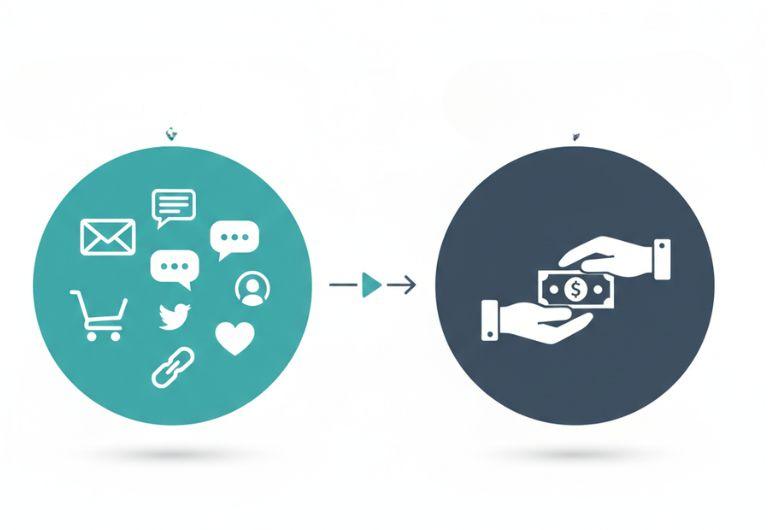
Micro-Conversions vs Macro-Conversions: Key Differences That Matter
The distinction between micro vs macro conversions is not academic—it is fundamentally operational. It shapes how organizations diagnose performance, prioritize investment, and forecast revenue before it materializes. In high-competition markets, the difference between growth and stagnation often lies not in whether conversions are tracked, but which ones are used to guide decisions.
Macro Conversions Measure Outcomes
Macro conversions answer a narrow but essential question: Did revenue occur?
A completed purchase, a signed contract, or a qualified lead submission provides clear confirmation that marketing activity translated into financial value. These events are binary in nature—either they happened or they did not—and they occur relatively infrequently. As a result, macro conversions are excellent for reporting, forecasting, and executive accountability, but limited in their ability to explain performance variance.
Because macro conversions sit at the end of the funnel, they reflect the cumulative effect of many prior interactions. When they decline, the underlying causes are already embedded earlier in the journey—often invisible if only final outcomes are measured.
Micro Conversions Reveal Revenue Potential
Micro conversions answer a more strategic and predictive question: Is revenue likely to occur—and if not, why?
They capture the behavioral signals that indicate intent formation, trust development, and decision momentum. Actions such as engaging with high-value content, viewing pricing pages, comparing solutions, or progressing through onboarding flows do not generate revenue directly, but they dramatically influence whether a macro conversion will eventually take place.
Unlike macro conversions, micro conversions are probabilistic and abundant. Their volume provides statistically meaningful insight into user behavior, enabling marketers to detect friction, messaging misalignment, or UX barriers long before revenue is impacted.
Accountability vs Control in Conversion Strategy
This distinction creates a critical asymmetry in conversion strategy. Macro conversions provide accountability—they tell leadership whether growth targets were met. Micro conversions provide control—they give teams the ability to intervene, optimize, and redirect performance in real time.
Organizations that optimize only for macro conversions tend to operate reactively, adjusting campaigns after results are already locked in. Those that manage micro conversions proactively can influence outcomes while they are still malleable.
Why Modern Measurement Depends on Both
In advanced conversion tracking metrics, micro and macro conversions are inseparable. Revenue-driven conversions rarely result from a single touchpoint or session. Instead, they emerge from micro conversions compounding across channels, devices, and time, forming behavioral sequences that steadily increase purchase probability.
As Google Analytics documentation increasingly emphasizes, modern measurement is about paths, not points. The true value of analytics lies not in isolated events, but in understanding assisted conversions, behavioral sequences, and the cumulative impact of engagement. In this context, micro conversions are not “secondary metrics”—they are the leading indicators that make revenue predictable, scalable, and strategically controllable.
Do Micro Conversions Increase Revenue?
The short answer is yes—but indirectly and disproportionately.
Micro conversions increase revenue by improving conversion efficiency, not by replacing macro outcomes. Brands that track and optimize micro conversions typically see higher macro conversion rates because they remove friction earlier in the funnel.
According to a benchmark study cited by Harvard Business Review, companies that actively manage early-stage engagement signals outperform peers by up to 85% in revenue growth over three years. The implication is clear: behavior precedes purchase.
In practical terms, improving micro conversions increases:
- Time-on-site quality, not just quantity
- Message-market fit across channels
- Lead nurturing effectiveness
- Retargeting precision and ROI
For Dubai-based businesses operating in competitive, multilingual, and high-CPM markets, these gains compound quickly.
How Macro Conversions Impact Revenue (and Where They Fall Short)
Macro conversions remain non-negotiable. Without them, there is no business. But relying on them exclusively introduces blind spots.
Macro-only optimization often leads to:
- Overinvestment in bottom-funnel media
- Underinvestment in education and trust-building
- Inaccurate attribution modeling
- Volatile revenue tied to paid traffic fluctuations
When macro conversions decline, teams scramble—changing creatives, adjusting bids, redesigning pages—without understanding whether the issue lies in awareness, consideration, or intent alignment.
This is why sophisticated organizations treat macro conversions as scorekeeping metrics, not steering mechanisms.
Micro Conversions vs Macro Conversions in Marketing Funnels
Micro Conversions as Intent Checkpoints in Non-Linear Funnels
In modern marketing funnels—particularly non-linear, multi-touch ones—micro conversions function as intent checkpoints rather than mere engagement metrics. They mark moments where a prospect signals interest, evaluates credibility, or progresses mentally toward a decision, even if no immediate transaction occurs.
A typical high-consideration journey might unfold over days or weeks. A prospect may:
- Read a thought leadership article
- Watch a short explainer video
- Compare service tiers
- Download a guide
- Return days later via branded search
Each of these actions is a micro conversion. None generate revenue in isolation, but together they form a conversion probability curve—a rising likelihood that the user will eventually complete a macro conversion.
This is why micro conversions are indispensable in complex buying environments such as B2B services, enterprise SaaS, financial products, and premium eCommerce. In these contexts, decision-making is incremental. Trust, clarity, and perceived value accumulate over time, and micro conversions are the observable signals of that accumulation.
When mapped correctly through funnel analytics, micro conversions expose where momentum builds and where it breaks down. They reveal whether prospects stall due to unclear messaging, accelerate after encountering proof points, or abandon when friction outweighs perceived value. Without this visibility, optimization efforts remain guesswork.
By analyzing these intent checkpoints, teams can deploy targeted conversion rate optimization (CRO) interventions—refining copy to address objections, improving UX to reduce cognitive load, or upgrading content to better support evaluation. The result is not just higher engagement, but a measurable increase in revenue yield, driven by a funnel that guides prospects deliberately rather than leaving conversion to chance.
Case Study: B2B Services Brand in Dubai
A Dubai-based B2B professional services firm struggled with stagnant lead volume despite heavy paid media investment. Macro conversions—form fills—were tracked meticulously, but micro conversions were ignored.
A deeper audit revealed that while traffic volumes were high, pricing-page engagement and case-study views were abnormally low. Prospects were clicking ads but not finding sufficient proof or clarity.
By redesigning mid-funnel content, introducing interactive cost estimators, and tracking micro conversions like scroll depth and document downloads, the firm increased assisted conversions significantly.
Within six months, macro conversions rose by 42%—without increasing ad spend. Revenue followed. The insight was not in chasing more leads, but in strengthening the behaviors that precede them.
Micro Conversions for eCommerce and SaaS
In eCommerce, micro conversions such as product views, wishlist adds, and checkout initiations often predict revenue more accurately than traffic alone. In SaaS, feature exploration, onboarding completion, and trial engagement serve the same role.
High-growth SaaS companies track micro conversions obsessively because churn prevention begins long before renewal dates. Usage depth, not sign-ups, predicts lifetime value.
For Dubai’s expanding SaaS and DTC ecosystem, this approach separates brands that scale profitably from those that burn acquisition budgets unsustainably.
How to Track Micro and Macro Conversions Effectively
Building a Hierarchy-Driven Conversion Tracking Framework
Effective tracking is not about more data—it is about better hierarchy. Most organizations already collect vast amounts of behavioral data, yet struggle to translate it into meaningful action. The issue is rarely measurement; it is prioritization. Without a structured hierarchy, conversion data becomes noise, offering visibility without direction.
Defining What Truly Drives Revenue
Advanced teams begin by establishing clear definitions of revenue-driven conversions. This creates alignment across marketing, sales, and leadership on what success actually looks like. When macro conversions are explicitly defined and universally understood, they become a reliable anchor for all performance analysis. This prevents teams from optimizing toward activity-based metrics that appear positive but fail to move the business forward.
Weighting Micro Conversions by Predictive Value
Once macro outcomes are clear, micro conversions are evaluated based on their historical correlation with revenue. Not all engagement signals are equal. A return visit to a pricing page or a product comparison often signals far stronger buyer intent than a single content view. By weighting micro conversions according to their predictive strength, teams convert raw engagement data into actionable intelligence that highlights where intent is forming—and where it is not.
Connecting Touchpoints Through Attribution Modeling
This hierarchy is strengthened through cross-channel attribution modeling. Modern customer journeys rarely follow a straight line; they span paid, owned, and earned channels across devices and time. Advanced attribution models account for assisted conversions, recognizing the cumulative influence of early- and mid-funnel interactions on final outcomes. This perspective enables more rational budget allocation and protects strategically important channels from being undervalued.
Turning Dashboards Into Strategic Assets
Finally, mature organizations rely on unified dashboards that connect behavior to revenue attribution. These dashboards are designed not for passive reporting, but for decision-making. By linking micro-level engagement patterns to macro-level revenue outcomes, they reveal bottlenecks, surface optimization opportunities, and support more accurate forecasting.
Together, these elements transform analytics from a retrospective record into decision-making infrastructure. Instead of asking what happened after results are known, teams gain the ability to influence performance in real time—making conversion tracking a strategic asset rather than an operational afterthought.
Case Study: eCommerce Brand Scaling Across GCC
An eCommerce brand expanding across the GCC faced inconsistent ROAS across markets. Macro conversion tracking suggested underperformance, but micro conversion analysis told a different story.
In some regions, add-to-cart and product comparison rates were strong, but checkout completion lagged due to payment friction. In others, early engagement was weak due to localization gaps.
By resolving micro-level issues—payment options, language nuances, trust signals—the brand improved macro conversions without increasing acquisition costs.
Revenue growth followed operational clarity.

Are Macro Conversions the Only Revenue Metric That Matters?
Macro conversions are the final metric—but they are not the most informative one. They confirm that revenue has occurred, yet they offer limited insight into how or why it happened. When organizations rely exclusively on macro conversions, they gain certainty at the expense of understanding.
Revenue attribution models that ignore micro conversions tend to systematically undervalue early-stage channels, content initiatives, and UX investments. Thought leadership, educational assets, and experience design rarely close deals directly, but they shape perception, trust, and intent long before a purchase decision is made. When these contributions are invisible in measurement frameworks, budgets are often reallocated toward short-term performance tactics that deliver immediate returns but erode long-term growth.
Over time, this bias leads to short-termism and declining marginal returns. Acquisition costs rise, conversion rates plateau, and teams struggle to explain why increased spend produces diminishing impact. The root cause is not market saturation, but an incomplete understanding of the behaviors that precede revenue.
As one oft-cited principle in conversion rate optimization states, “You cannot optimize what you do not understand.” Macro conversions show outcomes; micro conversions explain the mechanisms behind them. They reveal where prospects hesitate, what builds confidence, and which interactions accelerate commitment.
How Micro Conversions Support Macro Conversions
Micro conversions support macro conversions by creating momentum across the customer journey. They reduce uncertainty, build trust, and progressively align expectations between brand and buyer. Each interaction—whether informational, evaluative, or experiential—increases the probability that a macro conversion will eventually occur, not instantly, but predictably.
This compounding effect is central to modern revenue analytics. Micro conversions act as behavioral reinforcements, confirming relevance at each stage of the journey. A prospect who repeatedly engages with high-value content, explores pricing structures, or revisits key pages is signaling readiness, even if the final action is delayed.
In analytics terminology, this cumulative influence is known as assisted value. It recognizes that revenue is rarely the product of a single decisive moment, but the outcome of many smaller affirmations. The brands that outperform their peers are those that measure, model, and optimize this assistance—treating micro conversions not as secondary metrics, but as the drivers that make outcomes inevitable.
By focusing on assistance rather than attribution alone, organizations gain a more realistic view of how revenue is created. They shift from asking what closed the deal to understanding what made the deal possible—a distinction that separates reactive reporting from strategic growth.
Conclusion: Which Drives More Revenue?
The answer is not micro or macro—it is micro and macro, strategically aligned. Macro conversions define success in clear, financial terms; they are the moments when value is realized and growth is recorded. But micro conversions determine whether that success can be repeated, scaled, and sustained. Without strong micro-level signals guiding prospects forward, macro conversions become unpredictable events rather than reliable outcomes.
For Dubai-based marketing agencies and the brands they serve, this alignment represents a critical competitive advantage. The region’s markets are fast-moving, high-cost, and increasingly sophisticated, with buyers who expect relevance, credibility, and seamless experiences at every interaction. Agencies that master the relationship between micro-conversions vs macro-conversions do more than track performance—they actively shape demand, identifying intent early, removing friction before it compounds, and allocating investment with confidence rather than guesswork.
In an era where attention is scarce and trust is earned incrementally, revenue belongs to those who optimize the entire journey, not just the destination. Growth is no longer driven by isolated wins at the bottom of the funnel, but by consistent progress across every touchpoint that precedes them. Brands that understand this do not merely measure conversions—they engineer them, turning insight into a durable engine for long-term revenue.
FAQ
1. Do micro conversions really matter if they don’t generate revenue directly?
Yes. Micro conversions matter because they signal intent, trust, and readiness. While they don’t produce revenue on their own, they strongly influence whether a user will eventually complete a macro conversion. Brands that ignore micro conversions often struggle to explain why revenue fluctuates.
2. Should I optimize for micro conversions or macro conversions first?
You should optimize for both—but in sequence. Macro conversions define the business goal, while micro conversions reveal how users move toward that goal. Optimizing micro conversions improves the efficiency and predictability of macro conversion performance over time.
3. Can micro conversions be misleading or inflate performance metrics?
They can be if treated as vanity metrics. Micro conversions only add value when they are correlated with revenue outcomes. High-performing teams weight micro conversions based on historical impact, ensuring engagement metrics reflect genuine buyer intent, not surface-level activity.
4. How many micro conversions should a business track?
There is no fixed number. The best practice is to track a small set of high-intent micro conversions that align with key customer journey stages. Tracking too many signals creates noise; tracking the right ones creates insight and control.
5. Are macro conversions enough for small businesses or startups?
Relying only on macro conversions can limit learning, especially with low traffic or long sales cycles. Micro conversions help startups and small businesses understand user behavior early, improve messaging faster, and build a foundation for scalable, revenue-driven growth.