
How to Carve Out Brand Distinction in a Competitive Market
Introduction
Let’s be real—today’s consumers are flooded with brand messages from every direction, every screen, every scroll. In this chaotic landscape, it’s not enough to be good or even better—you need to be memorable. That’s where brand distinction comes in. It’s not some high-level luxury reserved for global giants. It’s the lifeline that determines whether your brand earns a place in someone’s mind—or vanishes into the noise.
While many businesses still chase being “different” through flashy features or bargain prices, forward-thinking marketers are flipping the script. They’re showing us that distinctiveness—being instantly recognizable, emotionally resonant, and consistently “you”—is what actually drives long-term loyalty and growth.
In this article, we’ll walk you through a proven framework for carving out that kind of distinction. Drawing on the insights of branding minds like Marty Neumeier and Byron Sharp, plus Superside’s battle-tested strategies, we’ll explore the three key ingredients that unforgettable brands share: mental availability, emotional connection, and narrative clarity. And no, this isn’t just marketing theory. We’ll show you real-world examples and tangible steps to help your brand not just stand out—but stand for something.
So whether you’re building from the ground up or refreshing a legacy, this is your guide to making your brand the one people remember—and love.
Why Brand Distinction Beats Differentiation (Humanized)
The Misconception Between Difference and Distinction
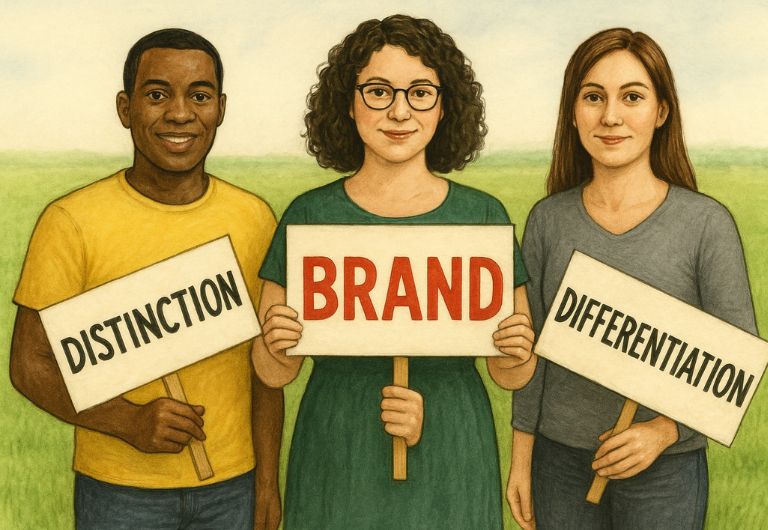
Here’s the thing a lot of brands get wrong: they confuse being different with being distinct. Yes, they sound similar—but in practice, they’re miles apart. Differentiation is about how your product is better—maybe it loads faster, costs less, or has more bells and whistles. But here’s the catch: being “better” isn’t what sticks in people’s minds. Distinction is what makes your brand unmistakable.
Marty Neumeier nails it with his quote: “Different is better than better.” Because people don’t always buy what’s best. They buy what they remember, what feels familiar, what speaks to them emotionally. Byron Sharp backs this up in “How Brands Grow,” where he shows that brands win not through technical superiority, but through mental availability. Simply put, the brands that come to mind first are the ones that get picked.
Case in Point: Coca-Cola vs. Pepsi
Think about the age-old Coke vs. Pepsi debate. Blind taste tests often lean toward Pepsi. Yet Coca-Cola dominates global sales. Why? Because Coke has something Pepsi struggles with: emotional real estate. Coke is nostalgia in a bottle. It’s family gatherings, holidays, iconic ads, and that unmistakable red can. People feel Coke before they even taste it.
The Danger of Relying on Features Alone
Now let’s talk about the trap many brands fall into—putting all their chips on features. Features can be copied. Your tech edge today might be your competitor’s update tomorrow. But your brand’s voice? Its vibe? The feeling people get when they see your logo or hear your story? That’s yours alone. Distinctiveness is your moat. It’s the emotional shorthand that makes you unforgettable—and uncopyable.
So if you’re pouring everything into specs and price points, it might be time to zoom out. Build a brand people connect with, not just a product they use.
Core Pillars of a Distinct Brand Framework
If you want your brand to stick—really stick—you need more than clever taglines or eye-catching logos. True brand distinction is built on something deeper: a sturdy, intentional foundation made up of three core elements. Think of them as the legs of a stool. Remove one, and your brand story wobbles. Nail all three, and you’ve got something unforgettable.
These pillars are mental availability, emotional edge, and narrative consistency. Each plays a unique role in shaping how your audience sees you, remembers you, and decides whether or not to trust you.
Mental Availability: Staying Top-of-Mind
Mental availability is all about ease—how easily your brand pops into someone’s head when it’s time to buy. In a world where people are overloaded with choices, they rarely stop to weigh every option. They go with what they know, what feels familiar.
Byron Sharp talks about building “memory structures”—those visual, sonic, and emotional cues that make your brand recognizable in a split second. Your logo, your color palette, your tone, your jingle (if you have one). These aren’t just nice-to-haves—they’re essential triggers for consumer recall.
Think of McDonald’s golden arches or Nike’s swoosh. Those symbols are seared into our brains. Your goal? Create your own version of those mental cues, then use them obsessively and consistently. That’s how you go from “option” to “no-brainer.”
Emotional Edge: Creating Deep Connections
Recognition gets your foot in the door, but emotion makes people stay. Emotional edge is what turns a one-time buyer into a lifelong fan. It’s the feeling people get when they think about your brand—warmth, excitement, trust, joy.
Look at Apple. They don’t just sell devices—they sell empowerment, creativity, elegance. Patagonia isn’t just outerwear; it’s a badge of values. These brands tap into deeper needs and beliefs, which makes them hard to walk away from.
To tap into emotional resonance, figure out what your audience truly cares about. Then bake that into everything—your messaging, your design, your customer service voice. When your brand reflects their values, it stops being just a product. It becomes personal.

Narrative Consistency: Telling a Coherent Story
We all love a good story. But for your brand, it’s not just about telling one story—it’s about telling the same story, everywhere. That’s narrative consistency.
If your website says one thing, your packaging says another, and your social media sounds like a completely different brand? That’s a trust-killer. On the flip side, when every touchpoint reinforces the same mission, tone, and vibe, people feel secure. They know what to expect. They begin to believe.
Patagonia is a masterclass here, too. From their product tags to their environmental campaigns to their return policy, the message is the same: protect the planet. That’s coherence. That’s credibility.
So ask yourself: does every part of your brand—big or small—tell the same story? If not, it’s time to realign. Because consistency doesn’t just build clarity. It builds trust.
Step-by-Step: From Audit to Activation
So, how do you actually build a brand that people remember and love? It all starts with knowing where you stand—and ends with showing up in the world with purpose and flair. Here’s how to go from fuzzy to unforgettable.
Laying the Groundwork: The Brand Audit
You can’t fix what you don’t understand. A brand audit is your deep-dive reality check. It reveals how your brand is showing up, what’s working, what’s falling flat, and where you might be sending mixed signals.
Start by looking inward. Audit your brand assets, messaging, visuals, tone of voice, website, social media, customer support—everything. Are your visuals telling the same story across touchpoints? Does your logo still feel right? Is your tone consistent with what you say you stand for?
Then, turn the lens outward. Talk to your customers. Run surveys. Interview loyal fans and lukewarm leads. What words do people associate with your brand? What sets you apart—if anything? If the answers are vague or all over the place, that’s a signal: you’re not sticking in people’s minds.
A good audit isn’t just about spotting problems. It’s about unearthing the raw materials you can refine and amplify.
Workshop the Future: Internal Collaboration for Clarity
Now that you’ve got the lay of the land, bring your people together. Host a distinctiveness workshop where team members from every corner—marketing, design, product, support—can weigh in. Everyone sees the brand from a different angle, and those insights are pure gold.
Use this time to get playful and strategic. Try:
- Brand archetyping – Is your brand a Rebel, a Sage, a Jester?
- Anti-personas – Who are you definitely not?
- Emotional mapping – How should people feel before and after interacting with you?
Out of this, aim to write one powerful sentence that captures your brand’s soul. One real brand nailed it as: “the trusted companion whispering confidence in your ear.” That kind of clarity reshaped everything—design, copy, and customer experience.
Design with Intent: Creative Identity & Visual Language
Now comes the fun part: turning ideas into visuals and voice. This is where your brand’s creative identity takes shape—your logo, colors, typefaces, illustration style, tone, and even animations.
But don’t just slap on trendy design elements. Design with intent. Every visual choice should reflect your brand’s emotional tone and story. Look at Spotify’s color bursts or Mailchimp’s playful sketches. These aren’t random. They say something.
And please—create a style guide that doesn’t just say what to do, but why it matters. Why that shade of blue? What feeling should your photography evoke? A great guide ensures your brand feels like you, no matter who’s designing.
From Theory to Market: Rollout and Reinforcement
Your brand rollout isn’t just a reveal—it’s a story unfolding. Start from the inside. Share the new direction with your team. Update your onboarding, sales decks, support scripts. Help your people live the brand before the world sees it.
Then, go public with heart. Relaunch across key channels: your site, social, packaging, PR. Share the why behind the rebrand. Let your audience be part of the journey, not just witnesses to it.
And measure everything. Use tools like Sprig, Lucid, or even simple surveys to check in on how your new identity is landing. Are people recognizing you? Do they feel what you want them to feel?
Remember: brand distinction isn’t a one-and-done. It’s a living thing. Keep nurturing it, and it will keep working for you.
Case Studies: Distinct Brands Done Right

Oatly: Turning Irreverence into Recognition
Oatly didn’t win hearts because their oat milk had extra vitamins or a lower price tag. They won because they dared to be weird in all the right ways. In a category as mundane as plant-based milk, Oatly stood out by leaning hard into their quirky, irreverent personality. From packaging that reads like a cheeky blog post to hand-drawn typography and billboard ads that feel like inside jokes, everything about Oatly says, “We’re not like the others.”
They took a risk—and it paid off. That snarky, playful voice shows up everywhere, even in their investor decks. It’s branding with attitude, but also with incredible consistency. Oatly made oat milk is more than a trend. They made it a statement.
Liquid Death: Metal Branding for Bottled Water
Liquid Death is what happens when someone asks, “What if drinking water felt as rebellious as slamming a monster energy drink?” They took something as plain as mountain water and wrapped it in punk rock swagger. Skull logos, death-metal fonts, and a slogan like “Murder Your Thirst”? It sounds wild—because it is. And that’s exactly why it works.
They tapped into an audience that was bored with boring health brands. Through viral content, edgy humor, and boundary-pushing campaigns, Liquid Death became the brand for people who want to hydrate without feeling like they’re signing up for a yoga retreat. It’s bold, consistent, and unforgettable—a perfect storm of mental availability and emotional edge.
Notion: Soft Power in a Noisy SaaS Market
In the noisy, feature-packed world of productivity software, Notion chose a different path: calm. Their brand is soft-spoken but powerful, like a deep breath in app form. With a pastel palette, minimal design, and a tone that’s more friend than firm, Notion didn’t just market software—they marketed a new way to think.
They let their community do the talking. User-generated templates, heartfelt stories, YouTube walkthroughs—all of it reinforces one simple idea: Notion is more than a workspace. It’s a creative partner. And that emotional positioning, that sense of empowerment and possibility, has turned users into die-hard advocates.
These brands all prove the same thing: when you build with intention and stay true to your voice, you don’t just win attention—you earn loyalty.
Overcoming Common Brand Distinction Roadblocks
Execution Overload: Trying to Do Too Much, Too Fast
It’s easy to get swept up in the excitement of a brand overhaul. After a high-energy workshop or a revealing audit, the impulse is often to hit the gas and transform everything at once—messaging, visuals, packaging, the works. But without clear priorities, that enthusiasm can backfire. You risk spreading your team too thin and losing the focus that makes your brand memorable in the first place.
A smarter path? Pace yourself. Focus on the brand touchpoints that matter most—the ones your audience interacts with first and most often. That could be your homepage, your packaging, your welcome emails. Nail those, then expand. Not only does this phased approach reduce stress, it gives you time to test, learn, and adjust.
Real talk: one SaaS company revamped just its onboarding materials as a test. Within three months, churn dropped by 40%. That one win lit the path for a full brand rollout—with buy-in from everyone.
Team Resistance: Misalignment and Internal Doubt
Rebranding can stir up a lot of feelings. For founders and long-timers, the brand is often deeply personal. It represents years of effort and identity. So when someone says, “Let’s change it,” even with good intentions, the reaction can be resistance or doubt.
But you can flip that script. The key is inclusion. Don’t just present the new direction—invite your team into it. Run collaborative sessions. Share the research. Let them see the “why,” not just the “what.” One great exercise? A “Keep, Lose, Amplify” map. Ask: What parts of the brand still work? What feels outdated? What deserves a spotlight? It turns skepticism into ownership and fear into creative energy.
Budget Constraints: Doing More with Less
Many teams worry that standing out means spending big. But distinctiveness isn’t about the size of your budget—it’s about the clarity of your message and the consistency of your presence.
With today’s tools, you can do a lot with a little. Design mockups in Figma or Canva. Run customer interviews through freelance platforms. Use user-generated content to amplify your brand’s voice. These aren’t shortcuts—they’re smart, scrappy strategies.
Take the example of a small nonprofit arts group. They pulled off a full rebrand using volunteer help and a couple of microgrants. By leaning into their story and using free design tools, they didn’t just save money—they tripled their event attendance in one season.
Bottom line: constraints can drive creativity. What matters most is that your brand feels like you and shows up consistently—where it counts.
Conclusion
In today’s overcrowded marketplace, standing out isn’t about being the loudest voice—it’s about being the truest one. Brand distinction is both a craft and a commitment. It’s what transforms your brand from just another name into a feeling, a memory, a conversation. When you weave together mental cues, emotional depth, and a consistent story, your brand becomes something people don’t just notice—they remember and care about.
The brands that linger in our hearts—whether it’s the rebellious wit of Oatly, the boldness of Liquid Death, or the quiet clarity of Notion—didn’t stumble into distinctiveness. They claimed it. They leaned into who they are, embraced what makes them different, and expressed it unapologetically across every touchpoint.
Whether you’re building from scratch or reinventing a legacy, the opportunity is the same: get real with your brand’s emotional core. What do you truly stand for? How do you want people to feel after they interact with you? Then align your visuals, voice, and values to echo that truth.
Because here’s the thing: when your brand shows up with soul, people notice. They talk. They remember. In a world of sameness, that kind of resonance isn’t just rare—it’s powerful. And it’s yours to claim. Let this be your moment to step out of the shadows of the generic and build a brand that’s not just seen, but felt. Brand distinction isn’t just smart marketing—it’s the legacy you leave behind.
FAQ
1. What makes a brand distinct?
A brand becomes distinct when it embeds itself in the minds of consumers through a consistent combination of visual elements, emotional messaging, and storytelling. It’s not about offering the best product but being the most remembered one. This involves cultivating mental availability and an emotional tone that resonates on a deeper level. A strong narrative thread that runs through all customer touchpoints ensures a lasting impression.
2. Why is differentiation not enough?
Differentiation focuses on product features, price, or benefits that can be easily copied by competitors. Distinction, however, is built through identity—it’s how your brand feels, looks, and speaks uniquely to your audience. It fosters emotional loyalty and long-term recall, not just transactional interest. In saturated markets, memorability trumps marginal superiority every time.
3. How do I measure brand distinctiveness?
Brand distinctiveness can be measured through brand recall studies, sentiment analysis, and recognition tests of your visual and verbal assets. Surveys that gauge unaided recall provide insights into mental availability. Sentiment tools help analyze emotional impact in social media and reviews. Together, they show how embedded your brand is in consumer memory.
4. What is the best strategy to make a brand more memorable?
The most effective strategy is consistent reinforcement of core brand elements across all channels. This includes visual identity, tone of voice, and emotional messaging that align with your audience’s values. Repetition builds recognition, and emotional storytelling builds attachment. Focus on delivering a coherent and engaging brand experience at every touchpoint.
5. Is brand distinction only for big brands?
Absolutely not. Smaller brands often have the agility to pivot, test, and refine their identities more freely than large corporations. With clarity of mission and a focused message, even startups can carve out distinct positions. The key lies in strategic intent and creative consistency, not in budget size.