
Digital Marketing Roadmap: Step-by-Step Strategy to Grow in 2026

Introduction
Dubai in 2026 is a market where attention is expensive, competition is intense, and customer trust is earned faster—but lost even faster. Brands are no longer competing only on price or product. They’re competing on speed, proof, experience, and consistency across every digital touchpoint. That’s why growth is not about “doing more marketing.” It’s about executing the right sequence with measurable control.
This is where digital marketing roadmaps become the advantage. A roadmap transforms marketing from random activity into an operating system: it connects business outcomes to channel strategy, funnel design, content production, and analytics discipline. It forces clarity on what matters now, what scales next, and what should never be done without foundations in place.
In this guide, we’ll break down a step-by-step digital marketing roadmap for 2026 in a Dubai agency stylestructured, execution-ready, and designed for teams that want leads, revenue, and predictable performance.
Why Digital Marketing Roadmaps Are the Competitive Advantage in 2026
If you look at the brands that consistently win in the UAE—whether in real estate, aesthetics, automotive, hospitality, or e-commerce—the shared trait isn’t that they “do more marketing.” It’s that they execute in the right order.
They don’t attempt performance marketing without conversion foundations. They don’t invest in content without search demand mapping. They don’t scale influencer partnerships without attribution guardrails. They don’t “go viral” without retention systems that turn spikes into recurring revenue.
A roadmap forces this sequencing. It prevents the most common failure pattern we see in Dubai: campaigns that perform well inside a channel dashboard, but don’t translate into business outcomes because the funnel is broken somewhere else.
In 2026, the roadmap also becomes your compliance and risk buffer. Privacy shifts, cookie restrictions, platform automation, and rising CPM volatility make it dangerous to depend on any single tactic. The roadmap becomes the diversification strategy.
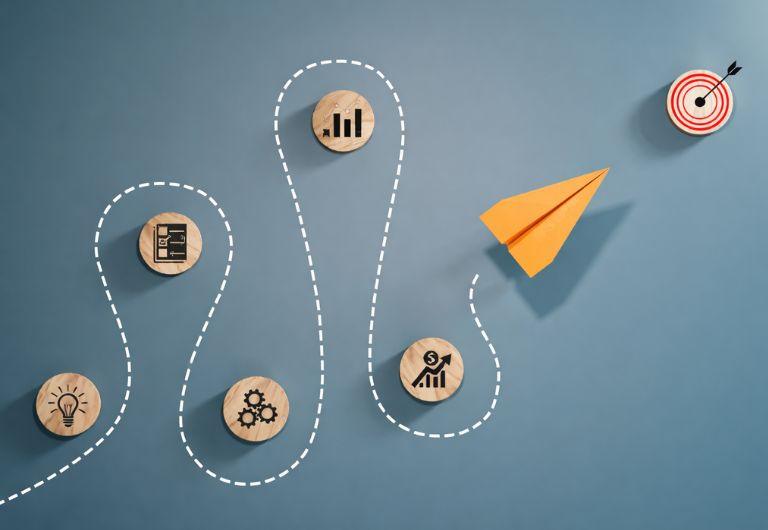
The 2026 Reality Check: What’s Changed and Why Your Old Plan Won’t Work
Dubai’s digital ecosystem isn’t slowing down. Consumer behavior is increasingly fragmented, with high mobile usage and fast decision-making cycles—especially in mid-ticket service categories. This makes experience quality a direct performance lever.
Page experience is not a design debate in 2026; it is a revenue debate. Google has repeatedly highlighted speed and user experience impact, and their page load research has shown that as load time increases, the probability of bounce rises significantly (for example, going from 1s to 3s increases bounce probability by 32%).
At the same time, personalization is shifting from “nice-to-have” to compounding advantage. McKinsey has reported personalization typically delivers 5–15% revenue lift and can improve ROI by 10–30%.
When you combine higher traffic costs, more fragmented journeys, and rising expectations, the only way to grow profitably is to build a roadmap that focuses on efficiency per dirham, not activity volume.
What a Digital Marketing Roadmap Actually Is
A digital marketing roadmap is a structured, execution-ready plan that translates business ambition into measurable actions. It connects where the business wants to go (revenue, growth, market share, retention) with how marketing will realistically get it there—step by step, quarter by quarter, and week by week.
In simple terms, it’s the bridge between strategy and execution. Strategy can be inspiring, but without a roadmap, it stays theoretical. A roadmap turns ideas into an operational system: it defines priorities, sequencing, ownership, timelines, and performance checkpoints so marketing becomes predictable rather than reactive.
At its core, a roadmap ties business goals to the complete growth engine, including:
Audience segments and intent clusters, so you’re not marketing to “everyone,” but targeting the exact customer groups that matter—based on purchase readiness and decision triggers. This is how brands stop wasting budget on irrelevant reach and start capturing demand that converts.
Funnel stages and conversion paths, ensuring every campaign supports a real buyer journey. That means knowing what content drives discovery, what proof drives validation, and what mechanisms push the final conversion—whether it’s a form submission, a phone call, or a WhatsApp conversation (especially important for Dubai).
Channel strategy and budget allocation, so you’re not choosing platforms emotionally or copying competitors blindly. Instead, you use channels with purpose: SEO and search ads to capture high-intent demand, social and video to build preference, and retargeting plus lifecycle marketing to increase conversion efficiency and lifetime value.
Content and creative production systems, because in 2026, growth comes from compounding creative—not isolated posts. A roadmap defines what content will be created, why it matters, where it will be used, how it connects to offers, and how it will be repurposed for scale across SEO, ads, Instagram, TikTok, YouTube, and email.
Tracking, reporting, and optimization cadence, which turns marketing into a performance loop rather than guesswork. A roadmap clarifies what gets measured (CPL, CPA, ROAS, conversion rate, pipeline value, lead quality), how often teams review performance, and what happens when results drop—so decisions are based on data, not opinions.
Team roles, tools, and governance, because execution fails when ownership is unclear. A roadmap establishes responsibility across teams—creative, paid, SEO, CRO, analytics, sales follow-up—and defines workflows, approvals, and timelines so projects move fast without chaos.
It’s also important to clarify what a roadmap is not. A roadmap is not a simple checklist of “do SEO, run ads, post on Instagram.” It isn’t a calendar of random content topics. It isn’t a one-time PDF that sits in a folder while teams launch campaigns on instinct. And it’s definitely not a rigid plan that cannot evolve when market dynamics change.
A true roadmap is a living system. It includes quarterly resets to realign with business targets, competitive changes, and seasonal shifts, and it runs on weekly learning loops where campaigns are tested, insights are extracted, and the plan improves continuously. In high-competition markets like Dubai, this agility is what separates brands that grow from brands that constantly restart.
Think of it like this: strategy tells you where to play and how to win. The roadmap tells you what to do next Monday—and what must be true by the end of the quarter to prove you’re actually winning. It doesn’t just set direction. It creates momentum, accountability, and measurable progress.
Step 1: Start With Revenue Targets and Business Outcomes
The biggest mistake we see in growth planning is starting with the channel. Teams decide they need SEO, paid ads, or social media content before they define what success looks like commercially. In 2026, this approach is costly because platforms are more automated, competition is sharper, and customer journeys are more fragmented. If your roadmap begins with “we need more traffic,” you risk building a system that produces activity—not profit.
A strong marketing roadmap strategy begins with outcomes such as quarterly revenue targets, number of qualified leads needed, cost per acquisition (CPA) thresholds, or booked appointment volumes. In Dubai, outcome-led planning is especially important because costs vary by industry and seasonality. Real estate campaigns behave differently during peak launch cycles. Hospitality shifts during tourism surges. Aesthetic and wellness brands see spikes around holidays and lifestyle seasons. Your roadmap must translate these realities into numbers you can execute against.
Once revenue targets are defined, reverse-engineering becomes straightforward. If your average deal value is AED 8,000 and your close rate is 20%, you need five qualified leads to close one deal. That means your roadmap shouldn’t aim for “1,000 leads.” It should aim for the right number of qualified leads at the right cost, with a system that increases conversion efficiency quarter after quarter.
This is why high-performing roadmaps connect marketing targets directly to sales targets. Marketing becomes accountable not for “reach,” but for pipeline contribution.
Step 2: Build an Audience and Intent Map That Matches Dubai Buyer Behavior
Dubai is not a single audience market. It’s a high-density mix of locals, GCC residents, global expats, and tourists—each with different buying triggers, trust requirements, and content preferences. That’s why segmentation can’t be limited to age and gender in 2026. It must be built on intent.
A mature digital marketing planning framework starts by dividing audiences into intent levels: people who are actively searching to buy, people who are comparing options, and people who are researching with future purchase potential. This intent structure becomes the foundation of your SEO strategy roadmap and paid advertising structure. Without intent mapping, marketing teams create content that attracts visitors who will never convert, or run ads that reach audiences too early to take action.
For example, a Dubai clinic targeting “skin treatment” customers must address very different needs across intent stages. Some users want “cost and packages.” Others want “before and after results.” Some want “how painful is it and how long recovery takes.” These are not just content angles—they are conversion triggers. Your roadmap needs to match each trigger to the right landing pages, creative messaging, and follow-up workflow.
The same applies for B2B. A CEO looking for “marketing agency Dubai” is high intent. A marketing manager searching “how to improve conversion rate” is problem intent. Your roadmap should treat them differently, or you will lose efficiency.
Step 3: Define a Funnel Architecture That Reflects How Customers Actually Convert in Dubai
In Dubai, many industries have shorter decision cycles than global markets—but higher trust thresholds. Customers move fast, but they validate hard. They don’t just click and buy. They scan reviews, compare Instagram profiles, check credibility, and often use WhatsApp as the final decision stage.
That means the funnel you need in 2026 is not linear. It behaves more like a loop: people discover you, validate you, take action, and then seek reinforcement that they made the right decision. If validation is weak, conversion drops even when traffic is high.
A roadmap built for growth includes a clear funnel blueprint that aligns content and channels to each stage. SEO and Search Ads usually dominate the bottom funnel because they capture high-intent demand. Social content and video often support validation and trust reinforcement. Retargeting accelerates decisions by placing proof content back in front of potential buyers. Lifecycle marketing drives repeat business, referrals, and reactivation.
One key insight for Dubai brands is that “conversion” is often not a form submission. It’s a conversation. The real funnel stage is when a lead enters WhatsApp or a call flow. Your roadmap must include SLA response times, lead handling scripts, and follow-up logic—because conversion is partly a marketing problem and partly a sales operations problem.
Step 4: Fix Conversion Foundations Before You Scale Traffic
The most expensive mistake in digital marketing is scaling traffic into a weak conversion system. If your landing pages, speed, trust signals, and lead flow are not optimized, increasing ad spend will simply increase leakage. In Dubai, where CPCs can be high in many industries, this becomes a direct profit killer.
Google’s research shows bounce probability increases significantly as load time grows; for example, going from 1 second to 3 seconds increases bounce probability by 32%. That’s not a small UX issue. It’s a budget multiplier—because you pay for the click and lose the user before conversion even becomes possible.
A conversion-ready roadmap focuses on customer experience and friction removal before scaling. That means every high-intent campaign should send users to a purpose-built landing page—not a generic homepage. It means your offer architecture must be clear, not overloaded with confusing options. It means your proof should be visible instantly: reviews, results, credentials, and trust indicators should appear above the fold.
It also means you need systems beyond the website. If leads are not nurtured quickly, the conversion rate collapses. In many Dubai sectors, response speed is a competitive advantage. If your average response time is 30 minutes and a competitor replies in 2 minutes, you lose. Your roadmap needs to treat follow-up workflows as part of the marketing engine, not separate operations.
Step 5: Build the Right Channel Mix Using a Full-Funnel Growth Model
Most brands approach channels like a shopping list: Google Ads, Instagram, SEO, influencers, email. In 2026, that approach fails because it ignores how channels work together. A proper roadmap builds a channel system that aligns to intent and funnel stages.
A Dubai-ready roadmap typically includes a “capture-create-expand” model. Capture channels bring in ready-to-buy demand through search and SEO. Create channels build demand through content, video, influencer collaborations, and thought leadership. Expand channels increase lifetime value through retention, upsell, and reactivation.
This is where many businesses waste budget: they spend heavily on demand creation while their demand capture is weak. Or they run expensive ads without lifecycle marketing, meaning every sale must be purchased from scratch again.
McKinsey has found personalization can deliver 5–15% revenue lift and improve marketing ROI by 10–30%, reinforcing why retention and customer experience strategy must be in the roadmap, not added later.
In practice, a roadmap should decide the channel mix based on the business model. A high-ticket service brand needs stronger proof content and sales enablement. An e-commerce brand needs a blend of shopping intent and retention systems. A B2B brand needs lead nurturing and trust-building content that converts into a pipeline.
Step 6: Build a Content System That Drives Trust and Conversion
In 2026, content is not a branding exercise. It is a conversion asset. The role of content inside digital marketing roadmaps is to reduce uncertainty and increase trust at scale. That means content must do work: answer objections, demonstrate proof, and accelerate decisions.
Dubai brands benefit strongly from content that validates: client results, before/after, behind-the-scenes credibility, and clear differentiation. Educational content builds authority, but proof content closes deals. Your roadmap must include both.
The most efficient content strategy in 2026 is modular production. Instead of producing separate assets for every channel, you create a “core narrative” and repurpose it across formats. A case study becomes a landing page, a short video, an Instagram carousel, a retargeting ad, and an email sequence. This lowers cost per asset while increasing consistency.
A strong monthly digital marketing roadmap checklist includes content that supports each funnel stage. If your roadmap produces only discovery content, you will earn attention but lose sales. If it produces only sales content, you will struggle to build demand and stay competitive long-term.
Step 7: Create KPI Architecture That Matches the Funnel and Revenue Model
Most teams measure what is easy—not what matters. The outcome is misleading reporting. A campaign can show a low cost-per-lead while producing low-quality leads. SEO can show rising traffic while conversions stay flat. Social media can show high engagement while revenue does not move.
A roadmap solves this with layered KPIs. At the top are commercial KPIs like revenue, CAC, margin, and LTV. Below that are funnel KPIs like click-through rate, conversion rate, cost per qualified lead, and lead-to-sale rate. Below that are channel KPIs like SEO rankings by intent cluster, ROAS by campaign type, or engagement quality metrics such as saves and shares.
The key is linking KPIs to decisions. If conversion rate drops, your roadmap should immediately assign ownership: is the landing page weak, offer unclear, audience wrong, or follow-up slow? If ROAS declines, the roadmap should guide actions: creative refresh, audience segmentation, retargeting improvements, or budget reallocation.
When KPIs are built properly, your roadmap becomes a control system, not a reporting document.
Step 8: Set Up Tracking and Analytics for Accurate Optimization
In 2026, attribution is more complex because privacy restrictions and platform automation make “last click” unreliable. But that does not mean measurement is impossible. It means measurement must be engineered.
Your roadmap must include analytics and reporting setup as a foundation step, not an afterthought. GA4 should be configured with meaningful conversion events, not just page views. UTM structures should be consistent across all campaigns. CRM integration is essential so you can measure lead quality, not just lead quantity. Call tracking and WhatsApp attribution methods must be implemented because many Dubai conversions happen through conversations, not forms.
The reason this matters is simple: you can’t optimize what you can’t measure. If your campaigns look profitable inside ad platforms but lose money after sales qualification, the roadmap must correct the feedback loop. The strongest agencies build closed-loop reporting so optimization decisions are made using revenue outcomes—not platform impressions.
Step 9: Execute With a 90-Day Roadmap Cycle and Weekly Optimization Rhythm
Roadmaps fail when they are written like long-term strategy documents and then ignored. Execution requires rhythm. For most Dubai businesses, a 90-day cycle is the most effective structure because it gives enough time to test, learn, and scale, while staying fast enough to react to market changes.
In the first month, the roadmap should prioritize foundations: conversion readiness, tracking setup, landing pages aligned with intent, and quick-win acquisition through high-intent campaigns. The goal is to stop leakage and create baseline stability. In the second month, the focus shifts to scaling: expanding what works, adding content depth through SEO clusters, and strengthening retargeting with proof content. The third month becomes optimization and compounding: creative testing, audience refinement, funnel improvements, and lifecycle marketing expansion.
This execution model prevents chaos. It avoids the most common growth trap in 2026: constantly switching tactics without gathering enough performance learning. Roadmap-led execution forces discipline, and discipline is what turns marketing into predictable growth.

Conclusion
Dubai brands don’t lose because they lack tools. They lose because they execute without order. Most businesses today have access to the same platforms, the same ad automation, the same creative formats, and the same analytics dashboards. The real difference is not technology—it’s sequencing. When marketing activities are launched in the wrong order, performance becomes unstable and expensive. Brands scale paid ads before fixing landing page conversion, publish content before understanding search intent, or chase “more leads” without building a system to qualify and close those leads. In Dubai’s highly competitive environment, where customer expectations are high and switching costs are low, even small execution gaps turn into lost revenue.
A strategy without sequencing creates waste, and waste becomes unsustainable in 2026. Waste shows up in multiple forms: paying for traffic that bounces due to slow load times or weak messaging, generating leads that never convert because response time is poor, and investing in awareness campaigns without a clear conversion pathway to move customers toward action. Many brands also over-invest in one channel because it worked temporarily, then suffer when performance drops due to algorithm shifts, seasonal changes, or rising competition. In reality, the market doesn’t punish effort—it punishes inefficiency, because inefficiency scales faster than success.
That’s why the best digital marketing roadmaps connect revenue goals to intent mapping, funnel design, conversion readiness, channel systems, content engines, KPI governance, analytics discipline, and a 90-day execution rhythm. When these pieces work together, marketing stops being a collection of isolated tactics and becomes a scalable operating system—one that improves with every cycle. It generates not only leads, but qualified pipeline, stronger close rates, repeat customers, and long-term market advantage. Instead of relying on luck or short-lived trends, brands build a predictable growth engine that performs consistently, adapts quickly, and compounds results quarter after quarter.
FAQ
1. What is a digital marketing roadmap?
A digital marketing roadmap is a strategic plan that outlines key initiatives, timelines, milestones, and priorities for digital marketing activities. It provides a clear path for achieving business objectives by aligning strategy, execution, and measurement over a defined period.
2. Why are digital marketing roadmaps important?
Roadmaps help teams stay focused and aligned. They clarify what needs to be done, when, and why—reducing ad-hoc efforts and inefficiencies. A well-defined roadmap improves accountability, resource allocation, and long-term planning.
3. What should be included in a digital marketing roadmap?
A typical roadmap includes business goals, target audiences, channel strategy, key campaigns, content plans, budgets, timelines, KPIs, and dependencies between activities. Flexibility is also important to adapt to performance insights and market changes.
4. How do digital marketing roadmaps support business growth?
Roadmaps ensure marketing efforts are sequenced logically and aligned with growth objectives. By prioritizing high-impact initiatives and tracking progress, businesses can scale successful tactics, reduce wasted spend, and maintain strategic consistency.
5. How often should a digital marketing roadmap be updated?
Digital marketing roadmaps should be reviewed quarterly and adjusted as needed. Changes in performance data, customer behavior, competitive activity, or platform updates may require roadmap refinements to stay effective.