
Digital Marketing Foundations & Definitions for Businesses in 2025

Introduction
In 2025, digital marketing is no longer a discipline reserved for specialists; it has become the economic backbone of modern business growth. Companies in Dubai, from family-owned enterprises to global multinationals, increasingly rely on structured digital marketing frameworks, online presence development, omnichannel activation, and performance-driven decision making to stay competitive in a region where digital adoption among consumers exceeds 99 percent internet penetration.
Yet despite this maturity, many businesses still struggle with definitions. What exactly constitutes digital marketing foundations? What differentiates a channel from a strategy? And how do business owners interpret digital marketing terminology without getting lost in complexity?
This article answers those questions through a clear and authoritative breakdown of the Digital marketing foundations & definitions required for any business operating in 2025. It provides a comprehensive glossary, strategic frameworks, and practical explanations that help senior leaders, marketing managers, and entrepreneurs align their teams around shared understanding — without oversimplifying the discipline.
The Evolving Definition of Digital Marketing in 2025
Digital marketing, in its 2025 form, can be defined as “a data-driven, multi-channel approach that uses digital platforms, content, technology, and customer insights to attract, convert, and retain audiences across the digital customer journey.”
While this definition sounds simple, the way it’s applied today has changed dramatically. In 2025, digital marketing is shaped far more by orchestration than by execution. The goal is no longer just to run campaigns; it’s to build seamless, measurable, omnichannel ecosystems where SEO, SEM, content marketing, email automation, PPC, and social media all work together to create predictable acquisition and retention.
Three major shifts define what digital marketing means today:
- From channel-based to customer-journey-based marketing.
Businesses now design funnels around how people behave, not the platforms they use. - From intuition to data-driven marketing.
Analytics, CRO, attribution modeling, and segmentation guide the decisions that used to rely on gut feeling. - From broadcasting to relevance.
AI-powered personalization now determines whether content succeeds or disappears into the noise.
Understanding these shifts is the starting point for any business looking to apply digital marketing basics in a rapidly evolving environment.
Why Foundational Understanding Matters for 2025-Ready Businesses
The UAE market is one of the world’s most digitally accelerated. According to regional insights from Google MENA and PwC:
- Over 70% of purchase decisions in the UAE start online, even when the final purchase happens in-store.
- Mobile dominates, with some industries seeing 80–90% of traffic coming from mobile devices.
- Businesses that activate three or more digital channels consistently see higher customer lifetime value.
These statistics reinforce a simple truth: digital literacy is now a competitive advantage.
Leaders who understand the foundational elements—definitions, frameworks, customer acquisition channels, and digital analytics terms—tend to create stronger internal alignment, build more effective budgeting models, and make faster, more confident decisions. On the other hand, companies lacking this literacy often overspend on short-term campaigns without building the long-term engines required for sustainable growth. A shared language is the starting point for strategic clarity.
Digital Marketing Foundations: The Six Core Pillars
To understand digital marketing foundations, businesses first need clarity on its structural components. In 2025, digital marketing can be grouped into six interconnected pillars that work together to drive sustainable growth.
1. Online Presence Development
This pillar covers everything that shapes a brand’s digital identity—its website, landing pages, mobile experience, SEO architecture, brand messaging, listings, and social presence. A strong foundation is essential; without it, no long-term marketing activation can perform. In the UAE specifically, brands with mobile-optimized pages and Arabic content often achieve up to 40 percent higher search visibility.
2. Traffic & Customer Acquisition Channels
These are the channels responsible for bringing new customers into your business. They include SEO, SEM and PPC advertising, social media marketing, influencer partnerships, content distribution, email marketing and automated workflows, paid social and remarketing, and marketplaces such as Amazon.ae and Noon.
A common misconception is mixing up channels and strategies: a channel is where communication happens, while a strategy is how results are achieved. Instagram is a channel. Retargeting is a strategy. This distinction plays a key role in digital marketing terminology throughout this article.
3. Content Marketing & Thought Leadership
Content remains foundational—not because of how much a brand publishes, but because of how relevant and strategic that content is. Strong content educates customers, clarifies value propositions, supports SEO, strengthens brand authority, and guides users through the marketing funnel. While AI speeds up production in 2025, human guidance ensures originality and differentiation.
4. Conversion Optimization (CRO)
CRO focuses on turning traffic into measurable business outcomes. It involves landing page optimization, A/B testing, funnel diagnostics, behavioral analytics, and user experience improvements. High-growth startups in Dubai invest heavily in CRO because even a one percent lift in conversion rate can create significant revenue gains.
5. Retention Marketing & Automation
Retention now carries as much importance as acquisition. Effective retention strategies include email nurturing sequences, WhatsApp automation, CRM-driven personalization, loyalty frameworks, and re-engagement workflows. These systems help turn first-time buyers into long-term, returning customers.
6. Digital Analytics & Insight Systems
Analytics act as the central nervous system of modern marketing. This includes attribution models, dashboarding, performance marketing concepts, KPI alignment, and predictive analytics. Businesses that analyze their data consistently outperform those relying on intuition or sporadic reporting.
DIGITAL MARKETING FOUNDATIONS & DEFINITIONS : A Strategic Guide
Digital Marketing Strategy Fundamentals
This section offers the clearest and most updated explanation of the foundational concepts that business leaders need when seeking practical clarity. A digital marketing strategy defines how a business uses digital channels to reach its objectives. It brings together market understanding, audience segmentation, value proposition design, acquisition frameworks, channel prioritization, budget allocation, and measurement systems. Without a defined strategy, individual channels become isolated activities rather than a unified ecosystem working toward shared goals.
Digital Customer Journey
The modern customer journey is multi-touch and nonlinear. It typically moves through stages such as awareness, consideration, engagement, conversion, retention, and advocacy. Every piece of digital content—whether it’s SEO-driven articles or social ads—must clearly map to a stage in this journey to ensure that customers feel guided rather than pushed.
Audience Targeting & Segmentation
Audience segmentation now extends far beyond traditional demographics. Today, it blends behavioral signals, purchase intent, psychographics, past engagement, and real-time user data. In a diverse market like Dubai, the precision of your segmentation directly influences ad performance and overall marketing efficiency.
Inbound vs Outbound Marketing
Inbound marketing attracts audiences through value-driven elements such as SEO, content, and webinars. Outbound marketing, on the other hand, pushes messages to audiences through ads and cold outreach. Modern success requires a balanced mix of both, ensuring that brands are discoverable while also proactively reaching potential customers.
Brand Visibility Online
Brand visibility reflects how easily potential customers can find, recognize, and trust your brand across digital channels. It is strengthened through search engine visibility, consistent messaging, reputable backlinks, high-quality content, and social proof such as testimonials. Strong visibility forms the foundation of long-term, compounding ROI and ensures that marketing investments grow in value over time.
Marketing Pyramid
To simplify the complexity of modern digital marketing, businesses can rely on the Digital Marketing Pyramid — a strategic model built to show how strong foundations support scalable, predictable growth. The pyramid helps leaders visualize where their efforts should begin, how each layer builds on the previous one, and why skipping steps often leads to inconsistent performance.
Level 1: Infrastructure & Presence (Base Layer)
This foundational layer includes your website quality, SEO architecture, mobile optimization, brand assets, and analytics setup. Think of it as the digital groundwork that every strategy depends on. If this layer is weak, everything above it becomes unstable. In practice, this means ensuring your website loads fast, your content is structured for search, your brand identity is consistent, and your analytics tools are correctly configured. Without this foundation, scaling becomes guesswork rather than strategy.
Level 2: Traffic & Acquisition (Middle Layer)
Once the foundation is in place, the next step is driving qualified traffic. This layer includes performance campaigns, organic search, social channels, partnerships, and influencer collaborations. These are the engines that bring new audiences into your ecosystem. When executed well, they create a steady, predictable flow of potential customers. But these acquisition channels only perform at their best when the base layer is strong enough to convert and retain the traffic you’re investing in.
Level 3: Conversion, Automation & Retention (Upper Layer)
At this stage, the goal shifts from simply attracting people to nurturing and converting them. This layer involves CRO, remarketing loops, CRM automation, and loyalty programs — the systems that turn attention into revenue and first-time buyers into repeat customers. Businesses that excel here typically leverage behavioral insights, personalized journeys, and automated follow-ups to maintain engagement. This is where efficiency and profitability begin to compound.
Level 4: Insights, Optimization & Expansion (Peak Layer)
At the peak of the pyramid sits attribution modeling, predictive analytics, and innovation projects. This layer is about refinement, intelligence, and scale. Once the earlier layers are stable, businesses can confidently explore new markets, test advanced tools, and optimize their performance at a deeper level. Data becomes not just a reporting tool, but a strategic advantage that informs every future move.
This pyramid highlights a core principle: businesses grow sustainably only when their foundational layers are strong enough to support the strategies above them. When companies try to accelerate growth without solid infrastructure or without understanding their acquisition and retention systems, results become inconsistent and expensive. But when each layer is built deliberately and in the right sequence, growth feels natural, stable, and scalable.
Case Studies
Case Study 1: A B2B Construction Supplier Increasing Lead Quality by 65 percent
A UAE-based construction supplier was struggling with high-cost PPC campaigns and a steady flow of low-quality leads. After stepping back and rebuilding their digital foundations — focusing on SEO essentials, website CRO improvements, and more targeted inbound content — the business began to see measurable transformation. They achieved a 40 percent drop in acquisition costs, a 65 percent increase in qualified B2B leads, and a three-fold boost in organic visibility.
Insight:
Strong foundations reduce a company’s reliance on expensive paid channels and allow performance to scale more efficiently.
Case Study 2: A Dubai Retail Brand Adopting Omnichannel Marketing
A regional fashion retailer shifted to a true omnichannel approach by implementing unified data tracking, remarketing loops, and automated WhatsApp retention campaigns. Within just 90 days, they recorded a 23 percent increase in repeat purchases and a 47 percent rise in in-store conversions driven by digital ads.
Insight:
Omnichannel marketing connects online and offline behavior — a critical success factor in Dubai’s hybrid retail landscape.
Case Study 3: A Startup Building Digital Literacy Early
A fintech startup made an early investment in internal training, ensuring the team fully understood digital marketing terminology and frameworks before launching any major campaigns. This foundational literacy led to faster decision cycles, smoother collaboration with agencies, and stronger confidence from investors.
Insight:
Shared understanding accelerates execution and equips young companies to scale with clarity and alignment.
The Four Strategic Layers of a Modern Digital Marketing Strategy
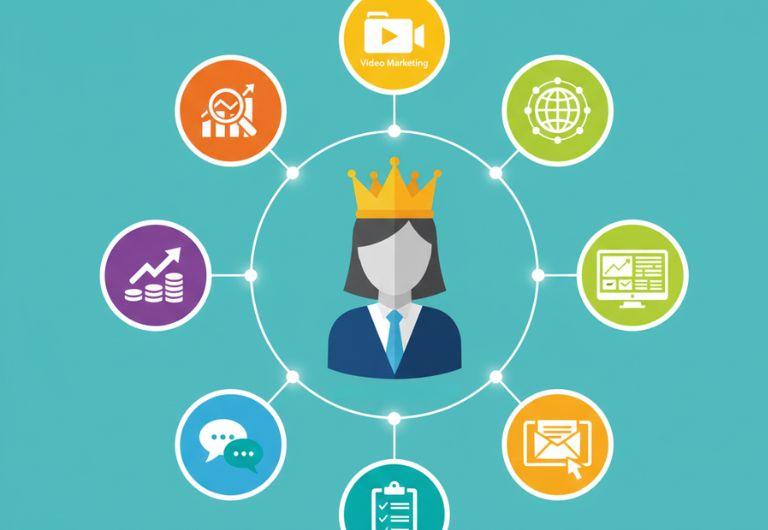
A modern strategy cannot rely on tactics alone; it must address four interconnected layers that guide direction, execution, and long-term performance.
1. Market & Audience Intelligence
Every effective strategy begins with understanding the market and the people within it. Research-driven insight shapes how businesses segment audiences, craft messaging, and prioritize channels. When companies invest in this layer, they gain clarity on who their customers are, what they value, and how they behave online. This intelligence becomes the compass that guides every other marketing decision.
2. Channel Ecosystem Design
Instead of trying to maximize every available channel, high-performing businesses design an ecosystem built around relevance. The right channels are selected based on user intent, cost efficiency, customer behavior, and alignment with each stage of the funnel. This approach prevents brands from spreading themselves too thin and ensures that every channel serves a clear purpose in the wider strategy. In a competitive market like the UAE, focus often outperforms volume.
3. Measurement Framework & KPIs
Digital success requires clear measurement systems, not guesswork. A strong framework defines both leading indicators — such as CTR, impressions, and visits — and lagging indicators like leads, sales, and customer lifetime value. When businesses understand these metrics, they gain visibility into what’s working, what’s not, and where budgets should shift. This creates a transparent performance environment where teams can make informed decisions rather than reactive ones.
4. Continuous Optimization
The highest-performing businesses in Dubai treat digital marketing as a continuous learning cycle. They run weekly reviews that examine campaign results, identify funnel gaps, explore CRO opportunities, assess messaging performance, and evaluate improvements in the customer journey. This rhythm turns digital marketing from a set of isolated activities into a dynamic optimization system — one that grows smarter, more efficient, and more profitable over time.
A strategy built on these four layers becomes more than a plan; it evolves into a learning system that adapts, improves, and compounds results month after month.
Three Foundational Steps for Small Businesses and Startups
For small businesses, startups, and teams just beginning their digital journey, the most effective approach is to focus on a few essentials rather than trying to master everything at once. These three foundational steps create stability, build momentum, and ensure that every marketing effort contributes to long-term growth.
Step 1: Strengthen Your Online Presence
Your online presence is the first impression your audience experiences, and it needs to be strong from the start. A website with solid SEO fundamentals, fast loading speed, mobile responsiveness, and clear messaging is non-negotiable. This is where customers form their initial perception of your credibility. When the basics are done well, every other marketing activity — from advertising to social content — performs better and becomes more cost-efficient.
Step 2: Build a Multi-Channel Acquisition Engine
Relying on a single source of traffic is one of the biggest risks for early-stage businesses. Instead, aim to create a balanced mix of organic, paid, and social channels. This diversification protects your business from sudden platform changes and gives you multiple pathways for growth. Even a light but consistent presence across search, social media, and targeted campaigns can create a steady, predictable stream of new customers.
Step 3: Implement Retention and Automation
Profitability doesn’t come from the first purchase — it comes from what happens after. Retention systems such as email nurturing, WhatsApp automation, and CRM-based workflows help maintain engagement long after the initial transaction. These tools support customers through their journey, remind them of your value, and increase the likelihood of repeat purchases. For small businesses, improving customer lifetime value is often the difference between inconsistent revenue and sustainable growth.
Conclusion
In 2025, digital marketing is defined by clarity, structure, and data-driven execution. Companies in Dubai, one of the world’s most digitally progressive markets, must build strong foundations to stay competitive and grow sustainably. Understanding digital marketing foundation & definition is not just an academic exercise
It directly influences decision-making, budget allocation, team alignment, and long-term business performance. Whether your organization is a startup learning digital marketing concepts for the first time, an SME looking for a practical digital marketing foundations guide, or a mature enterprise refining its strategic fundamentals, one truth remains the same: digital mastery begins with definition, and growth begins with understanding. Businesses that invest in foundational knowledge consistently outperform competitors, reduce marketing waste, improve customer acquisition efficiency, and build resilient digital ecosystems prepared for 2025 and beyond.
FAQ
1. What is digital marketing?
Digital marketing is the practice of promoting products, services, or brands using online channels such as websites, search engines, social media, email, and mobile apps. It enables businesses to reach targeted audiences, track performance in real time, and optimize campaigns based on data-driven insights.
2. Why is digital marketing important for modern businesses?
Digital marketing allows businesses to reach customers where they spend most of their time—online. It offers cost-effective targeting, measurable results, global reach, and the ability to personalize messaging, making it essential for brand visibility, customer acquisition, and growth in today’s digital-first economy.
3. What are the core components of digital marketing?
The main components of digital marketing include:
- Search Engine Optimization (SEO).
- Pay-Per-Click Advertising (PPC).
- Content Marketing.
- Social Media Marketing.
- Email Marketing.
- Affiliate and Influencer Marketing.
- Analytics and Conversion Optimization.
Together, these channels create an integrated digital presence.
4. How does digital marketing differ from traditional marketing?
Digital marketing focuses on online platforms and allows real-time interaction, precise targeting, and measurable performance. Traditional marketing relies on offline channels like print, TV, and radio, where tracking results and personalization are more limited.
5. What skills are essential for understanding digital marketing fundamentals?
Key skills include basic marketing strategy, data analysis, content creation, SEO knowledge, social media management, and understanding customer behavior. Strong communication and adaptability are also important, as digital platforms and algorithms constantly evolve.