
Digital Marketing Ecosystem Overview: Understanding the Systems Behind Digital Success
Introduction
For many organizations, digital marketing still operates as a collection of disconnected activities—SEO in one corner, paid media in another, social content managed separately, and CRM data living in isolation. This fragmented approach may generate short-term wins, but it rarely produces sustained, compounding growth. In contrast, the brands that consistently outperform their competitors operate within a digital marketing ecosystem—a structured, interconnected system designed to align strategy, technology, data, and execution around measurable business outcomes.
This digital marketing ecosystem overview explores how modern brands move beyond channels and tactics to build integrated systems that scale. For Dubai-based businesses operating in one of the world’s most competitive and digitally advanced markets, understanding this ecosystem is no longer optional. It is foundational to relevance, efficiency, and long-term value creation.
As management thinkers often note, competitive advantage today is less about doing one thing better and more about orchestrating many capabilities together. Digital marketing success, in this sense, is not achieved through isolated excellence but through architectural coherence.
What Is a Digital Marketing Ecosystem?
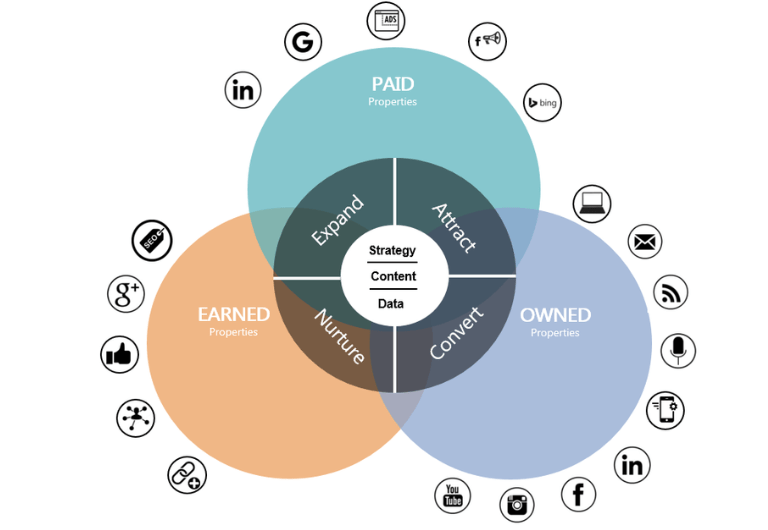
A digital marketing ecosystem is the complete environment in which a brand’s digital growth activities operate. It includes channels, platforms, data sources, technologies, workflows, and decision frameworks, all designed to function as a unified system rather than as independent parts.
Unlike traditional digital marketing models that focus on channel performance in silos, a modern digital marketing ecosystem emphasizes interdependence. Each component—paid media, owned content, CRM, analytics, automation, and experience design—feeds into and strengthens the others. The objective is not traffic or visibility alone, but predictable, scalable growth across the full customer lifecycle.
From a strategic perspective, the ecosystem answers three fundamental questions:
- How do customers move from awareness to loyalty across digital touchpoints?
- How does data flow across platforms to inform decisions in real time?
- How do marketing efforts align with broader business objectives such as revenue, retention, and lifetime value?
This systemic view is what differentiates a digital marketing ecosystem overview from a channel checklist.
Why Ecosystem Thinking Matters More Than Ever
A More Demanding Digital Market Reality
Digital markets have matured, and the rules that once fueled rapid growth no longer apply. Customer acquisition costs have risen steadily across most industries as competition intensifies and audiences become harder to reach. At the same time, privacy regulations and platform-level changes have reduced signal clarity, making it more difficult to rely on granular targeting or third-party data.
Platform algorithms have also evolved. Today, they reward relevance, quality, and experience far more than sheer media spend. Brands can no longer buy their way to sustainable visibility. In this environment, disconnected tactics quickly hit diminishing returns. Campaigns may perform in isolation, but the system as a whole struggles to scale or adapt.
Why Disconnected Tactics Fail at Scale
When channels operate independently, inefficiencies compound. Messaging becomes inconsistent, insights remain trapped in silos, and teams repeatedly solve the same problems without shared learning. Over time, performance plateaus not because the market is saturated, but because the system lacks cohesion.
As complexity increases, these gaps become more expensive. Every additional channel adds friction instead of leverage. What once felt agile starts to feel fragile, with growth dependent on constant intervention rather than durable structure.
The Role of an Integrated Digital Marketing Ecosystem
An integrated digital marketing ecosystem directly addresses these challenges by replacing fragmentation with intentional design. Instead of optimizing channels in isolation, the ecosystem aligns them around shared data, shared objectives, and a unified customer journey.
This approach allows brands to respond to market pressures with structure rather than reaction. Integration does not mean uniformity. It means coordination, clarity of roles, and continuous feedback across the system.
Consistency Across Touchpoints Builds Trust
In an integrated ecosystem, customers experience a coherent narrative across search, social, email, and web. Messaging reinforces itself rather than competing for attention. Each interaction feels connected to the last, building familiarity, trust, and recall over time.
Consistency does not come from repeating the same message everywhere. It comes from aligning intent, tone, and value across the journey. When customers feel understood rather than targeted, conversion becomes a natural outcome instead of a forced one.
Efficiency Through Shared Intelligence
One of the most powerful advantages of an ecosystem approach is shared intelligence. Insights generated in one channel inform optimization across others. Search behavior shapes content strategy. CRM data improves paid media targeting. On-site engagement informs email sequencing.
This flow of intelligence reduces waste, eliminates duplication, and shortens learning cycles. Teams stop guessing and start building on proven signals. The result is higher performance with fewer resources, not because teams work harder, but because the system works smarter.
Scalability Designed Into the System
Scalability is no longer about adding budget or headcount. In a mature digital market, true scale comes from systems built around repeatable processes and reliable data. An ecosystem designed for growth can expand reach, personalization, and impact without linear increases in cost or complexity.
This kind of scalability is resilient. It allows brands to grow even as platforms change, regulations tighten, and customer expectations rise. The system adapts because it was designed to do so.
Structure as the New Growth Lever
Research from global consulting firms consistently shows that organizations with integrated marketing systems outperform their peers in both revenue growth and customer retention. The pattern is clear across industries and regions.
The implication is no longer subtle. In today’s digital environment, structure matters more than spend. Brands that invest in architecture, alignment, and ecosystem thinking gain an advantage that competitors cannot easily replicate. Growth becomes not just possible, but sustainable.
Core Components of a Digital Marketing Ecosystem
At its foundation, a digital marketing ecosystem is composed of interrelated components that work together to support the customer journey and business objectives.
Strategic Layer: Objectives and Architecture
Every effective ecosystem begins with clarity of intent. This includes well-defined business goals, target audiences, value propositions, and success metrics. Without this strategic layer, even the most advanced marketing technology ecosystem becomes an expensive set of tools without direction.
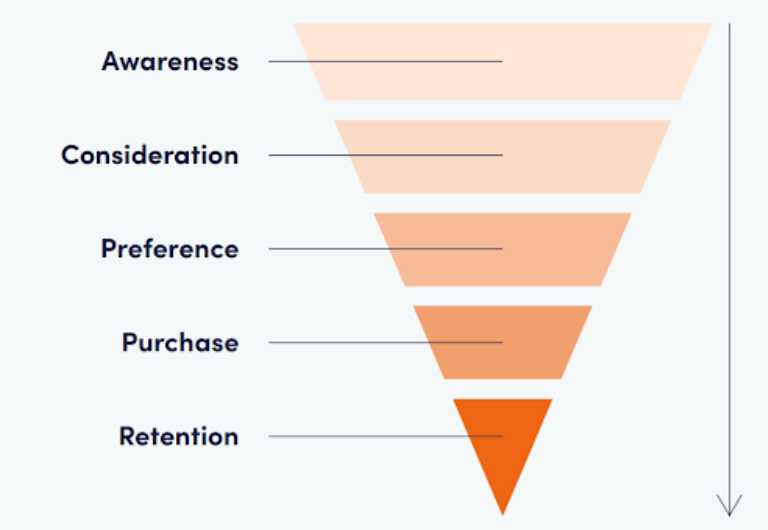
Here, brands define their digital marketing ecosystem strategy, mapping how different channels and platforms contribute to awareness, consideration, conversion, and retention. This layer establishes the rules by which the system operates.
Channel Layer: Integrated, Not Isolated
Channels remain critical, but within an ecosystem they function as connected nodes rather than standalone engines. Search, social, display, content, and email are orchestrated to support each other.
For example, paid media insights inform content strategy, while organic search data shapes conversion optimization. This is the essence of an integrated digital marketing ecosystem—channels aligned around shared objectives and data.
Technology Layer: The Marketing Technology Ecosystem
The marketing technology ecosystem—often referred to as the MarTech stack—enables execution, automation, and measurement. This includes CRM systems, analytics platforms, marketing automation tools, data platforms, and experience management technologies.
What distinguishes high-performing organizations is not the number of tools they use, but how well those tools are integrated. Data interoperability and workflow alignment are more valuable than feature depth.
Data and Intelligence Layer
Data is the connective tissue of the digital marketing ecosystem. Customer behavior, campaign performance, and lifecycle signals must be captured, unified, and translated into insight.
Advanced ecosystems prioritize first-party data, robust analytics, and attribution modeling to understand not just what happened, but why it happened. This enables continuous optimization across the full-funnel digital marketing ecosystem.
How a Digital Marketing Ecosystem Works in Practice
Understanding how a digital marketing ecosystem works requires moving from theory to application. In practice, the ecosystem operates as a feedback loop rather than a linear funnel.
A prospect may discover a brand through search, engage with content on social media, revisit via retargeting, convert through a personalized landing experience, and then enter a lifecycle marketing flow driven by CRM and automation. Each interaction generates data that refines future engagement.
Crucially, decisions are made at the system level. Rather than optimizing a single campaign in isolation, marketers evaluate how changes affect downstream metrics such as conversion quality, retention, and lifetime value.
This systems-based approach enables brands to respond intelligently to market shifts, platform changes, and evolving customer expectations.
Full-Funnel Perspective: Beyond Acquisition
One of the most common failures in digital marketing is over-investment in acquisition without sufficient attention to post-conversion value. A mature digital marketing ecosystem corrects this imbalance by adopting a full-funnel perspective.
Awareness and consideration are important, but they are only the beginning. Retention, expansion, and advocacy are where profitability is often realized. By integrating lifecycle marketing, personalization, and customer experience management, the ecosystem ensures that growth compounds over time.
This approach is particularly relevant in competitive markets like Dubai, where customer expectations are high and switching costs are low. Brands that treat marketing as an end-to-end system are better positioned to sustain growth.
Case Insight: Ecosystem Thinking in Action
Consider a regional retail brand expanding its digital presence across the GCC. Initially, the company invested heavily in paid media to drive traffic, but struggled with rising costs and inconsistent returns.
By re-architecting its digital marketing ecosystem, the brand aligned content, paid media, CRM, and analytics around shared customer segments and lifecycle stages. Paid campaigns were optimized not just for clicks, but for downstream conversion and repeat purchase. Email and automation flows were informed by behavioral data captured across channels.
Within twelve months, the brand reduced acquisition costs while increasing customer lifetime value—a result of system-level optimization rather than incremental channel tweaks.
This example illustrates a broader truth: sustainable digital success is rarely the result of a single tactic. It emerges from coherent architecture.
Digital Marketing Ecosystem vs. Digital Marketing Channels
Channels as Execution, Not Strategy
A common point of confusion in modern marketing conversations lies in the distinction between a digital marketing ecosystem and digital marketing channels. Channels are executional vehicles. They include search engines, social platforms, email, marketplaces, and media networks. Each channel serves a specific function and can be optimized for performance, but none of them operate in isolation from the customer’s perspective.
From the outside, customers do not experience “channels.” They experience a brand. Every interaction contributes to a cumulative perception, whether that interaction happens on a search result, a social feed, or an email inbox. Treating channels as standalone levers often leads to disjointed experiences, even when individual metrics look strong.
The Ecosystem as the Growth Operating System
The digital marketing ecosystem, by contrast, functions as the operating system that governs how channels interact. It defines how insights flow between teams, how responsibilities transition from one touchpoint to the next, and how value compounds over time rather than resetting with each campaign.
While channels answer the question “where do we show up,” the ecosystem answers “how does this all work together.” It provides structure, context, and continuity. In a well-designed ecosystem, each channel reinforces the others, creating momentum instead of friction and learning instead of noise.
The Cost of Channel-Only Optimization
When organizations focus exclusively on channels, they tend to default to short-term optimization. Budgets shift rapidly based on last week’s performance, tactics change faster than meaningful learning can accumulate, and teams chase incremental gains that look good in isolation but do little to strengthen the system as a whole.
Over time, this approach creates volatility. Performance spikes are followed by plateaus, and growth becomes increasingly expensive to maintain. In contrast, an ecosystem-level view prioritizes insight accumulation, strategic alignment, and adaptability. It builds learning loops that improve performance over time rather than forcing teams to start from scratch every quarter.
Why This Distinction Matters for Agencies and Brands
This distinction is especially critical for agencies advising growth-oriented brands. Clients rarely suffer from a lack of channels. Most already have access to more platforms than they can effectively manage. What they lack is a coherent system that makes those channels work harder, smarter, and more cohesively together.
Agencies that lead with ecosystem thinking help clients move beyond tactical overload. They shift the conversation from adding more activity to improving structure, alignment, and long-term effectiveness. In doing so, they create value that extends far beyond individual campaigns and builds partnerships rooted in sustainable growth.
Measurement, Attribution, and Accountability
Measurement is where many digital marketing ecosystems either mature or quietly fail. Traditional last-click attribution models simplify reporting, but they obscure the true contribution of different touchpoints across the journey. By over-crediting the final interaction, these models encourage overinvestment in closing tactics and underinvestment in education, trust-building, and brand development.
Advanced digital marketing ecosystems take a more nuanced approach. They employ multi-touch attribution, cohort analysis, and incrementality testing to understand how value is actually created over time. These methods do not promise perfect measurement. Instead, they aim for decision-grade insight that improves resource allocation and strategic confidence.
As Peter Drucker famously observed, “What gets measured gets managed.” In a digital context, what gets measured correctly gets scaled. Measurement is not about reporting performance after the fact. It is about shaping behavior, investment decisions, and long-term priorities.
The Role of AI and Automation in Modern Ecosystems
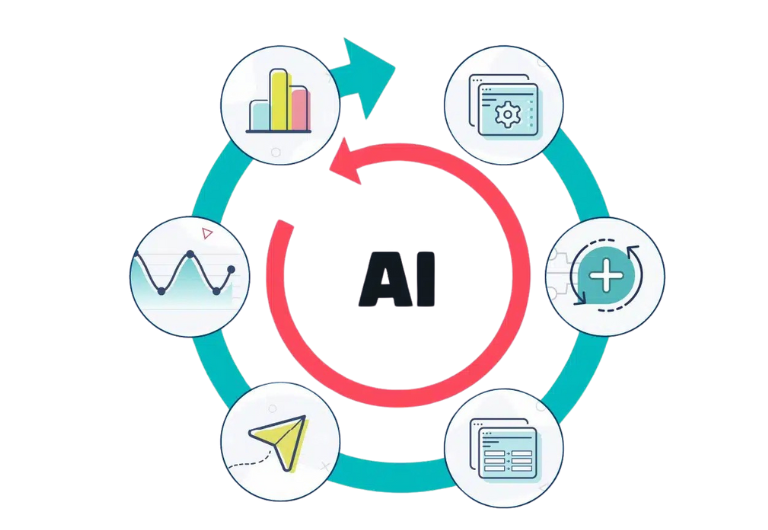
Artificial intelligence and automation are becoming central components of modern digital marketing ecosystems. From predictive analytics and audience modeling to dynamic content personalization and bid optimization, AI enhances the system’s ability to learn, adapt, and respond at speed.
However, technology alone does not create competitive advantage. Organizations that succeed with AI-driven marketing systems are those that embed these capabilities within a clear strategic framework and a disciplined operating model. They know what problems they are solving and what outcomes they are optimizing for before deploying automation.
Automation amplifies intent. When intent is clear, automation accelerates value creation. When intent is vague or misaligned, it simply accelerates inefficiency at scale. The difference is not the toolset. It is the clarity of the system guiding it.
Building a Digital Marketing Ecosystem: A Strategic Framework
For organizations seeking to build or evolve their digital marketing ecosystem, the process typically unfolds in deliberate stages rather than quick fixes.
The first stage is strategic alignment. Marketing objectives must clearly support broader business goals, ensuring that growth efforts are anchored in value creation rather than activity. The second stage is architectural design, where channels, platforms, and data flows are mapped across the customer journey with defined roles and handoffs.
The third stage is technology integration. Systems are connected not for the sake of completeness, but to enable insight, orchestration, and execution across the ecosystem. Finally, governance and measurement establish accountability, learning loops, and continuous improvement, ensuring the system evolves rather than stagnates.
While each organization’s path is unique, the underlying principle remains consistent. Over time, systems outperform tactics. Brands that invest in structure, alignment, and ecosystem thinking build an advantage that compounds and endures.
Conclusion: Digital Success Is a Systemic Outcome
This digital marketing ecosystem overview demonstrates that modern digital success is not the result of isolated brilliance, viral campaigns, or platform hacks. It is the outcome of disciplined system design, integrated execution, and continuous learning.
For Dubai-based brands navigating global competition and sophisticated consumers, the question is no longer whether to adopt ecosystem thinking, but how quickly and effectively it can be implemented.
Digital marketing, when understood as an ecosystem, becomes more predictable, more scalable, and more valuable. It transforms marketing from a cost center into a growth engine—one system at a time.
FAQ
1. What is a digital marketing ecosystem?
A digital marketing ecosystem is the complete framework of digital channels, platforms, tools, and data systems that work together to attract, engage, convert, and retain customers. It connects marketing activities across the entire customer journey, from awareness to loyalty.
2. What are the key elements of a digital marketing ecosystem?
The main elements include owned channels (websites, blogs, email), paid channels (search ads, social ads, display ads), earned channels (reviews, referrals, social shares), and supporting technologies such as analytics tools, CRM systems, and marketing automation platforms.
3. How do digital marketing channels interact within an ecosystem?
Channels within a digital marketing ecosystem support and reinforce each other. For example, content marketing supports SEO, paid ads drive traffic to landing pages, email nurtures leads, and analytics tracks performance. Integration ensures consistent messaging and smoother customer experiences.
4. Why is a digital marketing ecosystem important for businesses?
A well-structured ecosystem improves efficiency, consistency, and scalability. It helps businesses understand customer behavior, optimize touchpoints, reduce marketing silos, and make data-driven decisions that lead to higher conversions and stronger brand growth.
5. How can businesses build or improve their digital marketing ecosystem?
Businesses can strengthen their ecosystem by mapping the customer journey, defining clear roles for each channel, integrating data and tools, aligning content and messaging, and continuously optimizing based on performance insights and changing customer behavior.