
Channel Prioritization Logic: How to Rank Marketing Channels Effectively

Introduction
Dubai is one of the most opportunity-rich marketing environments in the world—and also one of the easiest places to waste budget. The city’s digital economy moves fast, consumer expectations are premium, and competition is constant across nearly every category: ecommerce, real estate, clinics, education, hospitality, B2B services, fintech, and luxury retail. In that environment, the brands that grow consistently are not the ones running the most campaigns. They’re the ones making the best decisions about where to focus first, what to scale next, and what to stop doing even when it feels uncomfortable.
That decision-making engine is what we call channel prioritization logic.
At its core, channel prioritization logic is a structured way to rank channels based on business outcomes rather than preferences, trends, or internal politics. It turns vague thinking like “we should be everywhere” into a measurable marketing channel prioritization plan where every channel has a role, a KPI logic, and a reason to exist. It also prevents the most common trap in modern marketing: spreading effort across too many channels and accidentally lowering performance across all of them.
In this guide, we’ll show you how to rank marketing channels effectively using a premium, agency-grade approach designed for Dubai-based businesses. You’ll learn how to apply a channel prioritization framework, build a repeatable channel prioritization model, evaluate channels using data, and connect your channel choices directly to CAC, LTV, ROAS, payback period, and incremental lift. Most importantly, you’ll see how the strongest brands use prioritization to build a scalable omnichannel marketing strategy without losing focus or efficiency.
Why Channel Prioritization Logic Has Become a Growth Advantage in 2026
Marketing used to be simpler. You picked a few channels, ran campaigns, and growth followed if your product was good enough. Today, customer acquisition channels are fragmented, audiences are more skeptical, and platforms compete aggressively for the same attention. That change makes channel selection a strategic advantage. It also makes it dangerous to assume that what worked last year will work next quarter, especially in Dubai where consumer demand is dynamic and trends move quickly.
When businesses don’t use a structured channel prioritization strategy, they often default to what feels productive. They boost posts, launch search ads, run influencer collaborations, start SEO “sometime,” experiment with WhatsApp campaigns, and create a content calendar without a clear measurement architecture. The result is heavy activity but weak clarity. Teams become busy, yet leadership cannot confidently answer one question: Which channel is actually driving growth and which channel is simply present?
Channel prioritization logic solves that problem by forcing every marketing decision into a measurable framework. It makes teams treat marketing as a portfolio of bets rather than a checklist of tasks. It also helps leaders see the difference between channels that capture existing demand and channels that create new demand—which is the difference between short-term conversions and long-term growth.
What Is Channel Prioritization Logic
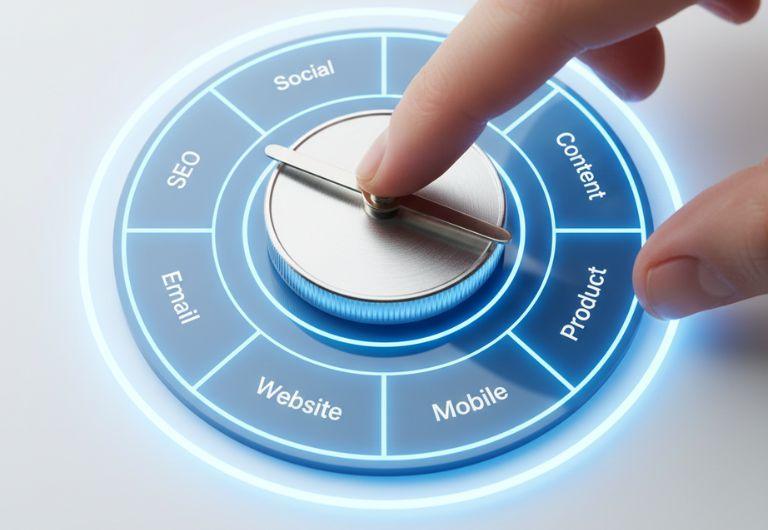
Channel prioritization logic is the process of ranking marketing channels based on their ability to deliver business outcomes under real-world constraints. These constraints include budget, time-to-result, creative capacity, data quality, operational readiness, and audience saturation. It is not simply choosing a channel you like or copying what competitors are doing. It is a structured decision method that uses both quantitative signals and strategic judgment.
The reason this matters is that every marketing channel has hidden costs and hidden ceilings. Google Search can generate high-intent leads, but scale is limited by search demand. Meta Ads can scale quickly, but efficiency often depends on creative velocity and audience freshness. SEO can deliver compounding returns, but time-to-result is slower and requires consistency. Influencer marketing can create strong top-of-funnel trust, but attribution is messy and performance varies widely. Email and WhatsApp can dramatically improve retention, but only if the business has a customer base large enough for meaningful impact.
When you use channel prioritization logic correctly, you don’t just ask “Which channel works?” You ask “Which channel works for our economics, our customer journey, and our growth stage—and what is the next channel to build after that?”
The Goal of Marketing Channel Prioritization: Clarity, Scale, and Predictability
Most businesses don’t struggle because they lack options. They struggle because they lack ranking. They have too many channels available and no decision system to prioritize them. That is why marketing channel ranking is one of the most underrated growth skills in modern marketing.
The ultimate goal of prioritizing marketing channels is to create predictable growth. Predictable growth means knowing which channels are driving acquisition, which channels support consideration, and which channels improve retention and profitability. It means you can forecast performance with confidence because you understand the economics and the scalability of each channel.
A well-built channel prioritization logic also strengthens budget allocation. Instead of “splitting spend evenly,” you design your marketing budget allocation around impact. Your most scalable, measurable channels get the most spend. Your experimental channels get a controlled learning budget. Your retention channels get investment because they reduce blended CAC and increase LTV. This is the difference between marketing as a cost center and marketing as an asset.
The 5-Layer Channel Prioritization Framework Used by High-Performing Brands
To build a prioritization process that holds up in the real world, you need a framework that considers strategy, economics, measurement, scalability, and execution. Below is a premium channel prioritization framework that agencies use when advising Dubai businesses and regional scale-ups.
Fit: Does the Channel Match Customer Behavior and the Market Context?
Every channel must fit how customers discover, evaluate, and purchase in your category. Fit is often misunderstood because teams assume that if a channel is popular, it must work. In reality, fit is about buyer psychology. A customer purchasing a premium clinic service behaves differently from someone buying skincare online. A founder choosing B2B software behaves differently from someone booking a restaurant. The channel is not the strategy—the channel is the route the customer is willing to take.
In Dubai, fit has extra complexity because audiences are diverse. A strategy that converts English-speaking expats may not perform the same way for Arabic-speaking audiences. Some segments respond strongly to social proof and influencer trust, while others rely heavily on search intent and comparison. Strong channel prioritization logic begins with fit because it prevents wasted experimentation.
Economics: Can the Channel Work With Your CAC, Margin, and LTV Reality?
Once fit is validated, the next layer is unit economics. The channel might generate results, but those results must make sense. This is where ROI-based channel prioritization becomes non-negotiable. You must understand customer acquisition cost (CAC), customer lifetime value (LTV), gross margin, and payback period before scaling spend.
A channel can look profitable in platform metrics like ROAS but fail as a business driver because it ignores returns, discounts, overhead, fulfillment, or churn. A premium channel prioritization model always ties channel performance to real profit, not vanity outputs. This is also why CAC vs LTV analysis is not just finance language—it’s marketing survival language.
Measurement: Can You Track Performance With Enough Confidence to Make Decisions?
Marketing is not perfectly measurable, and pretending otherwise creates bad decisions. Attribution varies by channel, and many channels influence conversion indirectly. A multi-touch attribution model may show you patterns, but it rarely provides absolute truth. The real question is whether you have enough measurement confidence to decide whether the channel should be scaled, maintained, or paused.
For example, branded search often looks like the best channel in last-click reports, but it is frequently the end-point of demand created elsewhere. Similarly, retargeting can “claim” sales that were already likely to happen. A strong channel prioritization strategy acknowledges this reality. It builds confidence using a mix of tracking, cohort analysis, and controlled tests where possible.
Scalability: Does the Channel Expand Without Destroying Efficiency?
Scalability is where many “good channels” fail. A channel can start strong but collapse when spend increases due to audience saturation, increased competition, limited inventory, or creative fatigue. This is why scalable growth requires more than a performance snapshot.
In Dubai’s highly competitive ad auctions, scalability is one of the biggest differentiators between brands that grow and brands that stall. A good channel prioritization model doesn’t just rank channels by performance today; it ranks them by sustainable growth potential over the next 90–180 days.
Execution Readiness: Do You Have the Capability to Win on This Channel?
Some channels are operationally demanding. TikTok performance requires fast creative iteration. SEO requires consistent publishing and technical foundations. Partnerships require relationship management and negotiation. B2B demand generation requires sales alignment and nurture systems. If you are not ready operationally, the channel will underperform—not because the channel is weak, but because your execution engine can’t support it.
Premium marketing leaders treat readiness as part of strategy. They prioritize channels they can win now, while building capability for channels they want to win later. That sequencing is where prioritization becomes a growth advantage.
Building a Channel Prioritization Model That Leadership Can Trust
A useful channel prioritization model must do something most marketing plans fail to do: it must reduce debate. Leadership doesn’t want ten options; they want a clear ranking with measurable reasons behind it.
The best models use scoring not because numbers are magical, but because scoring forces trade-offs. When you build a marketing channel prioritization matrix, you’re telling the business what matters most. You’re stating whether you value speed, scalability, profitability, measurability, or compounding growth. That clarity makes channel decisions faster and more defendable.
In practice, we recommend weighting channels across fit, economics, measurement, scalability, and readiness. For early-stage companies, speed-to-signal and controllability may be weighted higher. For mature brands, incrementality and long-term compounding matter more. This flexibility is the reason channel prioritization logic can apply to startups and enterprises without becoming generic.
Step-by-Step Marketing Channel Prioritization Process
Channel prioritization is not a one-time activity. It is an operating system that should repeat on a 30–90 day cycle. The brands that win treat prioritization like a quarterly strategy ritual, not a workshop.
First, you inventory your channels. This includes active channels, channels you tried before, and channels you have the capability to test now. Then you classify each channel by funnel stage: awareness, consideration, conversion, retention. This step is critical because marketing funnel stages (TOFU/MOFU/BOFU) change how you measure success. Judging a TOFU channel by ROAS is how teams kill their brand growth too early. Judging a BOFU channel by engagement is how teams confuse attention with revenue.
Next, you define the KPIs that actually matter. Instead of generic performance metrics, you tie each channel to its role in the system. That is the foundation of channel prioritization using data and KPIs. Then you score channels and build a ranked list that reflects your growth objective. Finally, you allocate budget as a portfolio: core scaling channels, supporting channels, and a controlled experimentation budget.
This process is the best way to prioritize marketing channels because it creates both focus and learning. Your marketing becomes more consistent and less emotional.
How to Evaluate Marketing Channels Using Data-Driven Channel Prioritization
A channel’s true value is not its CTR or impressions. Its value is whether it improves your business outcomes, and whether it does so repeatedly. The most useful way to evaluate channels is by building a measurement stack that links channel activity to customer outcomes.
For acquisition, you track CAC and conversion rate by channel. For ecommerce, you also track contribution margin, return rates, and repeat purchase behavior. For SaaS, you track trial-to-paid conversion and churn. For B2B, you track lead quality, pipeline velocity, and close rates.
This is where channel performance analysis becomes strategic rather than tactical. You are not merely monitoring performance; you are deciding where to invest your next month of growth. A premium approach also monitors payback period because a channel that takes too long to recover CAC can constrain cash flow even if it is profitable long-term.
Prioritize Paid vs Organic Channels: The Smart Way to Sequence, Not Compare
Teams often debate paid versus organic as if one must win. But the real skill is sequencing. Paid channels are typically faster and better for learning. They let you test positioning, creative angles, and landing pages quickly. Organic channels tend to compound over time and reduce dependency on paid spend.
A high-performance channel strategy uses paid to build learning and demand capture, while organic builds authority and cost efficiency. This is what a real channel mix optimization approach looks like. Instead of saying “we should do SEO,” you define the SEO job in the system: capturing high-intent searches, building topical authority, and improving conversion through content-driven education.
Similarly, instead of saying “we should do Meta ads,” you define whether Meta is a discovery engine, a retargeting engine, or a full-funnel channel supported by creative and landing page iteration. Once every channel has a defined job, prioritization becomes clearer.
Omnichannel Marketing Strategy: Why Prioritization Is the Hidden Engine
Many businesses claim they want an omnichannel approach, but what they actually create is a multi-channel mess. Omnichannel does not mean running every channel. It means designing a customer journey where channels reinforce each other. The customer sees your brand in a TOFU environment, learns through MOFU touchpoints, and converts through BOFU intent channels, then stays through retention channels.
True omnichannel strategy requires prioritization because you cannot build it all at once. You build it layer by layer. In Dubai, where trust and credibility heavily influence purchasing decisions, omnichannel becomes even more valuable—because customers often need multiple touchpoints before committing, especially in high-ticket or high-trust categories.
Case Study (Ecommerce): Channel Prioritization Based on ROI and Retention
Imagine a Dubai-based ecommerce brand selling premium lifestyle products with an average order value of AED 280 and reasonable gross margins. The brand is heavily reliant on Meta Ads and sees good ROAS on retargeting. Leadership assumes the solution is to raise budgets. Instead, CAC increases and performance stabilizes at a plateau.
This is a classic prioritization problem. The channel was working, but it was harvesting existing demand rather than creating new demand. The fix is not “run more ads.” The fix is channel re-ranking.
The new prioritization logic places Google Search and Shopping higher because they capture intent-driven purchases at scalable volume, and it adds SEO around category-level keywords because that becomes a compounding acquisition asset. At the same time, email and WhatsApp retention marketing channels become a priority because they improve LTV and reduce blended CAC. Within 90 days, the brand becomes less dependent on a single channel and more resilient to CPM changes, and profitability improves because retention contributes more revenue without additional acquisition cost.
This is channel prioritization logic in practice: not chasing performance metrics, but engineering growth economics.
Case Study (B2B): A Channel Selection Strategy Built on Pipeline Quality
A Dubai-based B2B consultancy decides to go “all in” on LinkedIn lead forms. They generate leads, but lead quality is inconsistent and sales cycles are long. The team blames the channel. The real issue is that the channel was assigned the wrong job.
In B2B, LinkedIn is often strongest as an authority and demand-generation channel, not as a cold lead machine—unless you have an exceptionally tight targeting strategy and strong positioning. A better prioritization model pairs high-intent Google Search with LinkedIn retargeting and thought leadership, then uses webinars or lead magnets as MOFU conversion tools, backed by CRM nurture.
Once pipeline quality becomes the ranking metric rather than lead volume, the channel mix changes dramatically. The business closes fewer total leads, but revenue grows because they close better leads. That is the difference between activity and strategy.
Channel Prioritization Logic for Startups, Small Businesses, and Enterprises
Channel prioritization logic for startups must prioritize speed-to-learning. Startups cannot afford multi-channel complexity too early. They typically need one or two channels that provide fast feedback, then a third channel that compounds. For many Dubai startups, that might mean paid search for demand capture, Meta for creative testing and reach, and SEO as the compounding layer.
Channel prioritization logic for small businesses often prioritizes stability and cost efficiency. Local SEO and Google Search can produce consistent leads, while remarketing and WhatsApp retention improve conversion rates and repeat business. The goal is not to run everything, but to protect profitability while growing.
Enterprises prioritize incremental lift and resilience. They tend to build diversified portfolios across performance marketing, brand investment, partnerships, and content. Their prioritization models require stronger measurement discipline because false attribution becomes expensive at scale.

The Most Common Channel Prioritization Mistakes
The most damaging mistake is scaling spend before the channel has proven stability. Many teams increase budgets after one good week without understanding whether results are repeatable. Another common mistake is failing to separate channels by funnel stage, which leads to misaligned KPIs and wrong conclusions.
Dubai brands also frequently underestimate execution readiness. They start TikTok without creative production capability or start SEO without publishing consistency. In those cases, channels fail not because the channel is weak but because operational capability was not prioritized.
A premium channel prioritization strategy avoids these traps by sequencing: scaling what is stable, testing what is promising, and building capability for what will matter next.
Conclusion
If you want sustainable growth in Dubai, you need more than campaigns—you need decisions. Channel prioritization logic is the decision engine that aligns marketing with business outcomes. It forces clarity on where to invest, how to measure success, and when to scale. It prevents dilution and enables focus without losing the benefits of an omnichannel system.
The brands that win in 2026 will not be the ones experimenting with the most channels. They will be the ones with the strongest channel prioritization framework, the most disciplined channel prioritization model, and the clearest understanding of how to build a channel mix that balances speed, efficiency, and compounding growth.
If you’re serious about scaling, your next step isn’t adding another channel. Your next step is ranking your channels correctly—then building your growth engine with purpose.
FAQ
1. What is channel prioritization in digital marketing?
Channel prioritization is the process of deciding which digital marketing channels to focus on first based on business goals, audience behavior, budget, and expected impact. It ensures resources are invested where they deliver the highest value.
2. Why is channel prioritization important?
Without prioritization, marketing efforts become scattered and inefficient. Channel prioritization helps businesses avoid spreading budgets too thin, reduces operational complexity, and improves overall campaign performance by focusing on the most effective channels.
3. What factors influence channel prioritization decisions?
Key factors include target audience presence, customer journey stage, channel performance history, cost and ROI potential, competitive intensity, and internal capabilities. Alignment with business objectives is the most critical factor.
4. How does channel prioritization differ for new vs established businesses?
New businesses often prioritize awareness and discovery channels like social media and paid ads, while established businesses may focus more on conversion and retention channels such as SEO, email, and CRM-driven campaigns. Priorities evolve as brands mature.
5. How often should channel prioritization be reviewed?
Channel prioritization should be reviewed quarterly or when business goals, budgets, or market conditions change. Regular review ensures marketing strategies stay aligned with performance data and customer behavior trends.