
Channel Interdependencies in Digital Marketing: Why No Channel Works Alone
Introduction
In boardrooms and marketing reviews across Dubai, one question still dominates performance discussions: Which channel is working best? SEO teams point to organic growth, paid media teams defend ROAS, social teams highlight engagement, and CRM teams showcase open rates. Each channel justifies its value in isolation. Yet despite apparent optimization, many brands experience rising acquisition costs, inconsistent growth, and fragile performance that collapses when budgets shift.
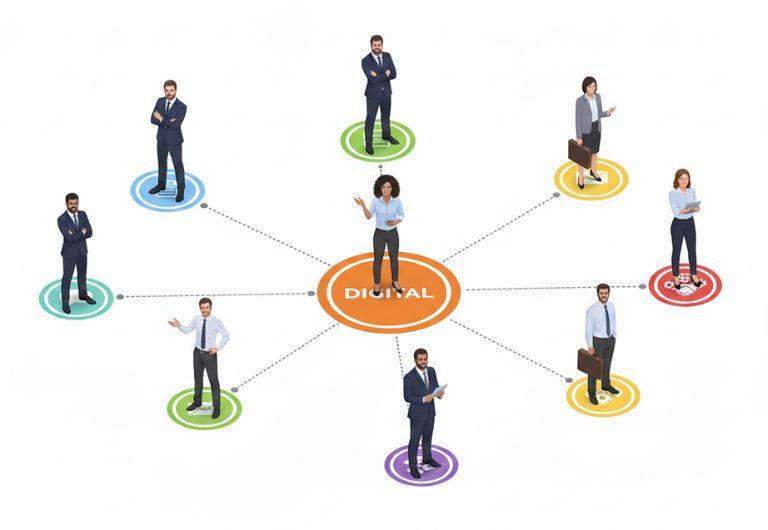
The issue is not execution quality. It is a flawed mental model. Modern digital marketing does not operate as a collection of independent levers. It functions as a system of interdependencies, where each channel’s effectiveness is shaped by what happens before, during, and after it. This is the reality of channel interdependencies—the structural relationships that cause marketing channels to amplify or weaken one another.
In high-competition markets like Dubai, where digital maturity is uneven and consumer expectations are sophisticated, understanding channel interdependencies is no longer an academic exercise. It is a prerequisite for sustainable growth.
Understanding Channel Interdependencies in Digital Marketing
Channel interdependencies in digital marketing describe the way customer perception, intent, and behavior are formed across multiple touchpoints rather than through a single interaction. A channel rarely creates demand on its own. Instead, it captures, accelerates, or converts demand that was shaped elsewhere.
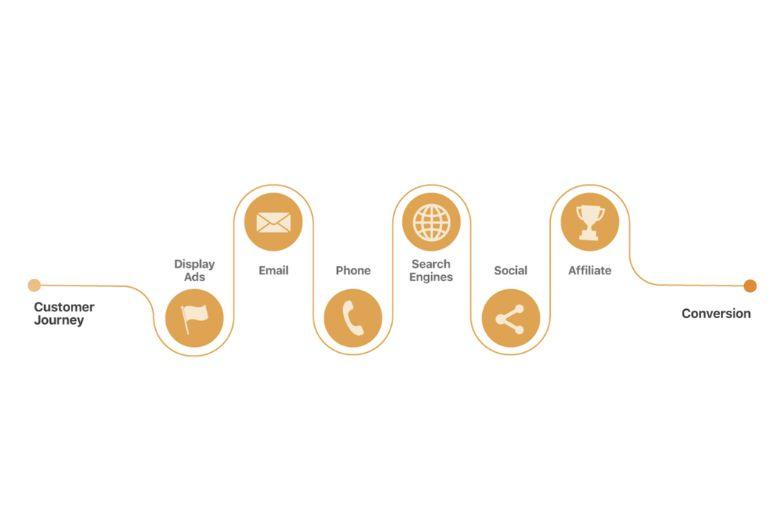
A paid search click, for example, is rarely the beginning of a customer relationship. It is often the result of prior exposure—perhaps a LinkedIn post, a YouTube video, an article discovered through organic search, or a recommendation shared privately. Each interaction deposits a small amount of trust. When enough of these deposits accumulate, conversion becomes possible.
This is why channel interdependencies are fundamentally about cognitive economics, not tactics. Marketing works when familiarity reduces risk. Channels collaborate—sometimes silently—to create that familiarity.
Why No Marketing Channel Works Alone in Practice
The comfort of simple stories and why they keep misleading us
The idea of a standalone channel sticks around because it feels safe. Measurement systems reward clean lines and clear winners, and last-click attribution delivers exactly that. It tells a neat, reassuring story: this channel closed the deal, so this channel gets the credit. For busy teams under pressure to justify budgets, that simplicity is tempting. But it is also deeply incomplete.
In real life, buyers do not behave like spreadsheets. They do not wake up, click one ad, and convert. They move in fits and starts, influenced by context, emotion, trust, and timing. When we reduce that complexity to a single click, we trade understanding for comfort.
Buying journeys are layered, not linear
Across industries, the data is clear. Most conversions happen only after a buyer has interacted with multiple touchpoints over time. This is especially true in B2B, real estate, financial services, and premium consumer categories common in the UAE. These are not impulse decisions. They involve long consideration cycles, internal discussions, and repeated moments of doubt and reassurance.
People research quietly. They compare options more than once. They disappear from funnels and re-enter weeks or even months later. Sometimes they engage without leaving a measurable trace at all. The journey loops, stalls, and restarts. Any model that assumes a straight line misses what is actually happening.
Every channel plays a different psychological role
Channels are not interchangeable, and they are not competing in isolation. Each one serves a distinct psychological function in the buyer’s mind.
Some channels spark initial awareness and curiosity. Others build credibility and signal legitimacy. Some answer practical questions, while others reduce anxiety right before action. None of these roles alone is sufficient. Remove one, and the whole system weakens.
This is why cutting content often leads to declining paid media efficiency, even if paid budgets stay the same. It is also why SEO performance can stall when brand presence fades elsewhere. The channels themselves have not suddenly failed. The supporting context that made them effective has eroded.
When performance drops, it is usually a system problem
What often looks like a single-channel issue is actually a system-wide coherence problem. Buyers sense inconsistency. Trust signals weaken. The narrative fragments. Results suffer.
Healthy marketing ecosystems work because the parts reinforce each other. Awareness primes consideration. Content builds confidence. Brand presence lowers perceived risk. Activation channels then convert demand that is already warm.
When we evaluate channels in isolation, we miss these interdependencies. Worse, we make decisions that optimize short-term attribution at the expense of long-term effectiveness.
Rethinking measurement to reflect human behavior
If the goal is real growth, measurement needs to reflect how humans actually make decisions. That means accepting messiness, overlap, and shared credit. It means looking at contribution, not just closure.
This perspective aligns with broader quality principles that emphasize understanding purpose, user experience, and holistic impact rather than isolated signals . Marketing systems, like people, perform best when they are evaluated as interconnected whole, not as disconnected parts.
The myth of the standalone channel is comforting, but growth rarely comes from comfort. It comes from clarity, even when that clarity is complex.
The Cost of Channel Silos
Channel silos are not merely organizational inconveniences; they are growth constraints. When teams optimize channels independently, they unintentionally compete for credit rather than collaborate for outcomes. SEO teams may avoid commercial keywords to protect rankings, while paid teams bid aggressively on branded terms, inflating costs. Social teams may chase engagement disconnected from demand, while CRM teams nurture leads without alignment to acquisition messaging.
Externally, customers experience inconsistency. Internally, leadership receives fragmented reporting that obscures true performance drivers. In contrast, organizations that embrace marketing channel interdependencies shift from channel ownership to journey ownership. The question changes from “How did this channel perform?” to “How did this channel support the system?” This shift alone often unlocks significant efficiency without increasing spend.
SEO and Paid Media: A Case Study in Mutual Dependence
SEO and paid media are frequently positioned as opposing forces—organic versus paid, long-term versus immediate. In reality, they form one of the strongest examples of channel interdependencies in digital marketing.
Paid media accelerates learning. It reveals which keywords convert, which messages resonate, and which audiences respond. SEO compounds learning by turning those insights into durable visibility and trust. When aligned, paid media reduces time to insight while SEO reduces long-term cost of acquisition.
Brands that rely heavily on paid media without SEO often experience diminishing returns. Click costs rise because trust is low. Conversely, brands that rely solely on SEO without paid amplification struggle to scale learning and visibility quickly.
The highest-performing systems treat paid and organic search as complementary mechanisms within a single demand capture strategy.
Content Marketing as the Structural Backbone
Channels may carry the message, but content is what keeps everything alive
If channels are the arteries of digital marketing, content is the bloodstream that keeps the entire system functioning. Channels can exist on their own, but without content moving through them, they struggle to do meaningful work. They push messages out, but those messages feel thin, repetitive, or intrusive. Content is what gives those channels purpose, depth, and direction.
This is also why content is so often misunderstood and undervalued. It is rarely the last click before a conversion, so it does not get the same credit in performance reports. But judging content only by final attribution misses its real job. Content does not close the deal in one moment. It quietly shapes the conditions that make closing possible.
Content works long before a buyer ever converts
Long before someone clicks an ad or fills out a form, content is already at work. It educates prospects before they even know what to search for. It frames the problem, introduces new ideas, and influences how people define their needs. By the time search or paid media enters the picture, content has often done the heavy lifting.
The same content then shows up again in different forms. It becomes proof points that raise ad click-through rates because the message feels familiar and credible. It becomes case studies, guides, and narratives that sales teams lean on when conversations get stuck. It becomes the substance inside email campaigns, so those emails feel useful rather than purely promotional.
In other words, content compounds. One strong piece rarely lives in just one place or serves just one function.
In diverse markets, content builds legitimacy, not just traffic
In markets like Dubai, content plays an even deeper role. Audiences are multilingual, culturally diverse, and highly discerning. People are not only evaluating what a brand offers, but whether that brand truly understands them.
Here, content becomes a signal of contextual legitimacy. Language choices, examples, tone, and cultural references all communicate whether a brand is speaking with the audience or merely at them. Well-crafted content says, “We understand your world.” Poor or generic content says the opposite, even if the targeting and technology are flawless.
Algorithms can place a message in front of the right person. Content determines whether that person trusts what they see.
Without content, channels interrupt. With content, they work together
When channels operate without strong content, they tend to interrupt. Ads feel like noise. Emails feel self-serving. Social posts feel disposable. Each channel competes for attention without offering much in return.
With content, the dynamic changes. Channels begin to collaborate instead of compete. Paid media amplifies ideas people already find valuable. SEO surfaces answers people genuinely want. Sales conversations feel supported rather than forced. Email becomes a continuation of a relationship, not a constant pitch.
Content does not replace channels. It connects them. It turns a collection of tactics into a coherent system that feels intentional, human, and trustworthy. And in the long run, that coherence is what drives sustainable performance.
Email Marketing’s Hidden Role in Channel Interdependencies
Email rarely feels exciting, but it quietly does essential work
Email marketing is easy to overlook because it does not usually deliver dramatic spikes. There is no sudden surge of traffic, no viral moment, no single campaign you can point to and say, “That changed everything.” Its impact is incremental, gradual, and often invisible in traditional reporting. Because of that, it is rarely given true strategic attention.
But that quiet nature is exactly what makes email so powerful inside a multi-channel system. Email is not designed to steal the spotlight. It is designed to support everything else.
Email strengthens memory, not just messaging
One of email’s most important roles is reinforcing memory structures. It keeps a brand mentally available between more visible interactions like ads, searches, or sales conversations. When someone sees your brand name again in search results or a paid placement, it feels familiar rather than foreign. That familiarity reduces friction.
Consistent, relevant email communication helps prospects remember not just who you are, but why you matter. Over time, it builds recognition and confidence. A prospect who regularly receives useful emails is more likely to trust your messaging in paid ads, click with less hesitation, and convert faster when re-engaged after a period of inactivity.
This is not persuasion in one moment. It is conditioning over time.
Email accelerates other channels without competing with them
Email rarely acts as the final conversion channel, but it makes final conversions easier elsewhere. It gives context to search queries. It reinforces claims made in ads. It echoes the same language sales teams use in conversations. When done well, it feels like a continuation of the relationship rather than a separate tactic.
Because email lives in a more personal space, it can afford to be calmer and more informative. That steadiness complements higher-intensity channels instead of competing with them. The result is a buyer who feels guided, not chased.
From a systems view, email is a stabilizer
From a systems perspective, email plays a critical stabilizing role. It smooths volatility caused by algorithm changes, platform updates, and rising media costs. When paid performance fluctuates or organic reach dips, email remains a controllable, owned channel that keeps momentum alive.
This stability is easy to undervalue because it does not show up as a win in attribution models. Email rarely “claims” the conversion. Instead, it quietly improves the efficiency and reliability of the channels that do receive credit.
The quiet channels often do the heaviest lifting
Email does not shout. It does not demand attention. It earns it slowly. And while it may never dominate dashboards or attribution reports, it plays a foundational role in making the entire system work better.
In complex buying environments, the channels that feel least dramatic are often the ones holding everything together. Email is one of them.
Attribution should guide thinking, not deliver a final judgment
One reason channel interdependencies are so poorly understood is attribution anxiety. Marketers are often under pressure to produce definitive answers. Which channel caused the conversion? Which one deserves the credit? Which one should get more budget next quarter? These questions feel practical, but they oversimplify how real decisions are made.
A more useful question is not which channel caused the conversion, but which channels contributed to readiness. Readiness is the moment when a buyer feels informed, confident, and safe enough to act. That state is rarely created by a single touchpoint. It is built gradually, through repeated exposure, reassurance, and reinforcement across channels.
Modern attribution models offer perspective, not perfection
Multi-touch attribution models try to distribute credit across touchpoints, and they are often criticized for being imprecise. That criticism misses the point. Their real value is not mathematical accuracy, but perspective.
Even imperfect models reveal patterns that last-click never shows. They highlight which channels consistently assist conversions, which ones speed up decision-making, and which ones tend to appear at the moment of commitment. This kind of insight changes conversations. Instead of arguing over winners and losers, teams start to see how channels support one another.
Used correctly, attribution becomes a diagnostic lens. It helps marketers understand relationships, dependencies, and leverage points within the system.
Why Interdependencies Matter So Much When Every Dirham Is Under Pressure
In high-cost markets like the UAE, efficiency matters far more than sheer volume. Media costs are high, competition is relentless, and even small performance swings can mean the difference between profitable growth and wasted spend. When budgets are tight and expectations are high, there is very little margin for disconnected thinking.
In this kind of environment, channel interdependencies are not a nice-to-have. They become a real strategic advantage that directly impacts results.
How Connected Channels Make the Same Budget Work Harder
When channels reinforce each other, results improve without requiring proportional increases in budget. Conversion rates rise because buyers arrive better informed, more familiar with the brand, and more confident in their decision. They are not starting from zero at each touchpoint.
Sales cycles shorten because fewer basic questions need to be answered late in the journey. Prospects have already built context through earlier interactions, which reduces friction at the point of conversion. At the same time, reliance on aggressive bidding and constant promotions decreases because demand is warmer and more qualified from the outset.
In practical terms, the same budget does not just reach people. It works harder at every stage of the journey.
Why Integrated Marketing Systems Consistently Outperform Fragmented Campaigns
This is why integrated marketing systems consistently outperform fragmented campaigns, even when total spend stays exactly the same. The advantage is not scale. It is coherence.
Every touchpoint feels connected and intentional. Each interaction supports the next one, rather than repeating the same message or creating confusion. Instead of feeling disjointed or overwhelming, the experience feels logical and reassuring, guiding people forward at a pace that makes sense to them.
When marketing works this way, it builds momentum instead of friction. And in a market where every dirham counts, that momentum is what turns efficiency into a lasting competitive edge.
Moving Beyond One-Off Campaigns Toward a Smarter, Connected Marketing System
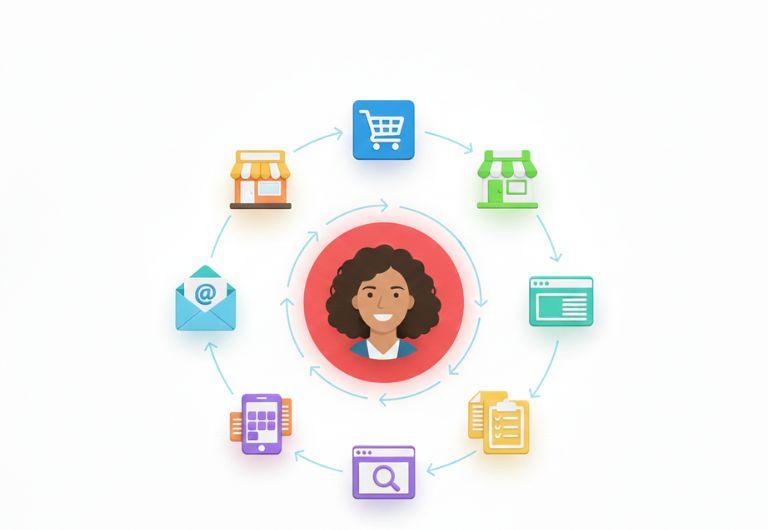
The most important implication of channel interdependencies is not tactical. It is strategic. Marketing cannot be managed effectively as a series of isolated campaigns that are launched, measured, and then replaced with the next idea. That approach treats marketing as a sequence of short-term activities rather than a long-term driver of growth.
Instead, marketing has to be managed as a living system. One that evolves over time, builds on what came before, and improves as it learns. Every campaign becomes an input, not a reset.
What Systems Thinking Really Requires Across Teams and Channels
Systems thinking requires more than better tools or dashboards. It requires shared objectives across teams, synchronized planning across channels, and unified measurement frameworks that reflect the full customer journey rather than individual touchpoints.
This shift moves the focus away from optimizing channels in isolation and toward optimizing how people actually progress. From first awareness, to deeper understanding, to confidence, and finally to action. Success is no longer defined by channel-level metrics alone, but by how smoothly and naturally that progression happens for real people.
When the journey flows, performance follows.
How This Mindset Changes Behavior and Builds Long-Term Growth
Adopting this mindset changes behavior inside organizations. It rewards collaboration over internal competition and replaces siloed ownership with shared accountability. It values insight over sheer activity and encourages teams to pause, reflect, and adjust rather than constantly push out more output.
Most importantly, it encourages better questions. Not just how to do more, but how to do what actually matters.
Over time, this shift is what transforms marketing from a perceived cost center into a durable growth engine. One that compounds value, improves efficiency, and supports the business well beyond individual campaigns.
Conclusion
Channel interdependencies reveal a fundamental truth about digital marketing: performance is created through interaction, not isolation. Customers do not encounter brands in separate channels; they experience a continuous flow of impressions, messages, and signals that shape trust over time. When one channel performs well, it is often because others have quietly prepared the ground. When results decline, the issue is rarely a single channel failing, but a system that has lost alignment.
For Dubai-based organizations facing intense competition and rising acquisition costs, this perspective is transformative. It reframes marketing from a set of disconnected expenses into an integrated growth engine. The brands that win will not be those with the biggest budgets or the loudest campaigns, but those that design coherent systems where every channel strengthens the others. In that kind of environment, growth is no longer forced; it becomes the natural outcome of alignment.
FAQ
1. What are channel interdependencies in digital marketing?
Channel interdependencies refer to how different digital marketing channels influence and support each other rather than operating in isolation. Actions in one channel—such as content marketing or paid ads—often impact performance in others like SEO, email, or social media.
2. Why are channel interdependencies important for marketing success?
Understanding interdependencies helps brands avoid siloed strategies. When channels work together, messaging is reinforced, customer journeys are smoother, and overall performance improves. Integrated channels often deliver higher engagement and conversion rates.
3. How do common digital marketing channels depend on each other?
Examples include content marketing improving SEO rankings, paid ads driving traffic that boosts remarketing and email lists, social media amplifying content reach, and analytics connecting insights across all channels. Each channel strengthens others when aligned properly.
4. What problems arise when channels are managed independently?
Managing channels separately can lead to inconsistent messaging, duplicated efforts, wasted budget, and poor customer experiences. Lack of coordination may also result in missed attribution insights and reduced campaign effectiveness.
5. How can businesses manage channel interdependencies effectively?
Businesses should map the customer journey, define clear roles for each channel, align content and messaging, integrate data through analytics tools, and encourage collaboration across marketing teams. Continuous monitoring ensures channels remain aligned as strategies evolve.