
Capturing Brand Essence: Why It Matters & How to Define It
Introduction: Brand Essence as Your Strategic Foundation
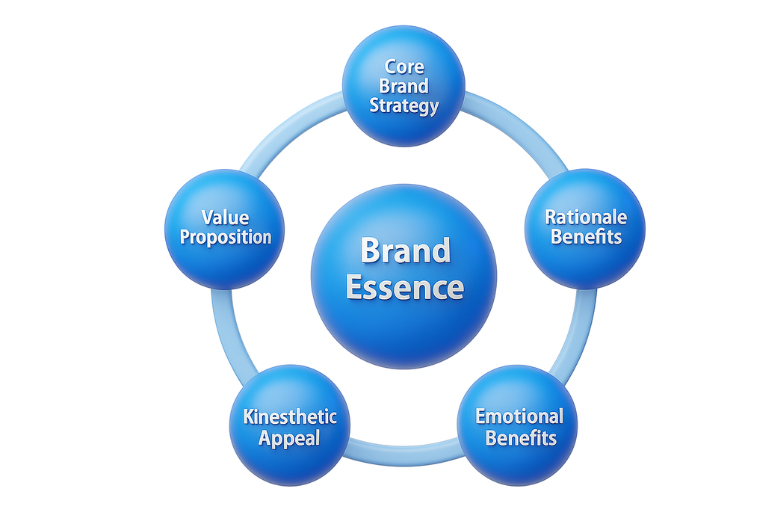
In today’s saturated marketplace, brand essence is what cuts through the noise—it’s the emotional undercurrent that breathes life into your brand. More than a slogan or a logo, brand essence is the strategic heart of your business, shaping every action, interaction, and decision. HubSpot captures it perfectly, describing brand essence as the “soul or DNA” of your brand—often distilled into just a few emotionally resonant words. And this is not just theoretical; the impact is tangible. Consumers today are more discerning than ever: 81 percent say they need to trust a brand before making a purchase, and 75 percent prefer brands that reflect their personal values. Brands that consistently communicate and embody their essence across all touchpoints tend to outperform others, often achieving 23 to 33 percent higher revenue growth compared to brands that present an inconsistent or fragmented image.
But the influence of brand essence extends far beyond how the brand is perceived externally. It also serves as a powerful internal compass that simplifies complexity across the organization. As brands scale and grow—spanning multiple regions, channels, and customer segments—the risk of becoming fragmented increases. A strong, well-articulated essence acts as an anchor, ensuring that every execution, whether global or local, is grounded in a shared emotional truth. This is what allows someone designing an app experience in Tokyo to infuse the same emotional resonance as a writer crafting a TV script in New York. Regardless of the medium or market, everyone involved understands how the brand should feel—creating a cohesive and authentic experience for customers everywhere.
What Is Brand Essence?
Brand essence is sometimes misunderstood as a tagline or reduced to a creative exercise. In reality, it is neither. It is the emotional soul of your brand—an invisible but deeply influential force that shapes perception. While a tagline might evolve with marketing campaigns, your brand essence remains constant, guiding not only external expressions but also internal behaviors and strategic choices. It influences product development, customer service, leadership decisions, and more, embedding itself in the very fabric of your organization.
Importantly, brand essence is not something that only lives outwardly; it profoundly shapes internal culture as well. When employees truly understand and embody the brand’s emotional DNA, it naturally influences how they collaborate, innovate, and lead. Consider a brand whose essence is centered on Courage. In such an environment, courage won’t just appear in advertising slogans; it will inspire teams to take bold risks, push creative boundaries, and challenge the status quo. This deep alignment fosters not just external brand loyalty but also internal cohesion, creating an organization where purpose and practice move in unison.
How Brand Essence Differs From Brand Positioning
It’s often said that positioning tells customers where you stand in the competitive landscape—what makes you different—while essence tells them how you make them feel. Where brand positioning defines your unique value proposition in market terms, brand essence reaches deeper, living in the realm of emotions, perceptions, and human experience. A brand may position itself as faster, cheaper, or more innovative, but few brands truly commit to building and leading with essence. This is because essence transcends direct competitive claims. It speaks to the emotional bond a core branding builds with its audience—a connection that can endure long after the market itself has shifted.
In fact, while positioning often evolves as markets change or new competitors emerge, brand essence should serve as a steady foundation. Take Disney as an example. Its brand positioning has certainly adapted over the years, evolving to embrace new platforms like streaming services. But its essence—that sense of Magic—remains timeless and unchanged. It is this core essence that allows Disney to move fluidly with the market while maintaining a deeply rooted emotional identity. In this way, essence enables positioning to flex strategically, without losing the emotional thread that binds the brand to its audience.
Brand Essence vs. Brand Personality: Understanding the Distinction
Brand personality and brand essence are often linked, but they serve distinct and complementary roles. Personality is the set of human traits that your brand expresses—it might be playful, authoritative, warm, or ambitious. This personality comes to life through tone of voice, visual identity, and brand behaviors. Essence, on the other hand, is what happens when that personality is fully distilled; it is the deep, emotional core that defines how your brand wants people to feel. In short, essence is the emotional “why” that sits beneath the brand’s outward expression.
While brand personality may flex from campaign to campaign or adapt to the context of new product lines, your essence remains constant. It provides the emotional anchor behind every attribute and expression. When personality and essence are in alignment, the result is a brand experience that simply “feels right” at every touchpoint—authentic, cohesive, and resonant. But when they are out of sync—for example, a playful personality attempting to convey an essence rooted in trust or gravitas—the experience can feel jarring or dissonant. This is why it is so important to carefully calibrate brand personality in service of essence. Tools like archetypes, tone of voice guidelines, and brand playbooks can help ensure that every brand expression contributes to, rather than competes with, the emotional foundation of your core branding.
Why Brand Essence Matters: Strategic Impact
Clarifying your brand essence pays dividends that ripple across every corner of your organization. Internally, it fosters a deep sense of alignment. When every team—from R&D to marketing to customer support—shares the same emotional compass, decisions become more cohesive and purposeful. This clarity reduces uncertainty, accelerates innovation, and ensures that your brand positioning and messaging stay consistent and resonant. Rather than operating in silos, teams are connected by a shared understanding of what the brand truly stands for and how it should make people feel.
Externally, brand essence helps move a brand beyond the purely transactional. In categories where functional differences are minimal—think airlines, banks, or telecom providers—emotional differentiation often becomes the most meaningful way to stand out. A brand with a strong, authentic essence can transform even the most routine interactions into experiences that resonate emotionally. Over time, this emotional connection fosters stronger customer loyalty and drives higher lifetime value, even when product features alone may be easily replicated or commoditized.
Frameworks for Defining Brand Essence
Defining your brand essence isn’t about intuition or guesswork—it requires a thoughtful, structured approach. One well-regarded model, shared by HubSpot, outlines five essential criteria to help guide this process. According to this framework, a strong essence must be relevant to your audience, timeless across changing market conditions, memorable and emotionally sticky, distinct from the competition, and believable—rooted in the reality of your brand’s experience and offerings. Taking this disciplined approach helps brands avoid vague or aspirational language that lacks true substance.
Frameworks also play a critical role in building stakeholder alignment. Without a shared structure to guide discussions, workshops around brand essence can quickly descend into subjective debates, with no clear way to move forward. Leveraging models such as the Brand Parthenon or using Phillips’s evaluative filters provides teams with clear, objective criteria against which potential brand essence candidates can be assessed. This not only helps drive consensus but also increases the likelihood that the chosen essence will gain genuine organizational buy-in—and, ultimately, be adopted and championed throughout the company.
How to Use Customer Insights to Shape Essence
Your brand essence should never be crafted in isolation, confined to boardrooms or creative workshops alone. For it to be truly authentic and resonant, it must be grounded in how your customers actually feel about your brand. This is where data-driven insights play a pivotal role. Tools such as sentiment analysis, structured interviews, focus groups, and social listening can help you uncover the real emotions and perceptions your audience holds. These insights provide a solid foundation—rooting your brand essence in reality rather than mere aspiration. You might discover, for example, that your brand is perceived as unassuming yet dependable—a subtle but powerful emotional insight that could serve as the core of your essence.
Equally important, customer insights help guard against internal bias. It’s all too easy for brand teams to project how they wish the brand were perceived, while overlooking how it is actually experienced by real people. Anchoring your essence in authentic customer feedback ensures that it reflects the emotional truth of your brand. This alignment not only fosters trust and credibility but also prevents the kind of strategic missteps that arise when there is a disconnect between aspiration and reality.
Should Brand Essence Evolve Over Time?
A question that often arises is whether brand essence should evolve. The short answer: it should be enduring, but not inflexible. Your brand’s core emotional truth—the essence—should remain stable, even as external factors shift. It is not meant to change with every marketing trend or campaign. However, how that essence is expressed—through visual identity, tone of voice, and audience engagement—should absolutely evolve to stay relevant. For instance, a brand built on Inspiration might express that through magazine ads one year, and through dynamic TikTok content the next, all while staying true to its foundational emotional promise.
That said, there are times when a deeper evolution may be necessary—such as during a major business transformation, a significant change in product portfolio, or a shift in core purpose or target audience. In such cases, brands should proceed with great care. Before embarking on an essence refresh, it’s critical to conduct a rigorous review: does the original essence still resonate with the brand’s new strategic reality? If not, evolving the essence may be the right move—but only if the process is handled thoughtfully, with a deep understanding of both the brand’s heritage and its future direction.
Remote vs. In-Person Brand Essence Workshops
There’s plenty of discussion around whether brand essence workshops are best conducted in-person or virtually. The truth is, both formats offer distinct advantages, and the choice largely depends on your goals and participants. In-person workshops naturally foster deeper emotional alignment through tactile, interactive exercises—think mood boards, role-playing, and live discussions that help teams connect on a more visceral level. On the other hand, remote workshops open the door to broader participation, enabling international stakeholders and external experts to contribute without the constraints of travel. Digital platforms like Miro and MURAL make real-time co-creation possible, fostering collaboration even across time zones. The key to success in either format lies in adapting your facilitation style—ensuring that the session remains structured, highly interactive, and encourages openness and candid dialogue.
No matter which format you choose, thoughtful pre-session preparation is critical. Providing participants with foundational materials—such as customer insights, brand history, and strategic context—ahead of time allows them to come into the session with a clear understanding of the task at hand. This preparation leads to richer, more meaningful discussions and ultimately, higher-quality outputs during the workshop itself.
Who Should Participate in an Essence Workshop?
Getting the mix of participants right is one of the most important factors in shaping an authentic and actionable brand essence. A cross-functional group—drawing from marketing, design, product, leadership, and customer service—ensures that a wide range of perspectives are represented, helping the essence resonate across the entire organization. Including front-line, customer-facing staff is especially valuable, as they bring the unfiltered voice of the customer into the room. Involving key executives is equally important to ensure that the work is strategically aligned and has top-level buy-in. For the most productive conversation, a group of around 8 to 12 participants tends to strike the right balance: small enough to foster meaningful dialogue, yet diverse enough to capture a breadth of insight.
It’s also wise to create a mix of both brand newcomers and seasoned veterans. Newcomers bring fresh perspectives and are often unafraid to challenge long-held assumptions, while veterans contribute deep institutional knowledge and act as stewards of the brand’s legacy. This dynamic interplay between fresh thinking and brand heritage ensures that the resulting essence is both true to the brand’s roots and relevant for where it needs to go next.
How to Embed Brand Essence Into Product Development
It’s common for product teams to view features primarily through a functional lens—focused on what works, what’s possible, and what adds utility. But when you embed your brand essence into product development, the emotional dimension becomes just as important as the functional one. In fact, brand essence can serve as a powerful filter for prioritizing development choices. If your brand’s essence revolves around simplicity, for example, then any feature that risks introducing unnecessary complexity—no matter how technically impressive it may be—should likely be deprioritized. By weaving essence into product roadmaps and strategic decision-making, you ensure that every feature choice reinforces the brand’s emotional integrity and supports its overall positioning.
To make this actionable, it helps to explicitly connect brand essence to product strategy documents and feature briefs. When product managers and designers see a clear line between the functionality they’re building and the emotional promise of the brand, it becomes far easier to evaluate trade-offs and make decisions that stay true to the brand’s core. This attention to detail should extend all the way down to micro-decisions—whether it’s the pacing of an animation, the tone of error messages, or the language used in onboarding flows. Each of these moments is an opportunity to either strengthen or dilute the emotional experience the brand delivers.
Essence-Driven Content Strategy
Content strategy offers one of the richest avenues for bringing brand essence to life. A strong essence doesn’t just influence what you create—it shapes how you create it, guiding themes, formats, tone, and storytelling approach. For instance, if your brand essence centers on uplift, your content might naturally gravitate toward stories of resilience, small victories, and inspirational profiles—even if these topics aren’t directly tied to your product’s core functionality. In this way, essence becomes a filter through which all content passes, helping to ensure coherence and emotional consistency across channels.
But it’s not only about the topics you cover; it’s also about the way you communicate. Essence should infuse the voice and style of every piece of content. A brand whose essence centers on Trust would lean into transparent, jargon-free language and straightforward storytelling, building credibility and connection through clarity. In contrast, a brand with an essence rooted in Excitement might embrace punchy headlines, dynamic visuals, and interactive formats—crafting an experience that energizes and engages the audience at every touchpoint. By aligning both the content and its expression with the brand’s emotional core, you create a more resonant, authentic, and memorable brand experience.
Real-World Examples: Essence in Strategy
Some of the world’s most iconic brands show us that when brand essence is truly embedded into strategy, it shapes far more than marketing—it becomes a north star for the entire organization. Nike’s essence of Authentic Athletic Performance doesn’t just live in ads; it informs everything from athlete sponsorships and product R&D to apparel design and community events. Apple’s Think Different mantra has fueled product innovation, shaped the in-store experience, and infused brand storytelling with a distinct sense of creative daring. Volvo’s unwavering commitment to Safety influences not only how their vehicles are engineered but also the clarity of their messaging and the trust they cultivate with customers. Similarly, Airbnb’s focus on Belonging has guided everything from host training to product interface design to the tone of its social storytelling. In all of these cases, brand essence serves as more than inspiration—it acts as a strategic lens that helps strip away misaligned ideas and ensures coherence across disciplines.
Perhaps most importantly, these examples illustrate that essence is inherently scalable. The strongest brands articulate their essence clearly enough that it can be consistently expressed across all touchpoints and by a wide variety of contributors—including franchisees, agency partners, international teams, and even casual collaborators. This ability to scale without diluting or distorting the brand’s emotional core is what sets great brands apart from the rest.
Pitfalls to Avoid
Of course, successfully embedding brand essence is not without its challenges, and many brands fall into common traps. One is reducing essence to little more than marketing language—a string of aspirational words that sound good but lack grounding in customer insight or operational reality. Another is treating essence as a one-time exercise—something developed during a workshop and then forgotten as business priorities shift. Still another risk is allowing the essence to drift over time, losing clarity and focus. To avoid these pitfalls, essence must be believable, rooted in real customer insight, and reinforced continuously through operational initiatives. Educational roadshows, brand cohesion bootcamps, and essence-driven creative briefs are just a few ways to keep the essence alive and ensure it informs daily decision-making.
Another trap brands often fall into is trying to be everything to everyone. When essence becomes too broad or universal, it loses its emotional potency. The strongest brands embrace a clear, focused essence that communicates a specific emotional value. Over time, as customers encounter that consistent emotional signal again and again, trust deepens and loyalty grows exponentially.
How to Audit Whether Your Brand Is Living Its Essence
Ensuring your brand is living its essence requires more than good intentions; it calls for a systematic, thoughtful approach to auditing both internal and external brand experiences. Start by reviewing all brand communications—your website, social media content, customer support interactions, presentations, packaging—and assess whether they consistently convey the emotional tone your essence promises. Brand sentiment analysis tools can help quantify this alignment, offering a data-driven lens on how your brand is being perceived. Internally, conducting interviews across departments can reveal whether employees feel that the brand’s essence is actively shaping their work or if it has drifted into irrelevance.
Importantly, audits should extend well beyond marketing. Consider every key customer experience touchpoint. Is your brand essence evident in how the support team handles difficult situations? Does it come through in the tactile experience of unboxing your product? Is it reflected in your onboarding flows and customer journey design? The more holistic your audit, the more clearly you’ll see where your brand is thriving—and where opportunities exist to better align every facet of the experience with your core emotional promise.
Brand Essence Checklist: Are You Ready?
At this stage, your brand essence should feel clear, emotionally resonant, and ready to guide not just communication, but the entire brand experience. Ask yourself: Is your essence relevant to your audience? Is it distinctive in the marketplace? Is it something your customers and employees genuinely feel? Is it actively operationalized across products, services, and touchpoints? And can you measure whether it is resonating? If you can confidently answer “yes” to these questions, you’re on the right path. If not, don’t hesitate to revisit earlier steps—whether that’s refining your ideas, testing with audiences, or re-engaging stakeholders—until you arrive at an essence that truly works.
And remember, brand essence is not something you define once and forget. It’s a living, strategic asset that should evolve in its expression while remaining emotionally true. Make it a habit to revisit your brand essence as part of your annual planning cycle—reflect on what’s working, refresh where needed, and re-embed it into your brand experience. In doing so, you ensure your essence remains a guiding force, not a forgotten phrase buried in a brand deck.
Conclusion: Your Essence as a Compass
Brand essence is far more than an abstract idea—it is the emotional core that brings purpose and meaning to every interaction your brand has with the world. When thoughtfully defined, consciously activated, and consistently reinforced, essence can transform a brand from a collection of products or services into an experience that resonates deeply with people. It becomes a compass—one that helps your organization navigate decisions large and small, align teams around a common purpose, and foster genuine connections with customers.
In an era when consumers crave brands that reflect their values, offer emotional connection, and provide a sense of belonging, brand essence has become a strategic necessity. It’s what turns transactions into relationships and drives loyalty that lasts far beyond a single purchase. Brands that lead with a clear, authentic essence are the ones that inspire trust, foster advocacy, and adapt gracefully through change.
But remember, crafting your brand essence is just the beginning. The real work—and the real opportunity—lies in embedding it into the fabric of your organization. From product design to customer service, from marketing content to internal culture, every touchpoint is a chance to bring your essence to life. It should evolve in its expression as the world and your customers evolve, while remaining rooted in the emotional truth that defines your brand.
So as you move forward, think of your brand essence not as a finished statement but as an ongoing conversation—a living promise that you renew every day through the experiences you create. Build it thoughtfully. Activate it fully. And most importantly, live it authentically.
FAQ
1. How to define brand essence?
To define your brand essence, distill the emotional core of your brand into a simple, memorable idea that captures its true spirit. This involves identifying what your brand uniquely stands for, the feelings it evokes, and the promise it delivers consistently. Conduct stakeholder workshops, customer research, and competitor analysis to crystallize this essence. Ultimately, it should serve as a guiding light for all brand actions.
2. How to create brand essence?
Creating brand essence starts with understanding your brand’s mission, values, personality, and emotional impact. Synthesize these elements into a concise, inspiring statement that expresses what your brand fundamentally represents. Engage both internal teams and external audiences to validate and refine it. The result should be a timeless, universally understood expression of your brand’s soul.
3. What is the difference between Brand Essence and Brand Identity?
Brand essence is the emotional heart and guiding spirit of a brand—an intangible core idea that connects with consumers on a deeper level. In contrast, brand identity is the outward expression of that essence through visuals, messaging, tone, and experiences. While brand identity shapes how a brand looks and sounds, brand essence shapes how it feels and why it matters.
4. What are some examples of Brand Essence?
Common brand essence examples include Nike: “Inspiration and Innovation,” Disney: “Magical Family Moments,” and Volvo: “Safety.” Each encapsulates the brand’s emotional promise in a few words. These essences transcend products—they express the feeling and value the brand consistently delivers to its audience across all touchpoints.
5. What role does Brand Essence play in shaping a Brand?
Brand essence acts as a strategic compass, guiding everything from marketing and communications to product development and customer experience. It fosters emotional connection and consistency, ensuring that every brand interaction reinforces its core promise. Without a clear essence, brands risk fragmentation and losing relevance in the hearts of consumers.
6. What is Brand Essence in Marketing?
In marketing, brand essence serves as the foundation for crafting resonant messages and experiences. It helps marketers articulate the brand’s unique emotional value, shaping campaigns that foster loyalty and differentiation. By aligning all marketing efforts around the brand essence, companies can build stronger, more enduring relationships with their audiences.