
Building Brand Strategic Partnerships: Collaboration for Growth
Introduction
In the hyper-competitive landscape of modern business, strategic brand partnerships have emerged as a core growth mechanism—not a marketing afterthought. These collaborations are no longer just creative campaigns or flashy PR stunts. Rather, they function as multi-dimensional business strategies that fuse audience bases, expand geographic reach, enhance credibility, and streamline resource efficiency. McKinsey’s data shows that companies with mature partnership programs grow twice as fast as their peers and report 30–50% higher retention among shared audiences.
These partnerships sit at the intersection of Brand Strategy & Execution. A winning alliance blends big-picture positioning—brand mission, market identity, audience strategy—with operational excellence in how campaigns are launched, monitored, and scaled. When executed strategically, brand partnerships offer not just marketing synergy but enterprise-level value creation.
Brand alliances allow organizations to combine strengths and neutralize weaknesses. A young tech startup, for instance, might lack distribution but possess innovative products, making it a perfect match for an established brand with a robust sales infrastructure but aging offerings. By joining forces, both brands gain access to otherwise unreachable assets, including customers, markets, technologies, or reputation boosts—each fueling mutual competitive advantage.
In today’s ecosystem, strategic partnerships extend far beyond traditional co-marketing. They power co-branded product launches, joint R&D, affiliate models, ambassador ecosystems, even data-sharing alliances—each designed to meet business goals faster, smarter, and leaner. As Forbes puts it, “Modern partnerships aren’t about logos sharing space on a poster; they’re about aligned missions sharing ownership of outcomes.”
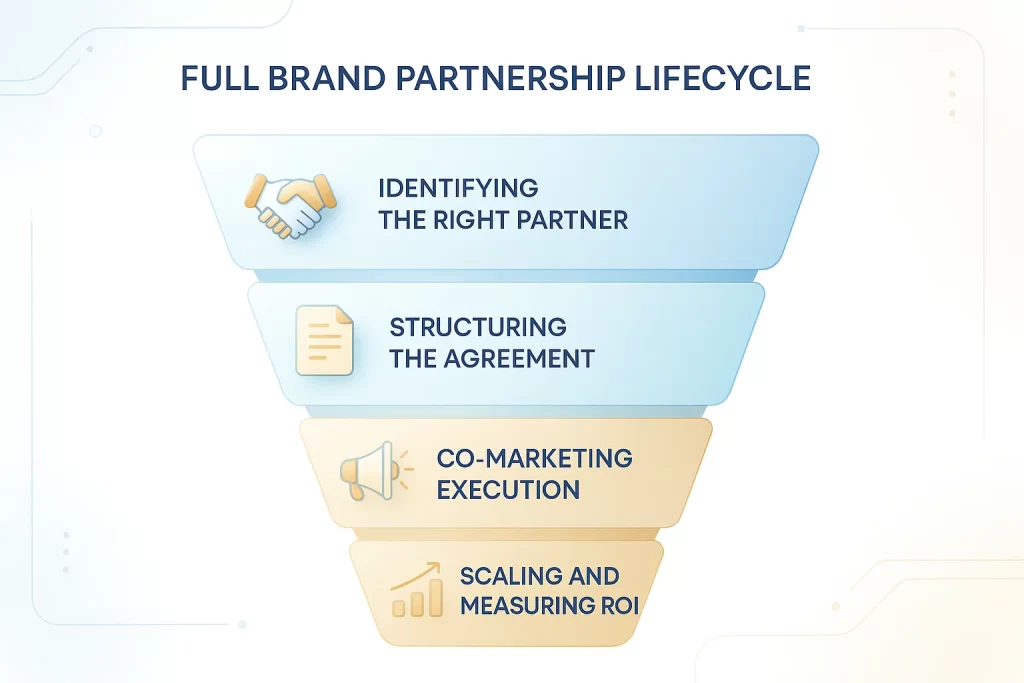
This article unpacks the entire lifecycle of building brand strategic partnerships—from identifying the right collaborator to structuring win-win deals, executing joint campaigns, and scaling long-term value. It integrates expert-backed insights, pain point resolution, real data, and actionable frameworks, delivering a comprehensive guide to collaboration as the next competitive edge.
Why Strategic Brand Partnerships Matter
Strategic brand partnerships are more than marketing stunts—they’re powerful accelerators of growth. According to Forbes, in 2023, certain brands generated over 28 % of their total revenue through partnerships, with companies committed to long‑term collaborations often seeing annual revenue growth exceeding 50 % .These figures highlight how deeply brand alliances can embed into core business strategy—not merely as auxiliary marketing, but as center-stage drivers of expansion.
Unlock Reach & Amplify Credibility
Partnerships enable brands to expand their audience quickly, tapping into partner communities that may otherwise be inaccessible. A trusted partner can lend credibility: aligning with a reputable brand often boosts consumer confidence and brand perception in ways that solo efforts rarely achieve. This addresses a frequent pain point—limited brand trust among new customers.
Shared Resources & Cost Efficiency
Collaborations allow brands to share marketing budgets, creative assets, and distribution channels, lowering individual investment while increasing impact. Partnership marketing research confirms that resource pooling and joint promotions drive broader reach and better customer value per spend. For smaller businesses worried about budget constraints, this offers a strategic escape hatch.
Fast-Track Innovation & Market Access
Co-branding and alliances can spark innovation by combining complementary expertise—from tech to content, design, or R&D—with each partner enhancing the other’s offerings. Co-branding arrangements often bring new products or service bundles to market faster and with higher appeal. This empowers brands to move quickly in competitive environments instead of enduring slow, high-risk product development cycles.
Measurable Returns—and Evidence of Impact
Research-backed case studies show remarkable results:
- GlassesUSA achieved an 87 % increase in unique conversions, 55 % revenue growth, and 40 % higher average order value through co-branded collections; and partner-acquired customers had 18 % higher lifetime value.
- In another example, a co-branded credit card campaign helped reduce acquisition costs by 94 %, delivering exceptional ROI when measured via conversion lift analysis.
Conversion lift studies—comparing exposed audiences with holdout groups—often reveal 50 % or more incremental gains in conversions, offering clear visibility into campaign impact.
Strategic Alliances Are Business Fundamentals
Today, brand partnerships are less edge strategy and more core strategy. The percentage of revenue derived from strategic alliances jumped from 3‑6 % in the 1990s to around 40 % by 2010, a trend that continues to this day. In varied cases—from co‑brand products to creator collaborations—the ability to forge complementary alliances can deliver sustainable long-term returns.
Challenges Solved
- Limited reach or audience growth
- Resource constraints and high marketing costs
- Slow product or market development cycles
- Low customer trust or perceived credibility
Unique angle reinforced: Strategic brand partnerships aren’t just marketing—they’re business engines that unlock reach, bring innovation, and deliver measurable ROI at scale.
Identifying the Right Partner: Fit, Values & Value
Choosing the right brand collaborator is a pivotal step in building a strategic partnership that delivers real results—whether it’s audience expansion, credibility, or innovation.
Define Values & Strategic Alignment
Start by clarifying your own brand’s core values, mission, and long-term objectives. As one LinkedIn expert advises: “Define your values, research your options, assess the fit, plan the collaboration…”. Then, evaluate potential partners on whether their values, reputation, and audience overlap authentically with yours, since misaligned partnerships can harm brand credibility and yield few tangible benefits Pitch.
Look for Complementary Strengths & Mutually Beneficial Value
Effective partners bring something to the table your brand lacks—a complementary strength such as distribution, technology, creative assets, or content expertise. According to Impact, mature partnership programs contribute roughly 28% of company revenue, compared to 18% for less mature ones, thanks to these complementary synergies. Strategic alliances aren’t mergers—they are collaborations where each party benefits while remaining independent entities
Audience Overlap Meets Expansion Potential
Look for partners whose customer base overlaps meaningfully with yours but also offers incremental downside: together, you can reinforce shared market segments while expanding into new areas. Shared audiences create authenticity; outreach beyond existing customers drives growth—especially for younger brands seeking reach amplification.
Audit Reputation & Trustworthiness
For YMYL scenarios—like finance, health, or privacy-impacting branding—credibility is especially vital. Perform independent reputation checks using search engines, reviews, and publications to verify that a prospective partner is widely respected and trustworthy over time
Set Clear Goals & Measurable Outcomes
Once values and audiences align, define measurable goals: for example, “increase conversions from Partner A’s email list by 20%,” or “add 1,000 net subscribers in the next 90 days.” Outlining shared KPIs and roles upfront prevents misunderstandings and strengthens execution accountability.
Support & Collaboration Acts as Partnership Glue
Maintain the relationship with shared resource support, education, creative asset sharing, and ongoing communication. Agencies like Dialogue emphasize partner onboarding and activation resources as essentials for streamlined collaboration and better outcomes
Strategic partnerships succeed when the values, goals, and audiences of both brands align—and when both sides bring their unique strengths. By starting with values, auditing overlap and reputation, and setting shared KPIs, brands move from opportunistic collaborations to high-impact, growth-driving alliances.
Structuring a Win‑Win Partnership Deal
In launching a strategic collaboration, the legal and financial framework—created early—will define how value is shared, risks are managed, and trust is upheld. This section explores essential deal structures, payment models, and legal safeguards.
Choosing the Right Partnership Model
- Revenue-sharing vs flat-fee vs referral
- Revenue-sharing agreements align incentives: both parties prosper when campaign goals are met.Flat-fee sponsorships offer predictability, great when outcomes are less certain.
- Referral or affiliate models suit performance-based collaborations, easing upfront investment risk.
- Joint ventures & co-branding arrangements
In deeper collaborations, consider equity or shared product ventures. These often deliver synergistic value but require detailed alignment on control, contribution, and exit strategies.
Components of a Clear Partnership Agreement
- Scope & objectives : Clearly define campaign scope, roles, deliverables, timelines, and responsibilities to avoid disputes and scope creep.
- Deliverables & quality standards: Define expectations—e.g. content formats, brand guidelines adherence, partner review cycles, and performance minimums.
- Revenue distribution terms: For shared revenue, clearly outline ticketing, commission rates, payout timelines, and audit rights.
- Duration & termination clauses: Set term start/end, renewals, termination process, breach consequences, and post-termination usage rights.
- Legal protection clauses: Non-disclosure agreements (NDAs) to safeguard proprietary information, indemnity clauses for litigation risks, usage rights for assets, and data privacy adherence.
Risk and Equity: Choosing What Matters Most
- Brand & reputational risk: Require co-marketing assets to be mutually approved and ensure the partner’s reputation is sound before entering binding agreements.
- Legal & regulatory compliance: Including in sectors like health, finance, or data-sharing requires stricter compliance standards (GDPR, HIPAA, etc.).
- Financial risk: For higher-cost collaborations, secure up-front commitments or milestone-based payments—especially critical for high-stakes activations involving inventory or ad spend.
Tools to Simplify Agreement Structuring
- Templates & playbooks: Use standardized agreement templates suitable to your industry (e.g. affiliate, co-marketing, licensing). These foster efficiency and reduce legal friction.
- Term sheets: Capture high-level agreement terms in a one-page summary before investing time in full contracts.
- Legal review procedures: Schedule outside counsel or in-house legal review for compliance risk areas and ongoing activations.
Why Structure Matters: Avoiding Scope Creep & Disputes
Partnerships are fragile constructs. Without clear frameworks, brands report experience such as:
“We ended up doing more work than we agreed to—and our partner ghosted afterward.”
“Without a legal baseline, we had to renegotiate midway due to misaligned expectations.”
These issues erode trust and stunt partnership potential.
Co‑Marketing Campaign Planning & Execution
Executing a successful co-marketing campaign hinges on strategic planning, shared vision, and rigorous coordination. This section outlines key steps—from goal-setting to campaign rollouts—while addressing common concerns like loss of control over messaging or uncertain ROI.
Set Shared Objectives and KPIs
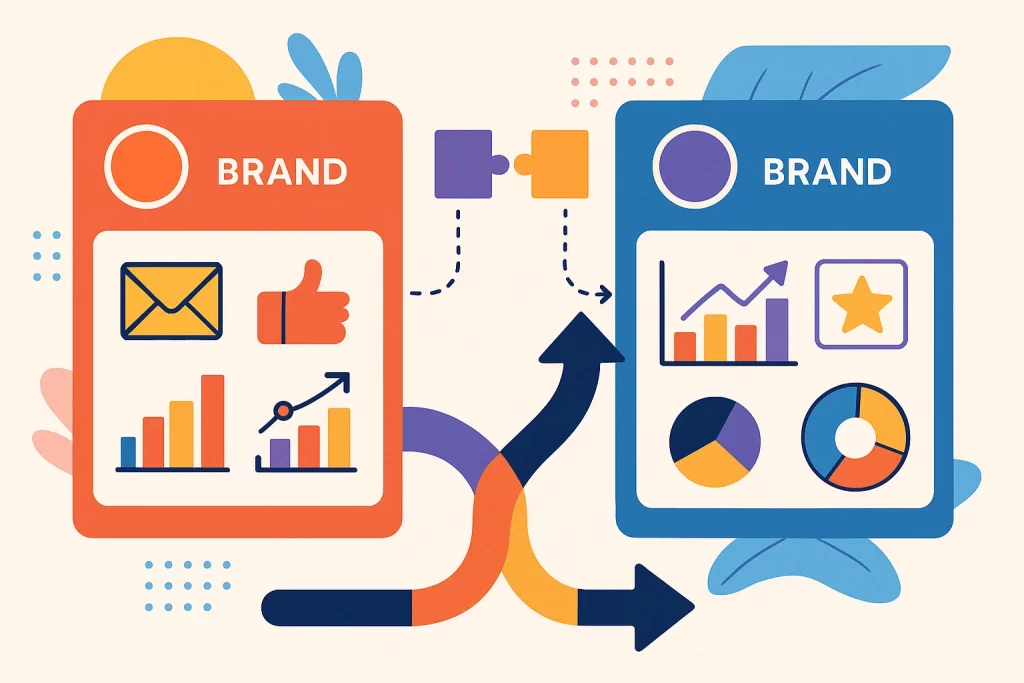
Begin by agreeing on measurable goals that align with both partners’ business objectives—such as increasing referral traffic by 25%, double open rates in email campaigns, or add 1,000 new high-quality subscribers in 60 days. Shared KPIs (like conversions, sign-ups, social engagement, or revenue lift) set clear accountability and help both sides evaluate effectiveness objectively.
Collaboratively Design the Campaign Strategy
Joint brands should co-develop campaign themes, messaging, and creative direction. Work collectively on joint branding elements—such as logos, visuals, and tone—to ensure both brands are authentically represented. Aligning creative vision upfront helps prevent inconsistent branding or diluted messaging during execution.
Audience Targeting & Channel Planning
Use combined data to refine target segments. Analyze both customer bases to identify overlapping and new segments, then decide which channels—email, social media, influencer outreach, content syndication, webinars—are best suited to reach those segments. Diversified channels multiply reach, reduce dependency on one platform, and enhance overall campaign performance.
Campaign Asset & Timeline Coordination
Create a collaborative timeline that includes key milestones: asset creation, legal approvals, reviews, launch dates, and performance check-points. Define deliverables clearly—guidelines for co-branded posts, graphics, blog features, email templates, press copy, and visual assets. Establish a review process involving both legal, marketing, and brand teams.
Testing & Iteration
Before full launch, test campaign elements—such as A/B email variations, landing page copy, or promotional creatives—across smaller groups. Monitor early results closely and refine creative based on what resonates best. By prioritizing early feedback and trimming underperforming elements, brands maximize ROI.
Open Communication & Shared Project Management
Ensure streamlined coordination using collaborative tools like shared calendars, project management boards, and communication channels (e.g. Slack, Trello, Asana). Regular status check-ins—weekly or bi-weekly—help align execution and catch issues early, safeguarding shared reputation and budget.
Real-World Example: Joint Product Launch Success
A startup partnering with a national retailer launched an exclusive co-branded product bundle. By joint email promotions, social media co-posts, and web features—with clear shared visuals and co-owned KPI tracking—they achieved 120% above their target in sales, engaged both audiences, and saw a 30% boost in repeat purchases following the campaign.
Challenges Solved
- Concern over diluted or misaligned brand voice
- Unclear shared responsibilities or deliverables
- Uncertainty regarding campaign ROI or conversion tracking
- Coordination inefficiencies across marketing teams
Strategic alignment, goal clarity, and structured execution transform co-marketing campaigns from hopeful experiments into reliable performance drivers.
Measuring Success: Metrics, Reporting & Growth
Evaluating the ROI of brand partnerships transforms speculation into actionable insights. This section walks you through tracking key metrics, building attribution systems, and balancing short-term wins with long-term strategic gains.
Define Clear Partnership Goals & KPIs
Successful measurement starts with SMART goals—specific, measurable, achievable, relevant, time-bound objectives. Whether it’s generating qualified leads, reducing customer acquisition cost (CAC), or launching co-branded sales, aligning KPIs ensures both brands stay accountable and focused. As ChannelPro Network observed, partnerships without defined goals often “drain resources without delivering ROI.
Key Metrics to Track Short- & Long-Term ROI
Cover the full spectrum using metrics explained below:
- Revenue from partners: Track direct referrals, co-branded product sales, shared offerings, and reseller revenue. Partner Relationship Management (PRM) tools with unique codes and clear attribution enable precise tracking.
- Customer Acquisition Cost (CAC) & Cost Savings: Compare costs via partnerships against other channels. Lower CAC signals efficiency.
- Lead generation & conversion rate: Use CRM tracking and referral source tags to assess funnel conversion performance.
- Customer Lifetime Value (CLTV): Measure long-term value of customers acquired via partnership versus others. Also known as pCLTV in partner context.
- Market reach & brand lift: Track new audience exposures, branded search volume, sentiment, social mentions, NPS, and equity shifts. Analysis should span campaign and brand health data.
- Operational efficiencies: Qualitative gains like reduced fulfillment or creative costs also count. Benefits like streamlined maintenance or shared development save time and money.
Harte Hanks notes that half to 80% of corporate alliances fail within a few years—measurement helps you avoid becoming one of them.hartehanks.com
Attribution: Multi-Touch & Holistic Tracking
Avoid oversimplified last-click models. Instead:
- Use multi-touch attribution to distribute credit across discovery, engagement, and conversion phases (linear, U-shaped, W-shaped).
- Track using UTM parameters, promo links, dedicated landing pages, and partner dashboards for transparent source tracking.
- Request screenshots from partner dashboards or platforms where reach and engagement visibility is limited externally.
Streak researchers highlight that combining quantitative and qualitative metrics yields the most robust ROI storytelling.
Reports That Matter: Telling the Story Behind the Numbers
Create layered reporting frameworks:
- Campaign-level dashboards : Show tracking of activated metrics—traffic lift, conversions, pipeline activity.
- Program-level insights: Compare partnership ROI across partner cohorts and channels.
- Executive-level summaries : Focus on overall ROI, CLTV impacts, and brand lift data tied to strategic alignment.
Include qualitative context: customer sentiment shifts, earned media coverage, content reuse success, or influencer quotes that illustrate impact beyond numbers.
Case Study Snapshots & Best Practices
Mayo Clinic Telehealth Partnership
Reduced patient acquisition cost by 41%, raised patient lifetime value by 19%, and delivered a 380% ROI within 18 months.
Deloitte: Creator Partnerships That Work
Brands giving autonomy to creators in content creation see up to 40% higher revenue ROI, compared to those that restrict creativity. Long-term relationships and respect for creators’ business needs were key.
CrowdStrike + AWS Collaboration
Swept in $4.2M in partner-sourced revenue in Q1 2024 alone thanks to complementary resources and aligned market reach.
With a comprehensive measurement system, you can confidently evaluate which partnerships drive real impact—informing strategic decisions, allocation of resources, and scaling future collaborations
Common Pitfalls and Partnership Pitfalls to Avoid
Even the best-aligned brand collaborations can falter if not managed carefully. Understanding common partnership pitfalls and knowing how to avoid them ensures smoother execution and preserves trust between brands.
Pitfall 1: Scope Creep & Misaligned Expectations
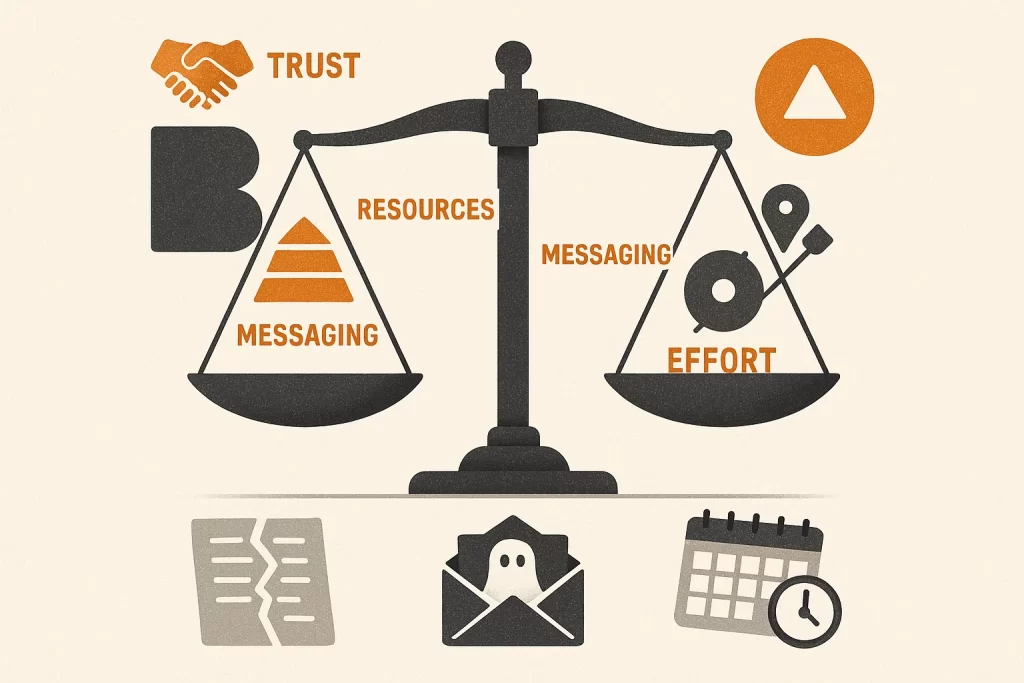
When project objectives aren’t clearly defined or documented, expectations may diverge quickly. A campaign can balloon into additional work or deliverables that weren’t agreed upon—leading to imbalance and resentment. Without sealed deliverables and defined responsibilities, one brand may feel they’re bearing more effort than the other.
Pitfall 2: Inconsistent Brand Voice and Messaging
When two brands have different tones, values, or visual styles, messages can feel dissonant. Consumers may perceive inauthenticity if branding is misaligned or if one partner overshadows the other in messaging. Joint campaign assets must undergo careful review to maintain voice, tone, and creative consistency.
Pitfall 3: Poor Timing or Execution Delays
Without shared timelines and buffer allowances for approvals or unexpected delays, campaigns risk being launched out-of-sync. This inconsistency can dilute impact, cause customer confusion, and derail momentum in time-sensitive promotions.
Pitfall 4: Unbalanced Contributions & Value Exchange
Inequitable partnerships—where one partner invests more time, budget, or creative output—lead to dissatisfaction and hinder long-term collaboration. When mutual value isn’t perceived equally, future cooperation suffers. It’s essential that benefits, effort, and credit are visibly and fairly shared.
Pitfall 5: Reputation or Risk Exposure
Always vet partners for reputational risk—bad press, legal conflicts, controversial actions, or social media backlash can transfer negative brand perception. Make sure you conduct due diligence and protect your brand legally in areas like content usage, privacy, and liability.
Preventive Strategies: Pitfall-Proof Your Partnership
| Pitfall | Prevention Strategy |
| Scope creep | Use detailed agreements, defined deliverables, milestones, and sign-offs |
| Brand voice discord | Co-create joint style guides, mockups, and visual templates |
| Timing mishaps | Use shared calendars and buffer windows for approvals and launches |
| Imbalanced value exchange | Define and document clearly what each brand is contributing and gaining |
| Reputation risk | Vet reputational history and build legal safeguards in the contract |
Real-World Insight
“We partnered with a bigger brand thinking it’d boost our growth, but since they delayed approvals and wrote their own messaging, our brand voice got lost—and the campaign flopped.”
“Another time, we ended up doing more work than we agreed, and the partner ghosted us post-launch.”
Embedding clear agreements, joint creative reviews, and shared asset planning mitigates these issues and preserves collaborative integrity. It also helps both sides stay aligned on high expectations, fair workload, and mutual benefits.
Scaling Your Partnership Strategy
To truly accelerate growth, partnerships must evolve from one-off collaborations to repeatable, scalable programs. This section explores how to grow a partner ecosystem, maintain alignment, and empower sustainable collaboration across teams and markets.
Partnerships as Growth Levers for Small Businesses
Strategic partnerships are a high-leverage path for scaling—especially for small or resource-constrained brands. Instead of hiring more staff or investing in new infrastructure, partnering enables you to enter new markets, share resources, and reinforce credibility with minimal added overhead. As one analysis puts it: “Strategic partnerships… accelerate efforts by opening up new markets, expanding capabilities, and strengthening your brand—all without adding overhead.
Build Repeatable Collaboration Patterns
Success comes from systematizing what works. Move from ad-hoc projects to programmatic models by:
- Documenting templates for onboarding, legal agreements, and campaign frameworks.
- Categorizing partner types (e.g. affiliate, co-brand, creator-led) with corresponding processes.
- Automating operational milestones, such as payouts, asset delivery, and performance tracking.
This shift enables you to scale without multiplying complexity or manual effort.
Stage-Based Growth: From Launch to Expansion
According to partnership program leaders, alignment between partner needs and internal processes evolves through three distinct stages:
- Infant Stage – Early collaboration experiments; fast-paced pivots and learning.
- Teenage Stage – Emerging structure with feedback loops, expect partner input.
- Senior Stage – Mature, stable operations with high partner engagement and predictable outcomes.
This staged growth approach ensures partnerships remain manageable and mutually beneficial over time.
Deep Engagement: Relationships over Transactions
Long-lasting partnerships extend beyond transactional exchanges. Especially in fields like cybersecurity or professional services, ongoing communication and trust matter. One case study notes: partners must stay aligned through change, maintain transparency, and host real-world engagement events—even amid evolving strategies.
Relationships built on shared goals and trust outlast fleeting collaborations and unlock tiered opportunities for growth.
The Power of Tech & Data Infrastructure
To scale partnerships effectively, invest in tools that enable efficiency and transparency:
- CRM integration, partner dashboards, and unified performance tracking systems enable better operational visibility.
- Deal automation and segmentation allow onboarding partners without overhead overload.
This infrastructure removes friction and empowers strategic growth.
Example: Scaling Creator-Led Advocacy at Scale
A premium cosmetics brand activated a global network of creators across 30+ markets. Consistent messaging, coordinated asset sharing, and streamlined content distribution enabled coherent local-to-global storytelling. The result: greater brand momentum and scalable engagement across creator segments
Practical Guidelines: Scale Smarter, Not Just Bigger
| Strategy Dimension | Scalable Approach |
| Program Structure | Use repeatable frameworks, templates, and workflows |
| Partner Segmentation | Differentiate onboarding for creators, affiliates, co‑brands |
| Communication Cadence | Regular check-ins—personal and automated as program grows |
| Operational Technology | CRM, dashboards, automated deal-payout systems |
| Partnership Review Cycles | Quarterly or biannual review to assess alignment and pivot |
FAQ
1. How can a small business start a brand collaboration when they’re just getting started?
For small businesses seeking brand collaborations for startups, prioritizing value and authenticity is essential. Reddit users often advise:
“Call them and show what you bring to the table—not what you want from them.”
Begin by identifying what your business uniquely offers—whether expertise, content assets, or market access—and approach potential partners with a clear proposal of reciprocal value. This approach minimizes power imbalance and helps ease the common startup fear of being overshadowed or overlooked.
2. Is it only worth doing partnerships if there’s instant ROI?
Building strategic partnerships for startups isn’t always about immediate returns. While it may take time to realize full financial value, partnerships can unlock referrals, new markets, and positioning upgrades. As one user shared:
“It could give them access to new markets, referrals, chance to get acquired…”
Even without direct revenue lift, partnerships can be foundational for future growth. Prioritize long‑term value and credibility, especially when short‑term ROI is uncertain.
3. Why do many partnerships fail, even with legal agreements?
Though contracts seem protective, failure often stems from misaligned values or poor planning—not paperwork. One redditor reflects:
“70% of partnerships fall apart… even if it’s in writing… you’re spending $50K+ and going to court.”
This highlights the critical role of matching values, expectations, and reputation—not just legal formality—to avoid costly disputes and emotional fatigue.
4. How do you approach larger brands for a partnership if you’re small?
“Approach them with what YOU can bring. Find someone connected to decision-makers.”
A cold pitch should clearly articulate mutual benefit, ideally via warm introductions or credible personal networks. Show how collaboration can solve their problems or make life easier—not the other way around.
5. What are the key documentation steps to protect early partnerships?
Without foundational documentation, Reddit entrepreneurs note:
“Without good documentation there is a lot of room for failure.”
Essential agreements include:
- A term sheet outlining roles, deliverables, and KPIs up front
- NDAs to protect sensitive info
- Scope statements to avoid unexpected added work
- Termination provisions for smooth exits
These steps prevent misunderstandings and ensure both parties stay aligned even as collaboration evolves.
Conclusion
Strategic brand partnerships are not just trends—they are resilient growth engines for brands seeking reach, innovation, and scalability. From defining aligned values to structuring equitable agreements, executing co-marketing campaigns, measuring performance, and avoiding pitfalls, partnerships—when done right—transform resource constraints into market leverage.
Today’s most effective collaborations go beyond logo placements. They are rooted in shared vision, measurable outcomes, mutual support, and long-term trust. Whether you’re a startup seeking your first co-brand ally or a scaling business looking to systematize your partner ecosystem, the roadmap is clear: Align. Activate. Accelerate.
As business ecosystems grow more interconnected, those who invest in strategic relationships will not only compete—they’ll lead. The future of marketing isn’t solo; it’s synergized.