
7 Step-by-Step Guide to Building Lead Nurturing Journeys
Introduction
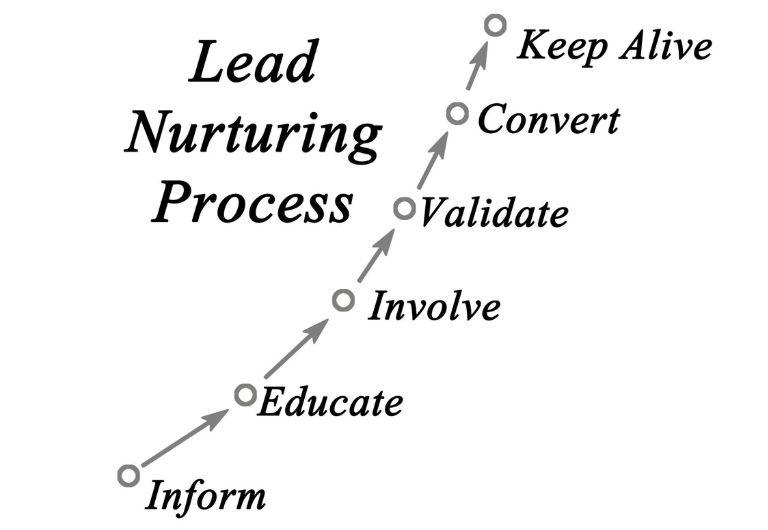
In high-growth markets like Dubai—where customer expectations are sophisticated, competition is intense, and sales cycles span multiple touchpoints—lead nurturing journeys are no longer a tactical add-on. They are strategic infrastructure.
McKinsey research shows that companies excelling at customer journey management achieve revenue gains of 10–15% while lowering service costs by up to 20%. Yet many organizations still rely on disconnected campaigns rather than cohesive journeys that guide prospects from first signal to long-term value.
This guide is written for decision-makers, CMOs, and growth leaders who want to move beyond ad hoc follow-ups and build repeatable, scalable lead nurturing journeys that convert. Drawing on global best practices and regional insights from the Middle East, we break down a seven-step framework that aligns marketing automation journeys with buyer intent, behavioral triggers, and commercial outcomes.

Why Lead Nurturing Journeys Matter More in Complex Markets
Dubai-based businesses often sell into fragmented, multicultural audiences across B2B, B2C, SaaS, and enterprise segments. Decision-making is rarely linear. Multiple stakeholders, long evaluation phases, and trust-based relationships define the buyer journey.
In this environment, lead nurturing is not about sending more emails. It is about orchestrating relevance across the customer lifecycle—anticipating questions before they are asked and delivering value before a purchase decision is made.
Harvard Business Review notes that nurtured leads make purchases that are 47% larger than non-nurtured leads. The implication is clear: nurturing is a revenue lever, not a communication tactic.
Step 1: Anchor Your Lead Nurturing Strategy to Revenue, Not Channels
The most common failure in lead nurturing journeys is channel-first thinking. Teams start with tools—email platforms, CRMs, automation software—before clarifying what commercial problem the journey is meant to solve.
An effective lead nurturing strategy begins with revenue alignment. The central question is not “What content should we send?” but “What decision must the buyer be confident enough to make next?”
This requires tight collaboration between marketing and sales. In high-performing organizations, both functions agree on:
- What qualifies as a meaningful lead signal
- How lead qualification evolves across sales funnel stages
- When a lead transitions from marketing-owned to sales-owned
Only once this alignment exists can customer journey nurturing become systematic rather than reactive.
Step 2: Map the Buyer Journey Before Designing the Nurturing Workflow
Before automation, there must be understanding. Buyer journey mapping is the intellectual backbone of effective lead nurturing journeys.
In Dubai’s B2B and SaaS sectors, buyer journeys typically include extended consideration phases driven by risk mitigation and internal approvals. This means nurturing must address uncertainty as much as interest.
Rather than mapping channels, mature teams map questions, objections, and motivations at each stage of the lead nurturing funnel. Early-stage prospects seek clarity and credibility. Mid-stage prospects seek proof and differentiation. Late-stage prospects seek reassurance and validation.
By documenting these stages, marketers create a blueprint that guides every message, asset, and trigger. Without this map, nurturing workflows become generic drip campaigns disconnected from buyer reality.
Step 3: Design a Lead Nurturing Process That Mirrors Decision Psychology
Once the buyer journey is clear, the next step is translating insight into a structured lead nurturing process. This is where many organizations default to rigid funnels. High-performing teams, however, design journeys that adapt to behavior.
Effective lead nurturing journeys reflect how humans make decisions:
- Confidence increases incrementally
- Trust is built through consistency, not volume
- Relevance outweighs frequency
Rather than pushing leads forward prematurely, the process should remove friction at each stage. This means sequencing value logically—educational content first, then comparative insight, followed by commercial clarity.
In practice, this often takes the form of layered messaging where email lead nurturing is supported by retargeting, webinars, case studies, and sales enablement touchpoints. The journey feels cohesive because it mirrors how buyers think, not how marketing teams are structured.
Step 4: Activate Marketing Automation Journeys With Behavioral Intelligence
Automation is the engine of scale, but without intelligence it accelerates inefficiency. The most advanced marketing automation journeys are not time-based—they are behavior-based.
Behavioral triggers transform static nurturing into responsive engagement. When a prospect downloads a whitepaper, revisits pricing pages, or attends a webinar, these signals indicate readiness for deeper conversation.
In advanced lead nurturing workflows, automation responds dynamically:
- High-intent actions accelerate the journey
- Passive engagement maintains educational pacing
- Inactivity triggers re-engagement or segmentation
According to Salesforce data, companies using behavioral marketing automation see a 451% increase in qualified leads. The lesson is not to automate more, but to automate smarter—anchoring each trigger to intent rather than assumptions.
Step 5: Personalize Customer Journey Nurturing at Scale
Personalization is often misunderstood as inserting a first name into an email. In reality, meaningful personalization reflects context, industry, role, and stage within the customer lifecycle.
For Dubai-based enterprises selling across sectors such as real estate, fintech, logistics, and SaaS, one-size-fits-all messaging erodes trust. Sophisticated lead nurturing journeys segment audiences based on:
- Industry vertical
- Company size or maturity
- Engagement history
- Lead scoring models
This allows teams to deploy personalization strategies that feel consultative rather than promotional. Content adapts to relevance, not demographics alone. Over time, this increases conversion optimization by making each interaction feel intentional.
Step 6: Align Sales Enablement With the Lead Nurturing Funnel
A common gap in lead nurturing journeys emerges at the marketing-to-sales handoff. Leads are often passed prematurely or without context, creating friction rather than momentum.
Best-in-class organizations integrate CRM integration directly into their nurturing workflows. Sales teams receive not just leads, but narrative context—what the prospect has consumed, which objections they may hold, and which messages resonated.
This alignment shortens sales cycles. Gartner reports that sales reps supported by effective nurturing insights close deals 18% faster. In complex markets, speed is not about pressure—it is about preparedness.
When marketing and sales share a unified view of the lead nurturing funnel, conversations begin where journeys leave off, rather than starting from scratch.
Step 7: Measure, Optimize, and Evolve Lead Nurturing Journeys
Lead nurturing journeys are living systems. Market dynamics shift, buyer expectations evolve, and competitive narratives change. Static journeys decay quickly.
Optimization begins by tracking metrics aligned with business outcomes, not vanity indicators. Open rates matter less than progression velocity across sales funnel stages. Engagement quality outweighs content volume.
High-performing teams conduct regular journey audits, examining where leads stall, accelerate, or disengage. These insights inform refinement—adjusting timing, messaging, or segmentation to better reflect reality.
Over time, this creates a compounding advantage. Each iteration improves efficiency, conversion rates, and revenue predictability.
What Happens After You Build Lead Nurturing Journeys—and Why It Matters
Building lead nurturing journeys is not the finish line. It is the moment where growth stops being episodic and starts becoming structural. The real value of the framework emerges only after it is operationalized, measured, and refined over time.
Once the seven steps are in place, lead nurturing journeys function less like campaigns and more like a flywheel—each interaction strengthening the next. Prospects enter the system at different stages, but the experience feels consistent because it is designed around intent, not tactics. Every touchpoint educates, qualifies, and builds confidence simultaneously.
Over time, this creates a powerful compounding effect. Leads arrive at sales conversations already aligned on problem definition and solution relevance. Sales teams spend less time persuading and more time advising. Marketing stops chasing short-term wins and starts engineering long-term pipeline health. The organization gains leverage because the same effort produces increasing returns.
The flywheel effect also changes how performance is evaluated. Instead of isolated campaign metrics, leadership can observe momentum across the entire lead nurturing funnel—how quickly prospects progress, where trust accelerates, and where friction slows growth. This visibility allows teams to optimize with precision rather than intuition.
Most importantly, mature lead nurturing journeys institutionalize learning. Every interaction generates insight into buyer behavior, preferences, and objections. These insights feed back into the system, continuously improving segmentation, personalization, and timing. What begins as a framework evolves into a self-improving growth engine.
In markets defined by competition and rising customer expectations, long-term advantage rarely comes from doing more. It comes from designing systems that learn faster than competitors. When executed with discipline, lead nurturing journeys do exactly that—turning strategy into sustained, scalable growth.
Think of the 7 steps as designing the machine. What follows is running, scaling, and monetizing the machine.
1. You Turn the 7 Steps Into a Live Revenue Engine
Once built, lead nurturing journeys become a self-reinforcing system that:
- Educates leads without manual effort
- Qualifies prospects before sales touch them
- Reduces dependency on individual sales reps
- Increases deal velocity and deal size
Instead of asking “Did this campaign work?”, leadership can now ask:
“How many leads moved closer to revenue this month?”
That’s the shift—from campaigns to pipeline mechanics.
2. You Standardize How Growth Happens (Not Just Generate Leads)
After the 7 steps, marketing is no longer improvising.
You now have:
- A repeatable lead nurturing workflow
- Defined handoff rules between marketing and sales
- A shared understanding of buyer readiness
This allows you to:
- Onboard new sales reps faster
- Launch new products without reinventing messaging
- Enter new markets (like GCC expansion) with confidence
In short: growth becomes systematic, not heroic.
3. You Use the Journeys as a Decision-Making Framework
One of the biggest hidden benefits is clarity.
When performance drops, you no longer guess:
- Is it lead quality?
- Is it sales follow-up?
- Is it messaging?
The journey shows you where friction exists:
- Early-stage drop-off → messaging or targeting issue
- Mid-funnel stagnation → trust or differentiation gap
- Late-stage hesitation → pricing, proof, or risk
The 7 steps give leadership a diagnostic lens, not just metrics.
4. You Shift Sales From “Persuasion” to “Precision”
After nurturing is in place, sales conversations change.
Sales teams now engage leads who:
- Already understand the problem
- Already trust the brand
- Already see category value
This means:
- Fewer “what do you do?” calls
- More “how do we work together?” conversations
- Higher confidence on both sides
In practice, this often leads to:
- Shorter sales cycles
- Higher close rates
- Less discounting
Sales stops pushing. Buyers start pulling.
5. You Compound Value Over Time (This Is the Real Payoff)
Unlike campaigns, lead nurturing journeys compound.
Every quarter you:
- Improve segmentation
- Refine triggers
- Upgrade personalization
- Tighten sales alignment
The same traffic and leads now generate more revenue.
This is why mature organizations invest heavily here.
The ROI curve is non-linear—slow at first, then exponential.
6. You Use the Journey Beyond Acquisition
This is often missed.
The same framework powers:
- Upsell and cross-sell journeys
- Partner enablement
- Re-engagement of dormant leads
- Customer education and retention
In other words, the 7 steps don’t end at conversion.
They extend across the entire customer lifecycle.
Case Study: A B2B SaaS Firm Scaling in the UAE
A Dubai-based B2B SaaS provider targeting enterprise clients struggled with long sales cycles and inconsistent lead quality. Marketing generated volume, but sales engagement remained low.
By redesigning their automated lead nurturing journeys, the company shifted from campaign-based outreach to behavior-driven workflows. Buyer journey mapping revealed that prospects needed more reassurance around data security and regional compliance.
The team introduced staged content addressing these concerns early in the journey. Behavioral triggers accelerated high-intent leads into sales conversations while maintaining educational pacing for others.
Within six months, the firm achieved:
- A 32% increase in sales-qualified leads
- A 21% reduction in sales cycle length
- A measurable improvement in close rates
The transformation did not come from more content, but from better journey design aligned with buyer psychology.
Lead Nurturing Journeys for B2B and SaaS: Strategic Implications
For B2B and SaaS organizations, lead nurturing journeys are strategic assets. They institutionalize trust-building at scale, reduce dependency on individual sales performance, and create predictable revenue pipelines.
In markets like Dubai—where reputation, expertise, and relationships drive decisions—nurturing becomes a differentiator. Organizations that invest in structured, intelligent journeys consistently outperform those relying on fragmented touchpoints.
Conclusion: From Campaigns to Capability
Lead nurturing journeys represent a fundamental shift in how modern organizations think about growth. They move marketing away from episodic, campaign-driven activity toward a continuous, always-on capability that compounds over time. When designed with rigor, empathy, and intelligence, these journeys stop behaving like communication sequences and start functioning as growth infrastructure—quietly shaping buyer perception, readiness, and confidence at every stage of the customer lifecycle.
For ambitious organizations, especially those operating in complex B2B and high-consideration markets, the strategic question is no longer whether to nurture leads. It is how deliberately, how consistently, and how intelligently that nurturing is executed. Teams that master this discipline replace guesswork with structure. They build pipelines that are not only fuller, but healthier—where leads progress with intent, sales conversations begin with context, and conversion becomes a consequence of trust rather than pressure.
In a region defined by rapid economic transformation, rising customer expectations, and global ambition, lead nurturing journeys are no longer optional. They are business critical. Organizations that invest in them early create durable competitive advantage—one rooted not in short-term tactics, but in systems that learn, adapt, and scale. Over time, this capability becomes difficult to replicate, turning disciplined nurturing into one of the most defensible growth assets a modern business can own.
FAQ
1. What is the difference between lead nurturing and lead generation?
Lead generation focuses on capturing interest, while lead nurturing journeys focus on developing that interest into purchase readiness. Nurturing builds trust, educates prospects, and reduces hesitation over time. Without nurturing, most generated leads never convert.
2. How long should a lead nurturing journey last?
There is no fixed duration—it depends on buying complexity and decision risk. B2B and SaaS journeys often last weeks or months, while B2C journeys may convert faster. The goal is relevance, not speed.
3. Do small businesses really need to lead nurturing journeys?
Yes. In fact, small businesses benefit the most because nurturing reduces reliance on manual follow-ups. Even simple automated lead nurturing journeys can significantly improve conversion rates without increasing headcount.
4. Why do most lead nurturing campaigns fail to convert?
Most fail because they are time-based rather than behavior-based. Sending content without responding to buyer intent creates noise instead of value. Effective lead nurturing journeys adapt to engagement, not calendars.
5. Is email still effective for lead nurturing journeys in 2026?
Yes, but only when combined with personalization and behavioral triggers. Email lead nurturing works best as part of a broader journey that includes content, retargeting, and sales touchpoints. Generic email blasts no longer perform.