
Informational vs Navigational vs Transactional Queries: The Complete Guide to Search Intent SEO

Introduction
Search intent is the foundation of modern SEO because it reveals the purpose behind every search query. Whether a user wants to learn about a topic, visit a specific website, compare products, or make a purchase, Google aims to deliver results that best satisfy that intent. This means that successful SEO is no longer about inserting keywords into content but about understanding user goals and creating pages that provide the most relevant and helpful answers. According to Google’s Search Quality Evaluator Guidelines, high-quality content should effectively fulfill its purpose while demonstrating Experience, Expertise, Authoritativeness, and Trustworthiness (E-E-A-T).
The four primary types of search intent—Informational, Navigational, Commercial Investigation, and Transactional—represent different stages of the customer journey. A user searching “What is SEO?” is looking for educational content, while someone searching “Semrush pricing” expects to find a pricing page. Similarly, queries like “best SEO tools” indicate users are comparing options before purchasing, whereas “buy SEO software” signals immediate purchase intent. Recognizing these differences enables businesses to create targeted content that aligns with user expectations, resulting in higher rankings, better engagement, and improved conversion rates.
As AI-powered search and semantic algorithms continue to evolve, understanding search intent has become more important than ever. Modern search engines evaluate entities, context, and user satisfaction rather than relying solely on exact keyword matches. Businesses that organize content around user intent, topical authority, and comprehensive answers are more likely to earn visibility in both traditional search results and AI-generated responses. In this guide, you’ll learn the differences between informational, navigational, and transactional queries, how Google interprets search intent, and how to optimize your content strategy to attract the right audience at every stage of their search journey.
What Is Search Intent?
Search intent, also known as user intent or keyword intent, refers to the primary goal a user has when entering a query into a search engine. It explains why someone is searching rather than simply what they are searching for. For example, a person searching for “how to improve website speed” is looking for information, while someone searching for “buy website hosting” is ready to make a purchase. Google’s algorithms are designed to understand these intentions and deliver the most relevant results that satisfy the user’s needs, making search intent one of the most important ranking factors in modern SEO.
It is important to distinguish between a search query, a keyword, and search intent. A search query is the exact phrase a user types into Google, while a keyword is the term marketers target during SEO campaigns. Search intent goes a step further by identifying the purpose behind that query. For instance, the keyword “SEO tools” can have multiple intents. A search for “best SEO tools” reflects commercial investigation, “SEO tools login” indicates navigational intent, and “buy SEO tools” signals transactional intent. Understanding this distinction helps marketers create content that aligns with user expectations instead of relying solely on keyword optimization. Effective seo services dubai use search intent to optimize content, headings, metadata, internal links, and other on-page elements around what users are actually looking for.
When businesses align their content with search intent, they can improve relevance, engagement, and the overall user experience. Professional on page seo services dubai help ensure that each page clearly communicates its purpose to both search engines and users, making it easier to match the content with relevant search queries and attract qualified organic traffic.
Google determines search intent by analyzing user behavior, search patterns, semantic relationships, and the type of content that consistently satisfies similar queries. If most top-ranking results for a keyword are educational guides, Google has identified the query as informational. If product pages dominate the results, the intent is likely transactional. By analyzing the search engine results page (SERP) before creating content, businesses can better understand what users expect and develop pages that provide the right answers, leading to improved rankings, higher engagement, and better conversion opportunities.
Why Search Intent Matters for SEO
Search intent is one of the most influential factors in modern SEO because Google’s primary goal is to provide users with the most relevant and helpful results for every search. Even if a webpage is well-optimized with the right keywords, it is unlikely to rank if it doesn’t match what users are actually looking for. For example, if someone searches for “buy running shoes”, Google expects to show product or category pages rather than an educational blog post about running shoes. Likewise, a query like “how to choose running shoes” is informational, making a detailed guide more appropriate than a sales page. This alignment between user intent and content type is what helps search engines deliver a better search experience.
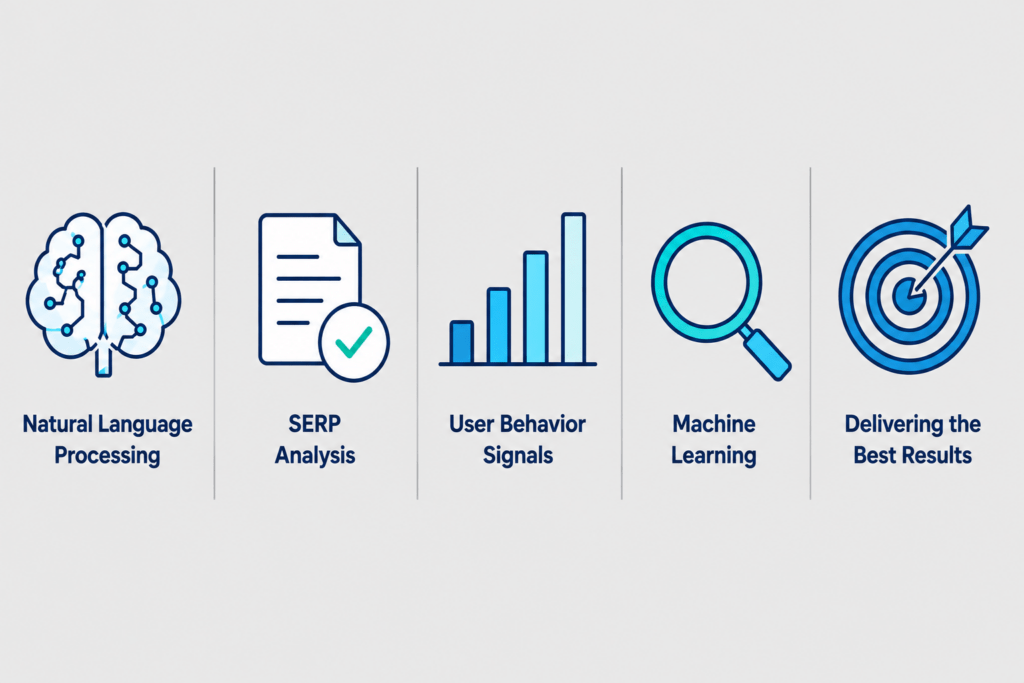
Matching content to search intent also has a direct impact on key SEO performance metrics. When users find exactly what they expect, they are more likely to click on the result, spend time engaging with the content, explore additional pages, and complete desired actions such as subscribing to a newsletter or making a purchase. These positive engagement signals—higher click-through rates (CTR), longer dwell time, lower bounce rates, and increased conversions—indicate that the content successfully satisfies user needs. As a result, search engines are more likely to maintain or improve the page’s visibility in search results over time.
One of the most common frustrations among website owners is, “Why isn’t my page ranking even though I’ve optimized it for the target keyword?” In many cases, the issue is not keyword optimization but intent mismatch. A blog targeting a transactional keyword or a product page targeting an informational query is unlikely to meet user expectations. By analyzing the search engine results page (SERP), understanding the dominant intent behind a keyword, and creating content that aligns with that intent, businesses can improve rankings, build topical authority, and create a better experience for both users and search engines. This user-first approach has become even more important with the rise of AI-powered search, where relevance and helpfulness outweigh simple keyword matching.
The Three Primary Types of Search Queries
Every search performed on Google reflects a specific goal, and understanding that goal is essential for creating content that meets user expectations. Search engines classify most queries into three primary categories: Informational, Navigational, and Transactional. Each type represents a different stage of the user’s journey, from learning about a topic to finding a specific website or completing a purchase. Identifying the intent behind a query enables businesses to deliver the right content at the right time, improving both user satisfaction and search visibility.
Informational queries are used when users want to gain knowledge, solve a problem, or find answers to questions. Navigational queries occur when users already know the brand or website they want to visit and use a search engine as a shortcut. Transactional queries, on the other hand, indicate that users are ready to take action, such as buying a product, subscribing to a service, or booking an appointment. Between these stages, many users also perform commercial investigation searches, comparing products, reading reviews, and evaluating alternatives before making a final decision.
Understanding these search query types helps marketers align content with the customer journey instead of treating every keyword the same. Educational blog posts work best for informational searches, optimized brand pages satisfy navigational intent, and product or service pages are ideal for transactional queries. In the following sections, we’ll explore each query type in detail, examine real-world examples, and discuss the best SEO strategies for optimizing content that matches user intent and drives meaningful results.
Informational Queries
Informational queries are searches performed by users who want to learn, understand, or solve a problem rather than make an immediate purchase. These searches typically begin with words such as “what,” “how,” “why,” “when,” or “guide,” indicating that the user is looking for knowledge or step-by-step instructions. Examples include “What is search intent?”, “How does Google rank websites?”, and “SEO best practices for beginners.” Users at this stage are in the awareness phase of the customer journey, seeking reliable information that helps them make informed decisions. Because the primary goal is education, Google usually ranks blog posts, comprehensive guides, tutorials, FAQs, and explainer articles for these queries.
Informational queries generally have high search volume because they address common questions asked by a broad audience. Although these searches may not generate immediate sales, they play a crucial role in building brand awareness, trust, and topical authority. Businesses that consistently publish high-quality educational content establish themselves as credible resources, increasing the likelihood that users will return when they are ready to compare products or make a purchase. Well-structured informational content should answer the user’s question early, cover related subtopics, include real-world examples, and anticipate follow-up questions to create a comprehensive learning experience.
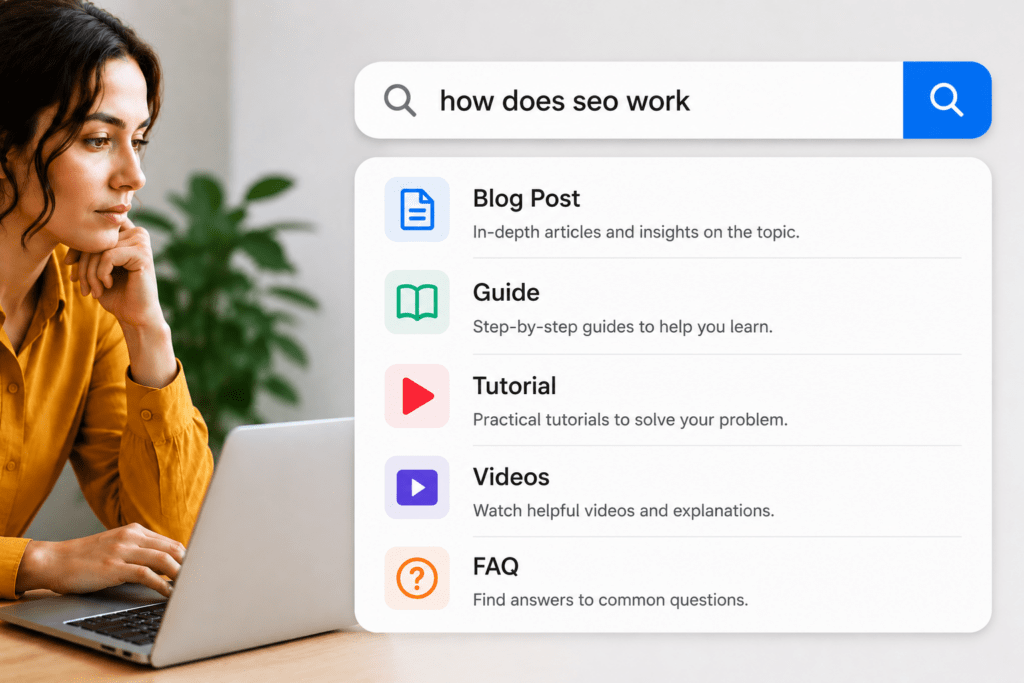
To optimize content for informational intent, focus on delivering clear, accurate, and helpful answers instead of promoting products too early. Use descriptive headings, concise explanations, visuals, examples, and FAQ sections to improve readability and user engagement. Incorporating structured data, internal links, and semantically related topics can further enhance search visibility while demonstrating topical expertise. By prioritizing user education over direct selling, businesses can attract qualified organic traffic, strengthen their authority in the industry, and guide readers naturally toward the next stage of the buying journey.
Navigational Queries
Navigational queries are searches performed by users who already know the website, brand, or page they want to visit but use a search engine as the quickest way to reach it. Instead of typing a full URL into the browser, users search for terms like “Facebook login,” “Gmail,” “Semrush pricing,” or “Nike official website.” These searches indicate that the user’s destination is already decided, and their goal is simply to navigate to the correct webpage. For this reason, Google typically displays official websites, login pages, branded landing pages, or verified business profiles at the top of the search results.
Unlike informational searches, navigational queries have a strong connection to brand recognition and user trust. People searching for branded terms are often existing customers, returning visitors, or users who have already discovered the business through advertisements, social media, or word of mouth. Ranking for navigational queries helps businesses maintain visibility, protect branded traffic from competitors, and ensure users reach the intended destination without confusion. A poor navigational experience—such as outdated pages, broken links, or missing brand information—can negatively affect user satisfaction and reduce trust in the brand.
To optimize for navigational intent, businesses should ensure their homepage, product pages, login portals, and key landing pages are properly indexed and easy to find. Clear page titles, branded meta descriptions, strong internal linking, and consistent business information help search engines identify the official destination. Maintaining an optimized Google Business Profile, implementing structured data, and building a strong online brand presence further improve visibility for branded searches. By delivering a seamless navigation experience, businesses can strengthen brand authority, improve user satisfaction, and maximize the value of users who already intend to engage with their website.
Transactional Queries
Transactional queries are searches performed by users who are ready to complete a specific action, such as purchasing a product, subscribing to a service, booking an appointment, or downloading software. Unlike informational searches that focus on learning, transactional queries indicate a high level of purchase intent and are usually the final step in the customer journey. Common examples include “buy running shoes online,” “SEO software pricing,” “order pizza near me,” “book hotel in Dubai,” and “subscribe to Netflix.” Because these users have already completed their research, Google prioritizes product pages, service pages, pricing pages, and checkout-ready landing pages that allow them to complete their desired action quickly.
Transactional keywords are among the most valuable in SEO because they attract visitors who are closest to converting into customers. These searches often include modifiers such as buy, price, discount, coupon, order, hire, book, download, or subscribe, clearly signaling purchase intent. Since competition for these keywords is typically high, businesses must optimize their landing pages not only for search engines but also for user experience. Fast-loading pages, mobile-friendly design, clear product information, transparent pricing, customer reviews, trust badges, secure payment options, and compelling calls-to-action all play a critical role in improving conversions. A well-optimized transactional page should remove friction and make it as easy as possible for users to complete their intended action.
To succeed with transactional intent, businesses should focus on creating conversion-oriented content rather than lengthy educational articles. Product descriptions should clearly communicate value, highlight key features and benefits, answer common customer questions, and address concerns such as shipping, returns, warranties, or support. Including testimonials, ratings, FAQs, and comparison tables can further increase buyer confidence and reduce hesitation. By aligning landing pages with transactional search intent and delivering a seamless purchasing experience, businesses can attract high-intent visitors, maximize conversion rates, and generate greater revenue from organic search traffic.
Commercial Investigation: The Fourth Search Intent
While Informational, Navigational, and Transactional queries are the three primary search intent categories, many SEO professionals recognize Commercial Investigation as a distinct fourth type. Users performing these searches are actively researching products or services before making a purchase decision. They have moved beyond simply gathering information but are not yet ready to buy. Instead, they want to compare options, evaluate features, read reviews, and determine which solution best meets their needs. Common examples include “best SEO tools,” “Semrush vs Ahrefs,” “Shopify reviews,” “best CRM software,” and “WordPress alternatives.” These queries indicate strong buying intent, making them highly valuable for businesses looking to influence purchasing decisions.
Commercial investigation queries usually generate search results that feature comparison articles, expert reviews, listicles, buying guides, and product roundups rather than direct sales pages. Users expect balanced, detailed content that highlights the strengths, weaknesses, pricing, features, and use cases of different products or services. Businesses that create transparent, data-driven comparison content can build credibility and establish trust with potential customers. Rather than aggressively promoting a single product, successful commercial content helps users make informed decisions by answering common questions and addressing concerns that arise during the evaluation process.
To optimize content for commercial investigation intent, focus on creating comprehensive comparison guides, honest product reviews, feature breakdowns, pricing comparisons, and “best of” lists supported by real-world insights and updated information. Include comparison tables, customer testimonials, FAQs, screenshots, and practical recommendations for different user needs. By helping users confidently evaluate their options, businesses can position themselves as trusted advisors and naturally guide readers toward transactional pages when they are ready to convert.
How Google Identifies Search Intent
Google uses advanced algorithms, machine learning, and natural language processing (NLP) to understand the intent behind every search query. Instead of relying solely on exact keyword matches, the search engine analyzes the meaning, context, and expected outcome of a query to determine the most relevant results. It also considers billions of previous searches, user interactions, and behavioral patterns to predict what searchers are most likely looking for. For example, a query like “Apple” could refer to the technology company or the fruit, and Google uses contextual signals, search history, and location to determine the most appropriate interpretation. This ability to understand semantics rather than just keywords allows Google to deliver highly relevant search results that align with user expectations.
One of the strongest indicators of search intent is the Search Engine Results Page (SERP) itself. Google continuously monitors which types of pages satisfy users for specific queries. If the top-ranking results for a keyword are educational articles and tutorials, Google has identified the query as informational. If product pages, pricing pages, or e-commerce listings dominate the results, the intent is likely transactional. Similarly, branded homepages and login pages usually indicate navigational intent. Google also evaluates user engagement signals such as click-through rate (CTR), dwell time, pogo-sticking, and return searches to determine whether users found the results helpful. Pages that consistently satisfy user needs are more likely to maintain strong rankings over time.
For SEO professionals, analyzing the SERP is one of the most effective ways to identify search intent before creating content. Instead of guessing what users want, marketers should examine the top-ranking pages, featured snippets, People Also Ask sections, image packs, videos, local results, and shopping listings to understand what Google considers the best response for a query. By matching content format, depth, and purpose with the dominant search intent reflected in the SERP, businesses can create pages that align with Google’s expectations, improve organic visibility, and provide a better experience for users throughout their search journey.
How to Identify Keyword Intent
Identifying keyword intent is one of the most important steps in developing an effective SEO strategy. Rather than selecting keywords based solely on search volume, marketers should first understand why users are performing a search and what type of content they expect to find. The easiest way to determine intent is by analyzing the search query itself and examining the pages that currently rank on Google. If the results primarily consist of blog posts and guides, the keyword likely has informational intent. If official brand websites dominate the results, the query is navigational. Likewise, if product pages, pricing pages, or service pages appear at the top, the keyword is transactional. This approach helps ensure your content aligns with user expectations instead of competing with pages that serve a different purpose.
Keyword modifiers also provide strong clues about search intent. Informational keywords often include terms like what, how, why, guide, tutorial, examples, and tips. Navigational keywords commonly feature brand names along with modifiers such as login, official website, homepage, or contact. Transactional keywords typically contain action-oriented words like buy, price, order, book, hire, discount, or coupon, indicating that users are ready to take action. Meanwhile, commercial investigation keywords frequently include phrases such as best, review, comparison, vs, alternatives, and top, suggesting that users are evaluating multiple options before making a purchase.
Although keyword modifiers offer valuable insights, they should always be validated by analyzing the Search Engine Results Page (SERP). Google has already determined the dominant intent for most search queries based on user behavior and satisfaction. Reviewing the top-ranking pages, featured snippets, People Also Ask boxes, shopping results, videos, and local listings provides a clear picture of what users expect. By combining keyword analysis with SERP evaluation, businesses can accurately identify search intent, create content that fulfills user needs, improve organic rankings, and guide visitors through every stage of the customer journey.
Mapping Content Types to Search Intent
Creating high-quality content is only effective when it aligns with the user’s search intent. Each type of search query reflects a different stage of the customer journey, meaning users expect different formats of content depending on their goals. Publishing a product page for an informational keyword or writing a blog post for a transactional query often results in poor rankings because the content does not match user expectations. Google’s algorithms evaluate not only the relevance of keywords but also whether the content format satisfies the intent behind the search. Choosing the right content type for each intent increases the likelihood of ranking higher, engaging users, and achieving desired business outcomes.
The table below illustrates how different search intents correspond to the most effective content formats:
| Search Intent | Best Content Type | Examples |
| Informational | Blog posts, guides, tutorials, FAQs, videos | What is SEO?, How to improve page speed |
| Navigational | Homepage, brand pages, login pages, contact pages | Facebook Login, Nike Official Website |
| Commercial Investigation | Comparison articles, reviews, buying guides, listicles | Semrush vs Ahrefs, Best CRM Software |
| Transactional | Product pages, pricing pages, service pages, checkout pages | Buy Running Shoes, SEO Software Pricing |
Matching content to search intent not only improves rankings but also enhances the overall user experience. When visitors immediately find the information, comparison, or product they are looking for, they are more likely to stay on the page, engage with the content, and complete their intended action. Before creating any new content, analyze the search results to understand which content types Google is rewarding for the target keyword. By aligning every page with the appropriate search intent and stage of the customer journey, businesses can build stronger topical authority, increase organic traffic, and convert more visitors into loyal customers.
Search Intent in the AI Search Era
The rise of AI-powered search has transformed how users discover information online, making search intent more important than ever. Features such as Google AI Overviews, conversational search, and AI assistants no longer rely solely on matching keywords to webpages. Instead, they analyze entities, context, semantic relationships, and user intent to generate accurate and comprehensive responses. As a result, content that genuinely answers users’ questions and satisfies their intent is more likely to be referenced in AI-generated summaries and appear prominently in search results. This shift reinforces the importance of creating helpful, trustworthy, and user-focused content rather than simply optimizing for individual keywords.
AI search systems evaluate multiple signals to determine which content deserves visibility. These include topical authority, content depth, structured data, internal linking, content freshness, and the overall credibility of the website. Pages that demonstrate Experience, Expertise, Authoritativeness, and Trustworthiness (E-E-A-T) are more likely to be considered reliable sources for AI-generated answers. Additionally, AI models favor content that clearly addresses user questions, covers related subtopics, and provides factual, well-organized information. Businesses that build comprehensive content hubs around a topic are better positioned to gain visibility in both traditional search results and AI-powered search experiences.
To succeed in the AI search era, businesses should focus on creating content that prioritizes user intent at every stage of the customer journey. Instead of producing isolated keyword-focused articles, develop interconnected content that answers common questions, supports decision-making, and guides users from awareness to conversion. Implement structured data, optimize for featured snippets, maintain accurate and up-to-date information, and strengthen your brand’s topical authority through consistent publishing. As search technology continues to evolve, websites that consistently satisfy user intent will remain the most competitive, regardless of changes in algorithms or AI-driven search experiences.
Common Mistakes When Targeting Search Intent
One of the biggest reasons content fails to rank is intent mismatch—creating content that doesn’t align with what users expect to find. Many website owners focus heavily on keyword optimization while overlooking the actual purpose behind the search. For example, publishing a detailed blog post for a keyword like “buy SEO software” is unlikely to perform well because users are looking for a pricing or product page, not an educational article. Similarly, creating a product page for an informational query such as “what is SEO” will struggle to satisfy users who simply want to learn. Google prioritizes pages that best match user intent, making it essential to understand what searchers want before creating content.
Another common mistake is relying solely on keyword research tools without analyzing the Search Engine Results Page (SERP). Search volume and keyword difficulty provide useful data, but they do not reveal what type of content Google considers most relevant. Ignoring search intent often leads to poor engagement, high bounce rates, and low conversion rates. Other frequent mistakes include keyword stuffing, publishing thin or repetitive content, neglecting internal linking, failing to update outdated information, and overlooking Commercial Investigation keywords that often attract highly qualified visitors. These issues reduce content quality and make it more difficult for search engines to identify the page as the best answer for a query.
To avoid these mistakes, start every content strategy by understanding the user’s goal rather than the keyword alone. Analyze the top-ranking pages, identify the dominant search intent, and create content that matches the format, depth, and purpose users expect. Focus on providing genuine value through comprehensive answers, clear site structure, and a seamless user experience. By prioritizing user satisfaction over keyword density, businesses can improve rankings, build stronger topical authority, and achieve better long-term SEO performance in both traditional and AI-powered search.
Best Practices for Optimizing Every Search Intent
Optimizing for search intent begins with understanding the user’s objective before creating content. Instead of selecting keywords based only on search volume, identify whether users are looking to learn, navigate to a specific website, compare products, or complete a purchase. Analyze the Search Engine Results Page (SERP) to determine the dominant intent, review the content formats that currently rank, and create pages that satisfy the same user expectations while providing greater value. Building a content strategy around the customer journey—from awareness to conversion—helps ensure that every page serves a clear purpose and supports overall SEO performance.
A successful search intent strategy also requires strong on-page optimization and website structure. Use descriptive page titles, compelling meta descriptions, clear headings, and logical internal linking to guide both users and search engines. Implement structured data where appropriate to improve visibility in rich results and AI-powered search experiences. Regularly update content to maintain accuracy, add new insights, and address evolving user questions. Demonstrating Experience, Expertise, Authoritativeness, and Trustworthiness (E-E-A-T) through high-quality, well-researched content further strengthens credibility and increases the likelihood of earning higher rankings.
Search Intent Optimization Checklist
- ✅ Identify the dominant search intent before targeting any keyword.
- ✅ Analyze the top-ranking SERP results to understand user expectations.
- ✅ Match the content format to the search intent (blog, landing page, product page, comparison guide, or FAQ).
- ✅ Create comprehensive, accurate, and user-focused content that fully answers the query.
- ✅ Use descriptive headings, relevant internal links, and structured data to improve discoverability.
- ✅ Optimize page speed, mobile usability, and overall user experience.
- ✅ Demonstrate E-E-A-T by citing reliable sources and maintaining content accuracy.
- ✅ Update content regularly to reflect new information and changing search behavior.
- ✅ Monitor engagement metrics such as CTR, bounce rate, and conversions to evaluate whether user intent is being satisfied.
- ✅ Continuously refine your content strategy based on search trends, user feedback, and evolving AI search capabilities.
By consistently aligning content with search intent, businesses can improve organic visibility, attract qualified visitors, enhance user satisfaction, and build long-term authority in search results. In today’s AI-driven search landscape, understanding why users search is just as important as knowing what they search for.
FAQ
1. What are informational queries?
Informational queries are searches made by users who want to learn, understand, or solve a problem. These searches typically begin with words like “what,” “how,” “why,” “when,” or “guide” and are answered best with blog posts, tutorials, FAQs, videos, and comprehensive guides. For example, queries such as “What is search intent?” or “How does Google ranking work?” indicate that the user is seeking knowledge rather than planning to make an immediate purchase. Businesses should focus on providing accurate, detailed, and easy-to-understand content to build trust and establish topical authority.
2. What are navigational queries?
Navigational queries occur when users already know the website or brand they want to visit and use a search engine as a shortcut. Examples include “Facebook Login,” “YouTube Studio,” “Semrush Pricing,” or “Amazon Official Website.” In these cases, users expect Google to display the official destination at the top of the search results. Businesses can optimize for navigational intent by maintaining strong branding, clear page titles, structured data, and well-organized landing pages that help users reach their intended destination quickly.
3. What are transactional queries?
Transactional queries indicate that users are ready to complete an action such as purchasing a product, subscribing to a service, booking an appointment, or downloading software. These searches often include modifiers like buy, price, discount, order, book, or subscribe. Since these users have strong purchase intent, Google typically ranks product pages, service pages, pricing pages, and checkout-ready landing pages. Optimizing these pages with clear calls-to-action, customer reviews, secure payment options, and fast loading speeds can significantly improve conversion rates.
4. How do I identify keyword intent?
The most effective way to identify keyword intent is by analyzing the Search Engine Results Page (SERP). Look at the types of pages that rank for your target keyword. If Google displays guides and tutorials, the intent is informational. If official brand pages dominate, the intent is navigational. If product pages appear, the keyword is transactional. Additionally, keyword modifiers such as “how,” “best,” “buy,” “review,” or “vs” provide valuable clues about user intent. Combining keyword analysis with SERP research helps create content that aligns with user expectations.
5. Why is search intent important for SEO?
Search intent is important because Google ranks content that best satisfies the user’s goal, not simply the content with the highest keyword density. Matching content to search intent improves rankings, increases click-through rates, reduces bounce rates, enhances user experience, and drives higher conversions. Whether creating educational content, brand pages, comparison articles, or product pages, understanding user intent ensures your content delivers the right information at the right stage of the customer journey.
Conclusion
Search intent has become the cornerstone of successful SEO because it helps businesses understand why users search, not just what they search for. Every query reflects a specific goal—learning new information, finding a particular website, comparing products, or making a purchase. By recognizing these goals and creating content that aligns with them, businesses can improve search visibility, deliver a better user experience, and build long-term trust with their audience. As Google’s algorithms and AI-powered search experiences continue to evolve, satisfying user intent will remain one of the strongest signals for achieving sustainable organic growth.
Rather than focusing solely on keywords, successful SEO strategies prioritize relevance, helpfulness, and user satisfaction. An informational query deserves a comprehensive guide, a navigational query requires an optimized destination page, and a transactional query should lead users directly to a conversion-focused landing page. Businesses that consistently match content to search intent are more likely to earn higher rankings, stronger engagement, increased conversions, and greater visibility in both traditional search results and AI-generated responses.
The most effective way to improve your SEO performance is to audit your existing content through the lens of search intent. Review each page, identify the user’s primary goal, compare it with the current search results, and update the content where necessary. By combining intent-driven content with high-quality information, strong E-E-A-T signals, and a seamless user experience, you can create a content strategy that not only ranks well but also delivers lasting value to your audience.