
How to Use TOFU MOFU BOFU to Increase Conversions
Introduction: Why TOFU MOFU BOFU Still Matters for Conversion Growth
In mature, competitive markets like Dubai, conversion growth is no longer constrained by traffic alone. Most businesses already invest heavily in paid media, SEO, and social acquisition. The real bottleneck lies deeper—between awareness and decision—where interest decays, trust is lost, and leads quietly exit the funnel.
This is precisely why TOFU / MOFU / BOFU frameworks remain one of the most powerful strategic models in modern marketing. Not because they are new, but because they provide a disciplined way to align content, messaging, and intent across the full customer lifecycle. When applied correctly, TOFU MOFU BOFU frameworks turn fragmented campaigns into a full funnel marketing strategy that compounds conversion rates rather than leaking them.
This article explains how to use TOFU MOFU BOFU to increase conversions and sustainable revenue growth, with a focus on strategy, application, and measurable outcomes—not surface-level tactics.
What Is the TOFU MOFU BOFU Funnel?
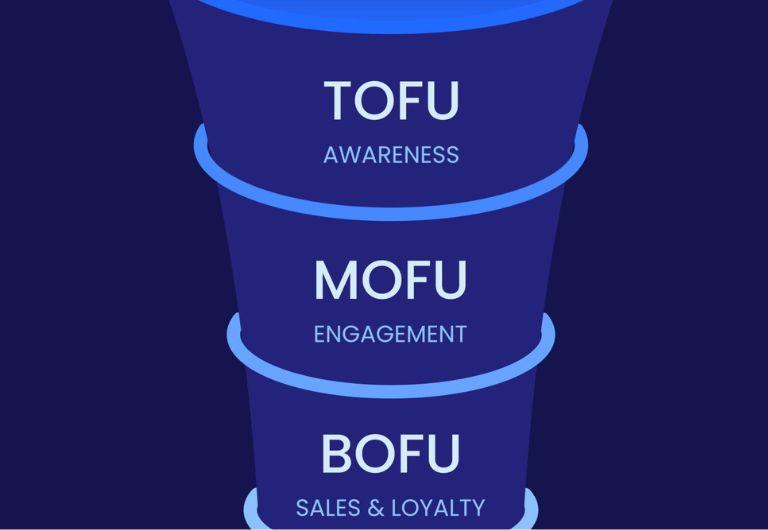
At its core, the TOFU MOFU BOFU funnel model maps marketing activity to the buyer’s journey stages: awareness, consideration, and decision. While simple in theory, its execution determines whether a brand merely attracts attention or systematically converts demand into revenue.
Understanding TOFU (Top of the Funnel)
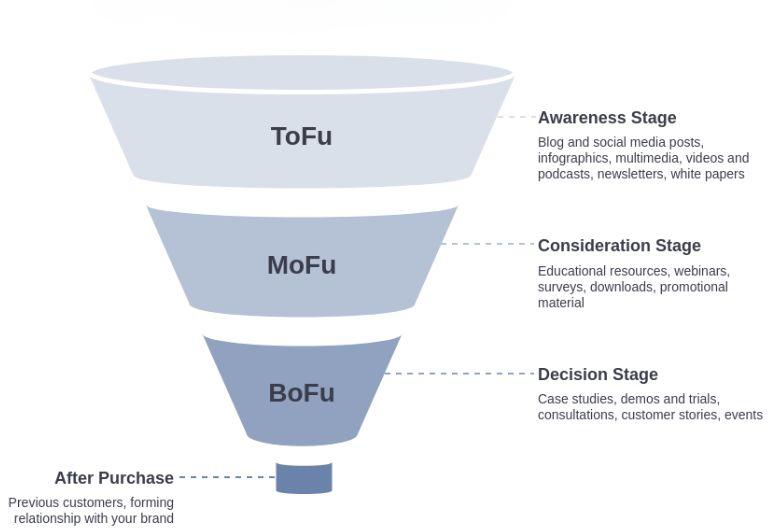
TOFU represents the awareness stage of the awareness consideration decision funnel. Prospects here are not searching for vendors; they are seeking clarity. They may recognize symptoms of a problem without yet understanding solutions or categories.
In TOFU, the objective is not persuasion. It is relevant. Brands that succeed at TOFU earn attention by framing the problem better than anyone else. This is why TOFU MOFU BOFU digital marketing begins with education, not offers.
Understanding MOFU (Middle of the Funnel)
MOFU corresponds to the consideration stage, where prospects actively compare approaches, vendors, and outcomes. This is the most strategically underestimated phase—and often the most profitable.
MOFU is where lead qualification funnels, demand generation funnels, and lead nurturing campaigns converge. Buyers are forming opinions, narrowing options, and seeking proof. If TOFU creates interest, MOFU builds belief.
Understanding BOFU (Bottom of the Funnel)
BOFU represents the decision stage, where intent crystallizes into action. Here, prospects are no longer asking what or why, but who and how. Conversion friction, trust gaps, and misaligned messaging at this stage directly suppress revenue.
A well-structured BOFU aligns sales enablement, CRO principles, and lifecycle marketing into a single conversion strategy.
How TOFU MOFU BOFU Impacts Conversion Rates
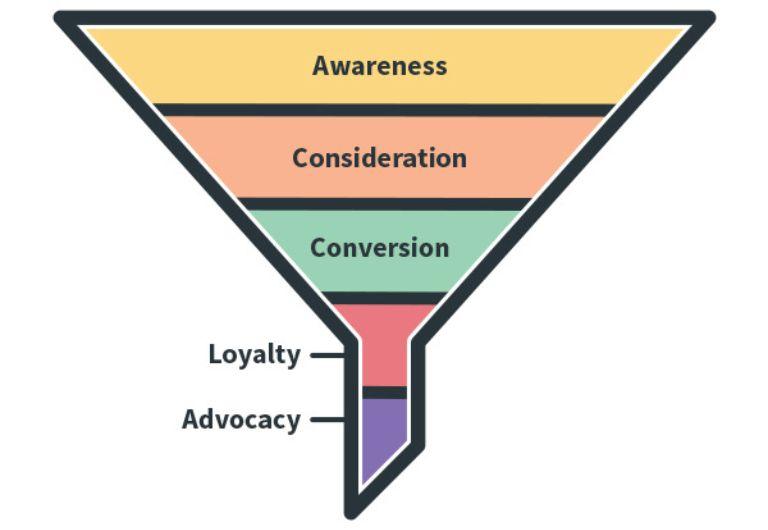
The power of TOFU MOFU BOFU frameworks lies in their ability to align content with intent while reducing friction across stages.
Aligning Content With Buyer Intent
Research from Google shows that buyers interact with 7–10 touchpoints before conversion, often non-linearly. Without a funnel-based content marketing structure, these touchpoints remain disconnected. TOFU MOFU BOFU content strategy ensures that each interaction answers the next logical question a buyer has, rather than repeating the same message at different volumes.
Reducing Drop-Off Between Funnel Stages
Most conversion loss does not happen at the point of sale—it happens between stages. A strong MOFU strategy acts as connective tissue, guiding users from awareness into readiness. Brands that actively manage these transitions consistently see higher assisted conversions and shorter sales cycles.
Building Trust Before Asking for the Sale
As McKinsey notes, “Trust is the new currency of growth.” TOFU MOFU BOFU frameworks institutionalize trust-building by sequencing value before persuasion. When BOFU messaging arrives, it feels like a logical conclusion rather than a premature pitch.
TOFU Strategy: Attract the Right Audience
Goals of TOFU Content
The goal of TOFU is not volume for its own sake. It is qualified attention. Effective TOFU content identifies the right problem, the right context, and the right audience—setting the stage for downstream conversion.
Best TOFU Content Types for Awareness
High-performing TOFU content includes SEO-driven thought leadership, educational videos, social explainers, and authoritative industry guides. These assets anchor inbound marketing funnels by addressing pain points before commercial intent exists.
For Dubai-based and regional brands, TOFU content often succeeds when it contextualizes global insights within local market realities—regulatory environments, buyer sophistication, and competitive density.
TOFU KPIs to Track
Rather than focusing solely on traffic, TOFU KPIs should prioritize engagement depth: time on page, scroll depth, return visits, and assisted conversion paths. These metrics indicate whether awareness content is attracting the right audience, not just a large one.
MOFU Strategy: Nurture and Qualify Leads
Goals of MOFU Content
MOFU exists to transform interest into intent. This is where TOFU MOFU BOFU lead nurturing becomes critical. Prospects should leave MOFU content more confident—not just more informed.
Best MOFU Content Types for Consideration
Case studies, webinars, comparison pages, and structured email drip sequences dominate high-performing MOFU funnels. These assets work because they reduce perceived risk while increasing perceived fit.
According to the Demand Gen Report, 47% of buyers consume three to five pieces of MOFU content before engaging with sales. This underscores the importance of sequencing, not saturation.
How to Move Users From TOFU to MOFU
Transitions matter. Contextual CTAs, progressive profiling, and behavioral triggers are far more effective than generic lead magnets. The question MOFU content must answer is: “Why this approach—and why now?”
MOFU Metrics That Signal Buying Intent
Key indicators include content-assisted conversions, email engagement velocity, return frequency, and solution-focused page views. These signals allow marketing automation workflows to prioritize leads before sales engagement.
BOFU Strategy: Convert Leads Into Customers
Goals of BOFU Content
BOFU is where strategy meets revenue. The goal is to remove friction, reinforce trust, and make the decision feel inevitable.
Best BOFU Content Types for Conversion
High-performing BOFU assets include optimized landing pages, demos, pricing explainers, testimonials, and tailored proposals. These are not marketing assets alone—they are sales enablement tools embedded within the funnel.
Reducing Friction at the BOFU Stage
Conversion rate optimization (CRO) principles dominate BOFU. Clear value articulation, risk reversal, social proof, and urgency cues must align seamlessly. Even minor friction—unclear pricing, vague differentiation, or slow response times—can suppress conversion rates disproportionately.
BOFU Conversion Metrics to Measure
Metrics such as lead-to-close rate, cost per acquisition, sales cycle length, and pipeline velocity provide a clear view of BOFU effectiveness. These metrics close the loop between marketing and revenue.
Mapping Content Across TOFU MOFU BOFU
Keyword Mapping by Funnel Stage
Effective TOFU MOFU BOFU frameworks map keywords by intent, not volume. Informational queries dominate TOFU, comparative queries define MOFU, and transactional keywords anchor BOFU. This approach strengthens SEO authority while supporting conversion goals.
Content Personalization Across the Funnel
Modern funnels are adaptive. Personalization based on behavior, industry, or funnel stage increases relevance and conversion probability. This is where lifecycle marketing outperforms static campaigns.
Funnel-Based Internal Linking Strategy
Internal linking should mirror funnel progression, guiding users naturally from TOFU insights to MOFU validation and BOFU action. This not only improves UX but strengthens topical authority in search engines.
Understanding TOFU / MOFU / BOFU Frameworks: More Than a Funnel Model
While TOFU, MOFU, and BOFU are often described as funnel stages, high-performing organizations treat them as strategic frameworks—decision-making systems that govern how demand is created, nurtured, and converted over time. The distinction matters. A funnel is descriptive; a framework is prescriptive.
TOFU / MOFU / BOFU frameworks provide a structured way to align marketing, sales, content, and technology around buyer intent. Rather than asking, “What content should we create?”, the framework forces a more strategic question: “What does the buyer need to believe at this stage in order to move forward?”
This shift—from activity-based marketing to intent-based orchestration—is where conversion growth accelerates.
TOFU / MOFU / BOFU as a Strategic Operating Framework
At scale, TOFU MOFU BOFU frameworks function as an operating system for full funnel marketing strategy. Each stage has a clear role, measurable outcomes, and defined handoffs.
At TOFU, the framework governs problem definition.
At MOFU, it governs solution validation.
At BOFU, it governs decision confidence.
Organizations that adopt this mindset stop viewing content, paid media, SEO, email, and sales enablement as separate functions. Instead, each channel becomes a delivery mechanism for the same strategic narrative—adapted to buyer readiness.
This is why TOFU MOFU BOFU frameworks remain foundational even as channels, algorithms, and technologies evolve.
How TOFU / MOFU / BOFU Frameworks Differ From Traditional Funnels
Traditional funnels assume linear progression. Modern buyers do not behave linearly.
TOFU MOFU BOFU frameworks are non-linear by design. They account for:
- Buyers re-entering MOFU after BOFU objections
- Decision-makers consuming TOFU content late in the cycle
- Multiple stakeholders engaging at different stages simultaneously
By mapping content, keywords, and messaging to intent rather than sequence, the framework supports real-world buyer behavior. This adaptability is why funnel-based content marketing outperforms campaign-based approaches in complex sales environments.
TOFU / MOFU / BOFU Frameworks and Conversion Rate Optimization (CRO)
One of the most overlooked advantages of TOFU MOFU BOFU frameworks is their impact on CRO. Conversion optimization is not confined to landing pages; it is cumulative across the entire customer acquisition funnel.
When TOFU messaging attracts the right audience, MOFU conversion rates improve.
When MOFU content builds trust, BOFU friction decreases.
When BOFU closes efficiently, lifetime value increases.
In this sense, TOFU MOFU BOFU frameworks act as upstream CRO levers. They improve conversion rates not by persuasion alone, but by pre-alignment—ensuring the buyer arrives at the decision stage already convinced.
TOFU / MOFU / BOFU Frameworks as a Revenue Alignment Tool
In high-growth organizations, misalignment between marketing and sales is a structural risk. TOFU MOFU BOFU frameworks reduce this risk by creating shared definitions of readiness.
Marketing owns TOFU engagement quality and MOFU intent signals.
Sales owns BOFU conversion and deal velocity.
Because both teams operate within the same framework, handoffs become clearer, lead qualification improves, and pipeline forecasting becomes more reliable. This is why many enterprise organizations embed TOFU MOFU BOFU logic directly into their CRM and marketing automation workflows.
Why TOFU / MOFU / BOFU Frameworks Are Especially Relevant in Competitive Markets
In highly competitive regions and industries, differentiation rarely comes from product features alone. It comes from how clearly and credibly a brand guides buyers through complexity.
TOFU MOFU BOFU frameworks excel in these environments because they:
- Reduce cognitive load for buyers
- Build authority before comparison begins
- Shift competition from price to value
This makes the framework particularly effective for B2B, high-ticket services, SaaS, and enterprise-focused organizations where trust and clarity drive conversion more than impulse.
TOFU / MOFU / BOFU Frameworks as a Long-Term Growth Asset
Unlike short-term campaign tactics, TOFU MOFU BOFU frameworks compound in value. Each new asset strengthens the overall system. Each insight improves future sequencing. Over time, the framework becomes a defensible growth asset—one that competitors cannot easily replicate.
As Harvard Business Review has observed, sustainable growth is rarely the result of isolated tactics. It is the outcome of systems that consistently turn attention into trust, and trust into revenue. TOFU MOFU BOFU frameworks, when executed with discipline, are exactly such a system.
Common TOFU MOFU BOFU Mistakes That Hurt Conversions
Creating Awareness Content Only
Many brands overinvest in TOFU while neglecting MOFU and BOFU. The result is traffic without revenue—a common but costly imbalance.
Selling Too Early at TOFU
Aggressive CTAs at TOFU erode trust. Buyers at this stage are not resistant; they are simply unready. Respecting intent preserves long-term conversion potential.
Ignoring Lead Nurturing at MOFU
Without structured MOFU nurturing, leads stagnate. This gap often forces sales teams to compensate prematurely, reducing close rates and increasing acquisition costs.
Optimizing the TOFU MOFU BOFU Funnel for Higher Conversions
Using Analytics to Identify Funnel Leaks
Advanced attribution and funnel visualization reveal where users disengage. These insights allow teams to optimize transitions rather than isolated assets.
A/B Testing Funnel Content
Testing headlines, CTAs, sequencing, and proof points across stages compounds results over time. Small improvements at MOFU and BOFU often outperform large TOFU traffic gains.
Automating Funnel Transitions
Marketing automation workflows ensure timely, relevant engagement without manual intervention. Automation does not replace strategy—it scales it.
TOFU MOFU BOFU Examples for Real Businesses
B2B Funnel Example
A regional B2B SaaS firm restructured its funnel around TOFU MOFU BOFU frameworks. By replacing generic TOFU blogs with problem-led thought leadership and introducing MOFU case studies aligned to buyer roles, the company increased qualified leads by 42% while reducing sales cycle length by 28%.
eCommerce Funnel Example
An eCommerce brand implemented MOFU comparison guides and BOFU retargeting offers tied to browsing behavior. The result was a 19% lift in assisted conversions and a measurable improvement in customer acquisition efficiency.
Service-Based Business Funnel Example
A professional services firm transitioned from direct-response ads to a funnel-based content marketing approach. TOFU educational content positioned expertise, MOFU webinars built authority, and BOFU consultations closed high-value engagements—demonstrating how trust-driven funnels outperform transactional tactics.
Conclusion
TOFU MOFU BOFU frameworks are not marketing theory—they are revenue architecture. When aligned with buyer intent, supported by rigorous analytics, and executed with operational discipline, they convert fragmented marketing activities into an integrated system for predictable growth. Rather than relying on isolated campaigns or short-term performance spikes, these frameworks create continuity across the customer acquisition funnel, ensuring that every interaction compounds the likelihood of conversion.
In high-competition markets where attention is scarce and switching costs are low, growth is no longer driven by visibility alone. It belongs to brands that understand when to educate without selling, how to nurture without overwhelming, and why buyers ultimately decide to act. TOFU MOFU BOFU frameworks provide that clarity by sequencing value, trust, and proof in a way that mirrors real decision-making behavior.
Applied correctly, TOFU MOFU BOFU shifts marketing from persuasion to preparation. By the time a prospect reaches the decision stage, the work of conversion has largely been done upstream—through relevance at TOFU, confidence-building at MOFU, and friction reduction at BOFU. This is how strategy becomes revenue: not through louder messaging, but through smarter alignment between intent, content, and timing.
{ “@context”: “https://schema.org”, “@type”: “FAQPage”, “mainEntity”: [ { “@type”: “Question”, “name”: “Is the TOFU MOFU BOFU framework still relevant in modern digital marketing?”, “acceptedAnswer”: { “@type”: “Answer”, “text”: “Yes, because it organizes marketing around buyer intent rather than channels or tactics. While journeys are non-linear, TOFU MOFU BOFU frameworks help brands deliver the right message at the right stage. When adapted properly, they improve clarity, alignment, and conversion efficiency.” } }, { “@type”: “Question”, “name”: “What is the biggest mistake companies make with TOFU MOFU BOFU?”, “acceptedAnswer”: { “@type”: “Answer”, “text”: “Most companies focus heavily on TOFU and neglect MOFU and BOFU. This creates traffic and engagement without revenue impact. Without structured nurturing and decision-stage content, leads fail to convert.” } }, { “@type”: “Question”, “name”: “How long should a customer stay in each TOFU MOFU BOFU stage?”, “acceptedAnswer”: { “@type”: “Answer”, “text”: “There is no fixed duration for any funnel stage. Progress depends on buyer readiness, deal complexity, and perceived risk. Effective funnels use behavioral signals rather than time-based assumptions.” } }, { “@type”: “Question”, “name”: “Can TOFU MOFU BOFU work for small businesses or only enterprises?”, “acceptedAnswer”: { “@type”: “Answer”, “text”: “The framework works for businesses of all sizes. Small businesses benefit from focus and efficiency, while enterprises benefit from scalability and alignment. Execution depth, not company size, determines success.” } }, { “@type”: “Question”, “name”: “How do you measure success in a TOFU MOFU BOFU funnel?”, “acceptedAnswer”: { “@type”: “Answer”, “text”: “Success is measured by movement between stages, not isolated metrics. TOFU focuses on qualified engagement, MOFU on intent signals, and BOFU on conversion and revenue outcomes. Stage-to-stage conversion rates provide the clearest insight.” } } ] }FAQ
1. Is the TOFU MOFU BOFU framework still relevant in modern digital marketing?
Yes, because it organizes marketing around buyer intent rather than channels or tactics. While journeys are non-linear, TOFU MOFU BOFU frameworks help brands deliver the right message at the right stage. When adapted properly, they improve clarity, alignment, and conversion efficiency.
2. What is the biggest mistake companies make with TOFU MOFU BOFU?
Most companies focus heavily on TOFU and neglect MOFU and BOFU. This creates traffic and engagement without revenue impact. Without structured nurturing and decision-stage content, leads fail to convert.
3. How long should a customer stay in each TOFU MOFU BOFU stage?
There is no fixed duration for any funnel stage. Progress depends on buyer readiness, deal complexity, and perceived risk. Effective funnels use behavioral signals rather than time-based assumptions.
4. Can TOFU MOFU BOFU work for small businesses or only enterprises?
The framework works for businesses of all sizes. Small businesses benefit from focus and efficiency, while enterprises benefit from scalability and alignment. Execution depth, not company size, determines success.
5. How do you measure success in a TOFU MOFU BOFU funnel?
Success is measured by movement between stages, not isolated metrics. TOFU focuses on qualified engagement, MOFU on intent signals, and BOFU on conversion and revenue outcomes. Stage-to-stage conversion rates provide the clearest insight.