
Owned, Earned & Paid Media Explained: How Brands Build Powerful Media Ecosystems
Introduction: From Media Channels to Media Systems
For years, marketing conversations revolved around channels—SEO, social media, advertising, PR—each optimized in isolation. Today, that mindset is no longer sufficient. In competitive, fast-moving markets such as Dubai, where consumer expectations are high and attention is fragmented, growth is not driven by individual channels but by how those channels work together.
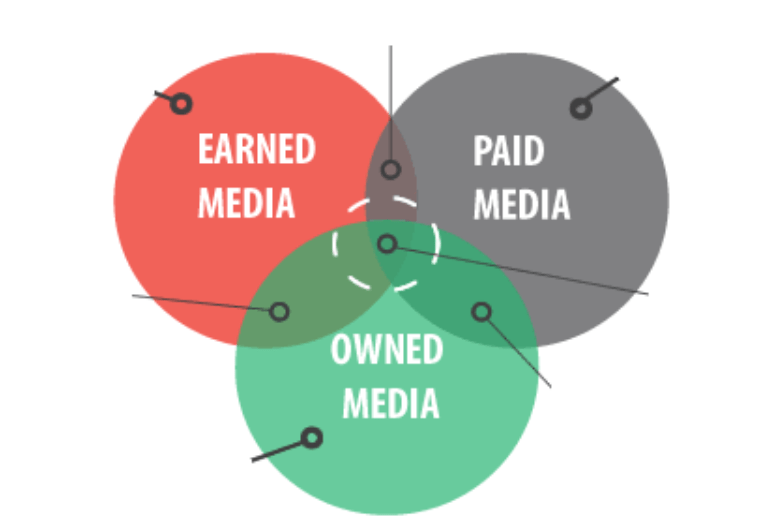
This is where owned, earned & paid media emerges not as a classification exercise, but as a strategic operating model. When integrated properly, owned, earned, and paid media form a media ecosystem—a self-reinforcing system where visibility, credibility, and conversion compound over time. A media buying agency dubai can help businesses strategically manage paid media alongside owned and earned channels to maximize reach, efficiency, and measurable results.
According to McKinsey, brands that integrate paid and organic media strategies outperform peers by up to 30% in customer acquisition efficiency. The implication is clear: sustainable growth no longer comes from spending more, but from designing smarter systems.
This article unpacks how owned, earned & paid media function individually, how they interact strategically, and how brands—particularly in the Middle East—can architect powerful media ecosystems that scale with confidence.
What Is Owned, Earned & Paid Media?
Owned, Earned, and Paid Media: Simple Labels, Complex Influence Paths
At a surface level, owned, earned, and paid media are often explained as three neat buckets that describe how brands reach audiences. The definitions are easy to memorize. What is harder and far more valuable is understanding how these media types actually work together in real life, and how influence moves between them. A ppc advertising agency can help businesses use paid search strategically to complement owned and earned media, strengthen visibility, and drive measurable audience engagement.
The real power of this framework is not academic. It lives in how attention, trust, and action are created over time.
Owned Media: Where Trust Is Built and Data Lives
Owned media includes the channels a brand controls directly. This usually means the website, blog, email lists, mobile apps, CRM systems, and social profiles.
But owned media is not just a place to publish messages. It is where relationships form. It is where customers learn who you are, what you stand for, and whether you are worth listening to again.
Owned channels act as trust anchors. They are also long-term data assets. Every visit, click, signup, and interaction adds context that helps a brand understand its audience better. While reach may grow slowly, the value compounds over time because the connection is direct and durable. Similarly, outdoor advertising dubai can complement owned channels by increasing brand visibility and reinforcing awareness across high-traffic locations.
Earned Media: Credibility That Cannot Be Bought
Earned media is the attention a brand receives from others. This includes press coverage, organic social mentions, reviews, backlinks, influencer advocacy, and simple word of mouth.
What makes earned media powerful is credibility. When people talk about a brand without being paid to do so, it signals trust. That trust travels fast and often further than owned channels ever could.
The challenge is control. Earned media cannot be scheduled or guaranteed. It is shaped by perception, experience, and timing. When it shows up, it amplifies everything else. When it does not, brands must continue earning it through consistent value and behavior.
Paid Media: Speed, Scale, and Precision Without Inherent Trust
Paid media covers all forms of advertising. Search ads, social ads, display, programmatic, sponsorships, and native placements all fall into this category.
Its strength is speed. Paid media allows brands to reach specific audiences quickly and at scale. It is precise, measurable, and adjustable in real time.
What it lacks is built in trust. Audiences know when they are being advertised to. Without support from owned credibility and earned validation, paid media struggles to move people beyond awareness.
The Real Power Comes From the Mix, Not the Medium
Each media type has clear limitations on its own. Owned media takes time. Earned media is unpredictable. Paid media is transactional.
Together, they balance each other.
Paid media introduces people to owned experiences. Owned media converts attention into relationships. Earned media reinforces credibility and accelerates trust. Influence flows between them, not in isolation but in a loop.
When aligned, owned, earned, and paid media form a connected system that drives awareness, trust, and conversion at the same time. That is where strategy replaces simplicity and where real marketing impact is created.
Why the POEM Model Still Matters—And Why It’s Often Misused
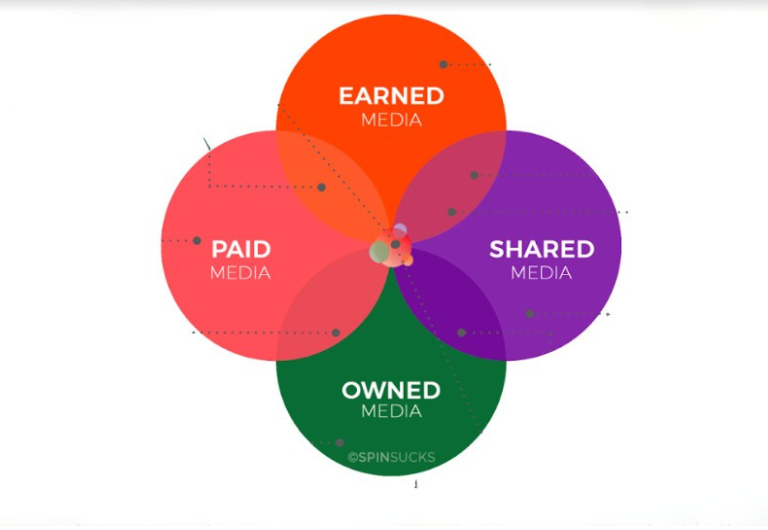
The paid, owned, earned media model is still a useful way to think about how brands reach people. The problem is not the framework itself. The problem is how it is often applied.
Many brands treat paid, owned, and earned media as separate workstreams. Media plans are split by department. Budgets are assigned by channel. KPIs are measured in isolation. On paper, everything looks organized. In practice, it creates blind spots.
When each media type is managed in a silo, the system stops working as a system.
How Fragmentation Quietly Erodes Performance
This separation creates inefficiency that is easy to miss and expensive to maintain. Paid campaigns struggle to convert because the owned experience they send traffic to is weak or unclear. Earned attention spikes briefly but does not compound because there is no content engine ready to capture and nurture that interest. Owned platforms slowly stagnate because there is no consistent amplification to bring in new audiences.
None of these failures happen because teams are doing nothing. They happen because teams are doing the right things independently instead of collaboratively.
From Budget Allocation to Value Flow Thinking
A modern owned, earned, and paid media framework starts with a different question. Instead of asking “Where should we spend?” it asks “How should value move through the ecosystem?”
This shift changes how success is designed. Media is no longer a set of channels to optimize individually. It becomes a connected flow where each touchpoint strengthens the next.
What High Performing Media Ecosystems Actually Do Differently
In high performing ecosystems, each media type has a clear role and a clear relationship to the others.
Paid media accelerates reach and insight.
It brings speed, scale, and learning. Paid is used not just to drive traffic, but to test messages, surface audience signals, and create momentum.
Owned media captures demand and builds memory.
It turns attention into understanding, trust, and data. Owned channels are designed to answer real questions, reduce friction, and make the next step obvious.
Earned media multiplies trust and efficiency.
It reinforces credibility and lowers the cost of future reach. When people talk, share, and recommend, everything else works harder with less effort.
The Outcome Is Systemic Advantage, Not Clean Attribution
The result of this approach is not a neat attribution model or a single winning channel. It is a systemic advantage.
Performance improves because each part of the system makes the others more effective. Trust compounds. Costs stabilize. Learning accelerates. Growth becomes more resilient. That is the difference between running media and building a media ecosystem.
Owned Media: The Strategic Core of the Media Ecosystem
In mature marketing ecosystems, owned media is no longer treated as basic hygiene. It is treated as infrastructure.
This shift matters. When owned channels are viewed as maintenance tasks, they are underfunded, underdesigned, and rarely connected to revenue outcomes. When they are treated as infrastructure, they become the foundation everything else depends on.
A brand’s website is no longer a digital brochure. It is conversion architecture. Email is not just a newsletter channel. It is a lifecycle engine. Content is not created to chase traffic. It exists to capture intent, build confidence, and earn trust over time.
Why Owned Media Determines ROI Before Paid Media Ever Does
In markets like Dubai’s B2B and premium B2C sectors, this distinction is especially important.
Purchase cycles are longer. Decisions are reputation sensitive. Buyers take time to validate who they are dealing with before committing. In these environments, owned channels often decide whether paid investment delivers ROI at all.
If the owned experience does not signal credibility, clarity, and relevance, paid media simply accelerates waste. Traffic arrives, hesitates, and leaves. When owned media is strong, the same paid investment converts more efficiently because the destination does the real work.
What High Performing Owned Media Systems Have in Common
High performing owned media systems are rarely accidental. They share a few consistent traits that separate them from stagnant platforms.
First, they are audience led. They are designed around real decision journeys, not internal org charts or campaign calendars. The structure reflects how people think, compare, hesitate, and decide.
Second, they are modular by design. Content is built to travel. A single idea can live across landing pages, emails, sales enablement, and paid formats without being recreated from scratch each time. This makes scale possible without dilution.
Third, they are measurable with intent. Measurement is not limited to surface engagement. These systems are designed to connect behavior to outcomes, linking attention, interaction, and progression directly to revenue signals.
Architecture Is What Turns Measurement Into Scale
Peter Drucker famously noted, “What gets measured gets managed.” In owned media, the deeper truth is this: what gets architected gets scaled.
When owned channels are intentionally designed, measurement becomes meaningful, optimization becomes continuous, and growth becomes repeatable. Owned media stops being a support function and starts operating as a growth engine.
That is when paid workers work harder, earn compounds faster, and the entire ecosystem becomes more resilient.
Earned Media: Trust, Credibility, and Compounding Returns
Earned media remains the most undervalued asset in digital marketing, not because marketers doubt its importance, but because it refuses to behave like a controllable channel.
You cannot schedule it. You cannot fully own it. You cannot turn it on with a budget line item.
And that discomfort often causes brands to deprioritize it, even though audiences value it more than almost anything else.
Consumers consistently trust earned media more than advertising. Nielsen reports that 92 percent of people trust recommendations from others, even when they do not know them personally. In reputation driven categories like finance, real estate, education, and healthcare, that trust gap becomes decisive. In these markets, earned media can outperform paid media in influence by orders of magnitude.
Reputation Driven Markets Amplify the Impact of Earned Attention
In high consideration categories, people do not simply respond to exposure. They look for reassurance. They read reviews. They search for third party validation. They notice who is being quoted, mentioned, or discussed without incentive. Earned media becomes a signal of legitimacy, not just visibility.
This is why earned exposure often carries more weight than even the most sophisticated paid campaign. It answers the unspoken question buyers are asking: who else believes in this brand?
Earned Media Is Not Accidental, It Is Engineered Over Time
Despite how it looks from the outside, earned media does not happen by chance. Brands that consistently generate organic media coverage, social conversation, and advocacy invest deeply behind the scenes. They invest in content quality that is genuinely useful. They invest in narrative clarity so their point of view is easy to understand and repeat. They invest in distribution intelligence so the right ideas reach the right audiences at the right moment.
Earned media is unpredictable, but it is not random.
Where Owned and Paid Media Quietly Enable Earned Momentum
Earned media thrives when it is supported by the rest of the ecosystem. Owned media provides substance. Thought leadership articles, research, and strong brand narratives give journalists, creators, and customers something meaningful to reference.
Paid media provides ignition. High performing campaigns introduce ideas at scale, creating the visibility that sparks conversation and sharing.
Exceptional customer experiences close the loop. They turn attention into reviews, referrals, and organic advocacy that no ad can replicate. When these pieces work together, earned media becomes a natural outcome rather than a forced pursuit.
The Strongest Brands Do Not Chase Earned Media, They Design for It
In a strong brand media ecosystem, earned media is not begged for or chased campaign by campaign.
It is designed for. It emerges because the brand consistently says something worth repeating, delivers experiences worth talking about, and shows up in places that invite trust. When that happens, earned media stops being a bonus and starts becoming a compounding asset that lowers costs, strengthens credibility, and amplifies everything else the brand does.
Paid Media: Precision, Scale, and Strategic Acceleration
Paid media is still the fastest way to access attention. When a brand needs visibility now, nothing moves faster.
The problem is not speed. The problem is speed without structure. When paid media operates in isolation, it naturally optimizes for short term metrics. Clicks, impressions, conversions. These numbers look productive, but they often hide inefficiency. Traffic arrives, value is extracted, and the learning disappears with the campaign.
Speed alone is expensive. Speed with intent is an investment.
From Channel Performance to Ecosystem Acceleration
In an integrated marketing ecosystem, paid media serves a broader role than direct response.
It accelerates learning.
It amplifies assets that already work.
It creates signal, not just volume.
Instead of asking whether an ad converted, advanced teams ask what the ad revealed. Which message resonated. Which audience leaned in. Which creative earned attention without forcing it. Paid media becomes a research engine as much as a delivery mechanism.
How Advanced Teams Use Paid Media to Learn, Not Just Scale
High performing teams use paid channels deliberately to reduce uncertainty across the ecosystem.
They test messaging to understand which problems and promises matter most. They identify high intent segments by watching behavior, not just demographics. They validate creative hypotheses before committing to large scale production.
The insight does not stay locked inside the media platform. It flows outward, informing owned content strategy and earned outreach narratives. Paid media stops being the end point. It becomes the starting point.
Why This Approach Is Mandatory in High Cost Markets Like Dubai
In Dubai’s highly competitive digital advertising landscape, this approach is not optional. In certain verticals, CPMs are among the highest globally. Competition is intense. Audiences are sophisticated. Waste shows up quickly on the balance sheet.
When paid media is treated as a blunt instrument, costs rise faster than returns. When it is treated as an intelligence layer, every dollar works harder because it strengthens what comes next. Sustainable ROI in this environment requires integration, not volume.
Media Smart Beats Media Heavy Every Time
The most effective paid strategies today are not media heavy. They are media smart. They are designed to feed the ecosystem rather than drain it. They create knowledge that improves owned experiences and credibility that supports earned momentum.
When paid media is structured this way, it does more than buy attention. It builds advantages.
Integration: How Media Ecosystems Actually Work
The difference between a media plan and a media ecosystem is interdependence.
In an integrated digital media ecosystem, no channel exists in isolation. Paid traffic lands on owned experiences optimized for intent. Owned content fuels earned visibility. Earned credibility reduces paid acquisition costs.
This creates a virtuous cycle:
- Paid media drives targeted exposure
- Owned media captures and educates demand
- Earned media amplifies trust and reach
- Insights feed back into smarter paid execution
Over time, dependency on paid media decreases—not because spend drops, but because efficiency rises.
Harvard Business Review research shows that brands with integrated media strategies achieve higher lifetime value and lower volatility during market shifts. Systems outperform tactics when conditions change.
Case Insight: Media Ecosystems in Practice
Consider a regional real estate developer launching a premium residential project. A channel-first approach might focus heavily on paid search and social ads. A media ecosystem approach starts earlier.
Owned media is structured around buyer education—location insights, investment analysis, lifestyle narratives. Paid media is used selectively to amplify high-performing content to qualified segments. Earned media is generated through architectural features, sustainability credentials, and investor success stories.
The outcome is not just leads, but qualified, trust-aligned demand. Paid costs stabilize. Conversion rates increase. Brand equity compounds.
This is how owned earned paid media drives business growth—not through volume, but through coherence.
Measurement, Attribution, and the Limits of Precision
One of the most misunderstood aspects of owned earned & paid media is measurement. Traditional attribution models struggle to capture ecosystem effects. Earned media influences consideration. Owned media shapes conversion. Paid media accelerates both.
Leading brands therefore shift from last-click obsession to contribution-based measurement. They track assisted conversions, content influence, and lifecycle progression.
In ecosystem-level marketing, the goal is not perfect attribution—it is directional intelligence.
As W. Edwards Deming observed, “Not everything that can be counted counts, and not everything that counts can be counted.”
Owned, Earned & Paid Media in Omnichannel Marketing
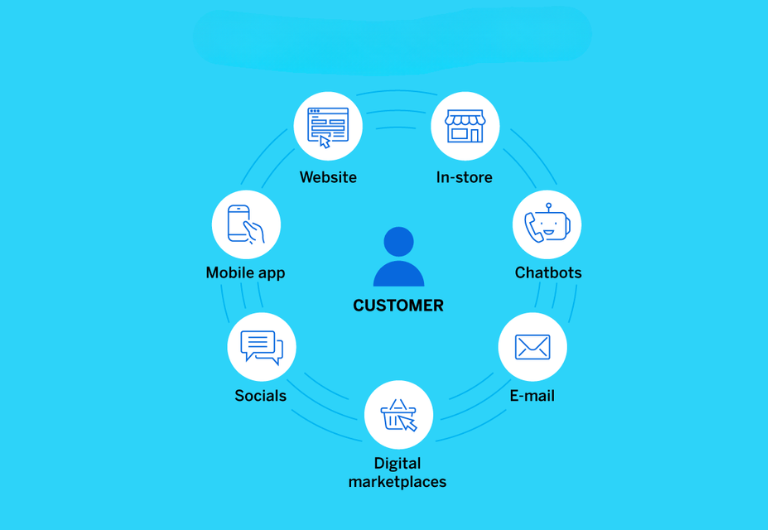
True omnichannel strategy is not about being everywhere; it is about being connected everywhere.
Owned, earned & paid media form the backbone of omnichannel marketing by ensuring consistency across touchpoints while allowing flexibility in execution. Messaging adapts, but meaning remains stable. Channels differ, but strategy aligns.
For brands operating across physical and digital environments—retail, hospitality, education—this alignment is critical. Disconnected media erodes trust. Integrated ecosystems reinforce it.
Strategic Implications for Dubai-Based Brands
Dubai’s marketing environment is uniquely demanding. Audiences are multicultural. Competition is intense. Brand perception carries disproportionate weight.
In this context, owned earned paid media is not a theory—it is a competitive necessity. Brands that invest only in paid visibility face diminishing returns. Brands that neglect earned credibility struggle with trust. Brands that underbuild owned platforms lack leverage.
The winners are those who think in systems, invest in integration, and optimize for long-term value rather than short-term metrics.
Conclusion: From Media Spend to Media Advantage
Owned, earned, and paid media are not separate strategies competing for attention or budget. They are interconnected components of a single system designed to create momentum over time. When they are orchestrated with intention, marketing stops behaving like a series of isolated tactics and starts functioning as a growth engine. Paid media brings speed and learning, owned media turns that attention into understanding and trust, and earned media reinforces credibility in ways no brand can manufacture on its own. Together, they create a compounding effect where insight deepens, efficiency improves, and trust strengthens with every interaction.
In a landscape where attention is scarce and skepticism is high, brands do not win by shouting louder or spending more. They win by building ecosystems that feel coherent, credible, and useful at every touchpoint. This means designing experiences that earn attention rather than interrupt it, that deserve trust rather than demand it, and that convert with confidence instead of pressure. For organizations willing to move beyond fragmented execution and think systemically, owned, earned, and paid media stop being tactical tools. They become a durable source of strategic advantage that supports sustainable growth.
FAQ
1. What is owned media in digital marketing?
Owned media includes all digital assets a brand fully controls. Examples include websites, blogs, email newsletters, mobile apps, and official social media profiles. Owned media forms the foundation of a brand’s digital presence and allows direct communication with audiences.
2. What is earned media?
Earned media refers to brand exposure gained organically through third-party sources. This includes customer reviews, social media mentions, shares, press coverage, referrals, and word-of-mouth. Earned media is highly trusted because it is driven by audience perception rather than paid promotion.
3. What is paid media?
Paid media consists of promotional efforts where brands pay for visibility. Examples include search engine ads, social media advertising, display ads, sponsored content, and influencer partnerships. Paid media helps scale reach quickly and target specific audiences.
4. How do owned, earned, and paid media work together?
These media types are most effective when integrated. Paid media drives traffic, owned media captures and nurtures audiences, and earned media amplifies credibility. Together, they create a balanced strategy that supports awareness, engagement, and conversion.
5. Why is balancing owned, earned, and paid media important?
Relying on only one media type limits growth. A balanced approach ensures stability, scalability, and trust. Owned media builds long-term value, earned media strengthens reputation, and paid media accelerates reach—making the overall digital marketing strategy more effective.