
Digital Marketing Ecosystem & Channel Architecture: How Modern Brands Win Online
Introduction
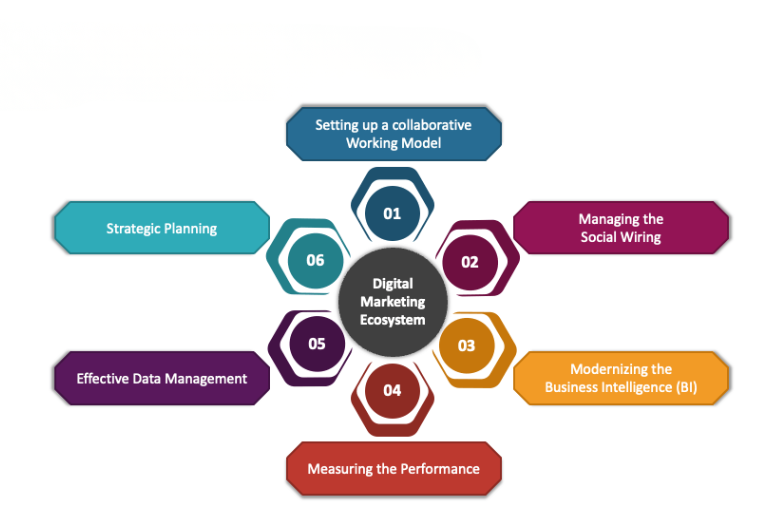
Digital growth is no longer a function of running more campaigns, opening more channels, or chasing every new platform that emerges. For modern brands—especially in competitive, digitally mature markets like Dubai—growth is determined by how intelligently those channels are structured, connected, and governed as a single operating system. This is where the Digital Marketing Ecosystem & Channel Architecture becomes a decisive strategic advantage.
Many organizations still approach digital marketing as a collection of disconnected tactics: SEO handled by one team, paid media by another, social content by a third, and CRM sitting somewhere downstream. This fragmentation leads to duplicated effort, wasted spend, inconsistent messaging, and—most critically—poor customer experiences. According to McKinsey, companies with strong cross-channel integration are up to 30% more likely to achieve higher customer satisfaction and retention than those operating in silos.
A digital marketing ecosystem is not simply the sum of your channels. It is the system through which demand is generated, nurtured, converted, retained, and expanded. Channel architecture is the structural design that determines how each channel contributes to that system—what role it plays, where it hands off responsibility, and how success is measured across the full customer lifecycle.
For Dubai-based brands navigating high acquisition costs, multicultural audiences, and intense competition across verticals, ecosystem thinking is no longer optional. It is the foundation of sustainable, defensible growth.
What Is a Digital Marketing Ecosystem & Channel Architecture?
At its core, a digital marketing ecosystem is the interconnected network of platforms, channels, data systems, and workflows that collectively drive growth. Channel architecture defines how each component is positioned within that network to achieve specific business outcomes.
Rather than asking, “Which channels should we use?”, ecosystem-led brands ask more strategic questions:
- Which channels introduce demand?
- Which channels educate and build trust?
- Which channels convert intent into revenue?
- Which channels extend lifetime value and advocacy?
Channel architecture in digital marketing is the answer to those questions. It is a deliberate design, not an organic accident.
In a well-structured ecosystem, owned, earned, and paid media operate as complementary forces rather than competing priorities. Paid channels accelerate demand, owned channels deepen relationships, and earned channels amplify credibility. Data flows across the ecosystem, enabling attribution modeling, personalization, and optimization at scale.
This is fundamentally different from traditional digital marketing models, where success is often measured at the channel level. Ecosystem thinking measures success at the system level—how efficiently attention is transformed into trust, and trust into revenue.
Why Channel Architecture Determines Brand Scalability
Modern brands do not fail because they lack channels; they fail because their channels lack architecture. Without a clear structure, growth becomes linear, expensive, and fragile.
Channel architecture enables scalability by clarifying roles and reducing dependency on any single platform. A brand that relies excessively on paid acquisition, for example, is vulnerable to rising CPCs and algorithm changes. A brand with a balanced ecosystem distributes risk while compounding returns.
In Dubai’s fast-moving digital economy—where consumer expectations are shaped by global leaders—scalability also requires consistency. Channel architecture ensures that messaging, positioning, and experience remain coherent across touchpoints, regardless of where or how a customer enters the ecosystem.
Harvard Business Review notes that customers increasingly expect brands to “remember” them across interactions. This expectation cannot be met through isolated channels. It requires integrated systems, shared data, and unified orchestration—precisely what a mature digital marketing ecosystem delivers.
Core Components of a High-Performance Digital Marketing Ecosystem
A successful digital marketing ecosystem is built on three interdependent layers: channels, data, and orchestration.
Channels as Strategic Functions, Not Tactics
Channels should be designed around intent, not popularity. Search, social, display, email, marketplaces, and content platforms each serve distinct functions within the customer journey. When these functions are clearly defined, channels reinforce one another rather than compete for credit.
For example, organic search often captures high-intent demand, while paid social introduces new demand. Content builds authority, while email and CRM convert and retain. Channel architecture aligns these roles so that effort compounds rather than fragments.
Data as the Unifying Layer
Data is the connective tissue of the digital marketing ecosystem. First-party data strategy, CRM and CDP integration, and performance attribution models enable brands to understand how users move across channels—and where value is created or lost.
In markets like the UAE, where privacy regulations and platform restrictions are tightening, first-party data is increasingly critical. Brands that invest early in data infrastructure gain resilience and insight that competitors struggle to replicate.
Orchestration Across the Funnel
Funnel orchestration is the discipline of guiding prospects through awareness, consideration, conversion, and loyalty with precision. It requires touchpoint optimization, lifecycle marketing, and marketing automation platforms working in harmony.
Rather than blasting the same message everywhere, ecosystem-led brands deliver contextually relevant experiences based on user intent and stage. This is where conversion architecture becomes a competitive advantage.
How Modern Brands Structure Digital Marketing Channels
Modern, high-performing brands no longer design their digital marketing channels around internal team structures or legacy org charts. Instead, they start with the customer journey and work backward. This shift may sound simple, but in practice it requires a fundamental change in mindset, measurement, and ownership.
One of the hardest adjustments is abandoning channel-centric KPIs in favor of system-level metrics. When each team is rewarded only for its own numbers, clicks, opens, impressions, or leads, collaboration quietly breaks down. Modern brands recognize that customers do not experience channels in isolation, so performance should not be measured that way either.
At the top of the funnel, channels are designed to maximize reach, relevance, and demand generation. This is where brands earn attention and plant the first seeds of interest. In the middle of the funnel, the focus shifts toward education, trust-building, and intent validation. Content, email, and remarketing work together to answer questions, reduce uncertainty, and help prospects feel confident moving forward.
Bottom-funnel channels prioritize frictionless conversion. This means removing obstacles, simplifying decision-making, and making it easy for customers to say yes. Importantly, the journey does not end at conversion. Post-conversion channels play a critical role in retention, upsell, cross-sell, and advocacy. This is where long-term value is created and where many brands still under-invest.
What truly separates modern channel architecture from traditional models is shared ownership of the journey. Paid media does not “end” at the click. Content does not “start” at the blog. CRM is not an afterthought reserved for after the sale. Each channel hands off responsibility seamlessly to the next, with clear intent and aligned goals.
Research from Salesforce supports this approach. Their findings show that high-performing marketing teams are 2.5 times more likely to align channels around shared lifecycle goals rather than individual performance metrics. This alignment is not a nice-to-have. It is a defining characteristic of effective, scalable channel architecture.
Digital Marketing Ecosystem vs Traditional Digital Marketing
Channel-Centric Execution and Its Limits
Traditional digital marketing models tend to emphasize channel execution over system design. Budgets are typically allocated by platform, teams are organized by specialization, and success is reported through isolated performance metrics such as impressions, clicks, or cost per lead. This structure makes sense on the surface because it offers clarity, ownership, and quick feedback loops.
In the short term, this approach can absolutely deliver results. Campaigns launch faster, optimizations happen quickly, and performance appears easy to manage. The problem emerges over time. When each channel is judged independently, teams optimize for what makes their own numbers look good, even if those optimizations weaken the overall customer experience. Growth becomes fragmented, inconsistent, and increasingly expensive to maintain.
Shifting From Channels to Systems
A digital marketing ecosystem takes a fundamentally different view of growth. Instead of asking how each channel performs on its own, it asks how channels interact, support one another, and collectively move customers forward. The focus expands beyond isolated moments and toward the full customer journey.
In this model, value is not created by a single touchpoint. It accumulates over time through repeated, connected experiences. Awareness builds familiarity, education builds trust, and consistency builds confidence. Success is no longer defined by isolated outputs, but by outcomes such as customer progression, loyalty, and lifetime value. This shift requires patience, alignment, and a willingness to look beyond immediate wins.
Why Attribution Models Shape Behavior
The contrast between traditional and ecosystem-driven marketing becomes especially clear when examining attribution modeling. Traditional models often rely on last-click attribution, assigning nearly all value to the final interaction before conversion. While simple to understand, this approach dramatically overvalues closing tactics and undervalues the work that happens earlier in the journey.
As a result, teams are encouraged to chase conversions aggressively. Educational content, brand storytelling, and trust-building initiatives receive less credit and, over time, less investment. This creates a cycle where short-term performance improves at the expense of long-term brand strength and customer confidence.
Multi-Touch Attribution and Long-Term Value Creation
Ecosystem-driven models use multi-touch attribution to understand the full influence of each channel across the entire journey. They recognize that awareness, consideration, reinforcement, and timing all play essential roles in conversion, even when they do not produce immediate results.
By acknowledging the contribution of every meaningful interaction, teams gain a more honest view of performance. This changes behavior. Instead of optimizing for vanity metrics, organizations begin optimizing for system efficiency. Acquisition costs decrease because trust is built earlier, and lifetime value increases because relationships are stronger and more durable. Over time, growth becomes not just faster, but healthier and far more sustainable.
The Role of Marketing Technology in Ecosystem Design
Marketing technology plays a critical role in enabling ecosystem-driven marketing, but it is not a shortcut. Technology is an enabler, not a solution. Tools only create value when they are aligned with a clear channel architecture and a well-defined operating model.
A modern digital marketing infrastructure typically includes analytics platforms, marketing automation tools, CRM systems, data warehouses, and personalization engines. Most organizations do not struggle with access to technology. They struggle with integration, governance, and clarity of purpose.
Without a clear ecosystem strategy, technology stacks become bloated, expensive, and underutilized. Tools overlap, data becomes fragmented, and teams lose confidence in insights. With the right architecture in place, however, technology enables real-time decision-making, intent-based marketing, and scalable personalization that actually serves the customer.
As Gartner notes, organizations that align marketing technology with business strategy outperform their peers by up to 20 percent in revenue growth. The takeaway is simple but powerful: architecture must come before tools. When strategy leads and technology follows, the entire ecosystem works smarter, faster, and with far greater impact.
Case Insight: Ecosystem-Led Growth in Competitive Markets
Consider a regional e-commerce brand operating in the GCC. Initially reliant on paid acquisition, the brand faced rising costs and declining margins. Rather than increasing spend, leadership redesigned the digital marketing ecosystem.
Content was repositioned as a demand generation asset, supporting SEO and social discovery. CRM was integrated with paid media to enable retargeting based on behavior, not demographics. Attribution modeling revealed that upper-funnel channels were undervalued, leading to smarter budget allocation.
Within twelve months, the brand reduced cost per acquisition by over 25% while increasing repeat purchase rates. Growth was not driven by more channels, but by better architecture.
This pattern is increasingly common among modern brands that win online. They do not chase platforms; they design systems.
Common Mistakes in Digital Channel Architecture
Even highly sophisticated organizations fall into familiar traps when designing their digital channel architecture. One of the most common and costly mistakes is over-investing in acquisition while under-investing in retention and lifecycle marketing. On paper, acquisition looks exciting because it shows immediate growth. In reality, this imbalance creates leaky funnels where growth has to be continuously bought instead of sustainably earned.
Many teams celebrate traffic spikes and lead volume, only to quietly accept churn, low repeat engagement, and declining lifetime value. Over time, this becomes exhausting and expensive. When retention is weak, marketing teams are forced to spend more each quarter just to stay in the same place. Sustainable growth comes from treating retention, loyalty, and post-conversion experience as first-class citizens in the ecosystem, not as afterthoughts.
Another common misstep is treating data as a reporting function rather than a strategic asset. Dashboards are often built to explain what already happened instead of guiding what should happen next. Without shared dashboards, unified KPIs, and a single source of truth, teams tend to optimize for their own channel goals. Paid media chases cost efficiency, CRM focuses on open rates, and content teams chase engagement, while the overall system quietly loses coherence.
When data is fragmented, organizations accidentally reward behavior that harms long-term performance. True ecosystem maturity requires data that aligns teams around outcomes, not outputs.
Finally, many brands mistake omnichannel presence for omnichannel strategy. Being everywhere does not automatically mean being effective. True omnichannel marketing architecture is not about coverage, it is about intentionality. Each channel should play a clear role in the customer journey, reinforcing the others rather than competing for attention. When channels work together with purpose, the experience feels seamless to the customer and far more efficient to the business.
Measuring Success in a Digital Marketing Ecosystem
Measuring success in an ecosystem-driven model goes far beyond individual channel performance. Click-through rates, impressions, and isolated conversion metrics only tell part of the story. What matters more is how the entire system performs together over time.
Key indicators include customer lifetime value, time-to-conversion, cross-channel attribution, and retention velocity. These metrics reveal whether marketing is creating real relationships or just short-term wins. They also help teams understand how quickly trust is built and how effectively customers move through the journey.
More advanced organizations take measurement a step further by tracking ecosystem health metrics. These include dependency ratios on paid media, growth of first-party data, funnel balance between acquisition and retention, and the resilience of owned channels. Unlike traditional reports, these indicators expose structural strengths and weaknesses before they become visible revenue problems.
Research from Bain & Company shows that increasing customer retention by just 5 percent can boost profits by up to 95 percent in some industries. Ecosystem-level measurement makes these gains visible, measurable, and actionable rather than theoretical. It shifts the conversation from short-term performance to long-term value creation.
The Future of Digital Marketing Ecosystems
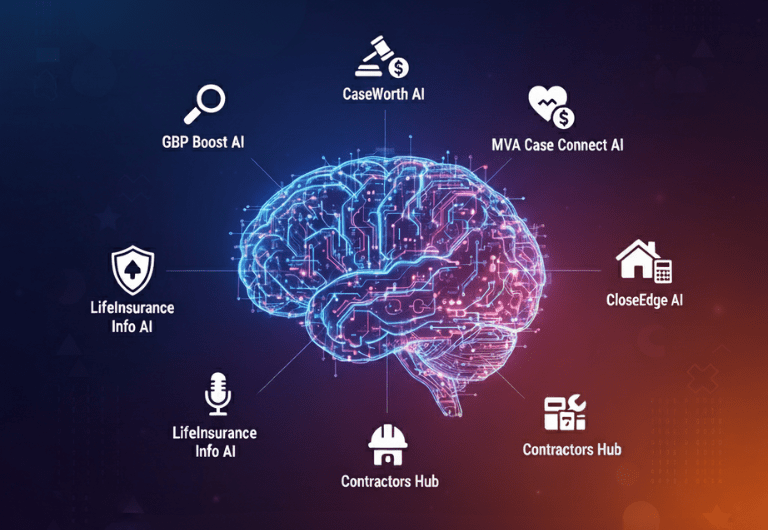
As AI, automation, and predictive analytics continue to mature, digital marketing ecosystems will become far more adaptive and responsive. Channel architecture will move away from static annual planning and toward dynamic optimization that reacts in real time to user behavior, intent signals, and changing market conditions.
Instead of manually reallocating budgets every quarter, intelligent systems will continuously rebalance efforts across channels based on performance, saturation, and opportunity. This does not remove the need for strategy. It raises the bar for it. Human insight will increasingly focus on defining guardrails, priorities, and ethical use of data while machines handle executional complexity.
Privacy-first design will also reshape ecosystem strategy. As regulations evolve and third-party data becomes less reliable, first-party data and owned media will become foundational assets. Brands that invest now in trust, transparency, and meaningful value exchange will be far better positioned to thrive in a privacy-conscious future.
In fast-moving, innovation-driven markets like Dubai, where ambition and experimentation intersect, ecosystem leadership will increasingly separate brands that grow quickly from brands that endure. The winners will not be those with the most channels, but those with the clearest architecture, the strongest data foundations, and the deepest understanding of their customers.
Conclusion: Architecture Is the New Competitive Advantage
The Digital Marketing Ecosystem and Channel Architecture is no longer a theoretical construct reserved for frameworks, whitepapers, or conference slides. It has become the operating system of modern brand growth. In a world where attention is increasingly scarce and trust is fragile, success no longer comes from isolated campaigns or short-term performance spikes. It belongs to brands that intentionally design intelligent, integrated systems that work together over time.
Digital marketing is not chaotic or unpredictable by nature. When structured correctly, it becomes measurable, scalable, and resilient. Clear architecture creates clarity of action. It aligns strategy with execution, data with decision-making, and teams with shared outcomes. Instead of reacting to every algorithm change or platform shift, ecosystem-driven organizations build systems that absorb disruption and continue to perform.
The brands that win online are not the ones with the most channels, the largest budgets, or the loudest presence. They are the ones with the clearest architecture. These brands understand how each channel contributes to the customer journey, how insights flow across the organization, and how performance compounds over time. Their growth engine is not a collection of disconnected tactics, but a coherent system designed to learn, adapt, and improve.
For organizations ready to move beyond fragmented tactics and perpetual optimization cycles, ecosystem thinking represents a meaningful shift. It replaces guesswork with intention, silos with collaboration, and short-term wins with durable advantage. This is not a future-state vision or an emerging trend. For modern brands serious about sustainable digital growth, ecosystem thinking is the present.
FAQ
1. What is the digital marketing ecosystem?
The digital marketing ecosystem is the interconnected network of platforms, channels, tools, and technologies used to attract, engage, convert, and retain customers online. It includes owned, earned, and paid media working together to support the entire customer journey.
2. What does channel architecture mean in digital marketing?
Channel architecture refers to how different digital marketing channels—such as SEO, social media, paid ads, email, content, and marketplaces—are structured, integrated, and aligned to achieve business objectives. A well-designed architecture ensures consistent messaging and smooth customer experiences across touchpoints.
3. What are the main components of a digital marketing ecosystem?
Key components include:
- Owned channels: Website, blog, email lists, mobile apps
- Paid channels: PPC ads, display ads, social media ads
- Earned channels: Reviews, referrals, PR mentions, shares
- Data & tools: Analytics, CRM, marketing automation platforms
Together, these components create a cohesive marketing system.
4. Why is channel integration important for marketing success?
Channel integration prevents fragmented communication and improves efficiency. When channels work together, brands can reinforce messages, guide users through the funnel more effectively, and improve conversion rates while delivering a seamless omnichannel experience.
5. How can businesses design an effective channel architecture?
Businesses should start by understanding their audience journey, defining clear objectives for each channel, assigning roles within the funnel, and using data to connect channels. Regular performance analysis and optimization help maintain alignment as platforms and customer behavior evolve.