
Managing Your Brand’s Online Presence for Maximum Impact

Introduction
In the age of algorithmic discovery and user-driven storytelling, a brand’s online presence has become its living reputation. For Dubai-based brands competing in a market built on instant impressions and high digital literacy, Brand Online Presence Management is no longer just about being visible, it’s about earning credibility, shaping influence, and maintaining control over how the brand is perceived.
The shift from physical spaces to digital-first experiences has completely redefined what “brand experience” means. According to Think with Google (2024), 82% of consumers research online before making a purchase decision. Whether someone is checking out a new café in Jumeirah, comparing a fintech app in DIFC, or browsing a real estate project in Dubai Marina, their opinions are formed long before they make contact.
That’s why managing perception consistently, intelligently, and across every touchpoint is at the heart of modern Brand Online Presence Management. It’s about shaping how people think and feel at every stage of discovery, guided by one powerful truth: User & Market Branding Perception defines reputation before a single transaction ever takes place.
Brand Online Presence Management: Beyond Visibility
Many brands mistake online presence for activity thinking more posts, more ads, and more hashtags mean more impact. But true presence isn’t noise; it’s structure. It’s the architecture of how a brand is seen, searched, shared, and spoken about.
At its core, Brand Online Presence Management (BOPM) is the thoughtful orchestration of every digital asset: your website, search visibility, social media, content, and reputation working together to build a cohesive story that inspires both awareness and advocacy.
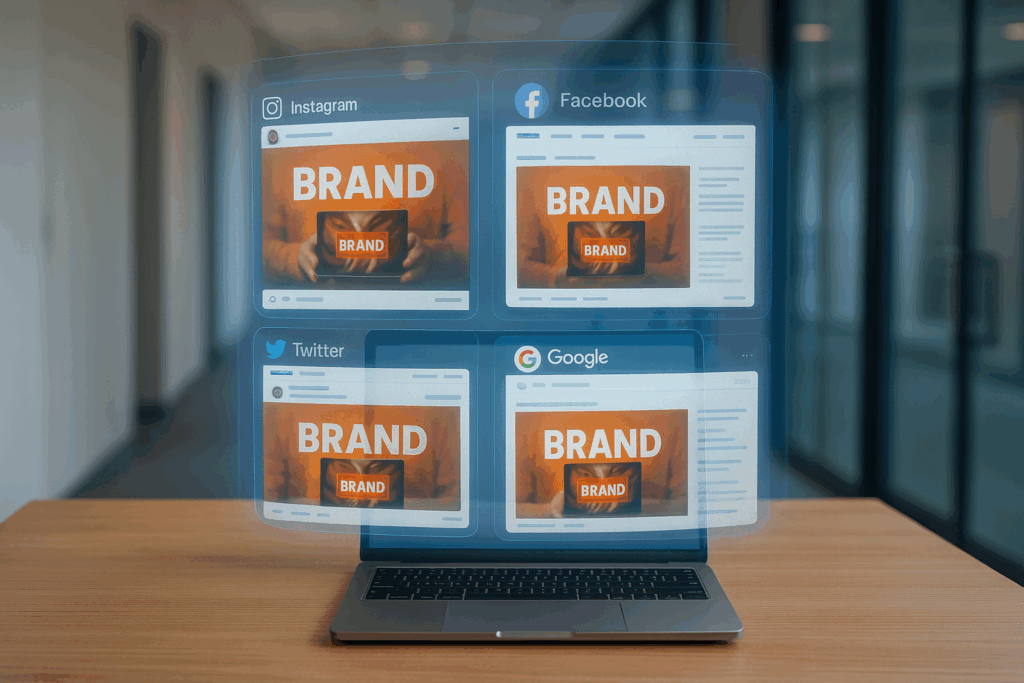
A strong online presence behaves like an ecosystem, not a megaphone. It connects seamlessly across four key areas:
- Visibility – how easily people can find your brand online (SEO, search snippets, local listings)
- Engagement – how meaningfully your audience interacts (content, social media, communities)
- Reputation – how your brand is perceived (reviews, sentiment, public feedback)
- Conversion – how awareness turns into measurable action (leads, purchases, loyalty)
Building this ecosystem takes focus and consistency. As McKinsey puts it, “Brands that integrate data, storytelling, and responsiveness in their digital presence outperform competitors by up to 2.5x in conversion and loyalty metrics.”
A Hyper-Connected, Reputation-Driven Market
Dubai offers a brand landscape unlike any other. With over 99% internet penetration and nine out of ten residents active on social media (Hootsuite Digital Report, 2025), it’s one of the most connected and competitive digital markets in the world.
But what truly sets Dubai apart isn’t just connectivity, it’s cultural velocity. Trends here move at lightning speed, and stories about brands spread across languages, communities, and influencer circles within hours.
To thrive, brands in Dubai must navigate three powerful tensions:
- Global Aspiration vs. Local Authenticity – A fintech startup, for instance, might need to project a global image while staying grounded in local trust signals, think Arabic localization or alignment with Islamic finance principles.
- Luxury Aesthetic vs. Everyday Accessibility – Especially in hospitality, retail, and lifestyle, brands must strike the right balance between prestige and approachability.
- Real-Time Response vs. Reputation Longevity – Quick, empathetic engagement on social platforms has to align with long-term brand credibility and consistency.
In a place where digital life moves this fast, Brand Online Presence Management (BOPM) isn’t just a marketing strategy, it’s a core organizational skill. Brands that master it don’t just keep up with Dubai’s pace, they shape it.
The Architecture of Brand Online Presence
Building a strong online presence isn’t just about managing platforms, it’s about managing perception through coherence. When a brand looks, sounds, and acts differently across touchpoints, trust begins to fade. But when every message aligns, consistency turns into credibility and credibility compounds into equity.
Owned Presence: The Foundation of Trust
Your owned channels website, blog, and email are your digital real estate. They’re where your brand lives, not just where it’s seen. These spaces build credibility and give you control over your data and narrative.
Website: Think of it as your brand’s headquarters. It should blend speed, SEO, and storytelling effortlessly. Research from Google shows that even a one-second delay in load time can cut conversions by 20% proof that performance and perception go hand in hand.
Blog & Content Hubs: Consistent, value-driven content establishes authority. Imagine a Dubai property developer sharing insights on “Smart Living in Dubai 2040.” That kind of forward-thinking storytelling not only ranks for future-focused search queries but also builds long-term investor confidence.
Email Ecosystem: Email may feel “old school,” but it remains one of the most powerful trust-building tools out there with a 42:1 ROI according to the DMA. Personalized updates, exclusive insights, or early access reminders all create a sense of connection and continuity.
Earned Presence: The Currency of Credibility
Earned media press coverage, influencer mentions, authentic reviews is what people say about you when you’re not in the room. And in Dubai’s fast-moving hospitality and lifestyle sectors, it matters more than ever: around 70% of purchase decisions are shaped by peer reviews or influencer validation.
A single Google Review or TikTok feature can sway sentiment faster than any paid ad. That’s why smart brands build earned presence pipelines aligning PR, SEO, and social listening to spot organic moments of advocacy, then amplify them with intention.
Shared Presence: The Social Brand Environment
Social platforms aren’t just megaphones; they’re living, breathing environments where your brand personality takes shape. For Dubai brands, success means mastering not just content, but conversation.
As neuroscientist Antonio Damasio said in The Feeling of What Happens, “Emotion is the substrate of decision.” Social engagement likes, comments, shares isn’t vanity; it’s the emotional infrastructure of your brand’s digital identity.
The secret lies in contextual storytelling: adapting your tone, visuals, and timing to match audience subcultures Arabic vs. English content, Emirati vs. expat tone, humor vs. authority. It’s how you stay relevant and real at the same time.
Paid Presence: The Amplifier Layer
While organic reach earns credibility, paid visibility ensures your message reaches the right people at the right moment especially during high-impact campaigns like the Dubai Shopping Festival or White Friday.
But within Brand Online Presence Management, paid media isn’t just a sales engine it’s a reputation accelerator. Every impression, every sponsored story, contributes to your brand’s long-term memory structure. Because in the end, true presence isn’t about being seen everywhere. It’s about being remembered for the right reasons.
Framework: The S7 Brand Online Presence System
A strong online presence doesn’t happen by chance; it’s built through structure, discipline, and consistency. The S7 Brand Online Presence System, inspired by advanced agency frameworks, brings this structure to life through seven interconnected layers that work together like gears in a well-tuned engine.
Search Visibility ensures your brand can be easily discovered through SEO, local listings, and knowledge panels measured by how often people find and click on you.
Social Voice where your tone, influencer partnerships, and engagement loops shape how your audience feels about you, reflected in sentiment and share ratios.
The Site Experience layer focuses on what happens once they arrive speed, usability, and accessibility that convert curiosity into action.
Story Layer keeps your brand narrative consistent and emotionally resonant across every piece of content
Sentiment Intelligence listens in real time, using reviews and AI-driven analysis to track shifts in perception and satisfaction.
Signal Consistency, ensuring your visuals, messaging, and tone align seamlessly across all touchpoints building coherence that people instinctively trust.
Sustained Reputation ties everything together with proactive PR, smart crisis management, and an ongoing advocacy cycle that turns customers into loyal ambassadors.
Together, these layers make Brand Online Presence Management a living system not a one-off campaign, but a continuous rhythm of signal, response, and reinforcement that strengthens trust over time.
The Role of SEO in Presence Architecture
Search is still where most digital journeys begin. In the GCC, 68% of brand interactions start with a search query, and more often than not, they happen on mobile. But today, SEO isn’t just about keywords, it’s about experience signals. How helpful, trustworthy, and relevant your brand feels in every search interaction matters more than ever.
Entity-Driven Search Optimization
Google now prioritizes entities, the people, brands, and organizations represented through structured data. For Dubai brands, that means going beyond basic SEO. Integrating LocalBusiness JSON-LD, rich snippets, and schema for events or products helps your brand move from being just another link to earning a spot in knowledge panels where trust and authority live.
AI-SEO & Generative Optimization
With the rise of Generative Search (SGE) and Answer Engine Optimization (AEO), SEO has become more conversational and context-driven. It’s no longer about stuffing keywords it’s about anticipating how people actually ask questions. For example, content that answers natural, intent-based queries like “best luxury fitness studios in Dubai Marina” will outperform static, keyword-heavy pages. The goal is simple: be the answer, not just a result.
Brand Search Consistency
Branded search queries convert up to five times higher than generic ones, which makes controlling what shows up for your name absolutely essential. From your official website and reviews to press mentions and social profiles, every result on page one shapes perception.
For a Dubai agency or any modern brand search results are your digital storefront. Each snippet, review, and link forms part of your brand’s architecture. Together, they tell your story before a single click happens.
Social Media Presence: From Broadcasting to Belonging
The algorithm no longer rewards volume, it rewards relevance. On social media, effective Brand Online Presence Management (BOPM) isn’t about posting more often; it’s about creating meaningful connections. It’s less “content calendar,” more community orchestration where every interaction strengthens your brand’s emotional footprint.
A. Emotional Engagement vs. Content Quantity
It’s not the number of posts that matters, but how deeply they resonate. According to the Sprout Social Index (2025), brands that tap into emotional storytelling see 23% higher engagement than those focused on frequency alone.
For Dubai brands, this means anchoring stories in culture and shared identity, not just trends. Take Emirates NBD’s #GiveInToGiving Ramadan campaign: it built emotional momentum through empathy-driven storytelling rather than flashy visuals, leading to a 47% rise in positive sentiment. It’s a reminder that people remember how a brand made them feel, not how often it was posted.
B. Micro-Community Management
In a diverse, hyperlocal market like Dubai, relevance grows through micro-communities: the food lovers in JLT, the sneakerheads in Alserkal, the expat founders in Business Bay. Successful brands don’t just broadcast to everyone; they listen, adapt, and engage with intent.
That means tailoring messages, collaborating with niche influencers, and showing up where these conversations naturally happen. When done right, it feels less like marketing and more like belonging.
C. Brand Behavior Consistency
Social media is where a brand’s true personality is tested. If you say you’re “innovative,” your visuals, tone, and even your comment replies should show it. Consistency in behavior builds recognition and trust.
Today, AI-powered tone analysis tools can even measure how consistent your voice is across platforms, a powerful asset for brands serious about authenticity. Because in the end, your audience doesn’t just follow your content; they follow your character.
Reputation Management: The Invisible Engine of Trust
Visibility might grab attention, but reputation is what earns loyalty. According to Edelman’s 2024 Trust Barometer, 71% of consumers say that brand trust matters more than price when making a purchase. In a market as fast-moving and vocal as Dubai, that trust isn’t built once it’s managed every single day.
The Review Loop
Reviews are today’s version of word-of-mouth instant, public, and incredibly influential. Whether on Google, TripAdvisor, or Zomato, they form the social proof people rely on before they buy, book, or visit.
An effective agency-led reputation strategy should include:
- Automated review requests sent after purchases or experiences (via email or WhatsApp)
- Real-time response management, where every piece of feedback gets timely acknowledgment
- Sentiment analysis dashboards that use AI to identify emerging patterns, risks, and opportunities
Handled right, reviews don’t just measure satisfaction they build relationships.
The Crisis Response Framework
In Dubai’s high-speed digital ecosystem, one viral post can undo months of careful branding. The “Golden Hour Framework” highlights that the first 60 minutes after a negative mention are crucial. A well-prepared response protocol that acknowledges, correct, and humanize can protect and even enhance brand equity.
Take, for instance, a Dubai hospitality brand that faced a viral TikTok complaint. Instead of deflecting blame, they responded within the hour, apologized sincerely, and followed up with a personalized experience. The result? A potential PR disaster became a story of care and loyalty.
The Advocacy Flywheel
Reputation management doesn’t end when critics are silenced it continues when customers become advocates. The Advocacy Flywheel creates that momentum through four layers:
- Experience – Deliver moments that genuinely delight.
- Engagement – Spark authentic conversations, not scripted replies.
- Empowerment – Recognize and reward your most vocal supporters.
- Expansion – Amplify their voices through your own media and platforms.
When this cycle spins continuously, advocacy becomes organic. Your customers stop being just buyers, they become believers and storytellers who carry your brand forward.
Data, AI, and Predictive Presence Management
The next era of digital presence is being shaped by predictive intelligence. With AI at the core, agencies are moving from simply reacting to online conversations to anticipating them, turning Brand Online Presence Management into a proactive, data-informed discipline.
Sentiment Forecasting
Thanks to Natural Language Processing (NLP), brands can now spot emotional and tonal shifts in online conversations long before they escalate. Imagine an AI dashboard tracking both Arabic and English discussions about a Dubai real estate brand; it might detect early signs of skepticism around pricing transparency or service quality. These subtle cues give brands the chance to respond thoughtfully before small concerns turn into public crises.
Dynamic Content Personalization
AI is also transforming how content meets its audience. By analyzing behavior and context in real time, it can automatically tailor landing pages, visuals, and calls-to-action to match individual user intent. For example, a visitor exploring family villas in Dubai might see community-focused imagery, while an investor sees ROI-driven insights.
This level of adaptability turns Brand Online Presence Management into a living, breathing ecosystem one that learns, adjusts, and optimizes itself with every interaction.
Unified Data Ecosystem
Data only becomes powerful when it’s connected. By integrating tools like Google Analytics 4, Meta Insights, CRM platforms, and heatmaps, agencies can create a complete 360° view of brand performance.
Dubai’s top digital teams are already building Presence Intelligence Dashboards that unify:
- SEO metrics (search share, click-through rate)
- Sentiment trends across languages
- Paid campaign ROAS
- Social voice share and engagement quality
The outcome? Leadership teams gain visibility not just into marketing metrics, but into real business impact from revenue and retention to long-term reputation growth. In short, AI is redefining what it means to be “present” online. It’s not just about seeing what’s happening now, it’s about knowing what’s coming next.
Local SEO and Geo-Reputation in Dubai
For service-based and retail brands, local visibility isn’t just an advantage, it’s the heartbeat of discovery. Nearly 46% of all Google searches carry local intent, and in Dubai, “near me” searches have surged by 150% year over year. In a city where convenience meets curiosity, showing up locally and showing up well can make all the difference.
Google Business Optimization
Your Google Business Profile is often the first impression your brand makes. A complete, regularly updated profile with posts, fresh images, Q&As, and review responses does more than boost rankings; it humanizes your brand.
For Dubai’s hospitality scene especially, keeping visuals fresh matters. Hotels and restaurants that update photos weekly see up to a 35% increase in click-through rates. It’s proof that people connect with brands that feel alive, responsive, and up to date.
Arabic SEO and Localization
Many Dubai brands still lead with English content, but nearly 40% of local search queries include Arabic keywords. Ignoring that is like leaving half your audience at the door. Bilingual strategies, especially Arabic-optimized metadata, FAQs, and landing pages don’t just expand reach. They signal respect, inclusivity, and authenticity. In a multicultural city like Dubai, localization isn’t a tactic; it’s a gesture of connection.
Location-Based Engagement
Finally, local presence extends beyond maps and listings. Using geo-targeted ads and hyperlocal storytelling like a content series titled “What Dubai Marina Residents Love About…” anchors your digital brand in the rhythms of real communities. When people see your brand reflecting their neighborhoods, languages, and lifestyles, it doesn’t just make you visible it makes you belong.
The Integration Era: Omnichannel Presence as Brand Reality
Today’s customer journey isn’t a straight line, it’s a web of touchpoints. A person might spot a YouTube ad, scroll through Instagram reviews, visit your website, compare options on Google, and finally make a purchase or inquiry through WhatsApp. In this fluid reality, Brand Online Presence Management must evolve into Omnichannel Presence Orchestration.
It’s no longer about managing isolated platforms, it’s about aligning signals across every digital touchpoint. When your message, tone, and design stay consistent across web, app, social, and email, you create what psychologists call cognitive fluency, the ease and familiarity that make people instinctively trust your brand.
In Dubai’s fast-paced retail landscape where WhatsApp shopping, TikTok discovery, and luxury in-store experiences all coexist this harmony becomes a competitive edge. According to the PwC GCC Retail Report (2024), brands that manage their presence holistically see an average 34% higher return on ad spend (ROAS). In short, omnichannel excellence isn’t about being everywhere, it’s about making every interaction feel like part of one seamless brand story.
Measuring Success: The Brand Presence Performance Index
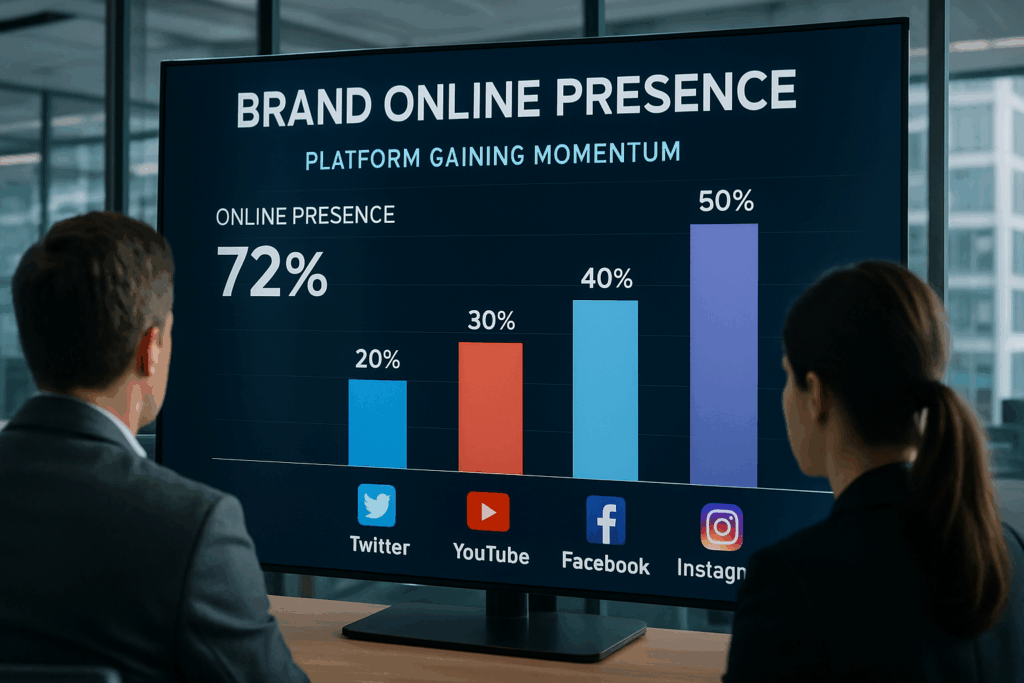
To move beyond surface-level vanity metrics, forward-thinking agencies are now creating composite presence dashboards called the Brand Presence Performance Index (BPPI). This index blends both numbers and nuance bringing together data that reflects not just how visible a brand is, but how it’s perceived. It looks at five key dimensions:
Visibility measured through search share and branded search volume, shows how easily people discover your brand.
Credibility tracked through average review ratings and earned media coverage, reflects the strength of your trust signals.
Engagement captured through click-through rates, dwell time, and the depth of social conversations, reveals how deeply your audience connects.
Consistency measures tone and visual alignment across touchpoints, ensuring every piece of communication feels unmistakably “you.”
Advocacy The ratio of promoters to detractors and the growth of referrals shows how much of your audience has truly become your community.
By viewing presence through this holistic lens, leadership teams can finally connect digital reputation to real business outcomes seeing how trust, engagement, and brand coherence directly influence revenue, retention, and growth.
Building Brand Presence Governance: From Team to Culture
Presence management can’t live inside the marketing department alone; it has to become an organization-wide mindset. Building and protecting a brand’s online reputation today requires clear governance, shared rituals, and true cross-functional ownership.
Governance Framework
The most forward-thinking agencies and brands are forming quarterly “Brand Presence Councils” collaborative sessions where teams from PR, SEO, social media, and customer experience come together around unified dashboards. These councils don’t just review data they align strategy. When everyone sees how their work impacts online perception, presence management shifts from a marketing task to a company-wide discipline.
Culture of Responsiveness
Every employee, from customer service to leadership, is now part of the brand voice. Training teams on tone, empathy, and escalation protocols ensures that every interaction whether an email, a comment, or a DM reinforces the brand’s story rather than diluting it. A responsive culture doesn’t just react quickly; it communicates with clarity, warmth, and respect. That’s how trust is earned one message at a time.
Ethical and Transparent Presence
In a world flooded with AI-generated content and influencer skepticism, authenticity is the new currency of credibility. Dubai’s Gen Z and Millennial audiences, in particular, value brands that aren’t afraid to show their human side open about partnerships, sustainability efforts, and core values. Transparency turns digital presence into brand integrity, a reputation built not just on how a brand looks online, but on how it behaves.
When governance, responsiveness, and authenticity come together, presence management evolves from a marketing function into a culture of consistency and trust, one that’s lived by everyone, not just posted by a few.
The Future: From Online Presence to Digital Personhood
The next chapter of Brand Online Presence Management is unfolding around the idea of AI-driven digital personhood, a world where brands begin to act less like systems and more like intelligent, responsive beings. These brands don’t just speak; they listen, learn, and engage in real time, shaping relationships as naturally as a human would.
Imagine a Dubai real estate brand whose digital assistant doesn’t just answer questions but understands tone, interprets emotion, and follows up with personalized recommendations all while staying perfectly on-brand. That’s not the future; it’s fast becoming the standard.
We’re stepping into the era of Conversational Presence, where chatbots, voice search, and AI personas blur the line between marketing and customer experience. Every interaction whether typed, spoken, or automated becomes part of one continuous dialogue between brand and audience.
But as automation grows smarter, the real challenge won’t be creating presence, it will be keeping it human. Authenticity will be the compass that keeps AI from feeling artificial. The brands that win in this new landscape will be the ones that combine intelligence with empathy, and technology with trust.
Conclusion: Orchestrating Digital Meaning
A brand’s online presence isn’t just its website, its followers, or its ads, it’s the sum of every signal it sends into the world, and how clearly those signals align with human perception. In a city like Dubai fast, connected, and constantly evolving Brand Online Presence Management has become more than a marketing function. It’s a discipline: a continuous orchestration of visibility, reputation, and story. Those who master it understand that success is measured not by noise, but by User & Market Branding Perception how people see, feel, and trust a brand across every digital touchpoint.
When done right, presence turns into progression: brands move from being found to being followed, from being seen to being trusted, and from simply communicating to genuinely connecting. As Dubai’s digital landscape grows ever more fluid, the most enduring brands will be the ones that treat presence not as a campaign or a checklist but as an architecture of meaning. These are the brands that won’t just exist in the market; they’ll shape how the market feels.
FAQ
1. What does managing an online brand presence involve?
Managing your brand’s online presence means controlling how your business appears and interacts across digital platforms such as websites, social media, search engines, and review sites. It includes maintaining consistent messaging, engaging with audiences, and monitoring brand reputation.
2. Why is a strong online presence important for brands?
A strong online presence builds visibility, credibility, and trust. Customers today research brands online before making decisions, so a professional and active digital presence helps attract new audiences, strengthen relationships, and drive business growth.
3. How can businesses improve their online brand presence?
Businesses can improve their presence by regularly updating content, engaging with followers, optimizing their website for SEO, responding to customer reviews, and maintaining consistent branding across all platforms. Quality, consistency, and interaction are key.
4. Which platforms are most important for managing brand presence?
The most important platforms depend on your audience but typically include your website, Google Business Profile, social media channels, and industry review sites. Being active where your customers spend time ensures maximum visibility and impact.
5. How can companies measure the success of their online presence?
Success can be measured through website traffic, social media engagement, online reviews, search rankings, and lead generation. Tracking these metrics helps brands understand what’s working and refine their digital strategy for better results.