
From Price Wars to Brand Value: Black Friday Marketing Strategies for the GCC

Introduction
Every November, Dubai’s retail scene doesn’t just change, it comes alive. Streets hum with energy, storefronts shimmer under bold banners, and inboxes overflow with “last chance” offers. But behind the glitter and countdown timers, something more meaningful is happening: Black Friday in Dubai and across the GCC is evolving. Once a frenzied race for the lowest price, it has now become a powerful reflection of brand maturity and market strength. Locally reframed as White or Yellow Friday, this period isn’t simply about a weekend of deals, it’s a high-pressure performance test for brands. It’s where reputation meets real-time response.
In a marketplace flooded with discounts and digital noise, the true winners aren’t the ones shouting the loudest, they’re the ones whose brand equity and digital performance work in harmony. Think of equity as the heart, the meaning, trust, and emotional connection a brand has earned. Performance marketing is muscle driving precision, reach, and agility. When these two forces operate as one cohesive system, something special happens. Every impression reinforces credibility. Every conversion adds to the narrative customers believe about the brand. It’s no longer about “selling fast” it’s about building lasting resonance through every click, share, and cart checkout.
In Dubai’s hyper-connected market, Black Friday isn’t just an event. It’s a moment of truth, a mirror reflecting how well a brand can balance emotion and execution, trust and technology, meaning and momentum.
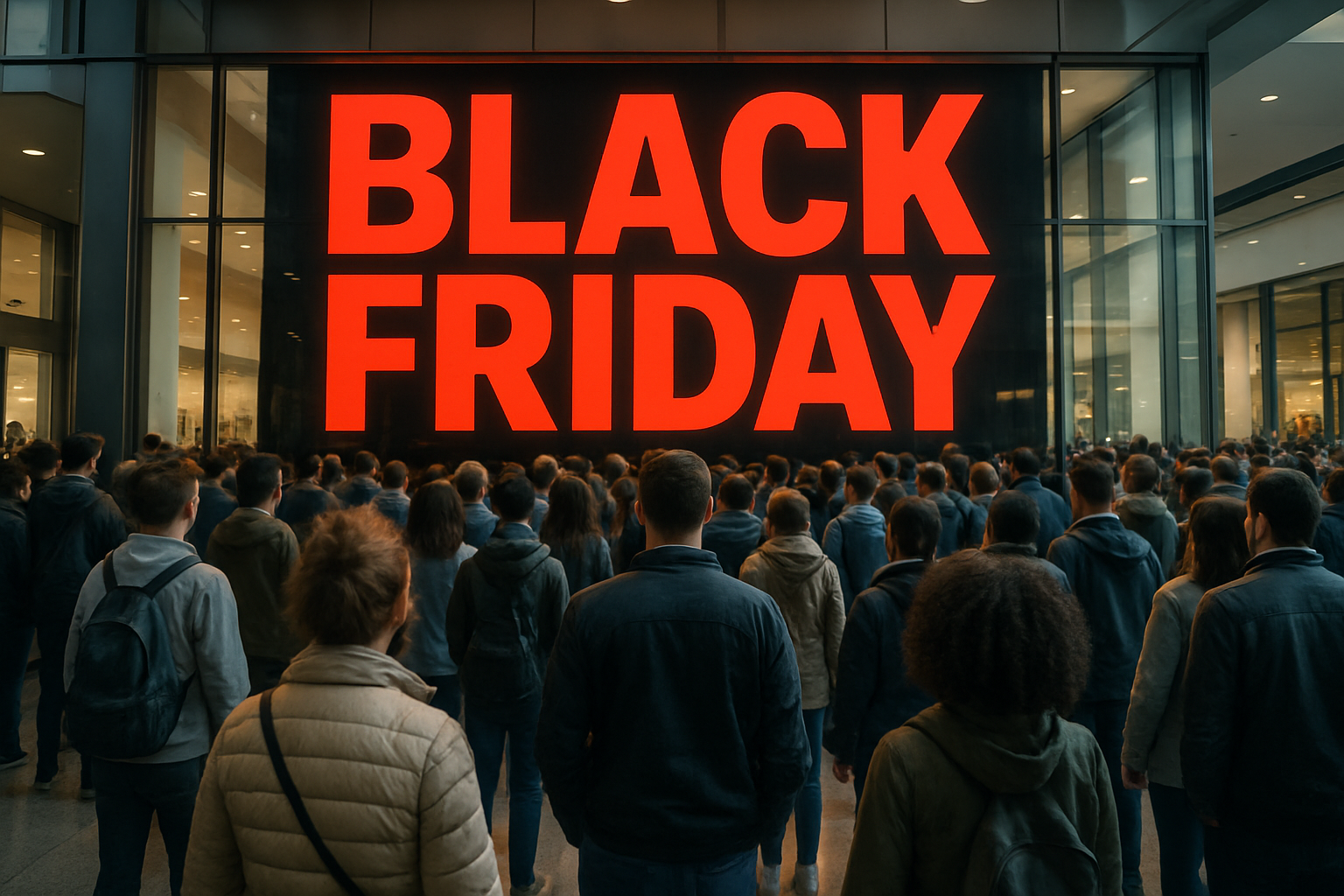
The Strategic Problem Black Friday Exposes
Black Friday has a way of pulling brands into short-term thinking. The pressure is real revenue targets loom, dashboards flash red, and every team scrambles to squeeze out just a little more performance. In that rush, it’s easy to over-rely on discounts, bidding wars, and retargeting frequency. But when that happens, creativity loses its context and customers start making choices based purely on price. And price, without meaning, is just a race to the bottom.
When a brand spends months carefully crafting its identity, its colors, typography, tone of voice, visual rhythm, and promises it’s building memory, not just aesthetics. Those brand codes are what make an offer feel like it belongs to something bigger. But when countdown clocks start flashing and urgency takes over, many brands let those signals fade. The result? What was meant as a “reward for loyalty” begins to look like desperation.
The opposite mistake is just as common. Some brands lean so heavily into their identity systems that they forget to meet the moment. Their campaigns look stunning art-directed perfection but they don’t perform. Black Friday doesn’t wait around for admiration; audiences jump between apps, languages, and offers in seconds. Without flexible budgets, sharp audience segmentation, and seamless landing experiences, even the most beautiful brand work can fall flat.
The real win lies in balancing the compact between brand and performance. Brand equity gives meaning to the deal. Performance marketing ensures that meaning is easy to find, believe, and act on. When the two work together, a brand doesn’t just sell, it strengthens the story people tell themselves about why it’s worth choosing, even when everything is on sale.
How Brand Equity Multiplies Performance (and Vice Versa)
Think of brand equity as a reservoir of expectation, a pool that stores all the meaning, trust, and emotion your brand has earned over time. In the GCC, that reservoir fills differently. It’s shaped by cultural nuance, the reliability of your service, how fluently you communicate across languages, and how confidently your brand shows up in social spaces. When that equity is strong, something remarkable happens: your performance marketing starts working more efficiently.
You see it in the data, even if you don’t name it. Strong equity means your ads get noticed more easily because people already recognize your colors, tone, and visual cues. It means customers click faster, hesitate less at checkout, and come back more often. Every layer of trust trims a little off your blended customer acquisition cost.
And the reverse is also true. Smart, well-optimized performance campaigns feed that reservoir back. As more people search for your brand, talk about it, and engage directly, your first-party data deepens giving you richer insights and more authentic creative direction for the next campaign. It’s a virtuous loop: brand builds efficiency; performance amplifies equity.
This isn’t marketing theory, it’s what you feel in the metrics. Campaigns that stay disciplined to their brand codes tend to drive stronger assisted conversions. Remarketing performs better when the landing page feels like the ad that brought you there. And organic demand rises when media planning reinforces a distinct brand promise instead of shouting “SALE!” into the void.
At its core, the principle is simple but powerful: coherence reduces friction and when you reduce friction, you convert at a premium.
The Dubai Context: What Makes Integration Non-Negotiable
Dubai’s retail scene is an omni-channel theatre alive, layered, and always in motion. Malls set the stage for aspiration, mobile drives discovery, and channels like WhatsApp and SMS fast-track intent. Add in seamless Arabic–English parity and sky-high fulfillment expectations, and you’ve got one of the most dynamic markets in the world. Then comes Black Friday, a moment that compresses all of this complexity into pure spectacle.
In those few days, the customer journey becomes a dance across touchpoints: a Reel teases a capsule drop, a TikTok creator breaks down the offer, a search ad captures intent, and a mall visit seals the deal. But when any step in that sequence falters when the creative tone shifts, language feels off, pricing changes midstream, or delivery promises slip, trust evaporates in seconds. And in a market as competitive as Dubai, that lost trust often means a lost conversion.
This is where regional nuance becomes a superpower, not a detail. The tone of “White Friday,” celebratory color palettes, and bilingual headlines don’t just localize, they humanize. They make the event feel like it belongs here, in this culture, for this audience. Family-first imagery, luxury codes for premium shoppers, and strong after-sales cues like returns and local warranties aren’t decorative; they’re trust signals that carry conversion weight.
In the GCC, cultural fluency isn’t just a nice-to-have, it is brand equity. And when your brand speaks the region’s language literally and emotionally it doesn’t just perform better; it earns the right to be chosen, again and again.
Why Black Friday in the GCC Is a Branding Moment
Dubai’s retail arena doesn’t just celebrate Black Friday it reinvents it every year. It’s not about copying Western playbooks; it’s about reshaping them to fit local culture, emotion, and identity.
Take Noon, for example. It didn’t just run a sale, it transformed Black Friday into Yellow Friday, weaving its signature color and upbeat tone into a regional phenomenon. That single creative decision turned a borrowed retail event into something distinctly Middle Eastern, full of optimism and energy.
Amazon.ae took a similar path, rebranding the day as White Friday, a name that feels positive, inclusive, and culturally aligned with the GCC’s values. Meanwhile, physical spaces like Mall of the Emirates and Dubai Hills Mall have elevated the experience even further, blending entertainment and commerce through live performances, influencer collaborations, and in-mall activations that drive both footfall and online engagement.
These examples reveal a powerful truth: in the GCC, cultural context matters just as much as discount depth. Consumers aren’t simply bargain hunters, they’re meaning seekers. They gravitate toward brands that reflect their aspirations, respect their values, and fit seamlessly into their lifestyles. A 50% discount from a brand they trust feels like an invitation. The same offer from an unfamiliar name can feel like a clearance. The difference? Brand equity.
Ultimately, Black Friday in this region isn’t just a marketing sprint it’s a symphony. Brand equity sets the emotional tone; performance marketing delivers the rhythm and reach. When the two play in harmony, the result isn’t just higher sales, it’s lasting resonance.
Designing the Brand–Performance Operating System
A brand–performance compact is only as strong as the system that powers it. Behind every high-performing Black Friday campaign in Dubai or anywhere in the GCC there’s an invisible operating rhythm where creativity, data, and execution move as one. That rhythm rests on four disciplines, all working in sync
1. Narrative Architecture
Before a single ad goes live, the brand must define why it’s showing up for Black Friday. What’s the story behind the sale? What value are customers truly getting access, curation, speed, craftsmanship not just a “percentage off”? This narrative becomes the logic that guides every channel and every headline.
For example:
- A luxury skincare brand highlights limited-time access to its spa-grade ritual, not a faceless price slash.
- A tech retailer frames smarter bundles and faster local warranty not just a cheaper spec sheet.
When the story leads, the discount supports it rather than defines it.
2. Identity in Motion
Brand identity shouldn’t freeze when urgency kicks in. Typography, color, and motion must flex across formats from story-first videos to performance tiles, from bilingual carousels to app banners without losing recognizability. Urgency can live within the brand world: motion creates energy, countdowns build anticipation, and time-boxed copy communicates scarcity. But even under pressure, the experience should feel like the brand premium, coherent, and unmistakably itself.
3. Performance Mechanics
Real performance starts with knowing who you’re speaking to. In the GCC, that means segmenting beyond simple demographics:
- UAE nationals vs. expat communities
- Arabic vs. English primaries
- High-value repeat buyers vs. deal-driven shoppers
- Mall-adjacent audiences who convert in-store vs. pure-play e-commerce users
Budgets and bids must flex with intent surges. Remarketing should ladder from brand-assuring creative to dynamic offers. Cross-device journeys stitched through first-party data and server-side tracking keep measurement resilient and privacy-safe. Performance, when engineered with nuance, doesn’t just convert its compounds.
4. Experience Friction Removal
Every click makes a promise of speed, service, and authenticity. Every break in that promise leaks equity. Offer clarity, accurate stock info, transparent delivery windows, flexible returns, and local payment options aren’t just operational, they’re emotional signals of trust. Even post purchase communication email, WhatsApp, and customer support should sound like you, not like a system. Because during Black Friday’s high tempo, operations become branding. The smoother the journey, the stronger the impression left behind.
When these four disciplines align, brands stop treating Black Friday as chaos to survive and start using it as a canvas to perform, prove, and deepen connection.
The Three Moments That Matter: Before, During, After
Before: Designing Anticipation with Identity
The goal before Black Friday isn’t just setup, it’s priming and permission. You’re preparing your audience to want what’s coming, and to feel part of something exclusive. The brand story should explain why this event matters and what makes it special beyond the discount. VIP waitlists and early-access codes create micro-status, rewarding your most loyal customers with a sense of privilege.
Behind the scenes, your systems are rehearsing for the spotlight: websites are load-tested, creative is versioned in both Arabic and English, and analytics pipelines are validated to ensure every click and conversion tells a story. This phase is about building anticipation not noise and doing it in a way that feels unmistakably “you.”
During: Performing in Real Time
Once live, the market turns into a living stream not a set of time slots. Agility becomes the strategy. Budgets shift with momentum; creatives swap in response to live insights; product mixes evolve as inventory moves. Every touchpoint, from live chat to social replies, should echo the brand’s voice warm, responsive, and human.
Even the details matter: visible shipping timelines, transparent stock levels, and real-time influencer reinforcement all build trust when competition is fiercest. Through it all, the brand never drops its tone or polish it sharpens them. Because in the chaos of performance marketing, recognition is the calm that converts.
After: Turning Buyers into Believers
When the flash sale ends, the relationship begins. The smartest brands treat post-purchase as a new storytelling phase, a moment to express care, craft, and community. Thank-you sequences, loyalty programs, and personalized recommendations should feel thoughtful, not transactional. Cross-sells should reinforce taste, not push price.
And when the dust settles, the real work begins: analyzing not just revenue, but resonance. Did search interest rise? Did direct traffic grow? Did NPS or sentiment improve? Did repeat intent strengthen? These signals prove that the event didn’t just generate sales it built brand capital.
Because when done right, Black Friday isn’t a spike. It’s a step forward in how customers see, feel, and believe in your brand.
Cultural Intelligence: The GCC Edge
In Western markets, Black Friday is largely a transaction, a fast, impersonal exchange between discount and demand. But in the GCC, it’s something more alive, more communal. It’s a performative shared experience that blends shopping with social connection. Families visit malls together, influencers go live from pop-up events, and bilingual storytelling fills digital feeds with energy and aspiration.
Here, cultural fluency isn’t a creative extra; it’s the edge that makes campaigns land.
Language Parity:
The region’s multilingual rhythm matters. Ads that combine Arabic headlines with English calls-to-action don’t just translate words they mirror how people think, speak, and share online. That duality feels natural and deeply local.
Visual Localisation:
Imagery that reflects real GCC life bustling malls, Dubai’s skyline at sunset, local festivities and family gatherings helps brands feel present, not imported. It’s a simple cue that says, “we understand you, because we’re part of your world.”
Trust and Service:
In this market, logistics are language. Fast local delivery, Arabic-speaking customer support, and transparent warranties do more than fulfill orders; they signal reliability, respect, and care.
In essence, cultural sensitivity is brand equity in motion. When a brand shows up fluently in language, in image, in service it earns not just clicks, but connection. And in the GCC, connection is what truly converts.
What “Good” Looks Like in Dubai
A Dubai electronics retailer that truly understands Black Friday as a brand stage doesn’t just push specs and prices it performs trust, relevance, and belonging. Picture this: performance ads highlighting product features are paired with creator-led demonstrations filmed inside Mall of the Emirates, surrounded by familiar energy and local flair. Arabic captions run by default, and the call-to-action promises same-day Dubai delivery with a certified local warranty. The audience doesn’t just see a deal, they see credibility. The product feels both useful and rooted in their world.
Now imagine a boutique fashion label approaching the same moment with craft and intention. Instead of shouting discounts, it releases limited capsule drops each piece styled through short, story-driven Reels featuring both Emirati and expat creators. Arabic calligraphic elements move gracefully across visuals, tying tradition to trend. On WhatsApp, a concierge team answers fit and exchanges questions in real time, making service feel personal, not procedural.
The sale still matters but it’s not the story. The real draw is desire, not deduction. The math may close the sale, but it’s the meaning of the culture, the care, the craft that keeps the brand wanted long after the discount ends.
Measurement That Respects Both Worlds
If your measurement model only rewards last-click revenue, teams will inevitably chase conversions at any cost, draining long-term equity for short-term wins. And if reporting swings too far the other way focusing only on brand proxies like awareness or reach you risk under-investing in the moments that actually drive purchase.
The answer isn’t choosing between the two; it’s creating a dual-lens scoreboard where brand and performance KPIs live side by side and tell one coherent story.
On the brand equity side, look beyond surface metrics. Track assisted conversions, brand search share, and the mix of direct traffic. Monitor sentiment shifts, social save rates, and post-purchase NPS broken down by language and audience cohort to understand how people actually feel about the brand before and after the event.
On the performance side, measure ROAS and blended CAC, but also pay attention to depth incrementality from holdout tests, time to first purchase, and retention curves over 30, 60, and 90 days.
Read together, these numbers reveal more than efficiency they reveal impact. They answer the real question: did Black Friday create profitable growth and did it elevate how the brand is perceived?
When your average order value holds steady, repeat purchase rates rise, and organic demand lifts in the weeks that follow, you’re not just looking at campaign success. You’re seeing brand equity and performance working in harmony proof that your marketing didn’t just sell, it compounded.
Governance: Keeping the Compact Honest
Alignment doesn’t happen by chance, it’s built through governance. Without it, even the best brand–performance compact will unravel under the pace and pressure of Q4.
In practice, that means establishing a single weekly ritual that brings everyone to the same table brand, media, e-commerce, CX, and analytics. One dashboard. One creative board. One shared view of reality. This is where silos dissolve and strategy becomes orchestration.
Each discipline plays a role:
- Brand leaders protect recognizability the codes, tone, and visual integrity that make the work unmistakably yours.
- Performance leads protect responsiveness ensuring agility and optimization don’t erode the brand.
- CX leads protect promise-keeping making sure what’s sold in the ad is delivered in experience.
- Analytics act as the referee for truth grounding debates in data, not gut feel.
Every decision is anchored in a hypothesis, not an opinion. For example: “Arabic headline version B reduces CPC among Arabic-first segments while maintaining brand tone.” This framing keeps creativity accountable and learning continuous.
Because at its core, the compact isn’t a campaign slogan or a slide, it’s a way of working. A rhythm where brand and performance don’t compete for control; they collaborate to build momentum, week after week, all the way through the Q4 crescendo.
Risks to Anticipate and How to De-Risk Them
The biggest danger in the Black Friday rush isn’t missing a sales target, it’s eroding brand equity through over-promotion. When everything is marked down all the time, the brand starts to feel ordinary, even desperate. The fix isn’t to avoid discounting, it’s to do it with intention. Time-box the depth of your offers so scarcity feels real. Protect your hero lines from blanket discounts so they keep their value halo. And frame the deal as access, not markdown “exclusive entry,” not “everything must go.”
The second major risk is an experience–promise mismatch when ads promise “same-day delivery,” but operations can’t keep up. That’s how trust breaks. The solution is simple but non-negotiable: align offers with real capacity. If exceptions arise, communicate clearly and in your brand voice. Customers forgive delays when they feel seen and respected; they don’t forgive silence.
The third risk is creative fragmentation: too many partners producing too much, too fast, with no system to hold it together. The cure is a modular identity kit: bilingual typography that scales seamlessly, motion templates that manage urgency without chaos, and component libraries that let every asset no matter how quickly made look and feel consistently on-brand.
In a high-stakes season like Black Friday, discipline is the real differentiator. Protect your story, keep your promises, and let your systems do the heavy lifting so creativity can stay human, even at speed.
The Seven Strategic Pillars
Branding Meets Digital Marketing
At its best, marketing doesn’t split into “brand” and “performance.” It’s one ecosystem where narrative, identity, offer logic, and customer experience all move in sync. Every click, every impression, every checkout should reinforce why the brand exists and what it stands for. Treat performance not as a separate lane, but as the distribution engine of a brand meaning the channel through which your story earns scale.
Creative Branding & Ad Design
Urgency doesn’t have to kill elegance. Express it with discipline through bilingual typography that respects both Arabic and English readers, regionally resonant imagery that feels familiar, and premium motion that creates energy without chaos. Always design for recognition first, conversion second. Because in truth, recognition is what lowers CPC and drives trust long before the click.
Paid Media & Brand Positioning
Budgets should follow the funnel, but tone should follow the brand. Defend your branded search terms to protect equity, build intent-rich Arabic and English ad groups, and make sure every creative execution reinforces positioning, not just promotion. Performance should never sound generic, it should sound like you.
SEO & Content Branding
Build momentum before the sale even begins. Create brand-anchored deal pages and FAQ hubs that anticipate “White Friday” or “Yellow Friday” searches. Keep the content voice elevated and consistent, so when organic traffic arrives, they experience identity, not just price. SEO isn’t only about ranking, it’s about recognition.
Social Media & Brand Community
In the GCC, Black Friday is as social as it is commercial. Turn the moment into a live community experience creators streaming real-time demos, user-generated content amplifying excitement, and bilingual engagement that feels personal and immediate. Swift, on-brand replies in Arabic and English signal attentiveness. Every comment, every tag, every repost is brand equity performing in real time.
Data, Analytics & Customer Retention
The most valuable insights live at the intersection of numbers and meaning. Measure ROAS, yes but read it alongside brand lift. Segment by language, cohort, and lifecycle stage. Then design 30/60/90-day retention journeys through email and WhatsApp that sound like your brand not like a CRM template. Loyalty isn’t automated; it’s earned through tone, timing, and care.
Industry-Specific Strategies
Every category plays its own melody in this symphony:
- Luxury protects scarcity and story.
- Electronics lean on trust, speed, and service.
- Fashion thrives on capsule drops and creators.
- Travel sells aspiration freedom, flexibility, and experience.
Different instruments, same composition: a brand–performance compact where story drives sales and every sale strengthens the story.
Bringing It Together: A Playbook You Can Run Tomorrow
Start with a sentence, not a sale.
Before any banner, discount, or ad copy goes live, write the one-line promise of your event. What are you really giving customers access to and why now? That sentence becomes the heartbeat of the campaign. Every performance unit, from a Google ad to a TikTok caption, should bend toward it. If you can’t articulate meaning, no amount of media spend can buy it.
Ship an identity kit tuned for urgency.
Black Friday moves fast, but your brand should never blur. Build a motion and design system ready for speed: bilingual headline stacks, scalable layouts, and motion templates that express urgency without chaos. Whether it’s a push notification or a homepage takeover, a visitor should recognize you within 200 milliseconds of a scroll. Urgency can live comfortably inside elegance.
Plan media like a conductor.
Think orchestration, not automation. Pre-map audiences for Arabic-first and English-first segments. Protect your brand search terms like they’re prime real estate. Sequence remarketing from reassurance (authenticity, warranty, service) to dynamic offers, and let budgets flow to what’s performing without cutting off top-of-funnel discovery. The best campaigns don’t chase momentum; they compose it.
Make landing pages the brand’s handshake.
The landing page is where belief turns into action. Keep offers clear, delivery and returns transparent, and trust badges woven naturally into design. Reviews should be native, not bolted on. Every line of microcopy every “Buy Now” or “Add to Cart” should sound like your brand, not a template. And when testing, focus on substance the way you frame value, not just surface tweaks like button color.
Treat customer service as a performance channel.
In the GCC, WhatsApp and chat aren’t just support, they’re conversion engines. Staff them with teams fluent in both language and tone. Quick, on-brand replies calm hesitation, resolve friction, and save sales. Every response is media spend in human form turning questions into confidence, and confidence into revenue.
Close the loop with a story, not just a receipt.
After the purchase, the conversation shouldn’t stop, it should deepen. Post-purchase emails and WhatsApp messages should thank with meaning, not just confirm payment. Curate cross-sells that reflect taste, not clearance. Ask for feedback in both Arabic and English. And when you invite customers into loyalty programs, make it feel like belonging, not a transaction.
Because when you start with a sentence instead of a sale, you’re not just launching a campaign, you’re writing a chapter in your brand’s story. And the customers who feel that story don’t just buy once; they remember, return, and recommend.

From Discounts to Discipline
Black Friday may look like a sprint from the outside, a blur of countdowns, campaigns, and conversion charts. But for brands that plan holistically, it’s not a race; it’s a compounding investment. The smartest marketers in Dubai already know this. They see that brand equity and performance marketing aren’t rival teams, they’re mutual accelerators, feeding each other’s strength in every impression, click, and cart. To make that happen, agencies need to think and act like orchestras, not assembly lines. Each function plays a vital instrument
- Strategy defines meaning. It decides why the brand shows up and what story the sale is really telling.
- Creative defines visibility. It makes that meaning instantly recognizable in a crowded, high-velocity feed.
- The media defines reach. It ensures the right message meets the right audience at the right moment.
- Data defines continuity. It turns campaign moments into long-term learning and compounding insight.
When all four work in harmony, every click during Black Friday does more than drive a sale; it strengthens the story your brand tells about itself. And in a market as fast, connected, and expressive as Dubai’s, that story is the real ROI.
What Success Feels Like After the Weekend
You’ll know the compact held if, in the weeks after Black Friday, your dashboards tell a richer story than revenue alone. Brand search terms climb. Direct traffic reclaims share. Social sentiment stays warm, comments read “love the service,” “beautiful packaging,” “arrived so fast.” Your CX team’s apology macros gather dust because promises were kept, not broken.
The clearest signal, though, comes from behavior: new customers return not because prices stayed low, but because the experience felt high-trust. They come back for how it felt, not just what it cost. That is the hallmark of a brand–performance compact working as designed where every metric reflects not just efficiency, but affinity. It’s the point at which marketing stops being a seasonal tactic and becomes a durable competitive advantage.
For brands in Dubai and across the GCC, this is the new frontier of leadership: using cultural fluency, creative coherence, and operational precision to turn Black Friday from a sale into a statement.
Conclusion
In the GCC, Black Friday has evolved. It’s no longer a seasonal interruption to brand strategy, it’s the stage where that strategy performs in full view. The region’s consumers are savvy, connected, and emotionally intelligent. They don’t respond to price tags alone; they respond to the confidence and consistency behind them. For brands in Dubai, this means the line between brand and performance has effectively disappeared. Performance marketing without brand meaning is just noise, and branding without performance discipline is theatre. The true leaders are those who choreograph both where every ad, every offer, and every click becomes an authentic expression of the brand, not an escape from it.
This integration takes discipline. It means protecting your tone of voice even when the pressure peaks. It means executing with cultural fluency, speaking in both languages literal and emotional. And it means using data not just to optimize, but to empathize to turn numbers into human understanding. When done well, Black Friday stops being a flash sale and becomes a live demonstration of brand clarity at scale. The future of marketing in the GCC won’t be defined by louder discounts, but by smarter coherence in a world where brand equity powers efficiency, and efficiency amplifies equity in return.
So this season, don’t treat Black Friday as a weekend to chase revenue. Treat it as a moment to earn relevance to prove that your brand can perform without losing its soul. The ones who master that balance will rise above the noise not only with stronger sales, but with stronger reputations built, measured, and remembered in the language of performance.