
Ensuring Emotional Consistency Across Brand Touchpoints

Introduction: The Importance of Brand Emotional Consistency
Brand emotional consistency is the practice of delivering a unified emotional experience across every interaction your customers have with your brand. This includes everything from your social media presence to your customer service team, website, and even product packaging. Emotional consistency ensures that no matter where or how a customer interacts with your brand, they encounter the same emotional tone, reinforcing your brand’s core values and strengthening the emotional connection to your brand.
This consistency plays a pivotal role in establishing trust, building long-term relationships, and enhancing customer loyalty. It helps create a sense of familiarity, making customers feel that they know your brand well and can rely on it to consistently meet their emotional needs. When emotional consistency is maintained, customers become more likely to return to your brand time and again, creating a lasting emotional bond.
Incorporating Emotional & Psychological Branding into your brand strategy is crucial to ensuring emotional consistency. This involves not only aligning the emotional message across touchpoints but also understanding the psychological triggers that influence customer behavior. It’s about making your customers feel understood, valued, and emotionally connected to your brand’s mission. In this article, we’ll dive deeper into the importance of brand emotional consistency, why it matters in today’s market, and the tools and strategies you can use to ensure that your brand consistently resonates with your target audience.
What Is Brand Emotional Consistency?
Brand emotional consistency refers to the practice of ensuring that your brand communicates a unified and cohesive emotional experience across all customer interactions, regardless of the medium or platform. Whether it’s through your products, website, advertising, or customer service interactions, every touchpoint should reflect the same emotional essence, reinforcing the brand’s core values and tone. This emotional continuity fosters a deeper and more authentic connection with your audience, making them feel comfortable and confident in their relationship with your brand.
At its core, brand emotional consistency is about creating a sense of familiarity and trust. Customers should always feel like they are encountering the same brand, whether they are reading a social media post, receiving an email, interacting with a chatbot, or making a purchase. The emotional cues—whether it’s excitement, warmth, security, or empowerment—remain the same throughout their journey with the brand. Over time, this consistency builds a strong brand emotional connection that resonates deeply with customers, reinforcing their loyalty and engagement.
Aligning with Brand Identity and Image
Maintaining brand emotional consistency across every touchpoint plays a critical role in reinforcing and defining your brand identity consistency. A strong, consistent emotional tone allows customers to instantly recognize your brand and feel at ease with it. For instance, if your brand promises empowerment and excitement, whether it’s through bold imagery, powerful language, or energetic colors, every piece of content you create should reflect those same sentiments. This makes your brand instantly recognizable and establishes a stronger emotional bond with your target audience.
When emotional consistency is achieved, your brand image consistency follows suit. A consistent emotional tone helps define how customers perceive your brand, and aligns it with the broader brand values, mission, and vision. A brand that communicates consistently over time builds credibility and reinforces trust. This emotional alignment between the brand’s visual identity, messaging, and customer experience creates a holistic and memorable brand presence. By staying true to your emotional identity, you keep your brand in line with its core mission, ensuring long-lasting relationships with your customers.
The emotional experience associated with your brand should remain the same whether customers are interacting with your product, website, or receiving customer support. Brand emotional consistency fosters a cohesive narrative, making customers feel understood and valued, regardless of where they engage with your brand.

The Benefits of Brand Emotional Consistency
Ensuring brand emotional consistency across all customer interactions not only creates a seamless experience but also brings numerous benefits that can significantly impact the long-term success of your brand. Let’s explore the key advantages of maintaining emotional consistency in your brand strategy.
1. Stronger Brand Identity
A consistent emotional experience across all brand touchpoints plays a crucial role in strengthening brand identity consistency. When your brand communicates a uniform emotional tone—whether it’s excitement, warmth, trust, or inspiration—customers are more likely to quickly recognize and resonate with your brand. This emotional alignment helps to create a stronger brand identity, making your brand stand out in the marketplace and leaving a lasting impression on your audience. Over time, this recognition fosters deeper emotional ties with customers, making them more inclined to feel a sense of belonging to the brand.
A strong brand identity cultivates an emotional connection with your customers, allowing them to engage with your brand beyond the functional benefits. They don’t just purchase a product—they feel connected to your brand’s values, personality, and mission. This deeper connection leads to greater customer satisfaction, retention, and advocacy, ultimately driving brand growth. By establishing emotional consistency, you provide customers with a sense of reliability and predictability, which builds trust and reinforces their loyalty over time.
2. Increased Customer Loyalty
One of the most significant benefits of brand emotional consistency is the increase in customer loyalty. When customers interact with your brand and consistently experience the same emotional cues—whether through advertising, product usage, or customer service—they feel reassured and valued. This familiarity and predictability strengthen their trust in your brand, increasing the likelihood of repeat purchases and long-term engagement.
Customers who trust that your brand will consistently evoke the same emotions, such as excitement, security, or empowerment, are more likely to stay loyal and return for future purchases. Loyalty goes beyond transactional relationships—it evolves into a deeper emotional connection to the brand. Loyal customers feel a sense of attachment to the brand, and this emotional bond often drives them to advocate for your brand, sharing their positive experiences with others. This advocacy and word-of-mouth promotion can be invaluable in driving new customers and expanding your brand’s reach.
3. Enhanced Brand Recognition
Brand emotional consistency also contributes to improved brand recognition, which is vital for success in crowded markets like Dubai, UAE. When a brand consistently communicates the same emotional tone across all touchpoints, customers are more likely to immediately recognize and engage with the brand. The combination of visual brand consistency (such as logos, colors, and fonts) with an emotionally consistent message creates a cohesive and memorable brand experience. This consistency makes it easier for customers to identify your brand, both online and offline.
In a competitive market, where customers are constantly bombarded with advertising messages, the ability to stand out is crucial. Emotional consistency ensures that your brand doesn’t get lost in the noise. Whether through advertising, social media content, or packaging design, your customers will always know what to expect emotionally from your brand, helping to build trust and ensure their loyalty.
4. Improved Customer Trust and Confidence
By delivering a consistent emotional experience across all touchpoints, your brand fosters greater customer trust and confidence. Consumers are more likely to trust a brand that presents a unified message, as it signals that the company is reliable, transparent, and aligned in its values. Emotional consistency ensures that customers are never confused or uncertain about the emotions your brand represents, which leads to a stronger sense of security in their purchasing decisions.
When your brand maintains emotional consistency, customers feel that they are engaging with a brand that truly understands their needs and emotions. This emotional understanding, coupled with a consistent experience, makes them feel valued and confident in their decision to choose your brand. Over time, this trust and confidence will increase customer retention and satisfaction, leading to a loyal customer base that continues to support your brand.
5. Reinforced Brand Messaging Across All Channels
Emotional consistency also reinforces your brand messaging across multiple channels. Whether customers interact with your brand on social media, through email marketing, or via your website, they will experience the same emotional tone and messaging. This alignment ensures that your brand’s values and identity are consistently communicated across all platforms, strengthening the overall brand presence.
By delivering a unified emotional experience, you help customers connect with your brand’s purpose and vision in a meaningful way. This consistency in emotional messaging fosters greater understanding and connection with your audience, allowing your brand to resonate deeply with them and create long-lasting relationships.
How to Ensure Brand Emotional Consistency Across Touchpoints
Ensuring brand emotional consistency requires strategic planning and careful alignment of every customer interaction. Whether online or offline, each touchpoint should reflect the same emotional tone, helping reinforce your brand’s identity and fostering a deeper connection with customers. Let’s explore how to maintain emotional consistency and ensure your brand delivers a unified experience across all customer interactions.
1. Unified Messaging Across Platforms
Maintaining consistent brand messaging across all communication channels is essential for building brand emotional consistency. Whether customers are interacting with your brand on social media, via email, or through your website, it’s crucial that your brand’s emotional tone remains the same. This emotional consistency ensures that your message is clear and relatable, regardless of the platform.
A unified message helps reinforce the emotions your brand evokes, whether it’s warmth, excitement, trust, or empowerment. For example, if your brand’s emotional appeal is centered around adventure and freedom, this message should be consistent across all platforms—social media posts, website copy, email newsletters, and advertising campaigns.
By delivering a consistent emotional experience, you establish familiarity, making it easier for customers to connect with your brand. Brand emotional consistency strengthens customer relationships and builds loyalty, as customers feel they understand what your brand stands for and what to expect in every interaction.
2. Visual Brand Consistency
Visual consistency is just as crucial as emotional messaging in maintaining brand emotional consistency. Your brand’s visual elements, such as logos, colors, fonts, and imagery, should convey the same emotions across all touchpoints. The way your brand is visually presented impacts how customers perceive its emotional tone and core values.
For example, if your brand is all about sophistication and trust, your logo and color palette should reflect that. Soft, muted colors, elegant fonts, and minimalist design elements can reinforce this image. Similarly, if your brand is about energy and excitement, vibrant colors and dynamic visuals will help convey that emotional tone.
Maintaining consistent visual brand consistency ensures that your brand is instantly recognizable, regardless of where customers encounter it. The combination of strong emotional messaging and aligned visuals creates a cohesive experience that makes a lasting impact. When your visuals align with the emotional tone of your messaging, customers develop a deeper, more memorable connection with your brand.
3. Customer Experience Consistency
Customer experience is one of the most important aspects of brand emotional consistency. Every interaction, from your website’s user interface to your customer service team, should reflect the same emotional tone that your brand promises. If your brand claims to offer a warm, personal connection, this tone should be evident in your customer support, whether it’s through live chat, email responses, or phone calls.
For instance, if your brand is focused on emotional brand building with a theme of trust and reliability, your customer service team should embody these values. They should be empathetic, quick to respond, and willing to go above and beyond to help customers. This consistency reinforces the emotions your brand seeks to convey, building trust and creating a strong bond with your audience.
Your product or service delivery should also reflect this emotional consistency. Whether it’s the way your product is packaged or the experience of using your service, all touchpoints should align with the emotional values your brand promotes. Brand emotional consistency in customer experience strengthens customer loyalty, fosters repeat business, and helps build an enduring relationship with your audience.
4. Consistent Tone of Voice
Your tone of voice should be consistent across all written and spoken interactions with customers. Whether it’s a promotional email, a social media post, or customer service interactions, your tone should reflect the emotional core of your brand. A consistent tone of voice helps maintain the brand emotional connection, ensuring customers feel like they are engaging with the same brand, no matter the platform.
For example, if your brand is built around providing expert advice and guidance, your tone should be authoritative but approachable, offering insights in a clear and helpful way. Alternatively, if your brand is built around fun and creativity, your tone might be casual, playful, and inspiring.
Maintaining a consistent tone of voice ensures that your audience understands the emotional message you’re conveying. It makes your communication feel familiar and authentic, encouraging customers to trust your brand.
5. Emotional Alignment in Brand Partnerships
Partnerships, whether with influencers, other brands, or collaborators, are also an important factor in maintaining brand emotional consistency. Any partnership or co-branding effort should align with the emotional values your brand promotes.
If your brand promotes a sense of adventure and exploration, partnering with a brand or influencer that embodies similar values will help reinforce the brand emotional connection. Conversely, a partnership with a brand that contradicts your brand’s core values can create confusion and dilute the emotional consistency you’ve worked hard to build.
Ensuring that all external collaborations align with your emotional branding strategy is key to maintaining a unified experience for your customers. Every brand touchpoint, whether internal or external, should convey the same emotional message, creating a seamless journey for your audience.
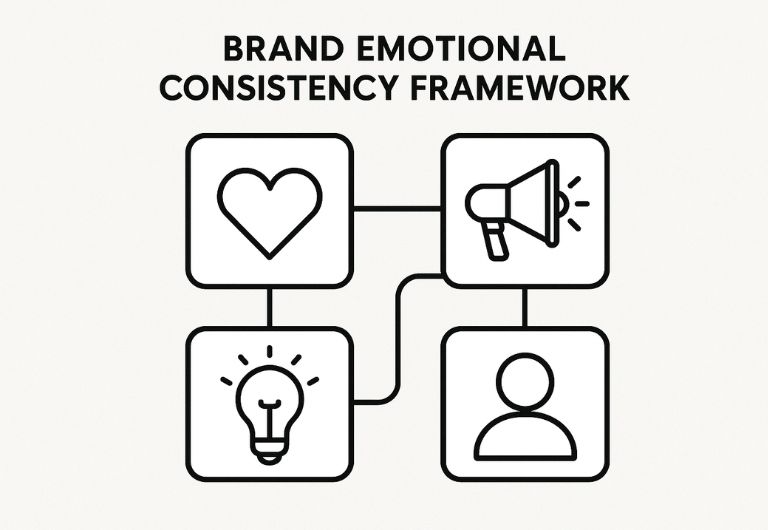
Core Pillars of the Brand Emotional Consistency Framework
1. Brand Emotional Identity
Every effective framework begins with clarity on the emotional identity of the brand. This is far more than a list of abstract values on a vision board; it is the precise emotional response the brand aims to trigger in its customers. A sports brand may position itself around empowerment, resilience, and achievement, while a financial services firm may focus on trust, reliability, and long-term security. Luxury brands, on the other hand, might lean into exclusivity, aspiration, and prestige.
This identity must meet three non-negotiable standards:
- Clear – It should be easy to summarize in a single sentence, leaving no ambiguity for internal teams or external audiences.
- Authentic – It must align with the company’s genuine mission, culture, and everyday operations; otherwise, it risks being dismissed as hollow marketing.
- Differentiated – The emotional identity should separate the brand from competitors, giving consumers a unique emotional reason to choose it over others.
By setting this foundation, brands create a compass that guides every piece of communication, every campaign, and every customer interaction.
2. Message Architecture
Consistency does not happen by chance; it requires structure. A message architecture is the blueprint that ensures emotional identity is translated into consistent language, visuals, and tone. Without this structure, even well-intentioned campaigns risk drifting away from the brand’s emotional essence.
The architecture typically includes:
- A hierarchy of messages – Defining the core promise, supporting claims, and proof points that reinforce the brand’s emotional positioning.
- Defined emotional vocabulary – Establishing a set of words, phrases, and metaphors that consistently communicate the desired emotional state.
- Tone guidelines – Outlining do’s and don’ts for how the brand speaks across different channels, from professional emails to playful social media posts.
When marketing, sales, service, and HR teams are aligned with the same message architecture, the customer experiences the same emotional journey at every touchpoint, strengthening trust and recall.
3. Cross-Touchpoint Alignment
A brand’s reputation is not built by advertisements alone; it is the sum of every interaction a customer has with the company. Cross-touchpoint alignment ensures that emotional consistency flows seamlessly across three critical dimensions:
- Digital touchpoints – Websites, mobile apps, emails, and social media campaigns must carry the same emotional tone. A brand that seeks to inspire should design digital experiences that energize, not confuse or overwhelm.
- Physical touchpoints – Stores, events, packaging, and even business cards should reflect the same emotional essence. A packaging design that contradicts the brand’s identity can quickly erode consistency.
- Human touchpoints – Perhaps the most critical, human interactions such as customer service calls, live chats, or in-person consultations should embody the brand’s emotional promise. If the website suggests empowerment but the service agent conveys indifference, the brand promise is immediately broken.
Alignment ensures the brand feels like one unified personality, not a fragmented set of voices.
4. Internal Culture as the Anchor
Employees are the most powerful carriers of emotional consistency. A framework cannot succeed if the internal culture does not mirror the external brand identity. The saying “brand is culture, and culture is brand” captures this truth.
For example:
- A brand that promises joy to customers must create joyful experiences for its employees—celebrating wins, encouraging creativity, and making work meaningful.
- A brand that markets itself as a source of security must ensure employees feel stable, respected, and supported within the organization.
When employees live and breathe the emotional identity daily, they naturally transfer it to customer interactions. Without this cultural alignment, even the most polished campaigns will feel inauthentic.
5. Measurement and Feedback Loops
An emotional consistency framework is not complete without mechanisms to measure and refine it. Measurement and feedback loops help track how well the brand delivers on its emotional promise.
Key methods include:
- Emotional sentiment analysis – Monitoring customer feedback across social media, surveys, and reviews to gauge whether the intended emotions are being felt.
- Consistency audits – Reviewing communications, campaigns, and service interactions to check for emotional alignment.
- NPS and loyalty metrics – Tying Net Promoter Scores and repeat purchase behavior back to emotional drivers.
By integrating these metrics, brands can adapt to changing market dynamics while preserving their emotional DNA, ensuring that evolution never becomes dilution.
Steps to Build the Framework
1. Audit Current Emotional Signals
The first step is an honest evaluation of how the brand is currently perceived. This means reviewing past campaigns, customer interactions, and internal culture to identify the emotional signals being sent—both intentional and accidental. A brand might claim to stand for empowerment but be unintentionally projecting exclusivity or arrogance. Recognizing these gaps is critical before moving forward.
2. Define the Emotional Core
After the audit, the brand must define its emotional core—the 1–2 dominant emotions that will drive all future messaging. This decision should be guided by the brand’s purpose, audience aspirations, and market research. Too many emotions dilute focus, while the right few create clarity and power.
3. Create the Message Architecture
Once the core emotions are chosen, the next step is to build a message architecture. This includes the vocabulary, tone, and storytelling principles that will bring the emotions to life. For example, a brand that embodies resilience may use strong, active verbs and visual metaphors of endurance, while avoiding language that suggests fragility or uncertainty.
4. Integrate Across Touchpoints
The framework must then be woven into every customer-facing channel. This requires detailed playbooks for digital marketing, product packaging, in-store experiences, and customer service scripts. Integration ensures that whether a customer is opening an email, visiting a store, or calling support, they feel the same emotional outcome.
5. Embed in Culture
Emotional consistency cannot survive as an external initiative alone. It must be embedded into the company’s culture. This includes training programs, onboarding rituals, and internal storytelling that reinforce the emotional core. Incentives and performance evaluations can also be aligned to reward behaviors that strengthen consistency.
6. Measure and Adjust
Finally, the framework must be continuously measured and refined. Tracking KPIs like sentiment analysis, consistency audits, and loyalty indicators helps ensure that the framework remains effective as markets evolve. Adjustments should be incremental, keeping the emotional identity intact while improving execution.
Emotional Branding Examples: Brands That Use Emotional Consistency
Leading brands like Nike and Coca-Cola have successfully maintained brand emotional consistency to form deep connections with their customers.
1. Nike: Empowerment and Inspiration
Nike’s brand emotional consistency revolves around empowerment and motivation. Every campaign, product, and customer touchpoint echoes this message. Through emotional brand building, Nike has positioned itself as a brand that inspires customers to push beyond their limits, creating a strong emotional bond with athletes worldwide.
2. Coca-Cola: Happiness and Positivity
Coca-Cola’s consistent use of emotional branding promotes happiness, warmth, and togetherness. Through its iconic advertisements and campaigns, Coca-Cola reinforces brand image consistency by delivering positive, feel-good messages that resonate emotionally with consumers.
Challenges in Maintaining Emotional Consistency
While emotional consistency is crucial for building a cohesive and trustworthy brand, maintaining it can be challenging, particularly as businesses grow and expand into new markets. The emotional tone of a brand must be consistent across all touchpoints and interactions, but several factors can make it difficult to achieve and sustain this consistency. Let’s explore the primary obstacles brands face in maintaining brand emotional consistency and how to navigate them.
1. Message Misalignment Across Teams
One of the most significant challenges in maintaining emotional brand consistency is the potential for message misalignment across different teams within an organization. Each department, whether marketing, customer service, or product development, plays a critical role in communicating the brand’s values and emotions. However, without a clear and shared understanding of the brand’s emotional tone, each team may interpret it differently, leading to inconsistent messaging.
For example, your marketing team may emphasize excitement and innovation in their campaigns, while your customer service team focuses more on empathy and support. This can create confusion among customers, as the emotional tone of the brand may seem inconsistent depending on the touchpoint they encounter.
To address this challenge, it is essential to align all teams around a unified emotional branding strategy. This strategy should clearly define the brand’s core emotional tone and ensure that every department understands and adheres to it. Regular cross-departmental communication and training are key to maintaining emotional consistency across all touchpoints. Additionally, setting clear guidelines for tone of voice, messaging, and customer interactions ensures that every team delivers a cohesive emotional experience.
2. Cultural and Regional Variations
When expanding to diverse regions like Dubai, UAE, or globally, maintaining brand emotional consistency becomes even more complex due to cultural differences. Different cultures may interpret emotional cues in various ways, and a message that works in one market may not have the same impact in another.
For instance, a brand campaign that evokes humor in one country might be seen as inappropriate or insensitive in another, while emotional appeals based on family values might resonate strongly in some regions but less so in others. These cultural nuances can create challenges in ensuring that your brand’s emotional message remains consistent while also being locally relevant and respectful.
To navigate these challenges, it’s crucial to balance localization with consistency. While adapting your message to fit local cultural norms and values is important, it’s also essential to ensure that the core emotional message of your brand remains intact. This may involve tweaking visuals, language, and tone to align with cultural expectations while preserving the underlying emotional appeal. Collaborating with local teams or cultural consultants can also help ensure that your emotional messaging is appropriate and effective in each region.
3. Brand Evolution and Changing Emotional Landscape
As brands grow and evolve, their emotional tone and messaging may need to shift. New products, services, or campaigns might call for a change in the emotional connection the brand is trying to establish with its audience. While this evolution is natural, it can create a challenge in maintaining emotional consistency.
For example, a brand that initially positioned itself as fun and playful may evolve into a more sophisticated or serious brand over time. This shift may confuse customers who are accustomed to the brand’s previous emotional tone, leading to a disconnect. It’s important to manage this transition carefully to ensure that customers still feel a strong emotional connection to the brand, even as its identity evolves.
To overcome this challenge, gradual emotional transitions are key. A brand can begin by introducing subtle changes in tone, messaging, and imagery to prepare customers for the shift. Communicating the evolution clearly to your audience, along with the reasons for the change, can also help maintain emotional consistency during this transition. By maintaining transparency and consistency in how you communicate the change, you can help customers adapt and remain emotionally engaged with the brand.
4. Overcoming Brand Fragmentation in a Multi-Channel World
In today’s multi-channel world, where customers engage with brands through websites, mobile apps, social media, emails, and physical stores, maintaining emotional consistency can become increasingly difficult. Each channel offers a different experience and may be managed by different teams, creating the risk of fragmentation in the brand’s emotional messaging.
For example, a brand might deliver a highly emotional experience on social media through storytelling and imagery but provide a less engaging experience on its website, where the tone feels more transactional. These discrepancies can confuse customers, making them feel disconnected from the brand.
To overcome brand fragmentation, it’s important to ensure that your brand emotional consistency is embedded in the experience across all channels. This requires integrating your emotional branding strategy into every aspect of your customer journey. Whether interacting with your brand on social media, your website, or in-store, customers should encounter the same emotional tone and messaging. Implementing centralized content management systems and ensuring close collaboration between different teams can help ensure that all channels reflect the same emotional connection with customers.
5. Balancing Authenticity with Idealization
In emotional branding, authenticity is crucial for building trust. However, while a brand may aim to evoke certain emotions like excitement, happiness, or empowerment, it’s important that these emotions feel authentic and not over-idealized. If a brand appears to be “forcing” an emotional connection that feels inauthentic or exaggerated, it can create a disconnect with the audience.
For example, a brand that promotes itself as a “perfect” solution to all problems might create emotional dissonance, especially if the customer feels that the product or service doesn’t live up to the idealized image. On the other hand, brands that embrace vulnerability, real-life challenges, and imperfections tend to form deeper, more genuine emotional connections with their audience.
To address this, brands should focus on authentic emotional messaging that resonates with real customer experiences. This means aligning your emotional branding with actual customer stories, feedback, and experiences. Authenticity builds trust, and when your emotional messaging is grounded in reality, customers are more likely to connect with your brand on an emotional level.
Brand Emotional Consistency Framework Challenges
Even with a strong Brand Emotional Consistency Framework, brands inevitably face challenges when putting theory into practice. These challenges often arise because organizations are dynamic, markets evolve, and customer expectations shift. Recognizing these barriers upfront makes it easier to design safeguards that preserve the brand’s emotional DNA.
1. Message Drift
One of the most common challenges is message drift—the gradual movement away from the original emotional core. This typically happens when teams chase short-term trends, adapt to new campaigns without proper oversight, or prioritize creativity over alignment. For example, a brand that is rooted in empowerment may start experimenting with humor-driven campaigns to appear trendy, only to dilute the emotional clarity that once made it memorable. Message drift is dangerous because it is often subtle; by the time leaders recognize it, customers may already feel the brand has lost its authenticity. Preventing drift requires constant reinforcement of the emotional core through training, brand guidelines, and ongoing audits.
2. Scaling Across Markets
As brands expand into new regions or cultures, maintaining emotional consistency across markets becomes particularly difficult. What resonates as inspiring in one culture may come across as aggressive in another; what feels like trust in one market may feel too formal elsewhere. This creates a balancing act between localization and consistency. For instance, a brand expanding from Dubai to Europe or Asia cannot simply replicate messaging word-for-word—it must adapt visuals, tone, and references while ensuring the emotional outcome remains unchanged. Without careful localization strategies, the brand risks confusing customers, weakening global cohesion, or appearing culturally insensitive.
3. Leadership Changes
Brands are also highly vulnerable to leadership transitions. New executives often bring their own perspectives, priorities, and styles, which can unintentionally disrupt emotional alignment. A new CEO might emphasize efficiency and cost-cutting, while the existing emotional core was built around warmth and personalization. If the framework is not institutionalized—documented, communicated, and embedded into culture—the shift in leadership can cause the brand’s emotional voice to fracture overnight. To safeguard against this, emotional consistency must be treated as part of the company’s DNA, not just the vision of one leader. Strong governance, brand councils, and codified brand playbooks can help sustain alignment through leadership changes.
4. Market Disruptions and Competitive Pressures
External shocks such as economic downturns, industry disruptions, or aggressive competitors can also pull brands away from their emotional framework. Under pressure, teams may adopt reactive messaging focused on price, speed, or discounts—temporarily sidelining the brand’s emotional promise. While short-term survival tactics may seem necessary, they can erode the long-term emotional bond that customers rely on. The challenge is to adapt messaging to changing conditions while still anchoring it in the brand’s emotional identity.
5. Channel Fragmentation
With the rise of new platforms—TikTok, AI-driven chatbots, AR/VR experiences—brands are challenged to maintain emotional consistency across increasingly fragmented channels. Each channel has its own norms, formats, and audience behaviors. A message crafted for LinkedIn may not translate seamlessly to Instagram Reels or WhatsApp marketing. Without careful adaptation guided by the framework, brands risk presenting conflicting tones that confuse customers. This fragmentation makes centralized governance and detailed playbooks essential.
Conclusion: The Power of Brand Emotional Consistency
In today’s highly competitive market, brand emotional consistency has become an essential element for creating lasting connections with customers. Ensuring that your brand communicates the same emotional tone and message across all touchpoints is not just a strategy—it’s a powerful way to build trust, foster loyalty, and enhance your brand recognition.
When customers interact with your brand, whether it’s through advertisements, social media posts, customer service interactions, or product experiences, they should feel the same emotional connection at every step. By aligning your brand identity consistency, consistent brand image, and brand messaging, you create a cohesive and unified brand experience that resonates deeply with your audience. This consistency forms the foundation of Emotional & Psychological Branding, allowing your brand to become more than just a product or service but an emotional entity that customers trust, love, and return to repeatedly.
Emotional consistency framework goes beyond just the message itself. It’s about the overall experience that your brand delivers—ensuring that every customer touchpoint evokes the same emotional response. Whether through visuals, messaging, or customer experiences, this consistency strengthens the emotional connection to brands, making your brand feel more human, relatable, and genuine. When done right, emotional consistency transforms your brand from a simple name or logo into a deeply connected entity that customers can rely on, trust, and feel emotionally engaged with time after time. This kind of Emotional & Psychological Branding is key to cultivating long-term relationships with your audience and ensuring your brand stands out in an increasingly crowded marketplace.
FAQ
1. What is Brand Emotional Consistency?
Brand emotional consistency refers to delivering a unified emotional experience across all customer interactions, ensuring the same emotional tone and message are conveyed, whether through advertising, customer service, or product usage. It builds a strong emotional connection, enhancing trust and loyalty with your audience. Maintaining this consistency helps establish a recognizable and dependable brand.
2. Why is Emotional Consistency Important for Brands?
Emotional consistency is crucial for building brand loyalty and trust. It creates familiarity, making customers feel connected to the brand, and helps in forming lasting relationships. A consistent emotional tone ensures that your brand’s message is clear and relatable, regardless of the platform or interaction.
3. How Does Emotional Consistency Impact Customer Loyalty?
When customers experience a consistent emotional connection with your brand, they are more likely to trust and return to it repeatedly. This trust fosters brand loyalty, encouraging repeat purchases and advocacy. Emotional consistency ensures customers always know what to expect, making them feel valued and understood by the brand.
4. Can Brand Emotional Consistency Be Adapted for Different Markets?
Yes, brand emotional consistency can be adapted for different markets, but it’s essential to preserve the core emotional message while considering local cultural nuances. Adjusting your tone, visuals, or messaging for regional preferences helps maintain relevance without losing the emotional connection that defines your brand. Balancing consistency with localization is key to global brand success.
5. What Are the Challenges in Maintaining Emotional Consistency?
Maintaining emotional consistency can be challenging due to message misalignment across teams, cultural differences, or brand evolution. Different teams may interpret emotional tone differently, and market expansion may require cultural adjustments. Aligning all teams and managing transitions effectively is essential to ensure emotional consistency across touchpoints.
6. What is a Brand Emotional Consistency Framework?
A Brand Emotional Consistency Framework is a structured approach that ensures customers experience the same emotional impact across all brand touchpoints. It aligns messaging, visuals, culture, and customer interactions with a brand’s emotional identity. This framework helps brands build trust, recognition, and loyalty over time.
7. What challenges affect the Brand Emotional Consistency Framework?
Common challenges include message drift, scaling across markets, leadership changes, and fragmented communication channels. To overcome these, brands must institutionalize the framework, train teams regularly, and audit emotional alignment across all touchpoints.