
Mastering Brand Omni-Channel Alignment: A Seamless Customer Journey

Introduction
Omnichannel marketing has become the new standard for brands seeking to deliver truly seamless experiences across all platforms. More than just a buzzword, it refers to the integration and unification of every customer touchpoint—from social media and email to physical stores and mobile apps—into one cohesive ecosystem. This strategy is not simply about being present on multiple channels, but about ensuring that the customer experience is connected and consistent, regardless of where or how the user interacts with the brand.
According to McKinsey, companies with strong omnichannel engagement strategies retain 89% of their customers, while those with weak omnichannel practices retain only 33%. This stark contrast highlights the tangible impact of a well-implemented omnichannel approach. For newcomers and junior marketers, understanding the foundational elements of this strategy is critical. The most successful implementations rely on key building blocks like data integration, CRM and POS system synchronization, AI-driven personalization, and above all, unwavering brand consistency. This article will guide you through these elements, offering both a strategic and tactical perspective to help you build, optimize, and scale your own omnichannel alignment.
What Is Omnichannel Marketing?
Omnichannel marketing is a strategy that unites all customer interaction points—be they digital, mobile, in-store, or through customer service—into a single, consistent brand experience. Unlike multichannel marketing, which involves being active on multiple platforms but not necessarily integrating them, omnichannel marketing ensures that all of these platforms communicate and function as part of a cohesive system. This means a customer who begins their journey by browsing a product on their mobile phone should have a seamlessly connected experience if they later engage with the brand through a laptop, email campaign, or physical store visit.
The key difference lies in the integration. Multichannel campaigns may send inconsistent messages and fail to capture the full context of customer behavior. Omnichannel approaches, on the other hand, track and respond to customers as individuals—not just users of isolated platforms. For example, an individual who abandoned a shopping cart online might receive a personalized email and see a dynamic ad on Instagram the next day reminding them of the same product. If they later walk into the physical store, the associate might be able to pull up their profile and offer assistance based on prior interactions. All of this is powered by unified data systems and strategic messaging.
This strategy is critical because today’s customers expect continuity. The digital transformation has made brand interactions non-linear and complex. A typical customer journey might start on Google Search, lead to a YouTube video, shift to mobile research, pause, and then convert in-store—all over a week. Brands that treat each of these moments as independent risk creating confusion and friction. Those that view the journey as a unified path—responding at each point with appropriate, personalized messaging—create loyalty and increase revenue.
Origins & Evolution
Omnichannel marketing did not emerge overnight. It evolved from traditional single-channel and multichannel approaches. Initially, businesses would focus on individual sales channels—retail stores, for example—without much connection to their digital presence. The introduction of multichannel strategies allowed brands to operate across multiple platforms, such as websites and physical stores, but often without coordination. This meant that inventory, promotions, and branding could vary wildly between platforms, creating a fragmented experience.
As customer expectations rose, especially with the rise of smartphones and instant digital access, these gaps became glaring. Brands realized that they needed to provide a connected journey—one where the website knows what the app knows, where email campaigns are responsive to in-store purchases, and where customer service can view your entire interaction history regardless of channel.
Take Starbucks, for example. Its app integrates loyalty points, store payments, online ordering, and even promotions—all tied to a single user profile. Whether you’re ordering coffee from your phone, walking into a store, or getting a push notification about a promotion, it all feels like one conversation. This kind of unified experience is the hallmark of a true omnichannel strategy.
A Harvard Business Review study that analyzed 70,000 consumers found that omnichannel customers spent 4% more on every in-store visit and 10% more online compared to single-channel users. These figures underscore the powerful ROI of alignment—not just in marketing messages, but in backend operations and customer data.
Key Components
Several critical components form the backbone of any effective omnichannel marketing strategy. First and foremost is brand consistency. Every channel must speak the same visual and verbal language. Whether it’s your Instagram ad, email footer, website header, or in-store signage, the colors, voice, and messaging should be unmistakably yours. Inconsistent branding not only confuses customers but erodes trust.
Next is technology integration. This includes your CRM (Customer Relationship Management) systems, POS (Point-of-Sale) systems, inventory databases, analytics tools, and marketing platforms. These tools need to talk to each other. If your CRM knows a customer’s preferences, but your email system can’t use that data to personalize a message, you’re missing an opportunity. When synchronized, these systems enable the delivery of timely, relevant, and personalized experiences at scale.
Customer data platforms (CDPs) are increasingly critical. These unify data from all touchpoints—social media, web, in-store, support—and allow for dynamic segmentation. With this, brands can personalize messaging based on browsing history, purchase behavior, and even location.
Then there’s AI-driven personalization. AI tools can analyze massive amounts of customer data to predict needs, recommend products, automate follow-ups, and even determine the best time to send communications. This brings your messaging closer to the customer, increasing relevance and engagement.
Finally, omnichannel support is essential. Customers expect support options—chat, email, phone, social media—to be consistent and responsive. When someone messages your brand on Instagram and later calls your hotline, they shouldn’t need to repeat themselves. A true omnichannel approach ensures agents have context across platforms.
Together, these components create a framework that goes beyond campaigns and toward experience orchestration. With each in place, your brand isn’t just communicating—it’s connecting.
Why Brand Alignment Matters in Omnichannel Strategy
Brand alignment is the invisible thread that holds an omnichannel strategy together. It ensures that no matter where or how a customer interacts with your brand—on Instagram, in a physical store, through an email newsletter, or on a live chat—they receive a consistent and recognizable experience. Without this cohesion, a brand risks appearing disjointed, confusing, or inauthentic, which can rapidly erode customer trust.
At the heart of brand alignment is consistency. This includes visual elements like logos, colors, and typography, but also extends to tone of voice, messaging, and even customer service demeanor. When a brand says it values simplicity and innovation, but its app is slow and cluttered, that contradiction speaks louder than any ad. Similarly, a promotional email promising exclusivity that leads to a generic landing page breaks the brand narrative.
This misalignment is a frequent pain point for marketers, particularly in organizations where digital, retail, and customer service teams operate in silos. Customers, however, don’t think in silos—they experience the brand as a whole. When there’s a disconnect between the sleek, stylish Instagram feed and the slow, outdated website, customers notice. According to Marketing Week, while 68% of marketers acknowledge that brand alignment boosts customer loyalty, only 32% feel they’ve achieved it.
Achieving true alignment requires internal clarity and cross-functional collaboration. Marketing, design, sales, and support teams must align around a unified brand playbook—a shared understanding of the brand’s voice, mission, and customer promises. This doesn’t mean robotic uniformity. Each channel can (and should) tailor its content for the context—Instagram Stories differ from a homepage—but the underlying essence of the brand must remain steady.
One powerful example is Disney. Whether you’re planning a vacation on their website, interacting with the mobile app, using your MagicBand at the park, or engaging with their Instagram content, you feel the same “Disney magic.” That consistency creates emotional resonance and builds brand equity over time.
The payoff is significant. Aligned brands enjoy higher customer loyalty, better word-of-mouth, and more efficient marketing. As customers move between devices and environments, each interaction reinforces the last, building a sense of familiarity and trust. In contrast, inconsistent experiences can make customers feel like they’re interacting with different companies altogether—each with its own rules, expectations, and levels of quality.
Ultimately, brand alignment isn’t a one-time exercise. It requires ongoing maintenance, internal training, and feedback loops. But when done right, it becomes a powerful differentiator in a crowded market—especially when paired with the scale and precision of an omnichannel strategy.
Building a Seamless Customer Journey
A seamless customer journey is the heartbeat of any successful omnichannel strategy. It ensures that every customer interaction—whether it begins on a mobile device, continues via email, or concludes in-store—feels intuitive, personalized, and consistent. This continuity doesn’t just enhance the customer experience; it increases conversions, improves retention, and turns casual shoppers into loyal advocates.
Today’s customers don’t follow a linear path. They may discover your brand through a YouTube ad, browse products on mobile during their commute, abandon a cart on desktop, revisit through an Instagram promo, and finally purchase in-store. Each of these touchpoints must not only be accessible but interconnected. A delay or disconnect in one stage can unravel the entire journey. This is why mapping the customer journey—and then synchronizing every touchpoint—is essential.
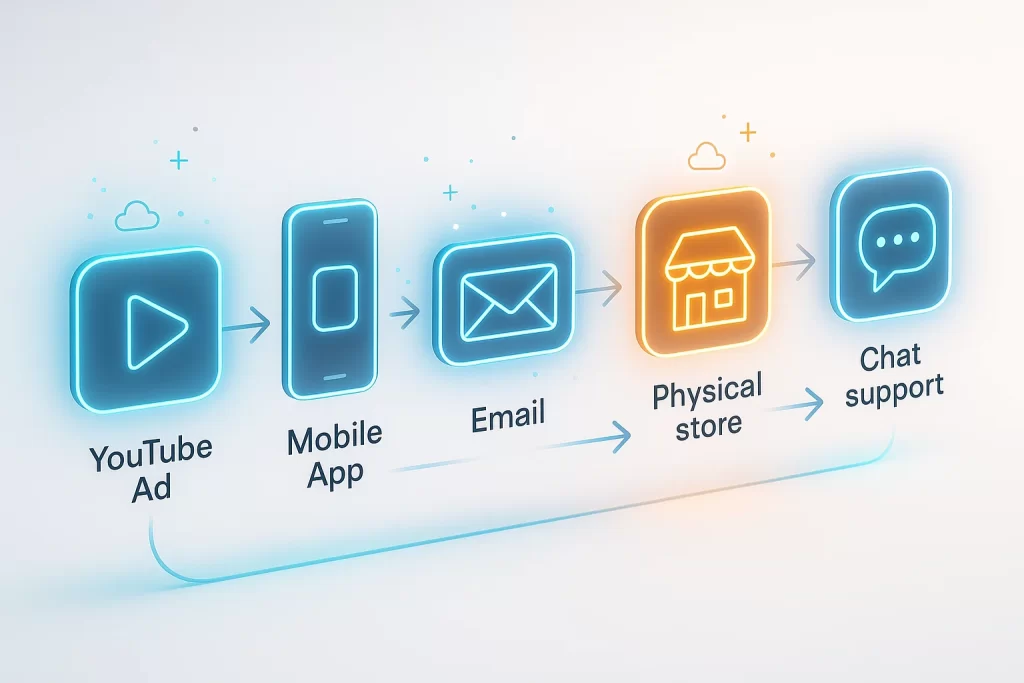
Many junior marketers fear that this process is overly complex or reserved for large enterprises. But with the right tools and a clear focus on user experience, even small brands can achieve impressive omnichannel fluidity. The key is to begin by understanding your audience’s most common pathways: Where do they come from? What content do they engage with first? Where do drop-offs happen? What motivates conversions?
Mapping Customer Touchpoints
Journey mapping is the practice of visualizing every stage of the customer’s interaction with your brand. It starts with awareness (e.g., an ad or social post), moves to consideration (browsing your website or reading reviews), and finally to conversion and retention (making a purchase, signing up for a newsletter, engaging with customer support).
When you map this journey, you’re not just outlining steps—you’re identifying opportunities. For example, if data shows that most customers abandon their carts after reading reviews, perhaps there’s a trust issue or a pricing concern that needs addressing. Or if customers frequently ask the same pre-purchase questions via chat, perhaps those answers need to be made more visible on your product pages.
A Reddit user, u/juniorCXstrategist, described their brand’s issue bluntly:
“My brand looks great on TikTok, but the website looks like it’s from 2008. Customers drop off at checkout.”
This type of gap is common—and fixable. Journey maps help highlight where brand consistency breaks down or where friction occurs, enabling teams to make strategic improvements.
Integrating CRM and POS Systems
The real power of omnichannel strategy emerges when backend systems are connected. Your Customer Relationship Management (CRM) tool stores behavioral data—what products a customer browsed, what emails they opened, and what channels they’ve interacted with. Your Point-of-Sale (POS) system tracks in-store purchases. When these systems work together, you can recognize and respond to customer behavior across platforms in real time.
Imagine this: A customer browses winter jackets online, then visits your store. With CRM-POS integration, the sales associate knows the styles they viewed and can provide more targeted suggestions. After the purchase, the system triggers a thank-you email with care instructions and accessories that match their choice. That’s real-time personalization in action—and it leads to higher satisfaction and repeat business.
Leading brands like Sephora and Amazon have built their success on this integration. Sephora’s Beauty Insider program tracks both in-store and online activity, delivering personalized recommendations, rewards, and reminders through every channel. According to Omnisend, businesses using three or more channels in their campaigns earn 494% higher order rates than those relying on just one.
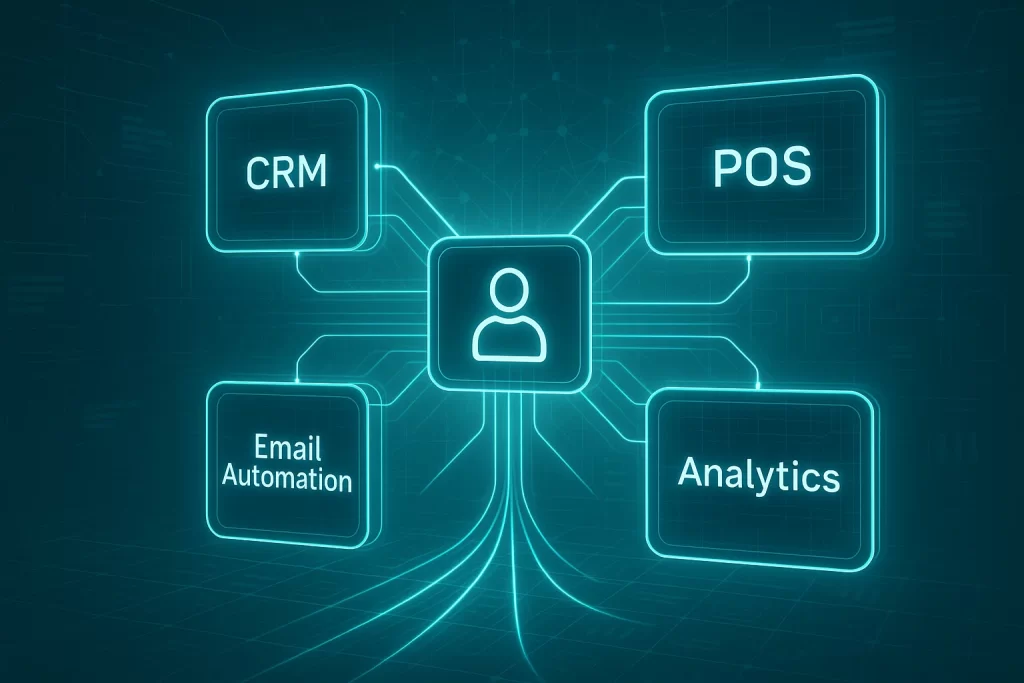
This interconnectedness isn’t just good marketing—it’s the new customer expectation. Brands that deliver disconnected experiences risk appearing outdated or unprofessional. With platforms like Shopify, HubSpot, and Klaviyo now offering native integrations between CRM, POS, and marketing automation tools, even small teams can start connecting the dots.
By focusing on seamless journey design and investing in backend alignment, brands can move beyond transactional experiences and start building relationships—ones that feel tailored, intelligent, and remarkably smooth.
Overcoming Implementation Challenges
Implementing an omnichannel strategy often seems like an overwhelming endeavor—especially for junior marketers or small teams. The technology stack can appear too complex, the data too scattered, and the expectations too high. But the truth is, omnichannel alignment doesn’t require an enterprise-level budget or a massive IT department to get started. What it does require is clear prioritization, smart tool selection, and a phased approach.
One of the most common pain points is technological overload. Marketers are inundated with platforms promising to solve every problem—email automation tools, CRM systems, customer data platforms (CDPs), social schedulers, POS integrations, and AI personalization engines. Without a clear roadmap, teams often adopt tools that don’t integrate well, leading to fragmented data and inconsistent messaging.
A Reddit user shared their frustration candidly:
“We tried syncing Shopify with our CRM, but it broke our inventory system and customer records. Nightmare.”
This kind of tech nightmare is avoidable when brands focus on interoperability first, rather than features. Before committing to any platform, ask: Can it connect to our existing systems easily? Does it support APIs or offer built-in integrations? Is it scalable as we grow?
Choosing and Integrating the Right Tools
Start small. You don’t need a full-blown omnichannel stack on day one. Begin by integrating your CRM with your email platform. This allows you to personalize messaging based on behavior and lifecycle stage. For instance, if someone browsed your product page but didn’t convert, your system can send a follow-up email with additional information or an incentive.
Next, sync your POS system with your CRM to track both online and offline purchases. This is especially important for retailers. By combining data across these touchpoints, you get a holistic view of the customer, enabling smarter decisions and more effective campaigns. Many platforms, like Shopify and HubSpot, already offer native integrations that make this process seamless.
Once foundational integrations are in place, layer in tools like:
- Zapier or Make for no-code workflows between platforms
- Segment for tracking and routing behavioral data to different apps
- Klaviyo or MoEngage for omnichannel marketing automation
- Google Analytics 4 (GA4) for cross-device performance tracking
If your team is small, assign one person as the tech liaison or bring in a freelance systems integrator to set up your stack. Doing so ensures each platform works in concert, not in competition.
“Accenture estimates that 91% of consumers are more likely to shop with brands that recognize them, remember past behavior, and deliver relevant offers.” – Accenture Research, 2024
This statistic highlights that the benefits of integration go far beyond convenience. It directly impacts personalization, loyalty, and ultimately, revenue.
Managing Internal Adoption
Another implementation hurdle is internal resistance. Teams may be used to working in silos, and introducing a new unified system can spark friction. To overcome this, ensure cross-functional buy-in early. Involve sales, customer service, design, and marketing from the outset. Create a shared understanding of the end goal: a better customer experience that benefits every department.
Train staff gradually. Start with small pilot programs or test campaigns, then iterate based on feedback. Use dashboards to share results openly—when teams see improvement in KPIs like retention, order value, or engagement, they become more invested.
Ultimately, omnichannel success lies not just in the tech, but in the team behind it. With a phased rollout, a focus on integration, and a commitment to cross-departmental alignment, even modest marketing teams can overcome implementation hurdles—and deliver seamless brand experiences that rival the biggest names in the industry.
Measuring Success & KPIs
Once your omnichannel strategy is in place, the next challenge is proving its effectiveness. For many beginners, this means figuring out how to measure something as complex and interconnected as a customer journey that spans multiple devices, platforms, and touchpoints. Fortunately, there are well-established metrics and tools to guide this process—and tracking them not only validates your efforts but also helps you optimize campaigns and justify budget allocations.
One of the biggest mistakes junior marketers make is relying solely on vanity metrics like traffic or follower count. While those numbers have some value, they don’t tell you whether your omnichannel experience is truly resonating with customers. The real insights come from understanding user behavior, retention trends, and conversion efficiency across all channels.
What to Measure
Start by focusing on Customer Lifetime Value (CLV). This metric tells you how much revenue a single customer generates over the course of their relationship with your brand. A successful omnichannel strategy should increase CLV by encouraging repeat purchases, higher cart values, and more frequent engagements. If CLV is rising, it’s a strong indicator that your experience is working.
Next is the Net Promoter Score (NPS)—a measure of how likely customers are to recommend your brand. This is especially relevant in omnichannel because a consistent, seamless journey tends to leave a lasting impression. Customers are more likely to recommend brands that make their life easier and more enjoyable, whether they’re interacting online or offline.
Repeat Purchase Rate is another critical KPI. This reveals how often customers return, and it’s directly impacted by your ability to deliver ongoing value. With omnichannel automation (like personalized emails or loyalty points synced across platforms), brands can significantly improve this metric.
You should also monitor Conversion Rate per Channel to understand where your funnel is strong and where drop-offs occur. For example, maybe email converts well but SMS doesn’t. Or maybe mobile visitors abandon their carts more frequently than desktop users. These insights help you fine-tune each channel without compromising the holistic journey.
Lastly, consider Customer Satisfaction Score (CSAT), usually gathered through post-purchase surveys. Ask customers to rate their experience across checkout, delivery, and support. When collected consistently, CSAT helps you identify weak links in the omnichannel chain.
“Brands offering seamless omnichannel experiences enjoy greater loyalty and higher conversion rates.” – Medium.com, 2025
Tools to Use
There’s no shortage of tools that can help you gather and interpret these KPIs:
- Google Analytics 4 (GA4) is essential for tracking cross-device user journeys and attribution.
- Hotjar provides visual insights through heatmaps and session recordings—useful for identifying UX issues on websites.
- Klaviyo and MoEngage offer advanced segmentation and automation insights across email, SMS, and push notifications.
- SurveyMonkey or Typeform can be embedded post-checkout to gather CSAT and NPS.
Case in point: A lifestyle brand using Klaviyo’s behavioral flows increased its repeat purchase rate by 22% by targeting email campaigns based on website browsing data and previous in-store visits (https://www.klaviyo.com/blog/omnichannel-marketing-strategies-bfcm).
Data doesn’t just validate your strategy—it reveals blind spots. Maybe customers are bouncing after seeing an inconsistent message on a third-party ad. Maybe your in-store staff isn’t trained to reflect digital promotions. With the right KPIs and dashboards, you can course-correct in real time.
Remember: omnichannel success is not about being everywhere—it’s about making every experience feel connected. By measuring the right things, you ensure your brand delivers not just reach, but resonance.
Future Trends & AI’s Role in Omnichannel
As consumer behaviors evolve and technology advances, the future of omnichannel marketing is being shaped by artificial intelligence (AI), personalization at scale, phygital experiences, and even immersive technologies like augmented and virtual reality (AR/VR). Brands that want to stay relevant—and lead—must begin integrating these tools and concepts today, especially as customer expectations for instant, context-aware engagement continue to rise.
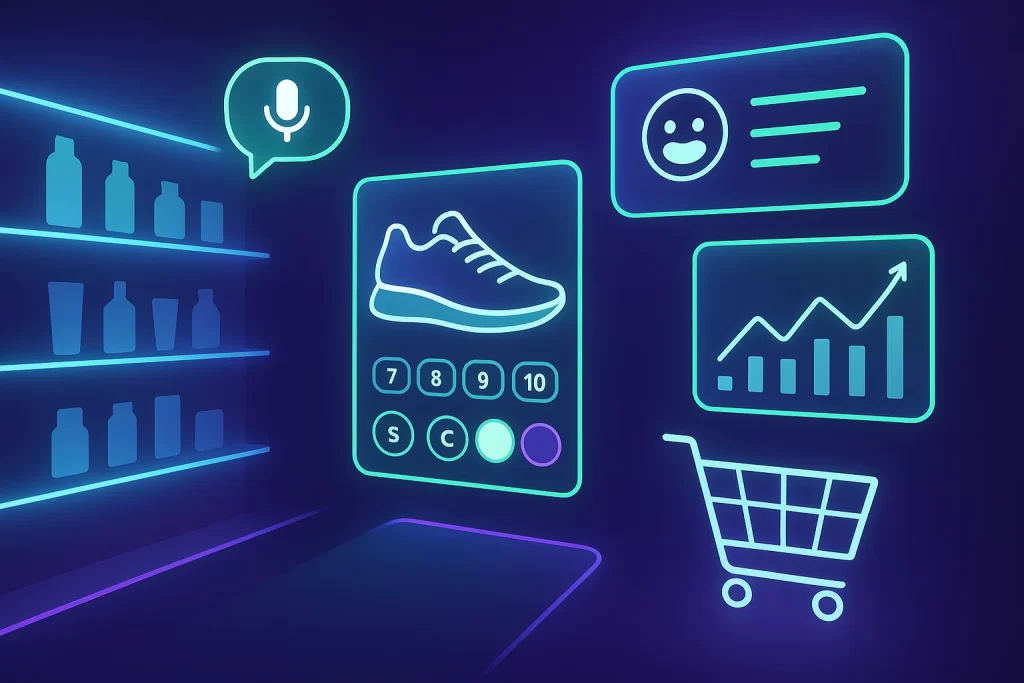
The biggest shift is from reactive marketing to predictive engagement. In the past, brands would wait for customers to take action—a click, a cart, a comment—before responding. Now, with AI, marketers can anticipate needs before they’re expressed. Algorithms analyze browsing patterns, purchase history, device usage, and even time-of-day behavior to make real-time decisions about what content, product, or message to serve.
For instance, if a user frequently shops for activewear in the early evening, an AI-driven engine might push a new leggings collection at 6 p.m. via push notification. Or, if a customer always buys during sales, the system can predict and time discount emails specifically for that user. These micro-optimizations lead to better engagement, less churn, and higher lifetime value.
“AI-driven predictive analytics enhance personalization and customer satisfaction.” – Valuebound.com, 2025
Phygital Commerce & Augmented Reality (AR)
Another rising trend is the fusion of physical and digital experiences—known as phygital. This trend blurs the lines between online and offline touchpoints, allowing customers to engage with digital tools while shopping in real-world environments. Retailers like IKEA and Home Depot have pioneered AR tools that let users visualize furniture or paint colors in their homes before buying. This boosts confidence and reduces returns.
Nike takes this further with in-store personalization. Their flagship stores use screens that recognize loyalty app users, show tailored product recommendations, and even let customers design shoes on the spot. This kind of immersive experience isn’t just flashy—it’s functional. It empowers customers, shortens decision time, and deepens brand loyalty.
According to Accenture, 47% of consumers say AR/VR tools increase their confidence in purchase decisions and make them feel more connected to the brand. As costs for these technologies drop, even smaller retailers can explore browser-based AR and interactive product visualization on their websites.
Voice commerce is another horizon. With devices like Alexa and Google Assistant, customers are now making purchases, asking product questions, and even requesting support hands-free. Brands that integrate their product catalogs and customer support knowledge bases into these ecosystems will be a step ahead in the next wave of omnichannel interaction.
Making AI Work for You
Beginner marketers can start small. Many CRMs now offer built-in AI recommendations. Email platforms like Klaviyo and Mailchimp provide send-time optimization and dynamic product blocks based on AI predictions. Customer service platforms like Intercom or Drift use AI chatbots to provide instant, personalized responses that escalate to humans only when needed.
The goal is not to make everything robotic, but to make personalization scalable. When a brand can deliver consistent, intelligent experiences to thousands of customers without overwhelming their human teams, that’s when omnichannel marketing becomes not just powerful—but sustainable.
Ultimately, AI isn’t replacing marketers. It’s amplifying them—offloading the repetitive tasks, surfacing new insights, and enabling smarter decisions. As the line between online and offline continues to blur, and as technologies like AR and voice evolve, the most successful brands will be those that adopt early, iterate fast, and stay relentlessly focused on what matters most: the customer experience.
FAQ
1. What is omnichannel marketing and why does it matter?
Omnichannel marketing is a strategy where all customer touchpoints—digital, in-store, mobile, and beyond—are connected into a seamless experience. It matters because modern consumers interact with brands across multiple platforms and expect continuity. When executed well, it improves loyalty, drives conversions, and enhances satisfaction. Without it, brands risk appearing inconsistent or outdated.
2. What are the key components of an omnichannel strategy?
The core components include consistent brand messaging, integrated CRM and POS systems, real-time data syncing, and AI-powered personalization. These elements work together to create a unified view of the customer. It allows marketers to engage meaningfully across all platforms. Personalization, timing, and message coherence depend on these building blocks.
3. How do I integrate CRM and POS systems without tech overwhelm?
Start by selecting tools that offer native integrations—platforms like Shopify, Klaviyo, or HubSpot are beginner-friendly. Focus on syncing customer data across just two systems first, such as CRM and email. Gradually expand to POS and support systems as needed. Use no-code tools like Zapier to automate without hiring developers.
4. How can beginners measure omnichannel ROI effectively?
Track metrics that reflect customer engagement across touchpoints—Customer Lifetime Value (CLV), Net Promoter Score (NPS), and Repeat Purchase Rate are essential. Use tools like Google Analytics 4 for multi-device tracking and heatmaps to spot UX drop-offs. Make sure KPIs are connected to specific journey stages. Measurement starts with clarity.
5. What upcoming trends should marketers expect in omnichannel marketing?
Expect stronger AI integration for predictive personalization, increased use of AR in shopping experiences, and more voice-activated commerce. Phygital strategies—where offline stores offer digital interactivity—are also gaining momentum. As tools become more affordable, even small brands can innovate. Staying agile and data-driven is the way forward.
Conclusion
Omnichannel marketing is no longer a luxury—it’s a necessity for any brand hoping to stay relevant in a world where customers expect seamless, personalized, and consistent experiences. By understanding the core principles—from brand alignment and customer journey mapping to CRM-POS integration and AI-driven personalization—junior marketers can confidently build strategies that drive loyalty and growth. While the technology and trends will continue to evolve, the foundation remains rooted in empathy, data, and clarity.
For beginners, the path may seem complex at first, but the rewards are substantial. Starting small with the right tools and a sharp focus on user experience can make all the difference. By measuring the right KPIs and staying informed about future trends like AR, voice commerce, and predictive analytics, marketers can ensure their efforts are both forward-thinking and effective. Ultimately, omnichannel success is about more than being everywhere—it’s about being everywhere, together.