
Brand Lifecycle Planning: From Launch to Long-Term Success
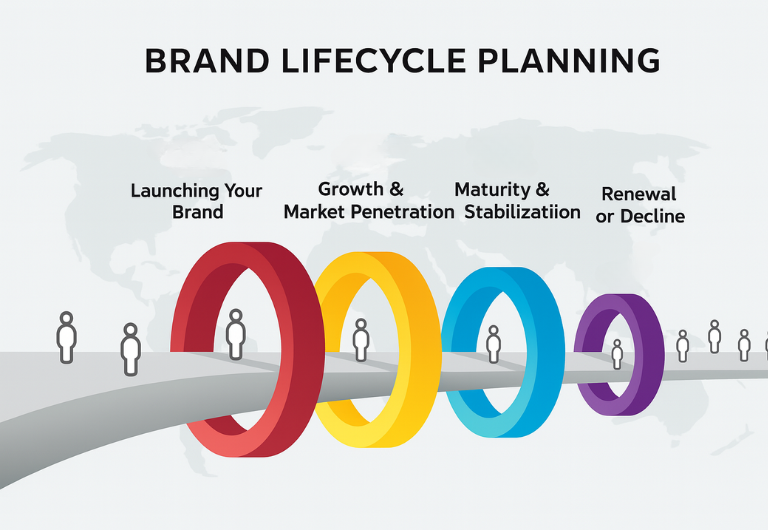
Introduction
Brand Lifecycle Planning isn’t just a marketing buzzword it’s the heart of how a brand grows, connects, and stays meaningful in a fast-changing world. Think of it as your brand’s personal roadmap: from those early days of just getting noticed, through the exciting growth spurts, into the calm (or sometimes restless) maturity stage, and then when done right toward renewal and reinvention rather than slow fadeouts. It’s different from the product lifecycle, which tends to follow a set path. A brand’s journey? It’s ongoing, and it demands care, creativity, and, above all, adaptability.
Unlike a product that might phase out when tech moves on or the market shifts, a core brand is emotional. It lives in the hearts of your audience, fueled by purpose, culture, and the emotional equity you build over time. And yet, many brands get stuck because they only plan for the launch, not the long haul.
This guide was created for those who want to think beyond the debut moment. Whether you’re a startup founder wondering if your campaign marks the growth stage or a seasoned marketer asking, “How do we keep our brand fresh year after year?” you’ll find honest insights, helpful checklists, and practical steps here. We’ll walk you through each stage of Brand Lifecycle Management and share how tools like Spiel Creative’s animation-first framework can help you set the tone early with visuals that evolve with your brand’s identity.
The goal? To help you not just launch, but last. Let’s build a core branding that earns loyalty and keeps growing on purpose.

Phase 1: Launching Your Brand (Introduction Stage)
The launch phase is where your brand finally steps out into the world and yes, it’s exhilarating. But behind that excitement lies a crucial truth: launch is not about making noise for the sake of it. It’s about crafting a message that lands, building a foundation that lasts, and telling a story that actually sticks. Far too often, brands bring bold vision to the table but skip the methodical groundwork needed to stay relevant beyond the first hype wave. Launching a brand well is less about being loud and more about being clear, intentional, and emotionally resonant.
Setting the Stage: Brand Naming That Connects and Converts
Choosing a name for your brand can feel like naming a child. It’s that personal, and yes, that consequential. But it’s also one of your most strategic decisions. A good name doesn’t just sound nice it helps your audience find you, remember you, and feel something about you. As Spiel Creative puts it, a powerful name is one that plays well across platforms: think logos, animations, hashtags, and even TikToks. It’s a blend of art and utility.
Let’s face it, naming can trigger a lot of anxiety. Founders often ask: “What if it’s too generic? Too trendy? Too weird?” That’s where the “3-L Rule” helps: Lookability (how it shows up visually), Linkability (can you actually get the domain and social handles?), and Lastability (will it grow with you?). A name like “QuantumFlow” may sound slick, but if it doesn’t evoke imagery or animate well, it may struggle in visual-first platforms.
Research backs this up. A Nielsen study found that names with strong imagery are 57% more memorable after just one exposure. That’s massive when you’re trying to leave a first impression. So think beyond clever puns, think about how your name feels, looks, and moves.
Crafting Your Story: Where Brand Meets Emotion
Once you’ve got the name, the real work begins shaping the story. This isn’t about cramming your origin story onto a single web page. It’s about defining the transformation you offer: Who are you helping? What’s changing in their world because of you?
This is where animation shines, especially in those crucial early days. Spiel Creative strongly recommends incorporating animated explainers to bring your story to life. One well-crafted animated sequence can communicate more than paragraphs ever could. It builds trust. It sparks curiosity. It helps people see the impact you promise.
Especially if you’re entering a saturated space, say, clean skincare or AI-driven finance animation gives you the edge. It compresses your “why” into a 30-second moment that can travel across social, your homepage, or pitch decks. It’s your elevator pitch, but visual.
And here’s the data kicker: animated brand assets can boost memory retention by 35% compared to static content. In a world where attention is short and competition is everywhere, that’s the kind of edge you want.
Metrics That Matter: Reading the Right Signals
Here’s a mistake even seasoned brands make when they track the wrong things at launch. Conversions can come later. Right now, what matters is how clearly your core branding is coming across and how people feel about it.
Start simple but smart. Measure brand name search volume, direct traffic spikes, or CTR on branded keywords. But also listen: what are early users saying in DMs, surveys, or YouTube comments? One wellness brand recently found that their audience described their launch video as “soothing” and “hopeful” exactly what they were going for. That emotional feedback loop is gold.
Why? Because it helps you adjust early, before you scale. Use it to fine-tune tone, messaging, and even visuals as you move into the next growth phase. This isn’t just data, it’s your audience telling you if your brand is working for them.

Phase 2: Growth & Market Penetration
This is the phase where your brand begins to stretch its legs. You’ve made a splash, now it’s time to build waves. Growth is about more than just numbers, it’s about deepening trust, reinforcing your identity, and becoming a brand people not only recognize but rely on. But here’s the catch: as things speed up, so does the risk of losing cohesion. The biggest pitfall in this stage? Not irrelevance but inconsistency.
Building Recognition Without Losing Your Core
Once you’re in the market, it’s tempting to chase every opportunity for visibility. But visibility without clarity can backfire. True growth doesn’t mean appealing to everyone, it means becoming essential to the right people. This is the time to double down on consistency: your tone, visual identity, and customer experience should all tell the same story, no matter where someone finds you.
Brands like Mailchimp and Notion offer a masterclass in this. They started with a relatable, almost quirky voice, and grew into trusted authorities not by abandoning their original tone, but by evolving it with purpose. They used the growth phase not to pivot, but to deepen their presence, layering on thought leadership, educational content, and smart partnerships that felt like natural extensions of their early identity.
If you’ve ever looked at one of your ads and thought, “Does this even feel like us?”, you’re not alone. That’s a common tension in this phase. Remember: a growth-stage brand shouldn’t start sounding like a corporate giant overnight. Let your audience grow with you. Familiarity builds loyalty far better than a sudden tone shift ever could.
Expanding Engagement: From Digital Clicks to Real-Life Touchpoints
Here’s where the brand really starts to meet people in their world. It’s not just about impressions now it’s about interactions that stick. Think beyond your screen. Yes, keep nurturing your digital presence through SEO, influencer collabs, and email flows. But don’t underestimate the magic of real-world experiences.
Imagine this: you’re a sustainable fashion brand. Hosting a neighborhood clothing repair pop-up or a panel on eco-conscious branding does more than just generate buzz it cements your values in your community. It’s no longer just what you say online; it’s what you do offline that builds lasting emotional equity.
At this stage, apply the 3C Principle to every touchpoint Coherence, Consistency, Connection. If something doesn’t tick all three boxes, it’s probably a distraction.
Keep Checking the Mirror: Touchpoint Audits and Brand Honesty
One of the most quietly dangerous questions a team can ask after launch is, “Now what?” It’s easy to coast on early success, but growth requires vigilance. Your brand needs monthly gut-checks: are all the parts still working together? Does your Instagram bio still match your homepage tone? Is your welcome email still telling the same story you built your brand on?
Take it from a CRM startup that thought everything was fine until they noticed users dropping off halfway through onboarding. A simple review showed a disconnect: their brand promised ease, but their onboarding felt like a software manual. By simplifying the experience (and echoing their original storytelling voice), they saw a 28% jump in completions. Sometimes, the fix isn’t big, it’s just about getting back to your roots.
This stage is your moment to solidify what you started. Done right, your audience won’t just recognize your brand, they’ll feel it. And that’s when you know you’re not just growing, you’re becoming unforgettable.
Phase 3: Maturity & Brand Stabilization
At first glance, the maturity stage feels like a win you’ve made. People know your name, customers are flowing in steadily, and brand equity is high. But here’s the truth most don’t talk about: maturity is sneaky. It looks like stability, but it often hides stagnation. The danger here isn’t decline, it’s drift. This is where your brand can slowly start to lose its edge if you’re not actively nurturing it. Growth might slow, but the need for creativity doesn’t it just shifts from making noise to keeping your promise.
Keeping the Flame Alive: Loyalty Over Likes
By now, people aren’t just aware of you, they’ve tried you, maybe even loved you. But what keeps them coming back? This phase is all about loyalty and emotional depth. It’s not enough for your brand to be “liked.” It has to be missed if it disappears.
That means investing in retention strategies that feel more human than transactional. Think exclusive communities, behind-the-scenes updates, or referral perks that feel like insider rewards, not just discounts. Take Glossier, for instance. Instead of a flashy rewards program, they built a quiet but powerful Slack community where superfans swapped skincare tips. It became both a focus group and a fan club deepening connection while quietly fueling product development.
But don’t forget the flip side. Loyalty can unravel fast if the brand starts to feel out of sync. A Deloitte study found that nearly half of customers walk away not because of price, but because the brand “changed.” Maybe the tone got corporate. Maybe the service slipped. Maybe they just didn’t feel seen anymore. Loyalty is emotional; it needs upkeep.
Knowing When to Grow and When to Say No
Once you’re established, expansion can be tempting. New products, new categories, new markets all sound exciting. But not all growth is good growth. This is where strategic restraint becomes your superpower.
The key is distinguishing between product extensions (like adding a new flavor or bundle) and brand extensions (like entering an entirely new vertical). A luxury notebook brand adding planners? Smart. That same brand launching headphones? Risky. Even if the execution is flawless, it might not feel right to your audience.
Use tools like the Brand Adjacency Matrix to map out both perceived and functional alignment. Only move forward when it’s a clear match on both. Branding scholars like Kevin Lane Keller emphasize avoiding “halo assumptions” the belief that brand trust automatically transfers across categories. It doesn’t. If you stray too far from your core, you don’t just risk confusion, you risk erosion.
The golden rule here: growth should protect your brand identity, not blur it. Stay close to your promise. Trends come and go but trust, once lost, is hard to win back.
Pulse-Checking Your Brand: Is the Love Still There?
So your brand has matured. But how do you know if people still feel something when they see you? That’s the real test of staying power.
Look out for positioning fatigue when users start to associate your brand with being “stale,” “overdone,” or worse, “irrelevant.” Tools like Brandwatch or Mention can track shifts in sentiment, emotional keywords, or even competitor envy creeping into the conversation.
Real talk? Sometimes the issue isn’t your features, it’s the feeling around your brand. One productivity app, once beloved by creatives, started hearing consistent feedback: “It feels bloated.” The tech hadn’t changed much but the brand tone had. By dialing back the jargon, simplifying the interface, and returning to their original voice, they reversed churn in just a few months. The fix wasn’t technical. It was emotional.
In this stage, your job isn’t to reinvent the brand. It’s to reignite it. Keep checking in. Keep listening. And never stop reminding people why they fell in love with you in the first place.

Phase 4: Renewal or Decline
Every brand, no matter how iconic, eventually reaches a crossroads. It’s that pivotal moment where momentum slows, and hard questions emerge: Do we evolve or fade out? This stage in the Brand Lifecycle Planning journey is deeply emotional. What was once a vibrant, culture-driving brand can begin to feel out of sync. Engagement dips. Internal energy feels fractured. And relevance? It starts to slip through your fingers. But here’s the truth: decline isn’t destiny. With the right mindset and a bold strategy, this phase can mark not an ending, but a rebirth.
Recognizing the Signs: Relevance Is Whispering
Decline doesn’t show up like a flashing red light. It creeps in, quietly. Lower email open rates. Fewer brand mentions in casual conversation. Loyal fans are starting to drift. On the surface, these might look like short-term metrics, but they often signal something deeper: relevance drift.
The key is knowing what to listen for. Are longtime customers saying, “They’ve changed,” or worse, “They’re trying too hard”? Is your visual identity suddenly feeling dated compared to newer players? Do people still feel like your brand gets them?
One common mistake? Brands focus so heavily on sales and revenue KPIs, they miss the early emotional cues. A 2023 HubSpot study found that 60% of brands facing loyalty erosion ignored these micro-signals until it was too late. To stay ahead, monitor spaces where honesty flows freely Reddit threads, TikTok comments, even DMs. The phrase “I used to love them but…” is a red flag worth digging into.
Choosing Renewal: Time for a Refresh, Rebrand, or Pivot?
If your brand is wobbling, don’t panic but don’t stay still. Renewal isn’t about scrambling. It’s about choosing the right scale of reinvention:
- A refresh may just mean evolving your tone, updating design elements, or simplifying your messaging.
- A full rebrand? That’s a deeper dive, maybe even a new name, new audience, or new promise.
- And then there’s the pivot changing direction entirely, guided by fresh purpose.
One of the most inspiring examples? Old Spice. Once considered irrelevant, it didn’t just rebrand it redefined itself. Through bold humor and imaginative storytelling, it tapped into a whole new generation and turned around over a decade of declining sales.
To make your next move wisely, lean on the 4R Framework:
- Recognize what’s happening: is it a temporary dip or a deeper disconnect?
- Reassess: have your audience’s needs outgrown your message?
- Rebuild your assets around a new narrative.
- Reintroduce yourself not as something brand new, but as a better, more aligned version of who you’ve always been.
Academic sources like Harvard Business Review support this emotional-first approach. Brands that engage hearts not just redesign logos are 2.4x more successful in relaunches.
Knowing When to Let Go: Sunset or Pass the Torch
Not every story needs a dramatic comeback. Sometimes, the most powerful decision is closure. If your brand no longer aligns with who you are or where your industry is headed, consider a sunset plan one that honors your customers, archives your story, and exits gracefully.
Another path? Licensing or brand transfer. If your name still carries weight, another company might take it forward under a new vision. Your legacy doesn’t have to disappear, it can evolve elsewhere.
This part hits differently for founders. There’s often a deep emotional pull “We spent years building this. How do we just stop?” One comment on Reddit captured it beautifully: “You’re not ending the story. You’re just turning the page differently.”
In brand lifecycle planning, we don’t just prepare for launches we also prepare for pivots, reinventions, and, yes, sometimes goodbyes. And when done intentionally, even endings can be powerful beginnings.
Full-Cycle Roadmap Checklist: A Living Guide for Brand Builders
Brands aren’t born fully formed; they’re built, nurtured, tested, and reshaped. If there’s one truth in branding, it’s this: momentum alone won’t carry you through. This checklist is your executive companion, designed to keep you focused and intentional, no matter where you are on the journey. Whether you’re naming your brand for the first time or navigating a potential rebrand, think of this as a compass one you can return to again and again
Introduction Stage: Launching with Clarity and Heart
- Choose a brand name that sparks imagery, feels emotionally relevant, and scales well across platforms.
- Define your brand story in a way that anyone, investors, customers, or your grandma can understand in under a minute.
- Use animated storytelling or visuals (per Spiel Creative’s model) to communicate who you are at a glance.
- Set early KPIs: brand search visibility, sentiment from first-user feedback, and awareness traction.
- Align every visual and verbal asset logo, tagline, voice with your identity from day one.
Growth Stage: Expanding with Soul and Structure
- Build community beyond the product launch webinars, AMAs, and spaces for two-way conversations.
- Audit your presence across channels to ensure visual and tonal consistency.
- Partner with brands or creators that mirror your values, not just your goals.
- Create feedback loops using tools like Hotjar, NPS, and the comments sections of your own content.
- Run ads that feel like you are not just performing well.
Maturity Stage: Staying Fresh While Holding Firm
- Launch loyalty efforts rooted in genuine emotional value, think community perks, not just point systems.
- Evaluate new product ideas using the Brand Adjacency Matrix before diluting your identity.
- Set a calendar reminder: once a month, look at your homepage with fresh eyes. Still telling the right story?
- Tune into the conversation to track emotional cues, not just mentions.
- Internally align your team; your brand promise is only as strong as your people’s belief in it.
Renewal or Decline: Navigating the Pivot or Farewell
- Stay sensitive to small signals: words like “fell off” or “they changed” are calls to action.
- Decide between a refresh, rebrand, or pivot but root your decision in audience insight, not fear.
- If sunsetting, do so with grace, archive the story, honor the customers, keep the door open.
- If equity remains, exploring licensing or selling a legacy can live on in new hands.
- Above all, communicate clearly. When change is honest and transparent, trust deepens.
Conclusion: Brands Don’t Age They Adapt
A brand isn’t your logo or color palette it’s how people feel when they hear your name. It’s a living identity that evolves, deepens, and, yes, sometimes lets go. Brand Lifecycle Planning isn’t just a business tactic it’s how you protect your relevance, your values, and your emotional bond with your audience.
By thinking in cycles instead of one-time launches, you create space to breathe, grow, and adapt. You avoid the trap of becoming yesterday’s favorite. You build trust that lasts.
So revisit this roadmap regularly. Not just when things feel broken but especially when they feel stable. Because the best brands aren’t just built to last they’re built to evolve.
FAQ
1. What is the difference between product lifecycle and brand lifecycle?
While the product lifecycle focuses on tangible offerings that move from introduction to obsolescence, the brand lifecycle is about evolving perception, emotion, and trust over time. Brands can outlive products if managed with purpose and adaptability. The key distinction is that a product can die, but a brand can reinvent. That’s why branding strategy requires deeper, cyclical thinking.
2. At what stage should I refresh my brand name or visual identity?
You should consider a refresh during the maturity or early decline phase especially if audience engagement dips, or you notice competitor visuals becoming more current. A refresh isn’t just about aesthetics; it’s about reestablishing emotional connection. Use social feedback and sentiment data as leading indicators. If users feel “disconnected,” it’s time to realign your identity.
3. How do I manage a brand throughout its lifecycle?
Managing a brand through its lifecycle means adapting, not just maintaining. Use KPIs, social listening, and visual consistency to steer your brand across stages. Stay aligned with your original mission but refine messaging, channels, and visuals as your audience evolves. Treat branding as a living system, not a one-time investment.
4. My brand isn’t growing. What lifecycle stage am I in?
If you’re seeing stagnant growth, lower engagement, or fewer repeat users, you may be in the early maturity or even decline stage. The mistake most make is assuming “more marketing” will fix it. Instead, reassess your brand’s emotional relevance, user experience, and messaging clarity. Growth plateaus are signals not failures.
5. Can a brand skip a phase or cycle faster?
Brands can accelerate through stages especially with viral moments or cultural resonance but skipping foundational steps risks instability. A launch that goes viral without scalable systems can backfire. Similarly, rushing into maturity strategies like loyalty programs before gaining trust can confuse users. Growth is good, but strategic pacing builds legacy.