
Creating Effective Brand Guidelines: Ensuring Consistency Across Channels

Introduction
In today’s digital age, where consumers are bombarded with countless brand messages daily, creating and maintaining brand consistency has become more crucial than ever. A well-defined set of brand guidelines serves as the cornerstone for ensuring that your brand’s identity remains uniform across all platforms and interactions, building trust and recognition among your audience.
The Importance of Brand Guidelines
Brand guidelines, also referred to as brand identity guidelines or brand manuals, are comprehensive documents that outline how a brand should be communicated and portrayed visually and verbally. These guidelines are vital in preserving the brand’s integrity, ensuring that whether a customer sees your logo on a billboard, interacts with your app, or reads your newsletter, the experience remains consistently on-brand.
Why Brand Guidelines Matter
The brand platform is fundamental to every company, providing direction and a vision for the future. Brand guidelines articulate these principles in a clear, actionable manner that translates into behavior, actions, and design. Unlike a brand style guide, which mainly serves creative teams, brand guidelines encompass every facet of the brand, ensuring cohesion and alignment across all business functions.
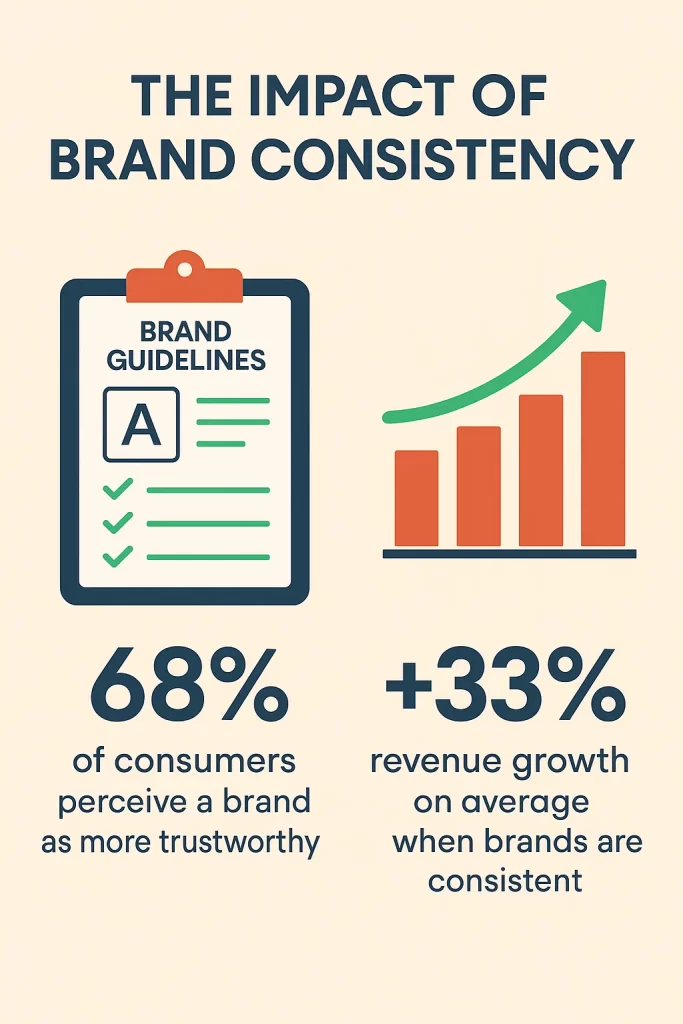
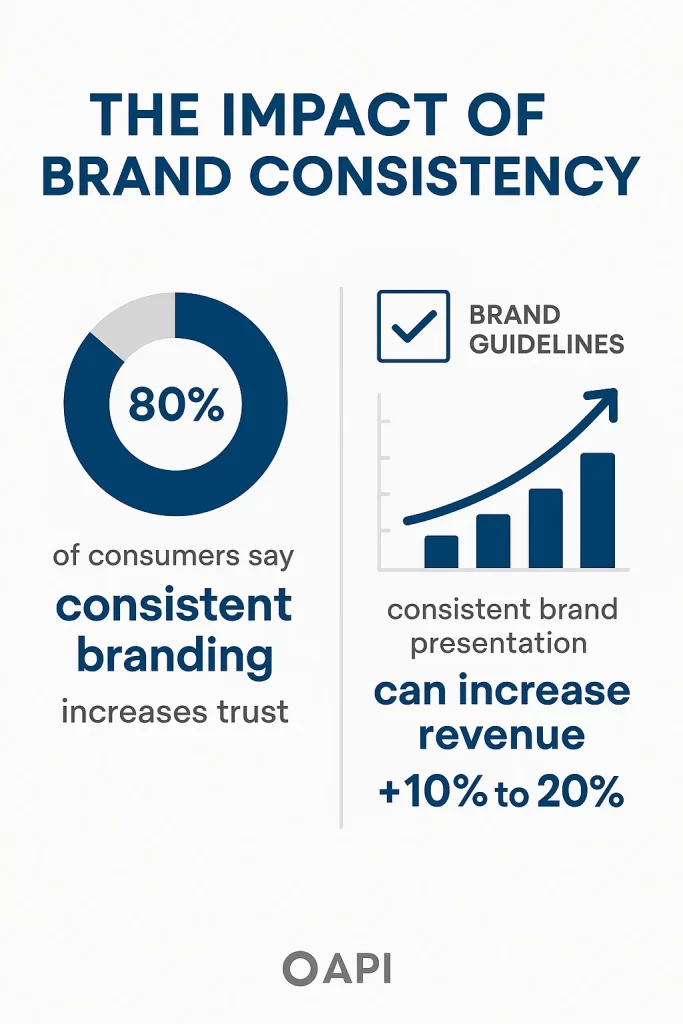
According to LinkedIn, “46% of consumers are likelier to purchase from a brand they trust,” and “68% of businesses have discovered that maintaining a consistent brand presence has boosted their revenue by at least 10%.” These statistics underscore the financial and reputational benefits of brand consistency.
Essential Elements of Brand Guidelines
Creating comprehensive brand guidelines involves several key components. Here’s what your brand guideline document should include:
1. Brand Core: Mission, Vision, and Values
Your brand’s core should clearly articulate its mission, vision, and values. This foundation guides every aspect of the brand’s representation and interaction.
2. Logo Usage
Guidelines should specify logo variations, clear space, minimum sizes, and examples of incorrect usage to prevent distortion or misuse that could dilute the brand’s identity.
3. Color Palette
Define primary and secondary colors with precise RGB, HEX, and CMYK codes to ensure color consistency across digital and print media. Elevarus highlights that “brands using a signature color can increase recognition by 80%.”
4. Typography
Specify fonts for headlines, body text, and other applications, including guidelines for font size, weight, and spacing to maintain a professional and cohesive look.
5. Imagery and Iconography
Include guidelines for photography style, illustrations, and icon use to ensure images align with the brand’s voice and message.
6. Tone of Voice
– Define the brand’s tone, style, and language to ensure communication consistency in all content, whether it’s marketing materials, customer service interactions, or social media posts.
7. Templates
Provide templates for business cards, presentations, email signatures, and other materials to ensure consistent design and messaging.
8. Accessibility and Usability
Design guidelines to be clear and easy to follow, ensuring they are accessible to everyone involved in brand communication, from internal teams to external partners.
9. Regular Updates and Adaptability
Guidelines should be flexible to adapt to market changes and technological advancements while ensuring they remain relevant and effective.
10. Monitoring and Feedback Mechanisms
Implement measures to track adherence to guidelines and gather feedback for continuous improvement.
Implementing Brand Guidelines: Use Cases and Scenarios
Onboarding New Employees and Partners
When onboarding new employees or collaborating with external agencies, brand guidelines serve as an invaluable resource. They provide a clear understanding of how the brand should be represented, ensuring consistency from day one. A well-documented guide can streamline the onboarding process, allowing new team members to quickly grasp the brand’s ethos and expectations.
Multi-Channel Marketing
For businesses operating across various platforms — from websites and social media to print and broadcast media — maintaining a unified brand presence can be challenging. Brand guidelines help ensure that all marketing materials, regardless of the channel, convey the same message, tone, and visual style. Mailchimp emphasizes that “brand consistency helps you stand out from the competition and encourages people to engage or buy.”
Scaling a Business
As businesses grow, maintaining brand consistency becomes increasingly complex. A comprehensive brand guideline document acts as a “single source of truth,” preventing brand dilution and ensuring that every team, regardless of location, adheres to the same standards.
FAQs on Brand Guidelines
1. What Are Brand Guidelines, and Why Do I Need Them?
Brand guidelines are a set of rules and standards that dictate how your brand should be presented to the world. They are essential for maintaining a cohesive and professional brand image, which in turn builds trust and recognition among consumers.
2. How Can I Ensure My Team Follows Our Branding Rules?
To ensure adherence to brand guidelines, consider regular training sessions, easy access to guideline documents, and feedback loops for questions or clarifications. Encouraging a culture of brand advocacy within the organization can further enhance compliance.
3. What Are the Essential Elements of a Brand Style Guide?
A brand style guide typically includes specifications for logo usage, color palettes, typography, imagery, tone of voice, and templates for consistency across all brand touchpoints.
Best Practices for Creating Brand Guidelines
1. Collaborate Across Teams
Involve stakeholders from various departments, including marketing, design, sales, and customer service, to ensure the guidelines reflect the brand comprehensively.
2. Make It Accessible and Engaging
Utilize an engaging layout with visuals and examples to make the guidelines easy to understand and apply. Consider using digital tools to create interactive guidelines.
3. Regularly Review and Update
Schedule regular reviews of the guidelines to incorporate feedback and adapt to any changes in the market or brand strategy.
4. Promote Brand Advocacy
Empower employees to be brand advocates by providing them with the tools and knowledge to represent the brand confidently and consistently.
Expert Insights and Future Trends
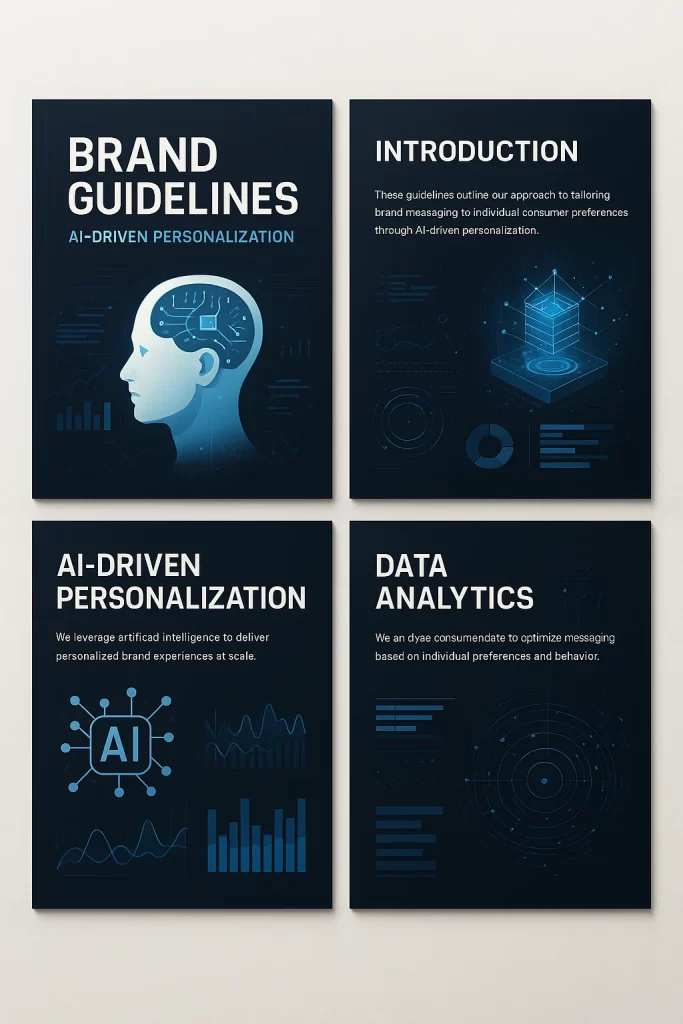
As the digital landscape evolves, the role of brand guidelines will continue to expand. With the rise of artificial intelligence and interactive digital experiences, brands must adapt their guidelines to incorporate new technologies while maintaining core brand values. Improvado notes that “effective brand guidelines are the result of collaboration among all stakeholders who are involved in brand representation,” highlighting the importance of ongoing collaboration and adaptation.
Looking ahead, brands that prioritize consistency and adaptability in their guidelines will likely see enhanced customer loyalty, trust, and engagement. As businesses navigate an ever-changing market, robust brand guidelines will serve as a critical tool in maintaining a strong, cohesive brand identity.
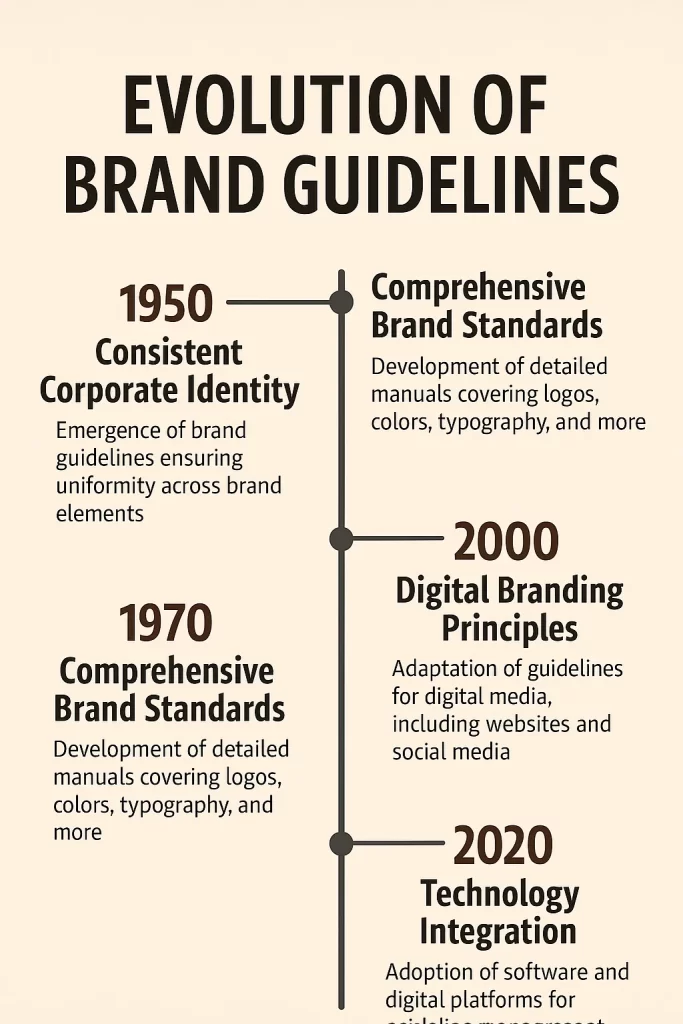

By creating and adhering to effective brand guidelines, businesses can ensure that their brand remains consistent, recognizable, and trusted across all channels, ultimately driving growth and success in a competitive marketplace.
Conclusion
Effective brand guidelines are the backbone of a consistent and recognizable brand identity. They act as a single source of truth that ensures every touchpoint—whether digital, print, or in-person—reflects the same voice, visuals, and values. By clearly defining design standards, messaging tone, and usage rules, businesses can maintain uniformity across teams, platforms, and campaigns. Strong brand guidelines not only protect brand integrity but also build trust, improve recognition, and create a seamless customer experience. In a competitive marketplace, consistency is what transforms a brand from being just visible to truly memorable.
FAQ
1. What are brand guidelines and why are they important?
Brand guidelines are a set of rules that define how a brand should be presented across all channels. They ensure consistent use of logos, colors, typography, imagery, and tone of voice, helping businesses maintain a professional and unified identity.
2. What should be included in effective brand guidelines?
Effective brand guidelines typically include logo usage rules, color palettes, typography standards, imagery style, brand voice and tone, messaging principles, and examples of correct and incorrect brand applications.
3. How do brand guidelines help maintain consistency across channels?
Brand guidelines provide a clear framework for designers, marketers, and content creators to follow. This ensures that websites, social media, advertisements, and offline materials all deliver a uniform brand experience.
4. Who should use brand guidelines within an organization?
Brand guidelines should be used by anyone involved in brand communication, including marketing teams, designers, content creators, agencies, and external partners to ensure everyone represents the brand accurately.
5. How often should brand guidelines be updated?
Brand guidelines should be reviewed regularly, especially when there are changes in business strategy, target audience, or branding elements. Periodic updates help keep the brand relevant while maintaining consistency.