
Why Contribution Matters More Than Attribution for Marketing ROI

Introduction
Measuring marketing success has always been a challenge for businesses. In today’s digital world, marketers invest heavily in multiple channels such as search engines, social media platforms, email campaigns, paid advertising, and content marketing. With so many touchpoints influencing the customer journey, understanding which marketing activities truly drive revenue becomes essential.
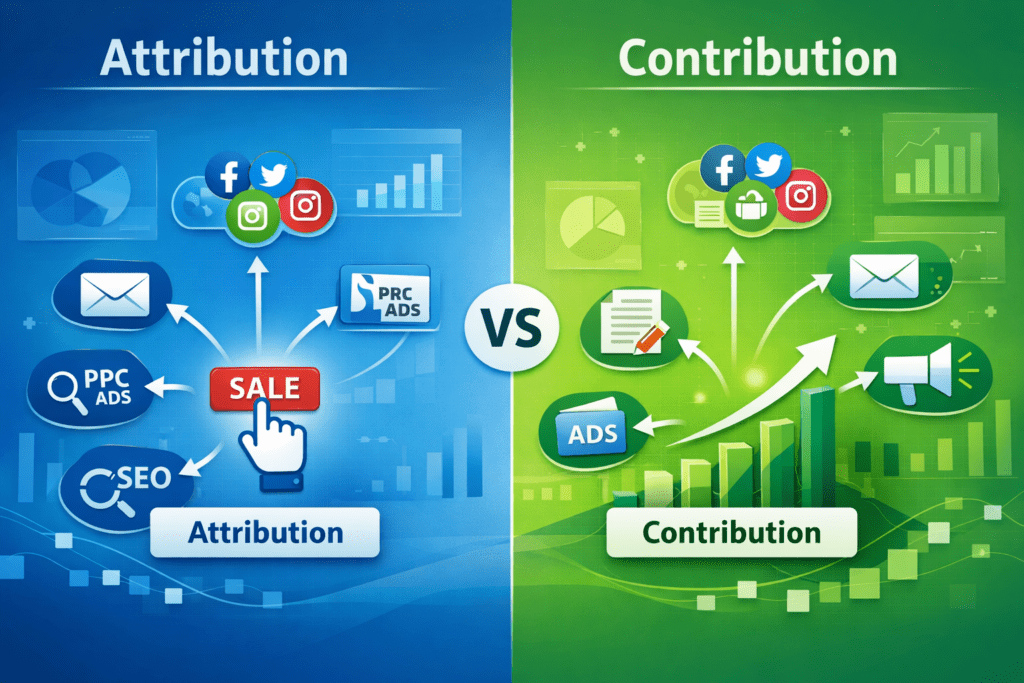
For years, marketing teams have relied on attribution models to determine the value of different channels. Attribution focuses on assigning credit for conversions to specific marketing touchpoints. While attribution provides useful insights, it often fails to capture the full impact of marketing efforts.
This is where contribution analysis becomes important. Contribution looks beyond individual touchpoints and measures the overall impact marketing has on business growth, revenue, and customer acquisition. Instead of asking “Which channel caused the conversion?” contribution asks “How did marketing activities collectively contribute to business success?”
As businesses adopt more sophisticated analytics tools and data-driven strategies, many organizations are shifting from attribution-based measurement to contribution-based models. In this article, we will explore the differences between attribution and contribution, why attribution alone is not enough, and why contribution provides a more accurate view of marketing ROI.
Understanding Marketing Attribution
Marketing attribution is the process of assigning credit to different marketing touchpoints that influence a customer’s decision to convert. The goal is to identify which channels or campaigns played a role in driving the final action, such as a purchase, signup, or lead generation.
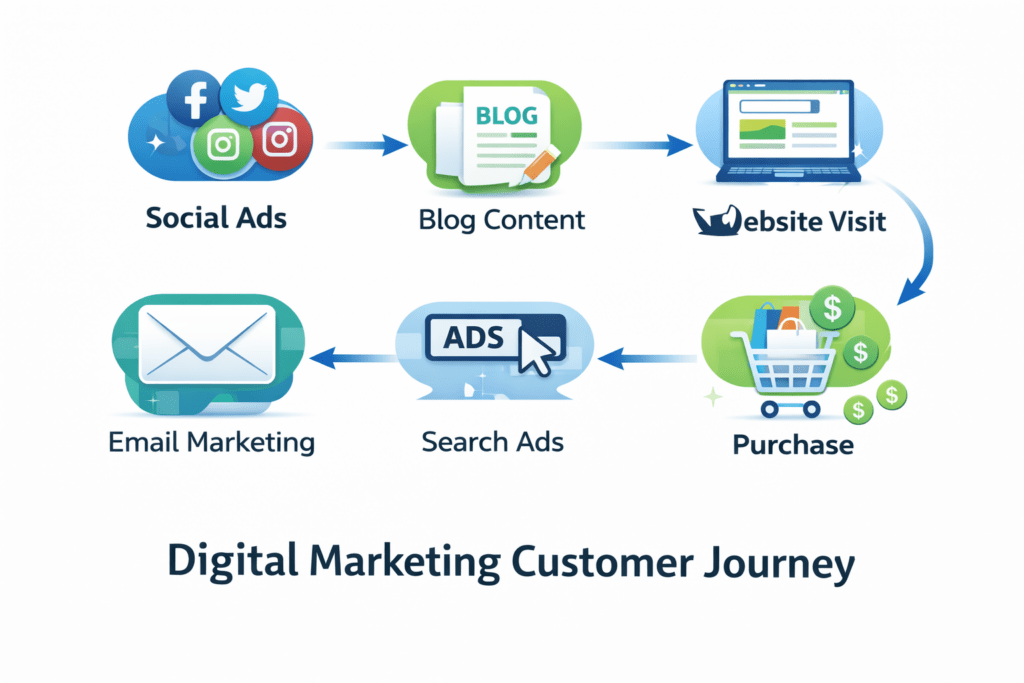
For example, a customer may:
- See a social media advertisement
- Read a blog article
- Click a Google search result
- Receive an email promotion
- Finally make a purchase
Attribution models determine which of these interactions deserves credit for the conversion.
Common Types of Attribution Models
First-Touch Attribution
First-touch attribution assigns 100% of the credit to the first interaction a customer had with the brand. If a customer initially discovers a company through a social media ad, that channel receives full credit for the conversion.
This model is useful for understanding which channels generate awareness, but it ignores all other interactions that influenced the purchase.
Last-Touch Attribution
Last-touch attribution gives full credit to the final interaction before conversion. If the last action a customer takes is clicking a search advertisement, that channel receives the credit.
Many businesses rely on this model because it is simple to track. However, it often overlooks earlier stages of the customer journey that influenced the decision.
Multi-Touch Attribution
Multi-touch attribution distributes credit across multiple interactions. Instead of assigning credit to a single touchpoint, it recognizes that several channels contributed to the conversion.
Examples include:
- Linear attribution
- Time decay attribution
- Position-based attribution
While multi-touch attribution is more sophisticated than single-touch models, it still has limitations when evaluating the overall impact of marketing.
Limitations of Attribution Models
Although attribution models provide helpful insights, they often fail to reflect the true complexity of modern marketing.
Over-Simplifying the Customer Journey
Customer journeys are rarely linear. People interact with brands across multiple devices, platforms, and channels over time. Attribution models attempt to simplify this complexity by assigning fixed values to touchpoints, which can lead to misleading conclusions.
Ignoring Brand Influence
Brand awareness campaigns, content marketing, and public relations often influence customer decisions indirectly. These activities may not generate immediate conversions, but they play a significant role in shaping perception and trust.
Attribution models frequently undervalue these efforts because they cannot easily connect them to specific conversions.
Difficulty Tracking Offline Channels
Many businesses use both online and offline marketing strategies, including events, direct mail, television advertising, and word-of-mouth referrals. Attribution models struggle to track these offline interactions accurately.
As a result, marketing teams may underestimate the value of certain channels.
Data Fragmentation
Marketing data often exists across multiple platforms such as analytics tools, CRM systems, advertising platforms, and email marketing software. Attribution models rely on accurate and unified data, which is often difficult to achieve.
Without complete data integration, attribution results may be incomplete or misleading.
What is Marketing Contribution?
Marketing contribution focuses on understanding how marketing activities collectively impact business performance. Instead of assigning credit to individual touchpoints, contribution analysis evaluates the broader influence of marketing on key outcomes such as revenue, customer growth, and market share.
Contribution models examine questions such as:
- How much revenue growth can be linked to marketing efforts?
- Which marketing strategies drive long-term business value?
- How do marketing investments influence overall demand?
This approach recognizes that marketing is a complex system where different channels work together to create results.
Attribution vs Contribution: Key Differences
Understanding the differences between attribution and contribution is essential for modern marketing measurement.
Focus of Measurement
Attribution focuses on identifying which touchpoints led to conversions.
Contribution focuses on understanding how marketing activities influence business outcomes.
Scope of Analysis
Attribution analyzes individual customer journeys.
Contribution evaluates broader trends across markets, campaigns, and time periods.
Type of Insights
Attribution provides tactical insights for optimizing campaigns.
Contribution provides strategic insights for long-term planning and budget allocation.
Business Perspective
Attribution emphasizes short-term conversions.
Contribution emphasizes long-term business growth.
Why Contribution Matters More for Marketing ROI
As marketing ecosystems become more complex, contribution analysis provides several advantages.
More Accurate Measurement of Marketing Impact
Contribution models capture the combined influence of multiple channels rather than isolating individual interactions. This creates a more realistic understanding of marketing performance.
Better Budget Allocation
By evaluating how different marketing strategies contribute to revenue growth, businesses can allocate budgets more effectively.
For example, contribution analysis might reveal that brand campaigns indirectly increase search traffic and conversions. Without contribution measurement, businesses might mistakenly reduce brand marketing investments.
Alignment with Business Goals
Contribution focuses on outcomes that matter most to organizations, such as revenue growth, profitability, and customer lifetime value.
This helps marketing teams demonstrate their value to executives and stakeholders.
Recognition of Long-Term Marketing Value
Some marketing activities take time to produce measurable results. Content marketing, SEO, and brand campaigns may influence customer decisions over months or years.
Contribution models capture this long-term value more effectively than attribution models.
How Businesses Can Shift from Attribution to Contribution
Moving from attribution-based measurement to contribution-based analysis requires several changes.
Integrating Data Across Platforms
Organizations must integrate data from multiple marketing tools, including analytics platforms, CRM systems, advertising dashboards, and sales databases.
Unified data enables more accurate analysis of marketing performance.
Using Advanced Analytics Techniques
Contribution analysis often involves advanced methods such as:
- Marketing mix modeling
- Incrementality testing
- Predictive analytics
These approaches help identify how marketing investments influence revenue and growth.
Aligning Marketing and Sales Metrics
Marketing and sales teams should collaborate to define shared metrics such as pipeline growth, lead quality, and revenue contribution.
This alignment ensures that marketing measurement reflects real business impact.
Best Practices for Measuring Marketing Contribution
Organizations that successfully implement contribution measurement often follow several best practices.
Define Clear Business Objectives
Marketing measurement should align with broader business goals such as increasing revenue, expanding market share, or improving customer retention.
Track Multiple Performance Indicators
Instead of focusing only on conversions, businesses should track metrics such as:
- Customer acquisition cost
- Customer lifetime value
- Brand awareness
- Engagement metrics
These indicators provide a more comprehensive picture of marketing effectiveness.
Use Experimentation
Controlled experiments such as A/B testing and incrementality testing help identify which marketing strategies truly influence outcomes.
Continuously Optimize Strategies
Marketing measurement should be an ongoing process. Organizations should regularly evaluate performance data and adjust strategies based on insights.
The Future of Marketing Measurement
The marketing industry is evolving rapidly, and measurement strategies must evolve as well.
Privacy regulations, changes in tracking technologies, and the decline of third-party cookies are making traditional attribution models less reliable. As a result, businesses are increasingly adopting broader measurement approaches.
Contribution analysis, combined with advanced analytics and marketing mix modeling, offers a more sustainable solution for understanding marketing impact in a privacy-focused world.
Conclusion
Attribution has played an important role in helping marketers understand customer journeys and optimize campaigns. However, as marketing ecosystems become more complex, attribution alone is no longer sufficient.
Contribution models provide a more comprehensive perspective by evaluating how marketing activities collectively influence business outcomes. By focusing on overall impact rather than individual touchpoints, contribution analysis enables organizations to measure marketing ROI more accurately and make better strategic decisions.
For businesses that want to demonstrate the true value of marketing, shifting from attribution to contribution is an essential step. As data analytics technologies continue to advance, contribution-based measurement will likely become the foundation of modern marketing performance analysis.
Frequently Asked Questions
1. What is marketing attribution?
Marketing attribution is a method used to identify which marketing channels or touchpoints contribute to a customer’s conversion. It assigns credit to specific interactions such as social media ads, email campaigns, search ads, or website visits that influence a purchase or lead generation.
2. What is marketing contribution?
Marketing contribution measures the overall impact of marketing activities on business outcomes such as revenue growth, customer acquisition, and brand awareness. Instead of focusing on a single touchpoint, contribution evaluates how multiple marketing efforts collectively influence results.
3. What is the difference between attribution and contribution in marketing?
The main difference is that attribution focuses on assigning credit to individual marketing touchpoints, while contribution measures the overall impact of marketing efforts on business performance. Attribution analyzes customer journey interactions, whereas contribution evaluates how marketing drives long-term business growth.
4. Why is attribution not enough for measuring marketing ROI?
Attribution models often oversimplify the customer journey and may ignore the broader influence of brand awareness campaigns, content marketing, and offline marketing activities. This can lead to incomplete insights about which marketing strategies truly drive business value.
5. Why does contribution provide a better view of marketing ROI?
Contribution provides a more comprehensive perspective because it considers the combined effect of multiple marketing channels. It helps businesses understand how marketing investments contribute to revenue growth, customer engagement, and long-term brand development.
6. How do contribution models improve marketing decision-making?
Contribution models allow marketers to evaluate the broader business impact of their campaigns. By understanding how different marketing strategies work together, businesses can allocate budgets more effectively and focus on initiatives that drive sustainable growth.
7. What are common marketing attribution models?
Common attribution models include first-touch attribution, last-touch attribution, linear attribution, time decay attribution, position-based attribution, and multi-touch attribution. Each model distributes credit differently across customer journey touchpoints.
8. What tools are used to measure marketing contribution?
Businesses often use advanced analytics tools and frameworks such as marketing mix modeling, customer data platforms (CDPs), marketing analytics dashboards, incrementality testing, and predictive analytics tools.
9. Can attribution and contribution be used together?
Yes. Many organizations combine both approaches. Attribution helps optimize specific campaigns and channels, while contribution provides strategic insights about how marketing supports overall business growth.
10. What is the future of marketing measurement?
The future of marketing measurement is moving toward holistic analytics and contribution-based models. With increasing privacy regulations and limited tracking data, businesses are focusing on broader frameworks that evaluate marketing’s total impact rather than relying only on attribution.
