
Online Marketing vs Digital Marketing: Key Differences That Impact Growth
Introduction
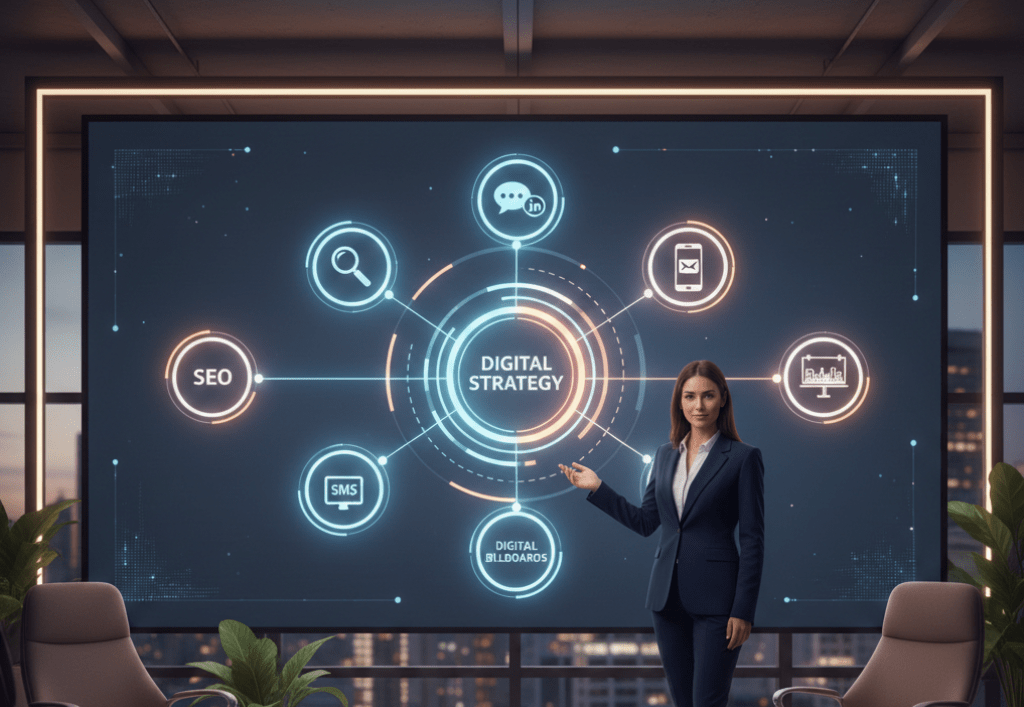
The distinction between online marketing vs digital marketing remains one of the most misunderstood concepts in modern business strategy, despite more than two decades of digital adoption. The confusion persists because both concepts share overlapping channels, tools, and performance metrics, yet differ fundamentally in scope, dependency, and customer interaction models. From a semantic and strategic perspective, online marketing represents a subset of digital marketing, not an interchangeable synonym—an important distinction that directly affects budget efficiency, channel selection, and growth outcomes.
Search behavior data consistently shows that users searching what is the difference between online marketing and digital marketing are not looking for definitions alone; they are seeking decision clarity. According to search quality principles outlined by Google, high-value informational content must resolve ambiguity, align with real-world use cases, and clearly satisfy user intent. This article addresses that requirement by treating online marketing and digital marketing as distinct but related entities, rather than collapsing them into a single vague concept.
Digital marketing is defined by the use of digital technologies to communicate value, regardless of internet connectivity. Online marketing, by contrast, is strictly dependent on the internet as its delivery mechanism. This distinction becomes critical when businesses expand beyond browser-based customer acquisition into mobile messaging, connected devices, digital out-of-home media, and offline data-driven touchpoints. Many brands fail to scale efficiently because they unknowingly limit themselves to online-only strategies while believing they are executing full digital marketing programs.
From a semantic SEO standpoint, search engines already understand this hierarchy. Entity-based indexing treats digital marketing as the parent concept encompassing online advertising, search engine optimization, email marketing, SMS campaigns, mobile apps, and digital broadcast media. When content blurs these entities, it risks weaker topical authority and reduced trust signals—an issue commonly seen in competitor articles that recycle surface-level explanations without operational depth.
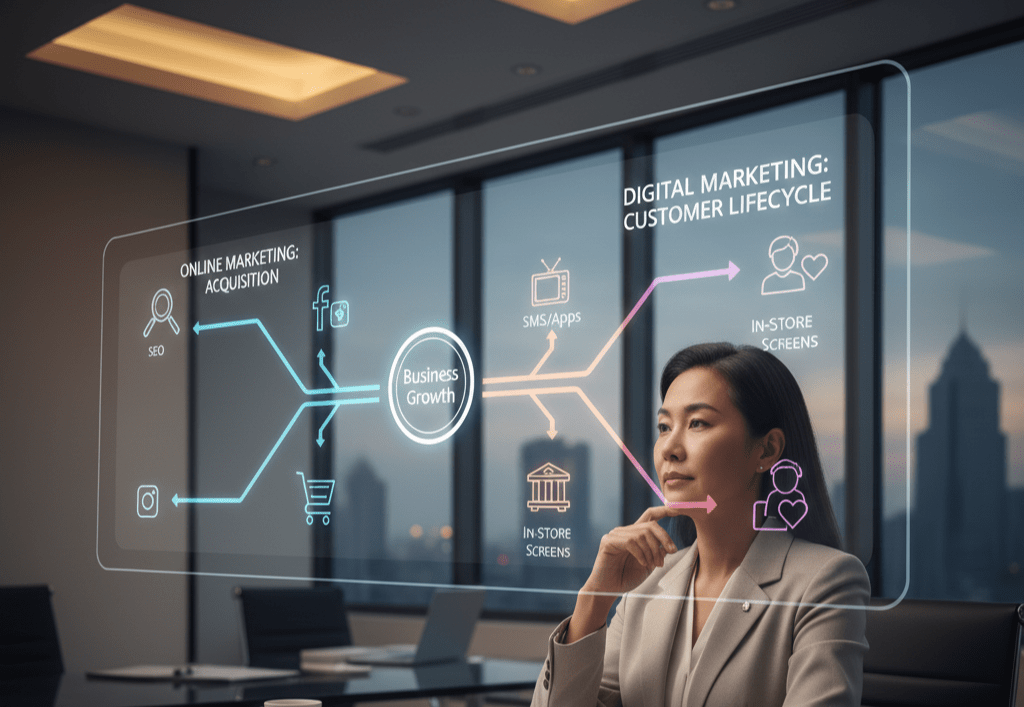
Businesses feel this confusion most acutely at moments of financial decision-making. Founders, marketing managers, and small business owners often ask whether online marketing vs digital marketing for small business requires different skills, tools, or budgets. The fear is not academic; it is practical. Choosing the wrong framework can lead to overinvestment in traffic channels while neglecting retention, personalization, and offline-to-online continuity.
This article takes a real-world, execution-first approach. Instead of repeating generic definitions, it maps each concept to channels, data flows, customer journeys, and measurable outcomes. You will see how internet marketing vs digital marketing differs not just in theory, but in campaign architecture, analytics models, and long-term scalability. By the end, the distinction will feel intuitive—not because it was memorized, but because it aligns with how modern customers actually behave.
What Is Online Marketing? (Definition, Scope, and Core Channels)
Online marketing refers to the strategic promotion of products, services, or brands exclusively through internet-dependent channels. In the online marketing vs digital marketing discussion, online marketing is the narrower concept: it only functions when a user is connected to the web. If the internet disappears, online marketing stops entirely. This single constraint is what defines its scope—and also what makes it powerful when used correctly.
At an entity level, online marketing definition includes all customer acquisition and engagement tactics executed within browsers, web-based platforms, and cloud-connected ecosystems. These tactics are designed to capture intent-driven demand, where users are actively searching, scrolling, clicking, or subscribing. This is why online marketing is often the first growth lever for startups, SaaS companies, creators, and eCommerce brands.
A major pain point for businesses is assuming online marketing equals “everything digital.” It does not. Online marketing excludes any offline digital channels, such as SMS without internet, digital billboards, in-store kiosks, or connected TV ads. Understanding this boundary prevents budget misallocation and unrealistic performance expectations—especially for small businesses with limited resources.
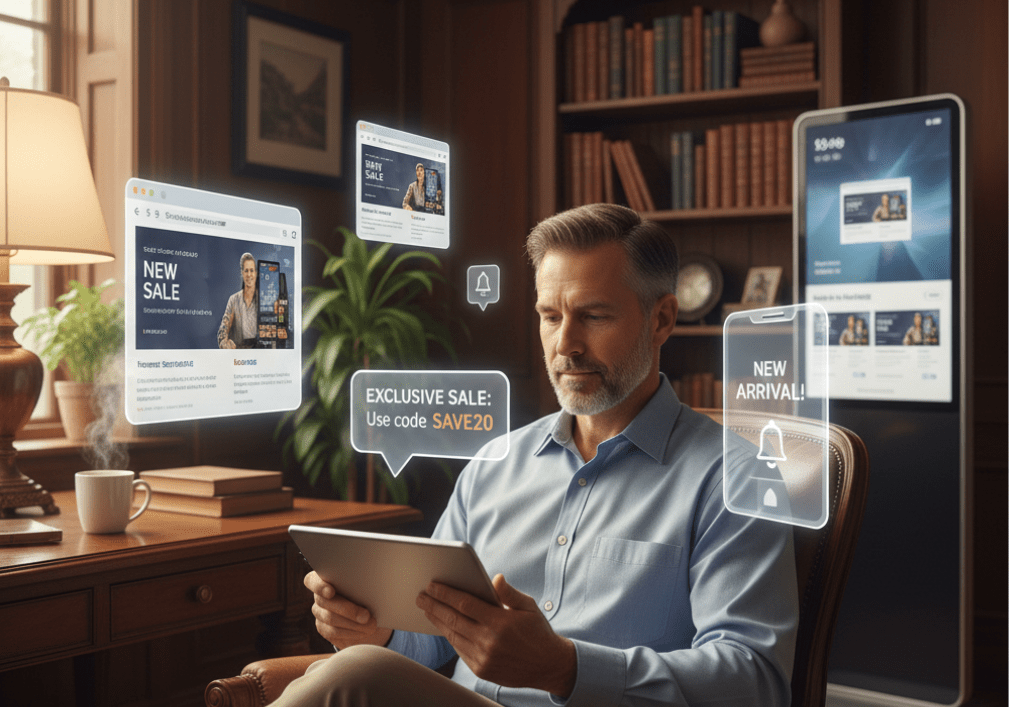
From a performance perspective, online marketing thrives on measurability, speed, and scalability. According to industry consensus, internet-based channels allow real-time feedback loops through impressions, clicks, conversions, and attribution models. This is why online marketing strategies dominate early-stage growth playbooks.
Key Online Marketing Channels Explained
The most effective online marketing channels all share one characteristic: they require active or passive internet usage at the moment of exposure.
Search Engine Optimization (SEO) focuses on improving visibility within organic search results. It captures users with explicit intent, making it one of the highest-ROI online marketing tactics when executed with strong topical authority and semantic relevance.
Pay-Per-Click (PPC) Advertising, including search ads and display ads, allows brands to buy immediate visibility. Platforms like Google Ads and Bing Ads dominate this space, enabling precise targeting through keywords, demographics, and behavior.
Social Media Marketing leverages platforms such as LinkedIn, Instagram, Facebook, X, and TikTok. While social media feels conversational, it remains a core pillar of online advertising because it depends entirely on internet-based platforms and algorithms.
Email Marketing is often misunderstood. While emails may be read offline later, email delivery, automation, personalization, and analytics are all internet-driven, placing it firmly under online marketing.
Content Marketing, including blogs, videos, webinars, and downloadable assets, fuels both SEO and social channels. It builds trust and authority while supporting conversion pathways.
Affiliate and Influencer Marketing operate through tracked online links, cookies, and referral systems—another clear indicator of internet dependency.
Together, these channels form the backbone of online marketing examples seen across SaaS, eCommerce, and digital publishing businesses.
Where Online Marketing Starts—and Where It Ends
Online marketing ends where internet dependency ends. Channels like SMS marketing, digital TV advertising, QR-code triggered offline experiences, and in-store digital displays do not qualify—even though they use digital technology. These belong to digital marketing, not online marketing.
This distinction matters operationally. A business relying solely on online marketing is optimizing for traffic acquisition, not full customer lifecycle management. That approach works well for digital-native brands but becomes limiting as soon as offline touchpoints enter the customer journey.
Understanding where online marketing stops helps businesses avoid the false belief that declining performance can always be solved by “more ads” or “better SEO.” Sometimes, the solution lies outside the online-only ecosystem.
What Is Digital Marketing? (Definition Beyond the Internet)
Digital marketing is the strategic use of digital technologies to communicate, influence, and convert customers across both online and offline environments. In the online marketing vs digital marketing framework, digital marketing is the parent system—broader in scope, more resilient to connectivity limitations, and designed to manage the entire customer journey, not just web-based acquisition.
At a definitional level, digital marketing includes any marketing activity executed through digital devices, data systems, or electronic media, regardless of whether the internet is actively involved at the moment of interaction. This distinction is where most confusion originates. Many articles define digital marketing as “marketing on the internet,” but that definition is incomplete and operationally misleading.
From an entity perspective, digital marketing definition encompasses online marketing, mobile-first communication, offline digital touchpoints, and data-driven personalization systems. This includes channels that function without continuous internet access, such as SMS messaging, digital television advertising, interactive kiosks, point-of-sale displays, and app-based push notifications. These channels expand reach beyond browsers and search engines into physical and hybrid environments.
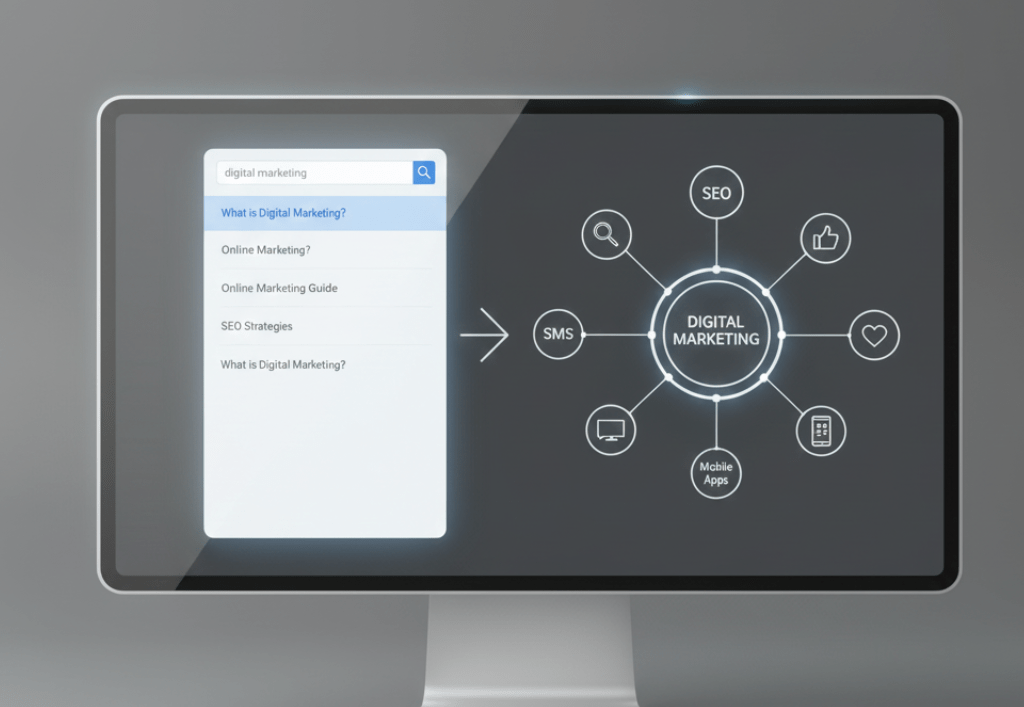
Businesses that misunderstand this scope often struggle with scale. They invest heavily in online marketing strategies while neglecting retention, loyalty, and cross-channel continuity—areas where digital marketing excels.
Digital Marketing Channels Most People Forget
A key reason users search for difference between online marketing and digital marketing is that many digital channels operate quietly in the background of daily life.
SMS Marketing is a prime example. Text messages do not require an active internet connection at the moment of delivery, yet they are triggered by digital systems, CRM platforms, and behavioral data. This places SMS firmly within digital marketing—not online marketing.
Mobile App Push Notifications function similarly. While apps may sync online periodically, notifications are delivered through device-level infrastructure. They play a critical role in re-engagement and retention, especially for fintech, eCommerce, and subscription businesses.
Digital TV and Connected TV (CTV) Advertising uses programmatic data and digital targeting but reaches users through televisions rather than browsers. This channel bridges brand awareness and performance marketing.
Digital Out-of-Home (DOOH) advertising—such as smart billboards and transit screens—uses real-time data, sensors, and automation to deliver dynamic messages in physical spaces.
In-store Digital Displays and QR-Driven Experiences further blur the line between physical and digital, enabling measurable interactions without relying solely on web traffic.
These channels explain why digital marketing channels extend far beyond search engines and social platforms.
Digital Marketing as a Customer Journey System
The defining strength of digital marketing is journey orchestration. While online marketing focuses primarily on acquisition, digital marketing connects awareness, engagement, conversion, retention, and advocacy across multiple touchpoints.
From a systems standpoint, digital marketing integrates:
- Customer data platforms (CDPs)
- CRM systems
- Marketing automation tools
- Attribution and analytics frameworks
This integration allows brands to recognize users across devices and contexts—online and offline—aligning with how modern customers actually behave.
According to widely accepted marketing research, brands using multi-channel digital strategies retain customers at significantly higher rates than those relying on single-channel online tactics. This is why enterprises, franchises, and omnichannel retailers prioritize digital marketing over internet-only approaches.
Understanding digital marketing as an ecosystem—not a channel—resolves the core confusion in the internet marketing vs digital marketing debate. Online marketing drives entry into the ecosystem; digital marketing ensures continuity, memory, and scale.
Online Marketing vs Digital Marketing: The Core Differences
The real difference between online marketing vs digital marketing is not theoretical—it is structural, operational, and strategic. Businesses that treat these two concepts as interchangeable often experience stalled growth, inefficient spend, and fragmented customer journeys. This section breaks down the differences in a way that directly answers the question most users are actually asking: How does this change what I should do with my marketing budget and strategy?
At the highest level, online marketing operates inside the internet ecosystem, while digital marketing operates inside a technology ecosystem. One is channel-centric; the other is system-centric. This difference shapes how campaigns are built, how success is measured, and how customers experience a brand over time.
Channel Dependency: Internet-Only vs Digital Ecosystem
Online marketing is internet-dependent by design. Channels such as SEO, PPC advertising, social media marketing, email campaigns, and content marketing require an active internet connection at the moment of exposure or interaction. If the user is offline, the marketing interaction cannot occur.
Digital marketing does not have this limitation. While it includes all online marketing channels, it also incorporates offline digital touchpoints such as SMS, mobile push notifications, digital TV ads, and in-store digital experiences. These channels continue functioning even when users are not browsing the web.
This distinction matters because modern customer journeys are non-linear. A user may discover a brand through search (online marketing), receive a discount via SMS (digital marketing), complete a purchase in-store, and later re-engage through a mobile app notification. Online marketing initiates interest; digital marketing sustains and expands it.
From a strategic standpoint, businesses relying only on online marketing are optimizing for entry points, not continuity.
Tools, Platforms, and Infrastructure Differences
Another critical difference between digital vs online advertising lies in tooling.
Online marketing relies heavily on:
- Search engines
- Social media platforms
- Ad networks
- Web analytics tools
These tools excel at traffic generation and intent capture, but they struggle with cross-environment identity resolution.
Digital marketing systems, by contrast, integrate:
- CRM platforms
- Customer data platforms (CDPs)
- Marketing automation software
- Offline attribution systems
- Device-level engagement tools
This infrastructure allows brands to recognize users across channels, sessions, and devices. Instead of asking “Where did this click come from?”, digital marketing asks “Who is this customer, and where are they in their journey?”
This is why enterprises, omnichannel retailers, and service businesses favor digital marketing frameworks over online-only approaches.
Measurement, Attribution, and ROI Reality
Measurement is where the confusion between online marketing vs digital marketing becomes most costly.
Online marketing success is typically measured using clicks, impressions, bounce rates, conversions, and ROAS. These metrics are valuable—but incomplete. They often fail to capture what happens after the click, especially when interactions move offline.
Digital marketing measurement expands attribution to include:
- Offline conversions
- Customer lifetime value (CLV)
- Retention and churn
- Cross-channel influence
- Assisted conversions
This broader measurement model aligns with how revenue is actually generated. A campaign may appear unprofitable in online metrics while driving significant offline or repeat business—something online-only dashboards cannot see.
Strategic Intent: Acquisition vs Lifecycle Growth
Online marketing is optimized for acquisition efficiency. Digital marketing is optimized for lifecycle growth.
This difference explains why startups and early-stage businesses often succeed with online marketing alone, while mature organizations outgrow it. Once customer volume increases, growth depends less on attracting strangers and more on retaining, reactivating, and personalizing experiences—core strengths of digital marketing systems.
Understanding this distinction resolves the confusion behind internet marketing vs digital marketing far more effectively than definitions alone.
Real-World Examples: Online Marketing vs Digital Marketing in Action
The easiest way to eliminate confusion around online marketing vs digital marketing is to observe how each one functions in real business environments. Definitions fade quickly when confronted with actual customer behavior, budgets, and operational constraints. In practice, companies rarely ask, “Which definition is correct?” They ask, “Which approach will move revenue this quarter without breaking what already works?”
This section addresses that exact concern by showing how online and digital marketing differ in execution, not theory.
Small Business Scenario: Online Marketing First, Digital Marketing Later
Consider a local fitness studio launching its first growth campaign. With limited budget and no in-house marketing team, the business chooses online marketing strategies as its entry point. The campaign includes local SEO, Google Search ads, Instagram promotions, and a simple email newsletter.
These channels perform well because they capture existing demand—people already searching for gyms nearby. Within weeks, the studio sees increased website traffic and online bookings. At this stage, online marketing is not just sufficient; it is optimal.
However, growth plateaus. Repeat attendance drops, promotions lose effectiveness, and ad costs rise. This is where the limitations of online marketing appear. The studio cannot re-engage customers who stop checking email or social media regularly.
By introducing digital marketing channels—such as SMS reminders, mobile app push notifications, and in-studio digital screens—the business reactivates dormant customers and increases retention. The shift is subtle but powerful: marketing no longer depends solely on internet browsing behavior.
This example illustrates online marketing vs digital marketing for small business in its most practical form: online marketing drives discovery, digital marketing sustains relationships.
eCommerce Brand Scenario: Online Marketing as the Revenue Engine
An eCommerce brand selling consumer electronics operates almost entirely online. Its primary growth drivers are SEO, paid search, retargeting ads, affiliate partnerships, and email automation. Every interaction—from discovery to purchase—occurs within a browser or app connected to the internet.
In this case, online marketing is not a limitation; it is the business model. The brand invests heavily in conversion rate optimization, attribution modeling, and performance analytics, because every sale can be traced back to an online interaction.
Yet even here, digital marketing quietly supports growth. Post-purchase SMS delivery updates, loyalty notifications, and app-based product recommendations extend customer lifetime value beyond the initial transaction. The brand still depends on online marketing for acquisition, but digital marketing increases efficiency and retention.
This highlights an important reality: even internet-native businesses benefit from digital marketing once scale is achieved.
Enterprise & Omnichannel Scenario: Digital Marketing as the Operating System
Large retailers, banks, and service providers operate in environments where online-only marketing fails to reflect reality. Customers research products online, visit physical locations, receive SMS alerts, see digital billboards, and interact with apps—all within the same buying cycle.
In these environments, digital marketing becomes the operating system. Online marketing channels such as search and social ads act as entry points, but the real value comes from cross-channel orchestration.
For example, a customer may:
- Discover a product via online search
- Receive a personalized SMS offer
- See a reminder on connected TV
- Complete the purchase in-store
No single online channel can explain this journey alone. Digital marketing systems—CRMs, CDPs, and automation platforms—connect these interactions into a coherent experience.
This is why enterprises rarely debate internet marketing vs digital marketing. They treat online marketing as one component inside a much larger digital ecosystem.
What These Examples Reveal
Across all scenarios, a pattern emerges:
- Online marketing excels at demand capture and fast experimentation
- Digital marketing excels at continuity, memory, and scale
Businesses fail when they confuse these strengths—or expect one to replace the other. Real growth happens when each is used where it performs best.
Is Online Marketing the Same as Digital Marketing?
No—online marketing is not the same as digital marketing, and treating them as interchangeable is one of the most common strategic mistakes businesses make. The confusion is understandable because online marketing is highly visible, while many digital marketing activities operate quietly in the background. However, visibility does not equal scope.
The most accurate way to understand the relationship is this: online marketing is a subset of digital marketing. Every online marketing activity is digital, but not every digital marketing activity is online. This distinction is not semantic hair-splitting; it defines how marketing systems are designed, measured, and scaled.
When users search “is online marketing same as digital marketing”, they are usually trying to validate a belief they have encountered repeatedly in blogs, agency websites, or social media posts. Many competitors oversimplify the answer to avoid nuance. That oversimplification leads to confusion, especially for decision-makers allocating budgets or building teams.
Why the Confusion Exists in the First Place
The confusion exists because online marketing channels dominate public discourse. Search engines, social platforms, and online ads are visible, interactive, and easy to associate with growth. By contrast, many digital marketing channels—such as SMS automation, CRM-driven personalization, and digital TV advertising—operate behind the scenes or outside traditional browsing behavior.
Another reason is historical. In the early 2000s, digital marketing was mostly online marketing. As technology evolved, digital touchpoints expanded beyond the browser, but language did not evolve at the same pace. The terminology lag created a gap between how marketing is discussed and how it is actually executed.
A Simple Rule That Never Fails
If a marketing activity requires the internet at the moment of interaction, it falls under online marketing.
If a marketing activity uses digital technology but does not require live internet access, it falls under digital marketing.
This rule immediately resolves ambiguity around:
- Email marketing → Online marketing
- SEO and PPC → Online marketing
- SMS campaigns → Digital marketing
- Mobile app notifications → Digital marketing
- Digital billboards and connected TV → Digital marketing
Understanding this rule protects businesses from mislabeling strategies and expecting outcomes that a channel cannot realistically deliver.
Why This Difference Actually Matters
The belief that online marketing and digital marketing are the same leads to structural blind spots. Businesses may believe they are “doing digital marketing” when they are only acquiring traffic—without systems for retention, reactivation, or cross-channel continuity.
This becomes especially problematic as customer acquisition costs rise. When growth slows, teams often attempt to “fix” online marketing by increasing ad spend or producing more content, instead of expanding into digital channels that support the full customer lifecycle.
A realistic Reddit-style sentiment seen repeatedly in marketing forums captures this frustration well:
“We’re running ads, doing SEO, posting on social media… but customers just disappear after the first purchase. Everyone keeps saying ‘do better digital marketing,’ but no one explains what that actually means.”
What it actually means is moving beyond online-only tactics into digital marketing systems that remember, recognize, and re-engage customers wherever they are.
Online marketing and digital marketing are related—but not equal. One drives discovery; the other sustains growth. Once this distinction clicks, strategic decisions become clearer, budgets become more efficient, and marketing stops feeling like a guessing game.
Which Is Better: Online Marketing or Digital Marketing?
The question “which is better, online marketing or digital marketing?” is one of the most searched—and most misleading—comparisons in modern marketing. It assumes a competition where none exists. In reality, online marketing vs digital marketing is not a choice between two opposing strategies, but a decision about scope, timing, and business maturity.
Neither approach is universally better. Each excels under specific conditions, and using the wrong one at the wrong stage creates inefficiency, frustration, and wasted spend. The goal is not to pick a winner, but to understand when each approach delivers maximum leverage.
When Online Marketing Is Enough
Online marketing is often the highest-impact starting point for early-stage businesses and digitally native brands. It works best when growth depends on capturing existing demand and converting it efficiently.
Online marketing is usually sufficient when:
- The business operates primarily online (SaaS, eCommerce, creators)
- The target audience actively searches or scrolls online platforms
- The budget is limited and must show short-term ROI
- The goal is customer acquisition rather than long-term retention
In these scenarios, online marketing strategies such as SEO, paid search, social media ads, and email campaigns provide speed, measurability, and control. Performance can be optimized quickly, making online marketing ideal for experimentation and validation.
This is why startups often succeed without ever thinking about digital marketing channels beyond the browser. For them, online marketing is not a constraint—it is alignment.
When Digital Marketing Is the Smarter Choice
Digital marketing becomes essential once a business reaches a point where growth is no longer driven by discovery alone. As customer volume increases, so does complexity.
Digital marketing is the smarter choice when:
- Customer journeys span online and offline touchpoints
- Retention and lifetime value matter more than first-click conversions
- The business operates physical locations or hybrid services
- Marketing must integrate with CRM, sales, or support systems
At this stage, relying only on online marketing creates blind spots. Customers stop responding to ads not because interest is gone, but because communication channels are misaligned. Digital marketing systems—SMS, app notifications, connected TV, in-store digital experiences—restore relevance by meeting customers where they already are.
This shift is especially important for online marketing vs digital marketing for small business as companies scale. What worked at ten customers often breaks at ten thousand.
The False “Either/Or” Trap
A common fear expressed by business owners is that choosing digital marketing means abandoning online marketing. This is false. Digital marketing includes online marketing; it does not replace it.
The most effective strategies use:
- Online marketing for acquisition and demand capture
- Digital marketing for orchestration, retention, and growth efficiency
Businesses that understand this stop chasing “the next channel” and start building connected systems.
A realistic Reddit-style quote from a small business owner captures this realization:
“We kept asking which channel to double down on, but the real fix was connecting everything. Ads got people in, SMS and email kept them coming back.”
How to Decide Without Overthinking
If you are deciding between online marketing vs digital marketing, ask one question:
Is my biggest problem getting noticed, or staying remembered?
If the problem is visibility, online marketing is enough.
If the problem is continuity, digital marketing is necessary.
That single question eliminates most confusion—and prevents costly misalignment.
Common Myths That Keep Businesses Stuck
Much of the confusion around online marketing vs digital marketing is not accidental—it is perpetuated by oversimplified blog posts, agency sales pages, and outdated training material. These myths are costly because they shape expectations. When expectations are wrong, strategies fail even if execution is strong.
This section directly addresses the most damaging misconceptions that prevent businesses from scaling effectively.
Myth 1: “Digital Marketing Is Just a Fancy Name for Online Marketing”
This is the most widespread and harmful myth. It reduces digital marketing to a rebranding exercise, ignoring its expanded scope and system-level function.
In reality, digital marketing is not a synonym—it is an umbrella framework. Online marketing exists inside it, alongside channels that never touch a browser. Businesses that believe this myth often think they are “doing digital marketing” simply because they run ads or publish content.
The result is predictable: strong acquisition numbers paired with weak retention, low lifetime value, and fragile growth. This myth persists because online marketing outputs are easy to see, while digital marketing systems operate behind the scenes.
Myth 2: “Offline Digital Channels Don’t Convert”
Another misconception is that channels like SMS, digital TV, or in-store digital displays are branding-only tools with vague ROI. This belief comes from measuring digital channels using online-only metrics, which they were never designed to satisfy.
Offline digital channels convert differently. They influence timing, memory, and behavior rather than clicks. When integrated into a digital marketing system with CRM and attribution modeling, these channels often outperform traditional online ads in retention and reactivation.
Dismissing them because they do not produce immediate clicks is a measurement error—not a channel failure.
Myth 3: “SEO or Social Media Alone Equals Digital Marketing”
SEO and social media are powerful online marketing strategies, but they do not constitute a complete digital marketing program. This myth is especially common among small businesses and creators who see short-term success and assume they have reached strategic maturity.
What is missing is continuity. SEO brings users once; digital marketing remembers them. Social media sparks engagement; digital marketing sustains relationships across platforms and time.
Believing this myth often leads to panic when algorithms change or ad costs rise—because the business has no supporting digital infrastructure.
Myth 4: “Digital Marketing Is Only for Big Companies”
Many small business owners assume digital marketing systems are too complex or expensive. This fear keeps them locked into online-only tactics, even when growth stalls.
In reality, digital marketing scales down as well as up. A simple SMS reminder system, a basic CRM, or automated follow-ups can dramatically improve results without enterprise budgets. The belief that digital marketing is “too advanced” delays adoption until problems become expensive.
A common sentiment seen in forums reflects this hesitation:
“We thought digital marketing was something you do after you ‘make it.’ Turns out that’s when you need it most.”
Why These Myths Persist—and Why They Matter
These myths survive because they simplify a complex landscape into comfortable narratives. But comfort does not drive growth—clarity does.
Understanding the real difference between internet marketing vs digital marketing removes guesswork. It allows businesses to stop chasing tactics and start building systems. Those who move past these myths gain a structural advantage over competitors who remain stuck debating terminology.
How Google and Search Engines Interpret These Concepts
Search engines do not treat online marketing and digital marketing as interchangeable phrases. Modern search systems—especially those driven by entity-based indexing and semantic understanding—recognize them as related but distinct concepts with different topical boundaries. This distinction directly affects how content ranks, how authority is assigned, and how user intent is satisfied.
From Google’s perspective, the goal is not to reward pages that repeat definitions, but pages that resolve ambiguity. When users search for online marketing vs digital marketing, the intent is comparative and clarifying, not purely informational. Pages that collapse both concepts into one definition often fail to meet this intent fully.
Entity-Based Understanding, Not Keyword Matching
Search engines now rely heavily on entities, not just keywords. In this framework:
- Digital marketing is treated as a parent entity
- Online marketing, internet marketing, SEO, PPC, and email marketing are treated as child or related entities
When content demonstrates this hierarchy clearly—without contradiction—it sends strong relevance and trust signals. This is why shallow articles that say “digital marketing means online marketing” often struggle to rank long-term, even if they contain the right keywords.
Google’s systems favor content that reflects real-world relationships between concepts. In the real world, businesses do not run SEO, SMS, digital TV, and CRM automation as identical tactics—they run them as interconnected systems. Content that mirrors this reality aligns better with search quality expectations.
Search Intent and Needs Met
According to search quality principles, high-quality informational content must:
- Clearly identify the user’s problem
- Resolve confusion without misleading simplification
- Provide a complete, accurate mental model
For online marketing vs digital marketing, the unmet need is usually decision clarity. Users want to know:
- Which approach fits their business
- Why definitions differ across sources
- Whether they are missing something important
Pages that focus only on surface definitions often earn a “moderately meets” intent rating at best. Pages that explain scope, application, and consequences are more likely to fully satisfy user needs.
Why Semantic Precision Improves Rankings
Semantic precision improves rankings because it improves trust. When content demonstrates that it understands the boundaries of a topic, it signals expertise—even without explicit credentials.
For example:
- Clearly separating online advertising from offline digital channels
- Explaining why SMS marketing is digital but not online
- Connecting marketing strategy to customer journey reality
These signals align with Experience, Expertise, Authoritativeness, and Trust (E-E-A-T) principles. They show that the content creator understands not just terminology, but application.
The Risk of Overgeneralization
One of the fastest ways to weaken topical authority is overgeneralization. When content treats internet marketing vs digital marketing as identical, it creates internal contradictions—especially when examples later introduce offline digital channels.
Search engines detect these inconsistencies. They do not penalize them manually, but they do reduce confidence in the page’s usefulness. Over time, this affects visibility, especially for comparative and educational queries.
What This Means for Content Creators and Businesses
For content creators, clarity beats cleverness. Using precise language, clear hierarchies, and real-world framing helps content perform better because it helps users understand faster.
For businesses, this means search engines already understand the difference—even if people do not. Aligning messaging, strategy, and content with that understanding improves both SEO performance and marketing effectiveness.
FAQs
1. What is the difference between online marketing and digital marketing in simple terms?
The simplest way to explain the difference between online marketing vs digital marketing is to look at internet dependency.
Online marketing only works when a user is connected to the internet. It includes SEO, social media, email campaigns, content marketing, and online ads.
Digital marketing includes online marketing plus digital channels that work without live internet access, such as SMS, mobile app notifications, digital TV, and in-store digital screens.
If a tactic stops working the moment the internet is unavailable, it is online marketing. If it still works using digital systems, it is digital marketing.
2. Is online marketing the same as internet marketing?
Yes, in most practical contexts, online marketing and internet marketing are used interchangeably. Both refer to marketing activities that rely on the internet to reach users.
However, neither term should be confused with digital marketing, which is broader and includes offline digital channels. This distinction becomes important when businesses expand beyond browsers and search engines into mobile, in-store, or device-based experiences.
3. Online marketing vs digital marketing for small business: which should I choose?
For most small businesses, the correct answer is both—but not at the same time.
Early-stage small businesses benefit most from online marketing strategies because they are:
- Faster to launch
- Easier to measure
- More cost-efficient for acquisition
SEO, Google Ads, social media, and email marketing are usually enough to generate initial traction.
As the business grows, digital marketing becomes necessary to:
- Improve customer retention
- Reduce repeat ad spend
- Build long-term relationships
A common small-business sentiment seen in online discussions reflects this progression:
“Online ads got us customers, but everything changed when we added SMS reminders and follow-ups. Suddenly people came back.”
This shift marks the transition from online marketing to true digital marketing.
4. Which is better: online marketing or digital marketing for ROI?
Neither is inherently better for ROI—the return depends on what problem you are solving.
- If the problem is visibility or traffic, online marketing usually delivers better short-term ROI.
- If the problem is retention, loyalty, or repeat purchases, digital marketing produces higher long-term ROI.
Businesses often misjudge ROI by measuring digital marketing channels using online-only metrics. When measured correctly—using lifetime value and cross-channel attribution—digital marketing often outperforms online-only approaches over time.
5. Does SEO fall under online marketing or digital marketing?
SEO is an online marketing channel.
It requires an internet connection, search engines, and web-based user behavior to function.
However, SEO supports digital marketing systems by feeding data into CRM platforms, remarketing audiences, and personalization workflows. This is another example of how online marketing operates within digital marketing rather than outside it.
6. Can a business succeed using only online marketing?
Yes—but only under specific conditions.
Businesses that are fully digital, such as SaaS platforms, content creators, or pure eCommerce brands, can succeed using only online marketing. Their customer journeys rarely leave the internet.
However, as soon as customer interactions include:
- Physical locations
- Mobile-first behavior
- Offline communication
Online marketing alone becomes a constraint rather than an advantage. Understanding this boundary prevents unrealistic expectations and strategy fatigue.
Conclusion
The debate around online marketing vs digital marketing persists not because the concepts are complex, but because they are often explained without context. When definitions are detached from real-world execution, businesses are left memorizing terms instead of making better decisions. This article reframes the distinction in a way that aligns with how customers actually behave and how modern marketing systems operate.
Online marketing is best understood as the engine of discovery. It captures attention where intent already exists—through search engines, social platforms, email, and web-based advertising. It is fast, measurable, and indispensable, especially for early-stage growth and digitally native brands.
Digital marketing, on the other hand, is the system of continuity. It extends marketing beyond the browser into devices, environments, and moments where customers live their lives. By integrating online and offline digital touchpoints—SMS, mobile apps, digital TV, CRM automation—it transforms isolated interactions into cohesive journeys.
The critical insight is not which approach is “better,” but when each becomes necessary. Businesses that stall often do so not because their tactics are weak, but because their scope is too narrow. Online marketing brings customers in; digital marketing gives them reasons to stay, return, and advocate.
Once this distinction is clear, strategy becomes simpler. Budgets align with outcomes. Channels stop competing and start collaborating. And marketing shifts from a series of disconnected efforts into a system that compounds over time.
That is the real difference—and the real opportunity.
Here is your **FAQ Schema in JSON-LD format** based on the difference between **online marketing and digital marketing**. You can add this inside your website’s `` section or before the closing `` tag: “`html “`FAQ
1. What is online marketing?
Online marketing refers specifically to marketing activities that require an internet connection. It includes channels such as websites, search engine optimization (SEO), social media marketing, email marketing, content marketing, and online advertising. All online marketing efforts happen on the web.
2. What is digital marketing?
Digital marketing is a broader term that includes all forms of marketing using digital technologies. It covers online channels as well as offline digital mediums such as SMS marketing, mobile apps, digital billboards, and in-app advertising. Not all digital marketing requires the internet.
3. What is the key difference between online marketing and digital marketing?
The main difference lies in scope. Online marketing is a subset of digital marketing and depends entirely on internet-based platforms. Digital marketing includes both internet-dependent and non-internet digital channels, making it more comprehensive.
4. Which approach is better for businesses?
Neither is universally better—it depends on business goals and audience behavior. Online marketing is ideal for web-based customer acquisition and global reach, while digital marketing offers broader touchpoints, including mobile and offline digital interactions, for integrated campaigns.
5. Can online and digital marketing be used together?
Yes. Online marketing strategies often form the core of digital marketing efforts. When combined with offline digital channels like SMS, push notifications, or digital displays, businesses can create cohesive, omnichannel marketing strategies that improve reach and engagement.