
Creating Interactive Brand Elements that Engage & Delight Audiences
Introduction
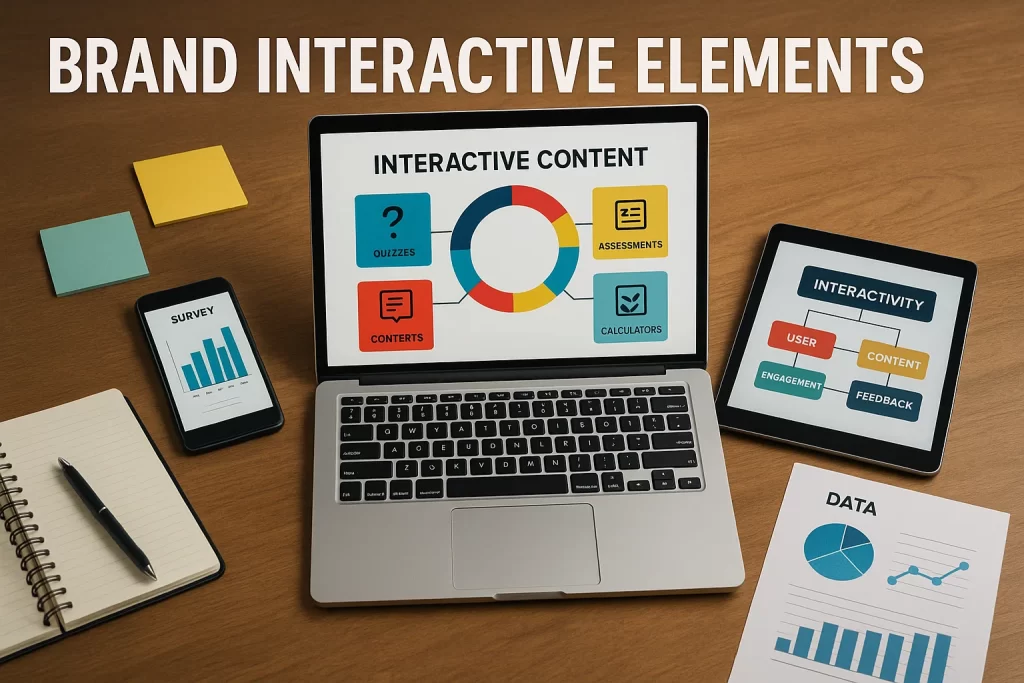
Brand interactive elements are no longer just a fancy add-on. They are fundamental to how modern customers experience a brand online. As user attention spans decrease, interactivity acts as a magnet—pulling people in, guiding them through brand stories, and ultimately driving conversions. According to a report by Demand Metric, interactive content generates twice the engagement as static content.
Well-executed interactive branding doesn’t just entertain—it serves a business goal. Whether it’s to boost time-on-site, lower bounce rates, or increase purchase intent, these tools move the needle. From an SEO perspective, they also signal quality engagement to search engines.
Take for instance the difference between a static landing page versus one with a quiz that recommends a product. The latter not only keeps users longer but also segments audiences for tailored follow-up—a win for both UX and marketing automation.
Common Pitfalls: Where Brands Fail to Deliver Real Interactivity
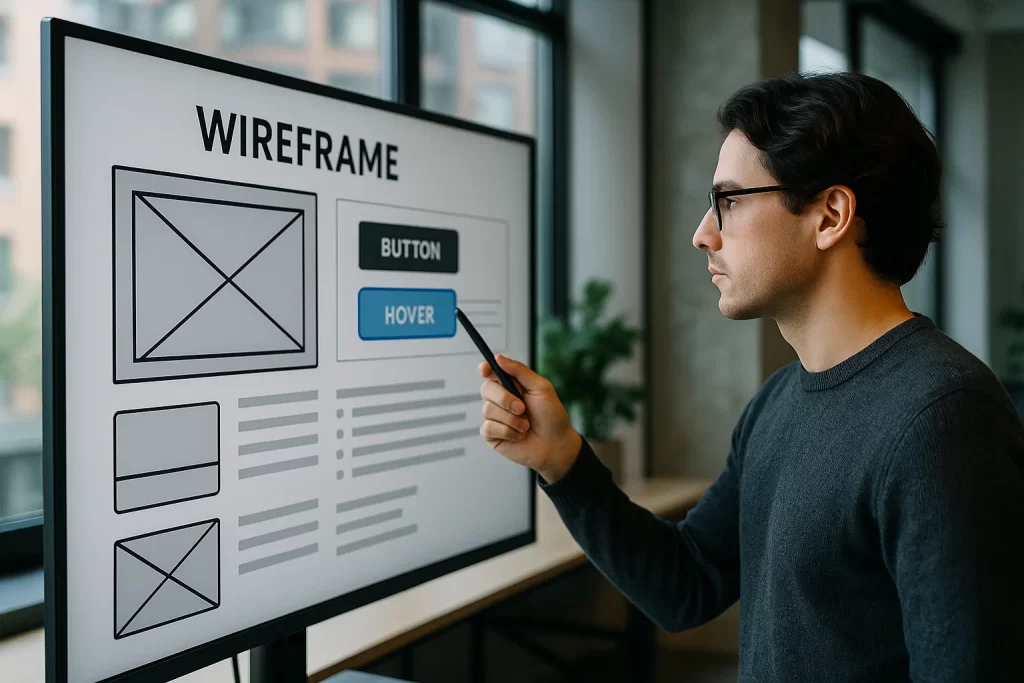
Despite its potential, many brands fall into the trap of superficial interactivity. This often looks like animated buttons or hover effects that add visual flair but no functional value. Real interactive brand features must provide utility—guiding users toward decisions or giving real-time feedback.
Common missteps
- Not testing for responsiveness on mobile
- Loading animations that delay engagement
- Gamified content with no payoff
Solving Key Challenges : Users often complain that flashy elements don’t equal functionality. Redditor u/DesignSnob lamented, “I clicked a wheel spinner on a brand site and all I got was a coupon I didn’t want. Felt gimmicky.”
To avoid this, apply UX heuristics and gather qualitative feedback during beta testing. Always ask: does this element help the user achieve something?
Core Principles: What Makes an Interactive Element Truly Engaging
An interactive element becomes truly effective when it satisfies these principles:
- Utility: It solves a micro-problem (e.g., size guide, product matcher).
- Responsiveness: Instant feedback ensures users feel heard.
- Gamification: Adds motivation and enjoyment.
- Narrative Integration: It aligns with brand storytelling.
- Data Capture Without Friction: Collects insights while providing value.
Expert Quote: “Interactivity is just a feature unless it’s user‑centered and performance‑optimized,” — Dr. Annie Lin, UX Researcher at Nielsen Norman Group.
Step-by-Step: How to Create Brand Interactive Elements for Customers
Step 1: Understand User Intent
Conduct audience segmentation to map decision journeys. Use empathy mapping to identify what will resonate most—games, tools, calculators?
Step 2: Choose Your Format
Options include:
- Quizzes (Buzzfeed-style personality to e-commerce matchers)
- Interactive infographics
- ROI calculators (common in SaaS)
- Product configurators
- Before-after sliders (useful in fashion, skincare, architecture)
Step 3: Prototype & Test
Use Figma or Bravo Studio for clickable prototypes. Deploy user testing to gather feedback on functionality and flow.
Step 4: Launch with Measurement Tools
Implement Hotjar or Microsoft Clarity for interaction tracking. Pair with Google Analytics events to measure conversion lift.
Tools to Mention: Ceros, Outgrow, Tiled, Vev

Real-World Examples: Interactive Content for Brands That Worked
- Sephora’s Shade Finder: A quiz that matches users to foundation shades. Increased conversion rates by 15%.
- Spotify Wrapped: Uses user data to create an interactive shareable story, boosting both retention and virality.
- HubSpot ROI Calculator: Lets potential clients quantify marketing impact—used widely in lead nurturing campaigns.
Each example shows how interactivity can reinforce brand identity, personalize the journey, and lead to tangible actions.
Costs vs Benefits: ROI of Interactive Brand Experiences
The upfront investment in interactive content often raises concern. But the data consistently supports its ROI:
- DemandGen Report states interactive content generates 2x more conversions than static.
- Interactive video ads have 3x higher click-through rates (Wyzowl, 2024).
Solving Key Challenges : “Are they worth the cost?”
Emphasize the compounding value: once built, interactive content can live across platforms, get repurposed, and continue collecting first-party data—an SEO and retargeting goldmine.
Tools & Platforms: Best Brand Engagement Tools
Here’s a curated list
- Outgrow – Best for quizzes, assessments
- Ceros – Ideal for editorial/agency content
- Tiled – Mobile-first interactive sales enablement
- Vev – Responsive, no-code builder with animation capabilities
Include details like use cases, pricing models, integrations, and customization level.
Optimization & A/B Testing: Refining Your Interactive Touchpoints
After launch, constant iteration is key. Brands must track behavior and identify:
- Drop-off points in quizzes
- Completion rates of interactive modules
- Heatmaps of CTA interactions
Best practices
- A/B test versions of the same element (e.g., two product matchers)
- Use session replays to catch UI confusion
- Ask users post-interaction: “Was this helpful?”
Future Trends: Immersive Brand Experiences on the Horizon
Looking ahead
- AR product try-ons will become standard in beauty/fashion
- AI-driven chat interfaces will shift from FAQs to guided storytelling
- Web3 interactions will enable token-gated brand experiences
These aren’t hype—they’re shifting how brands forge digital touchpoint strategies.
FAQ
1. How to create brand interactive elements for customers?
Start by understanding audience needs, choosing the right format (quiz, calculator, etc.), and testing rigorously. Use tools like Ceros or Outgrow to launch quickly.
2. Do interactive content for brands really increase conversions?
Yes—interactive content often delivers 2–3x engagement and conversion metrics versus static content.
3. What are the best brand engagement tools in 2025?
Outgrow, Ceros, Tiled, and Vev top the list for flexibility, features, and results.
4. Can small businesses afford interactive brand experiences?
Absolutely. Platforms now offer freemium or low-cost tiers. Start with a simple quiz or slider.
5. How do you measure success of interactive branding?
Look at dwell time, completion rates, conversions, and data captured (with consent). Tools like Hotjar help visualize user paths.
Conclusion
Interactive brand elements are no longer a luxury—they’re a necessity in competitive markets. When built with purpose, they become powerful tools for engagement, segmentation, and conversion.
Whether it’s a quiz that reveals product fits, or an AR experience that immerses users in your brand story, the key is to create with intent, empathy, and iterative optimization.
Done right, interactivity becomes your best brand ambassador.