
Crafting a Brand Sustainability Strategy: From Purpose to Practice
Introduction
Brand sustainability strategy is no longer a corporate nice-to-have—it’s a strategic imperative. In today’s climate-aware market, brands that ignore sustainability risk obsolescence. According to a 2024 Harvard Business Review study, over 76% of consumers expect companies to take responsibility for their environmental and social impacts. Simultaneously, McKinsey’s global ESG survey found that 63% of executives cite sustainability as a key revenue growth driver.
This shift is not merely ethical—it’s economic. A solid brand sustainability strategy embeds sustainability into every aspect of brand identity, from values and supply chains to storytelling and product design. Brands like Unilever and Patagonia exemplify this approach by weaving sustainability storytelling, ethical product lifecycles, and ESG performance metrics into their business models.
The strategy emphasizes brand transparency, eco-conscious brand identity, and alignment with the triple bottom line: people, planet, and profit. It transforms sustainability from a marketing buzzword into a competitive advantage. In doing so, it addresses consumer fears of greenwashing, provides measurable business outcomes, and positions the brand for long-term relevance.
“When done right, sustainability becomes a multiplier—not a constraint—for brand equity.” — Harvard Business Review
As we move through this article, we’ll explore how a sustainable branding strategy can reshape brand purpose, strengthen stakeholder trust, and create measurable business impact across the full value chain.
The New Imperative: Why Brand Sustainability Is No Longer Optional
A brand sustainability strategy has evolved from a fringe concern to a core business driver. It’s no longer about making a company look good—it’s about ensuring that the company survives and thrives in a carbon-constrained, ethically aware, and digitally transparent economy.
The Climate Clock Is Ticking
According to the IPCC, we have until the early 2030s to drastically reduce global emissions to limit warming to 1.5°C. This puts intense pressure on businesses to decarbonize not just operations but also their entire value chains. Consumers are acutely aware of this. A 2023 Nielsen report found that 73% of Gen Z consumers would switch to a brand committed to eco-conscious practices.
The Market Has Changed
Gone are the days when corporate social responsibility (CSR) reports were enough. Investors now use ESG performance metrics to evaluate long-term viability. Regulatory bodies in the EU and North America are tightening disclosure laws. And platforms like Morningstar now rate companies on sustainability impact alongside financial performance.
Even B2B sectors are feeling the squeeze. Sustainability has become a procurement criterion. Businesses that can’t prove their ethical sourcing or supply chain sustainability risk losing contracts.
Business Case for Sustainability
McKinsey estimates that companies with strong ESG credentials can see up to 20% higher valuation multiples compared to competitors. Similarly, a recent IBM study showed that 57% of consumers are willing to change their purchasing habits to reduce negative environmental impact.

Addressing the User Fear: ROI Uncertainty
One of the most common objections executives have is: “What’s the ROI?” This skepticism is rooted in legacy thinking that separates purpose from profit. Yet studies from Harvard and Bain show that brands with a defined sustainability strategy outperform their peers by 12% in long-term growth.
A Forrester Consulting report adds that purpose-driven brands experience higher customer loyalty, more advocacy, and better retention, especially when their strategies are rooted in genuine impact rather than marketing optics.
Anecdote
At a mid-size apparel company in Sweden, the CEO faced board resistance over shifting to low-impact dye processes. One year after implementing the change, not only had production costs dropped by 8%, but customer satisfaction also surged—thanks to transparency and engagement around the brand’s sustainability journey.
The takeaway is clear: sustainability is no longer optional—it’s existential. The brands that embed it now are not only future-proofing—they’re outpacing their competitors.
Defining a Brand Sustainability Strategy
What exactly is a brand sustainability strategy? It’s more than a green initiative or an annual report. It’s a core business philosophy—one that integrates environmental, social, and governance (ESG) factors into the DNA of a brand’s identity, culture, and customer journey.
The Holistic Framework
A strong sustainability strategy operates on multiple levels:
- Purpose: A clearly defined brand purpose rooted in social or environmental good.
- Operations: Internal practices that minimize harm—like switching to renewable energy or reducing packaging waste.
- Products: Designing for circularity, using biodegradable materials, or ethical sourcing.
- Messaging: Transparent communication and sustainability storytelling that align with real action.
- Measurement: Concrete metrics—ESG KPIs, life cycle assessments, stakeholder feedback.
At its core, the strategy is about consistency between brand promise and practice. The most admired brands—like Patagonia, IKEA, and Unilever—embed sustainability not just in what they say, but in how they operate.
Key Frameworks That Guide Strategy
To build such alignment, companies often turn to standardized frameworks:
- B Corp Certification: Measures social and environmental performance across governance, workers, community, and environment.
- Global Reporting Initiative (GRI): Offers a structured approach to sustainability reporting.
- UN Sustainable Development Goals (SDGs): A macro view of global priorities, now adopted into many brand strategies.
- Materiality Assessments: Used to identify which ESG factors are most relevant to business and stakeholders.
What It’s Not
A brand sustainability strategy is not a rebranded CSR department or a marketing ploy to sell more eco-products. It’s not a glossy sustainability page on a website filled with vague promises. The difference lies in intention, integration, and accountability.
Expert Quote
“Sustainability should not be an add-on. It must be the soul of your brand strategy.” — Harvard Business Review
From Greenwashing to Genuine: Building Authentic Sustainability
In an era of instant accountability and digital transparency, consumers are no longer fooled by vague eco claims or sustainability jargon. The fear of greenwashing—where a brand misrepresents or exaggerates its sustainability efforts—has become one of the biggest obstacles to trust. A 2024 GlobeScan study found that 43% of consumers don’t trust sustainability claims made by brands without third-party verification.
What Is Greenwashing?
Greenwashing occurs when brands:
- Overstate environmental achievements
- Use ambiguous language (“eco-friendly,” “natural,” “sustainable” without proof)
- Highlight minor green efforts while ignoring bigger issues (e.g., ethical labor violations)
- Fail to back claims with data or certifications
Greenwashing not only erodes consumer trust but can also lead to regulatory fines and brand damage. In the UK, the Competition and Markets Authority (CMA) is actively penalizing brands under its Green Claims Code.
What Authentic Sustainability Looks Like
Authentic sustainability is proactive, measurable, and embedded at every level of the brand. It includes:
- Third-party certifications (e.g., Fair Trade, B Corp, FSC, LEED)
- Transparent impact reports aligned with GRI or CDP frameworks
- Consistent messaging across touchpoints (no contradictions between marketing and operations)
- Real behavioral change—from executive pay tied to ESG metrics to circular product design
Expert Insight
“According to Harvard Business Review, the brands that thrive in the next decade will be those who match their talk with trackable, verifiable action.”
The Case of Patagonia vs. Fast Fashion
Patagonia built its brand on sustainability storytelling and walking the talk—down to asking customers not to buy new unless needed. Contrast this with fast fashion giants who launch “conscious” collections while producing millions of garments monthly under exploitative conditions. One wins loyalty and admiration. The other sparks skepticism and backlash.
Visual Asset Idea
A side-by-side comparison graphic: “Greenwashing vs. Authentic Sustainability” with examples, language cues, and impact data columns.
Consumer Skepticism
Many companies fear taking a stand on sustainability because they’re not perfect. But perfection isn’t the point—progress with transparency is. Consumers reward honesty. Brands that say, “Here’s where we’re falling short—and here’s our roadmap,” build credibility faster than those who only showcase wins.
Anecdote
“Why I don’t trust brands anymore”, one user wrote:
“If your sustainability claim sounds too good to be true, people will roast it to hell. We want receipts, not rainbows.” — u/eco_truthbomb
Embedding Sustainability Into Brand Identity
At the heart of every compelling brand is a purpose. When that purpose is tied to positive environmental and social impact, it transcends marketing—it becomes a movement. Embedding sustainability into brand identity means that sustainability is not just a campaign or department; it’s the brand’s soul.
The Rise of Purpose-Led Branding
According to Accenture’s Global Consumer Pulse Survey, 63% of global consumers prefer to purchase from purpose-driven brands that reflect their values. This is particularly pronounced in Gen Z and millennial segments, who are not only buying consciously but also advocating socially for the brands they align with.
To embed sustainability at the brand level, brands must:
- Redesign visual assets to reflect eco-conscious principles (e.g., green logos, minimal packaging)
- Infuse sustainability in brand language, messaging, and tone
- Ensure internal values align with external claims
- Make transparency and accountability part of the brand story
Real-World Example: IKEA’s Evolving Brand Identity
IKEA has shifted from a product-driven to a purpose-led brand, investing in circular furniture, launching repair kits, and committing to 100% renewable energy by 2030. These efforts aren’t siloed in sustainability reports—they’re integrated into every consumer touchpoint, from catalogs to store signage to app messaging.
Expert Quote
“Embedding sustainability into brand identity means consumers no longer need to read the fine print. They should feel the values in every interaction.” — McKinsey Branding Report, 2024
Imagery of Alignment
Sustainability isn’t just an initiative—it’s something consumers must see and feel
- Packaging made from recycled materials
- A user journey that highlights low-impact choices
- Loyalty programs that reward eco-friendly behavior
Solving Key Challenges : Values vs. Business Goals
One of the most common internal tensions is between sustainability and perceived growth constraints. But data increasingly proves otherwise. EY’s Purpose-Led Growth study found that companies aligning purpose with product strategy outperform peers by 42% in brand relevance metrics.
Embedding sustainability is not a trade-off—it’s a strategic accelerant.
ESG: The Business-Side of Sustainability Strategy
While purpose drives the emotional core of a brand sustainability strategy, ESG (Environmental, Social, and Governance) metrics provide the business backbone. They transform ideals into accountability frameworks, enabling brands to measure, manage, and scale impact.
Why ESG Matters to Brands
Brands are no longer judged solely by product quality or customer service. They’re increasingly evaluated based on how they:
- Reduce carbon emissions
- Protect labor rights
- Ensure ethical governance
- Manage diversity, equity, and inclusion (DEI)
- Disclose environmental risks transparently
This is particularly critical for publicly traded companies. According to MSCI study, brands with high ESG ratings showed 22% lower volatility and better long-term valuation.
What ESG Metrics Should a Brand Track?
Key categories include
Environmental
- Carbon footprint (Scope 1, 2, 3 emissions)
- Renewable energy use
- Product lifecycle impact
- Packaging waste
Social
- Fair wages and labor practices
- Community investment
- DEI initiatives
- Human rights due diligence
Governance
- Executive compensation tied to ESG
- Board diversity
- Anti-corruption policies
- ESG audit and disclosures
Expert Quote
“Sustainability without measurement is just storytelling. ESG provides the discipline to turn mission into metrics.” — Harvard Business Review
Addressing the Fear: How Do We Start?
Many brands fear ESG because it feels overly technical or reserved for large corporations. In reality, ESG begins with baseline assessments and simple tracking tools. For small to midsize brands, using platforms like EcoVadis or Sustain.Life can help build ESG readiness without large budgets.
Anecdote
At a regional cosmetics company in Canada, the CMO created a “light ESG” dashboard tracking just 5 indicators—from supplier diversity to carbon offsets. Within a year, the brand secured two new retail partnerships based on that transparency.
An effective brand sustainability strategy connects ideals with infrastructure. ESG metrics ensure that sustainability isn’t just felt—it’s proven.
Sustainable Supply Chains: Where Strategy Becomes Reality
A brand sustainability strategy is only as strong as the operations that support it—and that begins with the supply chain. From raw material sourcing to last-mile delivery, each touchpoint in the supply chain can reinforce or contradict a brand’s sustainability claims.
Why Supply Chain Matters to Sustainability
The World Economic Forum estimates that up to 90% of a company’s environmental footprint lies within its supply chain. This includes emissions (Scope 3), energy use, labor conditions, and material waste.
Brands cannot be sustainable without sustainable supply chains. That’s why leading companies are moving beyond supplier audits to build regenerative, circular, and resilient ecosystems.
What Makes a Supply Chain Sustainable?
Key pillars include
- Transparency: End-to-end visibility into suppliers, materials, and working conditions. Digital tools like blockchain and QR codes help here.
- Ethical Labor: No tolerance for forced labor or wage theft. Audits, certifications, and partnerships with local NGOs make a difference.
- Carbon Consciousness: From factory emissions to freight routes, carbon metrics must be tracked and reduced.
- Material Intelligence: Choosing biodegradable, recyclable, or upcycled inputs.
- Closed-Loop Logistics: Initiatives like returnable packaging, reusable pallets, and reverse logistics.
Case Study: Patagonia’s Worn Wear Program
Patagonia is a masterclass in ethical supply chain innovation. Its Worn Wear program extends product lifespan through repairs and resale, reducing waste and production demand. The company also publishes its supplier list, showing transparency at scale.
Expert Quote
“The most credible sustainability efforts start where consumers can’t see: deep in the supply chain.” — McKinsey Sustainability Index
Solving Key Challenges: Control Over Partners
Many brands fear they can’t control suppliers. While 100% control is unrealistic, contract clauses, local audits, and capacity-building partnerships can shift supply chain culture. Brands that help suppliers become greener win long-term loyalty and reduce reputational risk.
Sustainability Storytelling: How to Market the Mission
A brand sustainability strategy without effective communication is like a lighthouse with its light turned off. You might be doing the work—but if stakeholders don’t see it, you miss the opportunity to lead.
This is where sustainability storytelling becomes vital. It’s not about making things up—it’s about making real impact resonate.
Why Storytelling Works
Humans respond more deeply to stories than to statistics. Research from Stanford University shows that stories are 22 times more memorable than facts alone. For sustainability, this is critical—because people want to feel your impact, not just read it in a PDF report.
What Makes a Great Sustainability Story?
- Authenticity: Show struggles as well as successes. Brands that say “we’re working on it” are more credible than those who claim perfection.
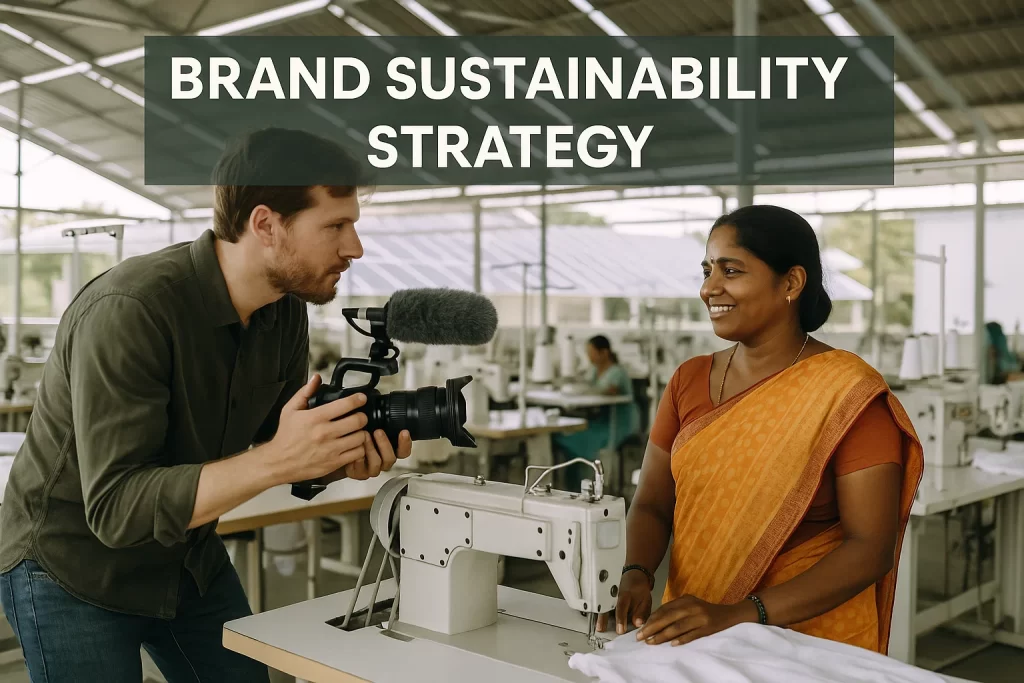
- Human Faces: Feature real employees, suppliers, or customers affected by your initiatives.
- Visual Proof: Use images, infographics, or behind-the-scenes videos to bring efforts to life.
- Consistency: Align the message across your packaging, website, social, retail, and customer service.
Real Brand Examples
- Unilever’s “Dirt Is Good” campaign connected environmental responsibility with parenting values.
- Ben & Jerry’s regularly tells stories about their climate activism and ingredient sourcing.
- Allbirds includes a carbon label on every shoe—turning sustainability into a conversation point.
Expert Quote
“McKinsey reports that brands who embed sustainability into customer experiences see 67% higher brand engagement.”
Case Studies: Brands That Got Sustainability Right
While strategy and storytelling are essential, nothing inspires trust and adoption like real-world proof. These brands didn’t just publish sustainability reports—they operationalized purpose, transformed industries, and built a new blueprint for brand identity.
1. Patagonia: Regenerative Branding in Action
Patagonia didn’t just preach sustainability—it redefined it. From asking customers to “buy less” to repair and resell programs, the brand embeds sustainable branding into every layer of its operations and identity.
- Sourcing: Uses organic cotton, recycled wool, and down traceability.
- Transparency: Shares entire supply chain maps and labor scores.
- Social Impact: Donates 1% of sales to grassroots environmental causes.
“We’re in business to save our home planet.” — Patagonia’s brand mission
2. Unilever: Multi-Brand ESG Integration
As a parent company to brands like Dove, Hellmann’s, and Seventh Generation, Unilever has implemented a unified ESG system. Key highlights include:
- Sustainable Living Brands grew 69% faster than the rest of the portfolio.
- Deforestation-free supply chains in palm oil sourcing.
- Waste reduction and circular packaging commitments.
Their success lies in making sustainability scalable across multiple sectors and consumer types.
3. Interface: Rebuilding a Brand from the Floor Up
This global flooring company is a hidden hero of the sustainable brand movement. Interface committed to becoming carbon negative by 2040, and has already:
- Reduced GHG emissions by 96% from 1996 levels
- Created the world’s first carbon-negative carpet tile
- Adopted a mission to “reverse global warming”—not just reduce harm
Visual Asset Idea
Chart titled “Brand Sustainability Matrix” comparing Patagonia, Unilever, and Interface across:
- Strategy Depth
- Transparency
- Environmental Impact
- Consumer Perception
Measuring the ROI of Brand Sustainability
For many executives, sustainability sounds like idealism without metrics—a “nice to have” that may not yield measurable returns. But that myth is collapsing fast. Leading brands are proving that a strong brand sustainability strategy can be quantified, tracked, and tied directly to profit, retention, and growth.
The Business Case in Numbers
- Brand Value Uplift: Kantar’s BrandZ study found that purpose-led brands grow at twice the rate of others.
- Customer Loyalty: IBM reported that 57% of consumers are willing to change habits and pay more for sustainable products.
- Risk Mitigation: Brands with poor ESG practices face higher legal, reputational, and operational risks—often hidden costs.
- Investor Attraction: ESG-positive brands receive better funding terms and higher valuation multiples.
How to Quantify ROI
- Customer Retention: Measure LTV (lifetime value) of sustainability-aware customers.
- Brand Equity Surveys: Use tools like RepTrak or YouGov to track brand perception shifts.
- Operational Savings: Track cost reductions from energy efficiency, material reuse, and process optimization.
- Revenue Attribution: Use campaign tracking to tie product sales to sustainability messaging.
Expert Quote
“Sustainability is no longer a cost center—it’s a growth lever. The brands measuring it right are outperforming on Wall Street and Main Street.” — McKinsey Quarterly, 2024
Challenges & Solutions in Executing a Brand Sustainability Strategy
Every great brand sustainability strategy starts with bold ambitions—but execution is where most companies hit friction. Whether due to budget constraints, internal resistance, or complexity, brands often underestimate the cultural, operational, and strategic shifts required.
Challenge 1: Internal Resistance
Leadership buy-in is the first hurdle. In many legacy organizations, sustainability is viewed as a cost, not a growth lever.
Solution
Use materiality assessments and market benchmarking to tie sustainability goals to financial performance. Show how competitors are outperforming because of—not despite—their green investments.
“We gained board approval for our climate initiatives only after showing our ESG risk score alongside our insurance premiums.” — Sustainability Director, Healthcare Company (2024 ESG Summit)
Challenge 2: Siloed Execution
When sustainability sits only in marketing or compliance, momentum dies in isolation.
Solution
Create cross-functional ESG task forces that include operations, procurement, HR, and brand. Appoint a Chief Sustainability Officer (CSO) or integrate ESG KPIs into CMO/COO roles.
Challenge 3: Measurement Confusion
Many brands feel stuck in “what do we measure?” or “we can’t prove impact.”
Solution
Start with available tools like Sustain.Life, GRI Standards, or B Impact Assessment. Begin tracking 5–10 core indicators (carbon, water, diversity, ethical sourcing, employee satisfaction).

Challenge 4: Short-Termism
Brands feel pressure to show quarterly wins, yet sustainability pays off long-term.
Solution
Adopt a “dual ROI lens”: report both immediate wins (like packaging cost savings) and long-term indicators (like employee retention or brand equity). Use storytelling to keep stakeholders emotionally invested in the journey.
Challenge 5: Fear of Imperfection
Some brands avoid public sustainability messaging out of fear they’ll be called out for hypocrisy.
Solution
Embrace transparency. Share the journey, the stumbles, the roadmap. According to GlobeScan, brands that admit imperfection but communicate progress have 3X more stakeholder trust.
FAQ
1. What is a brand sustainability strategy?
A brand sustainability strategy is the integration of environmental, social, and governance (ESG) principles into every facet of a brand’s identity, operations, and communication. It ensures that purpose and profit align, creating value for both society and shareholders.
2. How can a brand avoid greenwashing?
Avoid vague language and back all claims with evidence. Use third-party certifications, detailed sustainability reports, and transparent supply chain disclosures. Most importantly, don’t overstate minor efforts—authenticity over optics always wins.
3. What are ESG factors in branding?
Environmental, Social, and Governance (ESG) factors include
- Environmental: Emissions, energy, materials
- Social: Labor practices, DEI, community engagement
- Governance: Ethics, transparency, accountability
They are quantifiable signals of your brand’s responsibility, used by investors, consumers, and regulators to assess impact.
4. What are examples of successful sustainable brands?
- Patagonia: Circular economy champion with transparency and activism
- Unilever: Integrated ESG across a multi-brand portfolio
- Interface: Carbon-negative goals and material innovation
- Allbirds: Carbon labeling on every product
5. How to market eco-friendly products effectively?
Use sustainability storytelling. Focus on your brand’s why, show the human and environmental impact, and align your marketing with real operational integrity. Let your product’s lifecycle be the story, not just the label.
Conclusion
A robust brand sustainability strategy is no longer a branding trend—it’s the future of resilient, purpose-driven business. It enables companies to align with eco-conscious consumer values, stand up to increasing ESG scrutiny, and unlock long-term brand equity and loyalty.
From redefining supply chains to recalibrating messaging, the brands that win tomorrow are those taking action today. Whether you’re a global giant or a local startup, embedding sustainability isn’t just about doing good—it’s about staying relevant, accountable, and profitable.
The roadmap is clear:
- Build authentic purpose
- Measure what matters
- Communicate with transparency
- Evolve through partnerships and feedback
- Commit to a journey, not a one-off campaign
Because in the next era of branding, sustainability isn’t an accessory.
It is the identity.