
Achieving Brand Narrative Consistency Across Channels & Touchpoints
Introduction
In today’s hyper-connected landscape, Brand Narrative Consistency is no longer a nice-to-have—it’s a necessity. With customers navigating countless touchpoints from digital screens to physical shelves, even minor misalignments in brand voice or visuals can erode trust and reduce engagement. According to a Lucidpress study, brands that maintain a consistent presentation see an average revenue increase of 33%.
What makes consistency so elusive? For many organizations, it’s not a lack of creativity but a lack of execution across channels. That’s where the intersection of Brand Strategy and execution becomes crucial. Crafting a compelling narrative is only half the battle—translating that narrative seamlessly across websites, packaging, social content, internal documents, and even customer service scripts is where the real challenge lies.
As Octopus Marketing articulates in their guide on executing winning brand strategies, brand excellence happens when planning is embedded with executional rigor. It’s not just about defining who you are—it’s about reinforcing that identity consistently, from your homepage headline to your in-store greeting.
This article dissects why consistency matters, where breakdowns often happen, and how your organization can build a bulletproof system for scaling your brand story—internally and externally. Whether you’re an emerging startup or an enterprise struggling with global brand cohesion, what follows is your step-by-step playbook.
Why Brand Narrative Consistency Matters in Modern Marketing
Consumers today are not just buying products—they’re buying into stories, identities, and beliefs. In this context, Brand Narrative Consistency becomes the glue that holds together every customer interaction across a fragmented ecosystem of touchpoints. Whether someone is reading your blog, seeing a social ad, unboxing a product, or chatting with your customer service, each moment must feel like part of the same cohesive story.
The Cost of Inconsistency
An inconsistent narrative doesn’t just create confusion—it destroys credibility. Imagine seeing a playful tone on Instagram, a corporate voice on your website, and a robotic tone in your email support. The dissonance isn’t subtle. According to a report by Marq (formerly Lucidpress), consistent branding can increase revenue by up to 33%—but only 1 in 4 companies say their brand is presented consistently.
Consumers need to feel anchored. Without a unifying brand story, they lose track of who you are, what you stand for, and why you matter. This becomes even more critical when dealing with complex buyer journeys or multi-region brand operations. When your brand voice fluctuates, your identity dilutes.
Building Trust Through Familiarity
Consistent brand messaging reinforces trust. It gives customers a sense of reliability and professionalism. When messages align across digital platforms, packaging, and real-world interactions, it creates a seamless experience—an experience that consumers will remember and prefer.
According to branding expert Denise Lee Yohn, “Your brand is a promise, and consistency is how you keep that promise.” Each time your narrative aligns with what came before, it deepens emotional engagement. Conversely, when your brand feels different depending on where or how people interact with it, you start to feel unreliable.
Digital Amplifies the Need
The rise of omnichannel marketing has only heightened the importance of brand narrative consistency. Brands are now operating across more channels than ever—Instagram stories, LinkedIn thought leadership posts, in-app messages, e-commerce product pages, YouTube ads, and more. This complexity makes consistent execution not just a marketing challenge but a business necessity.
Moreover, algorithms reward consistency. Social and search platforms are increasingly tuned to cohesive brand strategy and execution, with structured content plans and voice alignment leading to better visibility and engagement.
Competitive Advantage
Most competitors are not failing because they lack good ideas—they’re failing in execution. This is your edge. A brand that shows up consistently across all touchpoints conveys professionalism, authority, and care. Over time, this unified voice becomes part of your brand equity—a signal to customers that they can trust what you say, do, and offer.
In the words of one Reddit user frustrated with inconsistency:
“I don’t care how fancy your ads are if your customer service doesn’t even sound like they work for the same company. That’s a red flag.”
This sentiment is echoed across consumer forums and reviews. In the experience economy, perception is reality—and reality is built on narrative consistency.
Identifying Breakdowns: Common Gaps in Brand Story Alignment
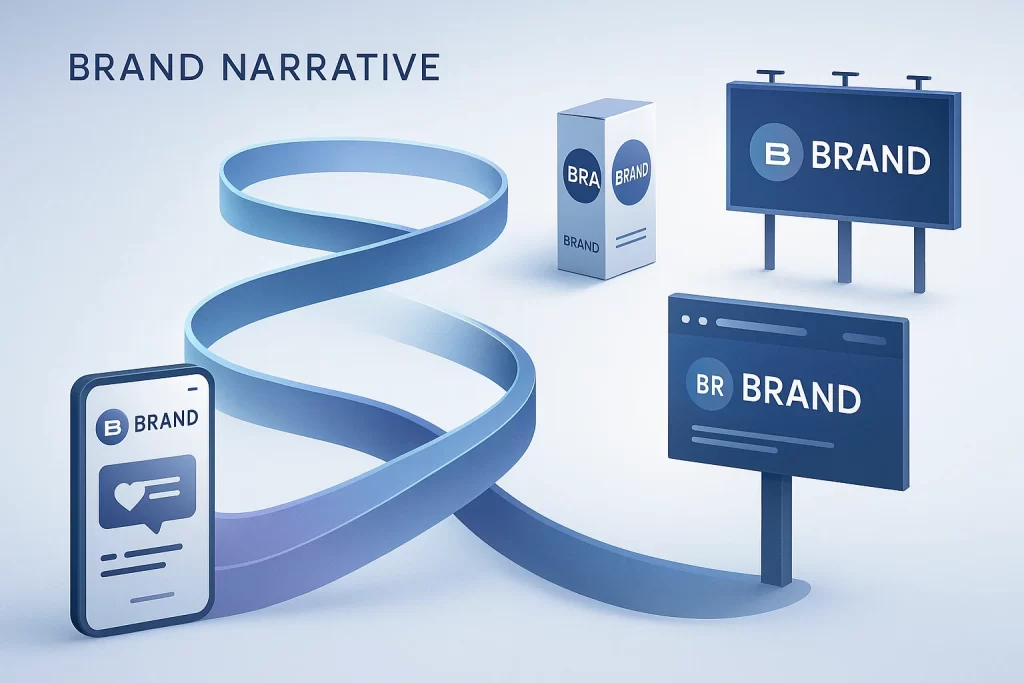
Brand inconsistency doesn’t happen overnight—it creeps in quietly through channel silos, rapid growth, and lack of governance. Even brands with clear guidelines often struggle to maintain narrative cohesion across departments, regions, and digital versus physical touchpoints. Recognizing these gaps is the first step to closing them.
1. Digital vs. Physical Messaging Misalignment
One of the most common fractures occurs between digital campaigns and physical experiences. A brand might portray itself as fun and casual on social media but come across as sterile and formal in retail stores or packaging.
This gap erodes trust. Customers who are drawn in by playful Instagram posts expect the same tone when they open the package or interact with staff in-store. When that experience doesn’t match, they feel deceived—even if unintentionally.
2. Departmental Silos and Internal Mismatches
Marketing might have one vision. Product another. Customer service yet another. Without cross-functional narrative alignment, customers receive fragmented stories.
According to a 2024 Forrester report, 60% of companies say internal silos are their top obstacle to delivering a consistent customer experience.
This gap is often due to lack of brand strategy execution, where teams operate from isolated briefs instead of a shared narrative framework.
3. Regional and Localization Inconsistencies
Global brands often run into inconsistency due to poor localization. Translations may be technically correct but tone-deaf or off-brand. A brand that sounds aspirational in English might feel overly formal or distant in another language.
This disconnect can make customers feel like afterthoughts. Localization isn’t just about words—it’s about maintaining tone, voice, and cultural relevance while respecting the brand’s core identity.
4. Agency vs. In-House Disparities
Many brands use a mix of agencies and internal teams. But without centralized governance, each content producer interprets the brand differently. One agency might highlight innovation; another, reliability.
Without guardrails, the brand turns into a game of telephone.
5. Growth Without Scalability
Fast-growing startups often suffer from difficulty scaling brand message. In the early days, one founder may manage all messaging. As teams expand, so do interpretations of the brand. Without a documented voice, inconsistent messaging becomes the norm.
“We went from 10 people to 100 in a year,” a startup head of marketing shared. “Our Slack channels had 20 different elevator pitches by Q3.”
Expert Quote
“You don’t scale your brand with new tools—you scale it with disciplined narrative consistency,” says Julia Cheek, CEO of Everlywell.
Crafting a Unified Voice Across Channels
A unified voice isn’t about sounding the same everywhere—it’s about sounding like you everywhere. The key to Brand Narrative Consistency lies not in robotic repetition, but in deliberate cohesion. Whether it’s an Instagram caption or a keynote speech, your tone, language, and values should feel instantly recognizable.
What Is a Unified Voice?
Think of your brand’s voice as its personality. Are you bold and rebellious? Warm and nurturing? Analytical and trustworthy? Once defined, this personality must be reflected in everything from your ad copy to internal memos.
Defining Your Voice: The Brand Lexicon
Start by developing a brand lexicon—a set of preferred words, phrases, and stylistic decisions. For example:
- Say “customers” not “clients”
- Use active language (“We build…” instead of “Our platform enables…”)
- Emojis? Only in social media.
- Jargon? Only when speaking to technical audiences.
The goal is not uniformity but strategic cohesion. Your brand strategy should define what tone looks like in different contexts.
Expert Citation
“Brand voice isn’t just about tone; it’s about trust,” says Ann Handley, author of Everybody Writes. “Consistency creates familiarity, and familiarity builds trust.”
Building Templates, Not Scripts
To execute your voice, give teams flexible tools: email templates, social media post structures, internal communication guidelines. These ensure consistency while leaving room for creativity.
Consider a modular approach:
- Core Message: Stays consistent
- Tone Modifier: Adjusts for audience or medium
- Call to Action: Tailored per channel
This modularity helps avoid robotic messaging while keeping everything within the brand umbrella.
Cross-Department Collaboration
Marketing doesn’t own the brand voice alone. Sales, HR, Product, Customer Support—all departments shape perception. Facilitate collaboration by embedding brand voice training in onboarding and building cross-team playbooks.
“Our internal Slack now has a #brand-voice channel,” shares one Head of Brand. “People drop in copy drafts, and others give feedback. It’s like crowd-sourced consistency.”
Best Practices for Touchpoint Integration: Digital, Physical & Internal
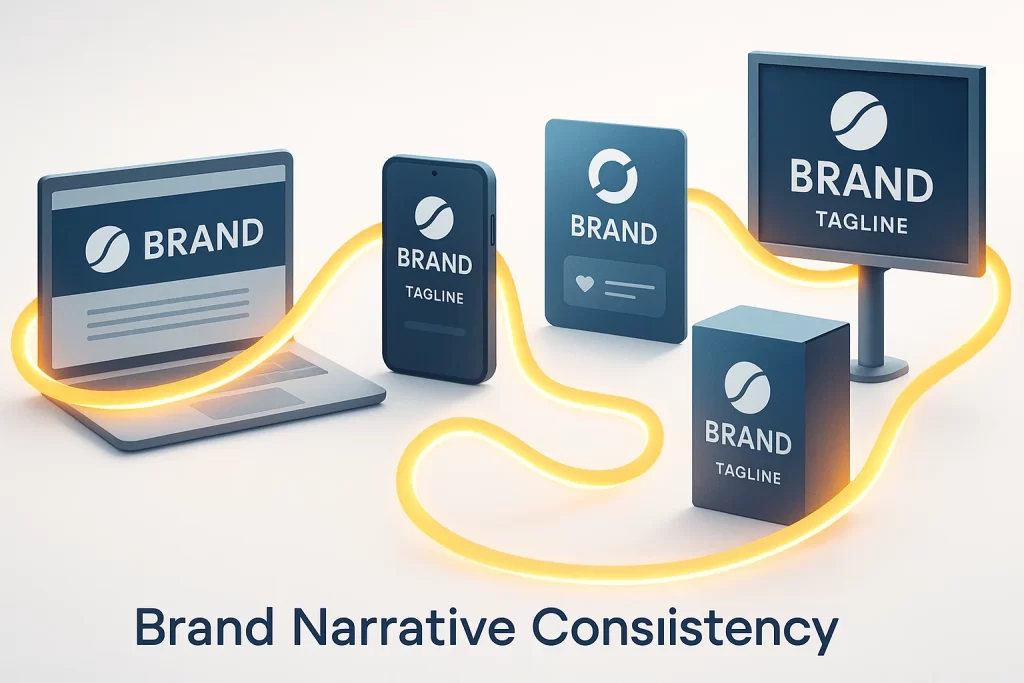
Building Brand Narrative Consistency across all touchpoints requires more than a brand book—it demands intentional, repeatable systems. Consistency isn’t just about messaging; it’s about the total experience a customer has with your brand, from digital discovery to physical interaction and internal culture.
This section presents proven methods for aligning digital, physical, and internal touchpoints—ensuring that your brand strategy and execution are unified and scalable.
Digital Touchpoints: Website, Social, Email
Digital channels are often where brands make their first impression—and first mistakes. The tone, visuals, and messaging must reflect the same values across your:
- Website: Is your mission clear? Does the homepage tone match your social ads?
- Email Marketing: Are subject lines and copy aligned with your social or product language?
- Social Media: Is the voice the same across platforms, or do you switch personas?
Example Strategy
- Build “channel voice” matrices that map how tone shifts slightly from LinkedIn (professional) to Instagram (conversational) while staying rooted in the same brand DNA.
- Use shared content calendars and caption templates to keep posts in-sync across teams.
Expert Quote
“Digital chaos kills narrative clarity,” says Neil Patel. “One mixed message in a Facebook ad can undo weeks of strategic positioning.”
Physical Touchpoints: Packaging, Retail, Events
While digital dominates, physical brand expressions carry high emotional weight. Imagine ordering a product marketed as “premium” online—then receiving it in cheap, unbranded packaging. That dissonance kills trust.
Your physical brand storytelling should include
- Retail Displays: Is the look and language consistent with online tone?
- Packaging: Does copy mirror digital messaging pillars?
- In-Person Interactions: Are staff trained in the same values you promote online?
Solving Key Challenges : inconsistent customer experience
Tip: Align physical artifacts with digital journeys. For example, include QR codes on packaging that drive customers to personalized onboarding videos or community groups.
Internal Touchpoints: Culture, Communication, Onboarding
You can’t deliver external consistency without internal alignment. Your employees are brand storytellers—every conversation, Slack message, or email contributes to the brand experience.
Best practices:
- Brand Onboarding Kits for new hires: Include tone guidelines, history, and “how we talk.”
- Internal Newsletters: Use the same voice as customer comms.
- Leadership Messaging: Ensure executive updates model brand values and tone.
As one Quora user posted
“Our CEO says we’re about empowerment—but every internal memo is cold and top-down. That disconnect bleeds into how we talk to customers.”
Internal misalignment leads to external inconsistencies. Closing this loop helps the brand feel authentic, not manufactured.
Expert Citation
“Culture is the root of brand consistency,” notes Harvard Business Review. “Externally polished but internally chaotic brands often crumble.”
Measuring Narrative Consistency: KPIs & Audits
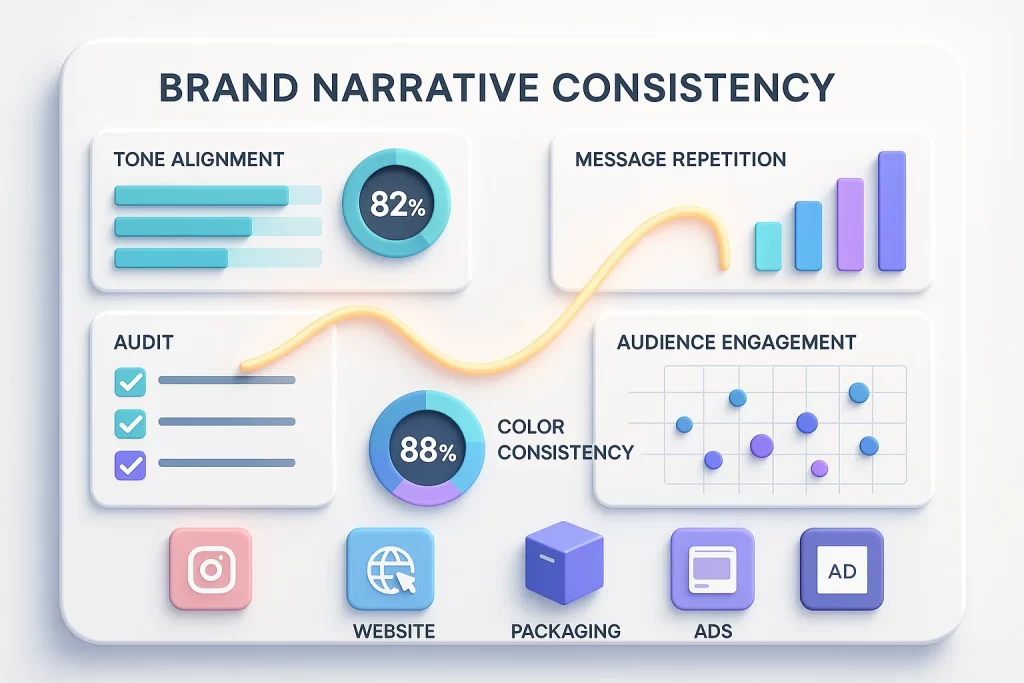
If you can’t measure it, you can’t manage it. Brand Narrative Consistency isn’t a fluffy ideal—it’s a measurable discipline. Without visibility into how well your messaging aligns across touchpoints, brand teams are flying blind. This section explores how to translate narrative alignment into trackable KPIs, audit frameworks, and feedback loops that ensure your brand voice stays on course.
Why Measurement Matters
Narrative consistency impacts key business metrics—customer loyalty, engagement, perception, and conversion. But too often, brand efforts are measured only by awareness, not alignment. A strong brand may be known—but is it consistently understood?
Core KPIs for Measuring Brand Narrative Consistency
These metrics provide a real-world view of how aligned (or fractured) your brand voice really is:
- Message Recall Rate: How many users remember and repeat key brand messages post-campaign?
- Tone Consistency Index: A scoring system that evaluates tone alignment across social, email, and customer support.
- Brand Voice Audit Score: Manual or AI-led audit assessing copy across 10+ channels for consistency to brand guidelines.
- Internal Brand Alignment Score: Run internal surveys asking staff if they can explain the brand story, tone, and purpose.
“We discovered 48% of employees described the brand differently in onboarding interviews,” shared a brand lead in a recent Reddit AMA. “We realized our strongest consistency issue wasn’t external—it was internal.”
Conducting a Brand Narrative Audit
A structured audit reveals where inconsistencies are undermining your brand. Here’s a basic 5-step model:
- Select Channels: Choose your top 5–10 customer-facing platforms.
- Gather Messaging Samples: Collect 2–3 recent messages from each (e.g., website, ads, packaging, Instagram, support chats).
- Evaluate Against Brand Voice Guidelines: Score each for tone, message alignment, terminology use.
- Calculate Overall Consistency Score: Assign weight to high-priority channels.
- Recommend Adjustments: Flag deviations, and suggest fixes.
Pro Tip: Use an outside facilitator or agency for audits to avoid internal bias.
Tools to Streamline Consistency Monitoring
To support ongoing measurement, leverage these platforms:
- Frontify / Brandfolder: Ensure access to updated assets and tone guidance.
- Grammarly Business: Custom brand tone profiles to flag off-brand language.
- Qualtrics: Measure internal and external brand perception through surveys.
- Notion or Airtable: Build shareable audit checklists and dashboards.
Expert Quote
“Consistency isn’t just creative—it’s operational,” says Michael Bierut, Partner at Pentagram. “And like any operation, it must be monitored and optimized.”
Addressing Scale: From Local to Enterprise
Maintaining Brand Narrative Consistency at scale is one of the greatest challenges facing brand leaders. While small businesses can manage consistency with a single marketing lead and shared Google Docs, large enterprises juggle global teams, regional adaptations, multiple agencies, and constantly evolving campaigns. Without a strategic system, narrative alignment collapses under its own weight.
This section explores scalable methods to protect brand integrity as you grow—whether you’re expanding across markets, departments, or digital ecosystems.
The Challenges of Scaling Brand Consistency
At scale, the risks compound:
- Dozens of stakeholders interpret the brand independently.
- Multiple content creators (in-house, freelancers, agencies) dilute message clarity.
- Regional teams localize content without clear tone or values alignment.
- Growth speed outpaces brand onboarding, especially after funding rounds or M&A.
These challenges often result in a disjointed customer experience. The brand becomes recognizable—but not cohesive.
Customer Challenges: difficulty scaling brand message
Build Governance, Not Just Guidelines
Brand books are helpful—but alone, they aren’t enough. Scalable consistency comes from governance: decision-making systems, approval workflows, and escalation paths that protect the narrative without bottlenecking creativity.
Recommended Framework
- Brand Council: A cross-functional team that owns brand voice and alignment.
- Guardrail Policies: What’s flexible vs. fixed across channels, regions, and formats.
- Tiered Approval: High-impact assets (e.g., national TV ads) go through stricter review than social posts.
Local vs. Global: Smart Localization
Brands often face the “localize or lose” dilemma: how to adapt for regional markets without losing your core identity.
Best Practice
- Establish global messaging pillars that stay consistent.
- Allow regional freedom in tone, visuals, and idioms—but within a sandbox.
- Use shared asset libraries (e.g., Google Drive, DAMs) with pre-approved copy and visuals.
Expert Quote
“The trick to scaling brand narrative isn’t cloning—it’s harmonizing,” says Wally Olins, co-founder of Wolff Olins. “The music changes, but the melody stays.”
Empower Teams With Playbooks
Train for scale. Develop playbooks that go beyond brand rules to show how to apply brand voice in real situations.
Example modules
- How to write a support email in our tone
- How to launch a regional campaign aligned with brand values
- How to localize humor without losing voice
Use real examples (both good and bad) to make learning practical.
Case Studies: Successes & Missed Opportunities
Nothing illustrates Brand Narrative Consistency better than real-world examples—brands that mastered cohesion across every touchpoint and those that faltered under the weight of misalignment. These stories reveal how a strong narrative system can amplify a brand’s identity—and how cracks in execution can unravel even the best strategy.
Success: Airbnb’s Seamless Global Brand Story
Airbnb is a masterclass in unified brand storytelling. Whether you’re reading their About page, scrolling through their Instagram, receiving a confirmation email, or attending a Superhost training session, the message is always the same: “Belong Anywhere.”
They embed this narrative at every touchpoint:
- Tone: Friendly, inclusive, inspiring
- Design: Minimalist, warm, people-focused
- Internal Culture: Employees are “belonging ambassadors”
Their internal playbook aligns marketing, product, customer service, and even legal messaging around shared principles. Regional teams adapt language—but not message.
Expert Commentary
“Airbnb isn’t just telling a story—they’ve created a worldview,” notes branding author Marty Neumeier. “That’s how you scale narrative without losing soul.”
Failure: Uber’s Pre-2017 Disjointed Identity
Before its 2017 rebrand, Uber struggled with narrative fragmentation. Ads pitched it as a lifestyle brand. The app felt transactional. PR campaigns lacked emotional resonance. Internally, employees described the culture as disconnected from the external image.
One of the biggest breaks? Driver experience vs. consumer messaging. Riders were promised convenience and respect, while drivers reported inconsistent support and tone-deaf policies.
The result: a confused public image, plummeting trust, and mounting backlash.
A Reddit thread summed it up:
“Uber says one thing to riders and another to drivers. It’s like they’re running two brands—and both are cracking.”
The 2017 rebrand shifted to a more human-centered narrative, finally aligning internal and external voices under the theme of “movement.”
Startup Example: Notion’s Quiet Clarity
Notion, the productivity startup, maintains narrative consistency by staying consistently understated. From minimalist design to clear copy and helpful onboarding, everything feels like part of the same ecosystem. Their tone—calm, clever, collaborative—shows up on:
- Website tutorials
- Twitter memes
- Email onboarding
- In-app tooltips
- Developer documentation
They even extend brand narrative to how employees communicate on Slack and Zoom.
“It’s the first SaaS that feels like a person wrote it,” shared a fan on Product Hunt.
Framework: The Narrative Consistency Playbook
Achieving Brand Narrative Consistency isn’t about guesswork—it’s about process. Brands that scale without fracturing their voice use intentional, repeatable systems. This section outlines a 5-part Narrative Consistency Playbook that any brand—startup or enterprise—can use to align every message, medium, and market.
Each pillar of the playbook is designed to address key breakdowns in voice, tone, messaging, and execution across channels.
1. Governance: Who Owns the Brand Voice?
Without ownership, consistency crumbles. Governance defines who makes final decisions, who provides guidance, and how updates get communicated.
Tactics:
- Create a Brand Council with reps from Marketing, Product, Support, and HR
- Use an internal wiki or Notion doc to document roles, reviews, and exceptions
- Set a quarterly cadence for narrative reviews
“We don’t need more voice guidelines. We need brand referees,” said a VP of Marketing on a recent branding podcast.
2. Messaging Pillars: Define the Core Story
Before you can align messaging, you must define it. Messaging pillars are the core truths your brand stands on—values, purpose, voice traits, and key themes.
Example Messaging Pillars
- Empower through clarity
- People-first innovation
- Trust built through transparency
All future brand copy, from job posts to billboard headlines, should reflect these.
3. Templates & Modular Assets
To prevent chaos without stifling creativity, give teams modular tools—not rigid scripts.
Assets to Include
- Headline starter packs
- Voice dos & don’ts
- Channel-specific message maps
- Brand vocabulary list
Expert Quote
“Great brand systems feel like jazz—structured enough to guide, open enough to riff,” says brand strategist Emily Heyward.
4. Training & Onboarding
Don’t bury your voice guide in PDFs. Train people to live it.
- Run quarterly workshops for all content creators
- Include tone exercises in onboarding
- Add brand voice checkpoints in team reviews
Customer Challenges Solved: internal confusion and scaling difficulties
5. Feedback & Audits
Your playbook needs upkeep. Use regular feedback loops and performance audits to keep narrative health in check.
- Quarterly consistency audits
- Internal surveys: “Can you describe our voice in 5 words?”
- Analyze top-performing content for alignment with tone pillars
FAQ
1. How can I ensure brand narrative consistency across digital and physical channels?
Start with a core messaging playbook. From there, audit each touchpoint to align tone, terminology, and visual identity. Brands often lose cohesion when internal teams and vendors interpret messaging without shared guardrails.
“Our website feels premium, but our packaging looks like a budget brand. We keep confusing customers.”
To solve this, centralize brand decisions with a governance model and build channel-specific guidelines that reflect your master brand story.
2. What tools can help me monitor unified voice in marketing?
Several platforms can help enforce and track consistency
- Grammarly Business: Custom tone profiles
- Frontify / Brandfolder: Store and distribute assets and tone docs
- Notion: Great for collaborative brand wikis
- Qualtrics: For running internal alignment surveys
Automated tools help scale governance, but regular human-led audits are just as critical.
3. Why do some companies struggle with scaling brand narrative consistency?
Because they rely on documents, not systems. A PDF brand guide won’t protect your voice as teams grow. You need:
- A brand council to enforce tone
- Shared content tools across departments
- Continuous training and onboarding
- Feedback loops to catch drifts
4. Can internal teams create consistent messaging without stifling creativity?
Yes, and they should. The secret is modularity. Provide content teams with:
- Voice-aligned message starters
- Real examples (good and bad)
- Do/Don’t lists for tone and language
Creativity thrives when there’s a sandbox. Give teams structure, not scripts.
5. What’s the first step to fixing fragmented brand messaging?
Run a brand narrative audit across your top 5–10 touchpoints:
- Collect real copy from each
- Compare against your core tone and message pillars
- Score and highlight inconsistencies
- Use that data to build your training and governance roadmap
You can’t fix what you haven’t diagnosed.
Conclusion
In a world of infinite channels and fleeting attention, Brand Narrative Consistency is your most durable competitive advantage. It’s the thread that connects every headline, onboarding email, packaging touchpoint, and customer support interaction. And when executed with precision, it transforms your brand from a set of assets into a living, breathing identity.
Whether you’re a startup scaling fast or an enterprise navigating global expansion, the principles remain the same: define your story, govern your tone, train your people, and audit relentlessly. Consistency doesn’t mean sounding the same everywhere—it means sounding like you everywhere.
So here’s your call to action: run an audit. Identify the cracks. And start building your narrative consistency playbook today. Because when your brand speaks with one voice, people listen—and remember.