
Web Design
Web Design Services
Web Design Services
Strategic UX Thinking
We design user journeys around clarity, usability, business goals, and meaningful customer interactions.
Distinctive Visual Systems
We create cohesive UI, typography, color, layouts, and brand elements that strengthen digital recognition.
Brand-Led Experiences
Every interface element supports your identity, positioning, audience expectations, and digital presence.
Why Choose Us
Why Choose Our Web Design Services
“Octopus transformed our digital identity into a clean, intuitive experience that finally feels like our brand”
Daniel Mercer,
― Brand Director
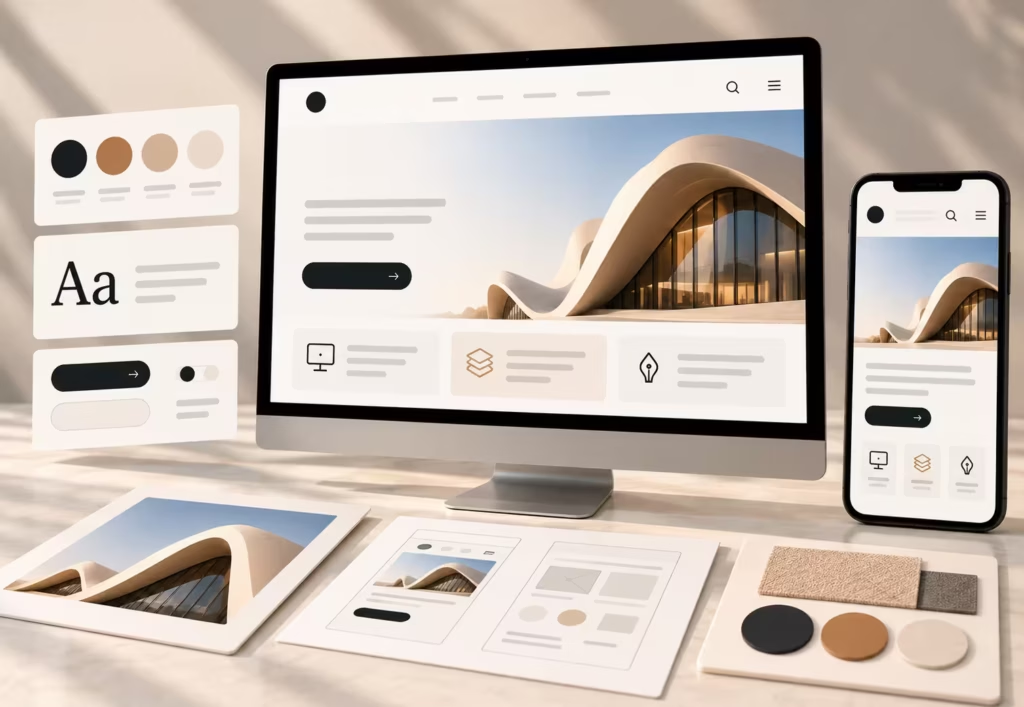
UX Built Around Real Users
We create intuitive UX experiences by combining user needs, business objectives, information architecture, interaction patterns, and usability principles into one clear digital journey.
- User-first thinking
- Clear user journeys
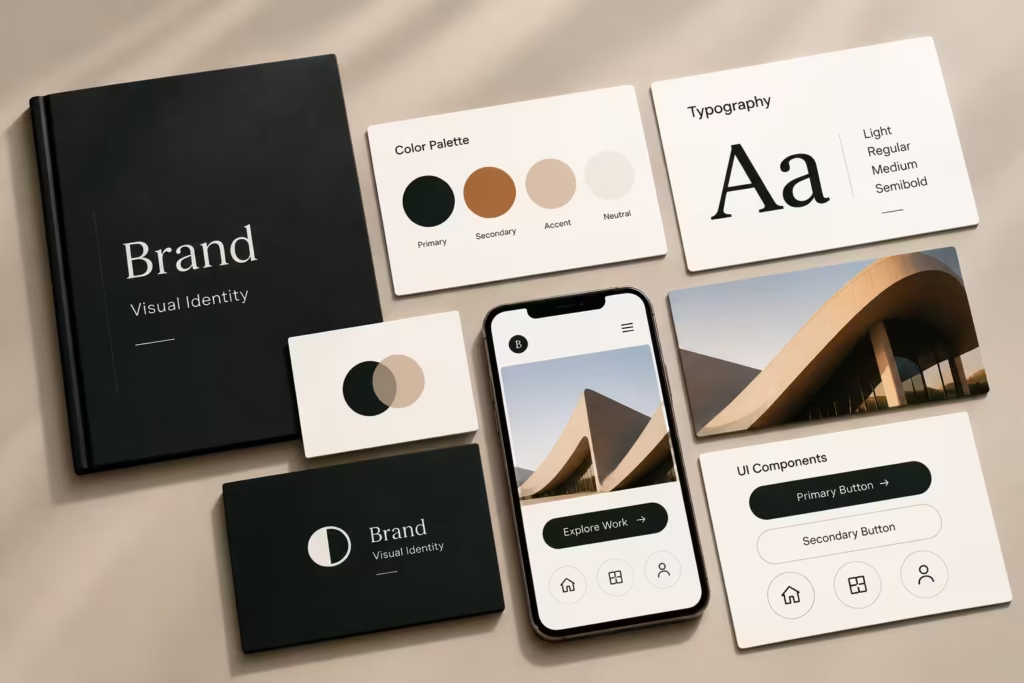
UI That Strengthens Your Brand
We develop polished interfaces where typography, color, imagery, components, spacing, and visual hierarchy work together to create a recognisable and consistent brand experience.
- Consistent UI systems
- Strong visual hierarchy
Our Services
Explore Our Web Design Services
Explore our focused web design services across UX, UI, branding, visual identity, interaction design, and digital experience strategy. Each service is designed to solve a specific experience or brand challenge while maintaining one cohesive creative direction.
UX Design Strategy
We define user needs, journeys, information architecture, and experience principles to create intuitive digital products.

UI Design
We create polished interfaces using visual hierarchy, typography, colour, spacing, components, and interaction patterns.

Website UI Design
We design responsive website interfaces that communicate your brand clearly while making navigation simple and engaging.
Brand Identity
We shape cohesive visual identities that establish recognition through strategic design systems and consistent brand expression.
Visual Identity
We develop colour, typography, imagery, graphics, and visual rules that give your digital presence a distinctive character.

Responsive Design
We create adaptable interfaces that maintain usability, hierarchy, and visual consistency across desktop, tablet, and mobile screens.
Web Design Services
Web Design: How UX, UI and Branding Shape Better Digital Experiences
A website is more than a collection of pages, images, and buttons. It is a digital experience where users discover a brand, understand its value, explore its offerings, and decide whether they want to engage further. Effective web design brings together user experience (UX), user interface (UI), branding, visual identity, content structure, and interaction design to make that experience clear and purposeful.
As businesses compete for attention across increasingly crowded digital spaces, having a visually attractive website is no longer enough. Users expect websites to be intuitive, consistent, responsive, and aligned with the identity of the brand behind them. A strong web design strategy considers both how a website looks and how it works.
What Is Modern Web Design?
Modern web design is the strategic process of creating digital experiences that balance usability, visual communication, brand identity, and user expectations. It includes everything from information architecture and wireframes to interface design, typography, colour systems, interactions, and responsive layouts.
The goal is not simply to make a website look modern. The goal is to create an experience where users can quickly understand what a business offers and move naturally through the website.
This requires a combination of creative thinking and structured design decisions. Every component, from navigation to typography, should have a clear purpose. When UX and UI work together with branding, the result is a website that feels coherent rather than simply decorated.
Why UX Matters in Web Design
User experience is the foundation of an effective digital product or website. UX design focuses on how users interact with a digital experience and whether they can complete their intended tasks without unnecessary confusion or friction.
A well-planned UX experience begins by understanding users. What information are they looking for? What questions might they have? What actions do they need to take? Where could they encounter friction?
Answering these questions helps designers structure the website around real user needs rather than assumptions.
UX design can involve user research, customer journeys, information architecture, navigation planning, wireframing, interaction design, usability considerations, and prototype testing.
For example, a website may contain excellent content, but if users cannot easily find it, the experience is weakened. Similarly, a website can have beautiful visuals but still create frustration if its navigation is unclear.
Good UX reduces unnecessary complexity and creates a logical path through the experience.
The Role of UI Design
While UX focuses heavily on how an experience works, UI design focuses on how that experience is visually communicated and interacted with.
UI design includes typography, colours, buttons, forms, cards, navigation elements, spacing, imagery, icons, grids, components, and other interface elements.
A strong UI system creates visual hierarchy. Users should be able to distinguish between primary and secondary information, understand which elements are interactive, and recognise important actions.
Consistency is equally important. Buttons should behave and appear consistently. Typography should establish a clear hierarchy. Colour should have a defined role. Spacing should create structure rather than visual noise.
When these elements work together, the interface becomes easier to understand.
UX and UI Need to Work Together
UX and UI should not be treated as completely separate disciplines. A website can have strong UX planning but a confusing interface, or an attractive UI that creates a difficult user journey.
The strongest digital experiences connect the two.
UX establishes the structure and logic of the experience. UI communicates that structure visually and makes interactions easier to understand.
Consider a website navigation system. UX determines how the navigation should be organised and what users need to access. UI determines how the navigation is visually presented, how active states appear, how typography communicates hierarchy, and how the menu behaves across different devices.
Together, these disciplines create a more complete experience.
Branding Is Part of the Digital Experience
Branding should extend beyond a logo. A website is one of the most visible expressions of a brand, which makes digital brand consistency important.
Brand identity can include typography, colour palettes, imagery, graphic language, iconography, layouts, tone, and visual principles.
When these elements are applied consistently across a website, users receive a stronger sense of recognition and continuity.
A financial company may require a different visual language from a creative studio. A technology business may need a different interface approach from a luxury brand. The design should reflect the positioning, audience, personality, and expectations associated with the business.
This is why web design should begin with brand understanding rather than simply selecting a visual style.
Building a Strong Visual Identity
Visual identity gives a brand a recognisable presence. It establishes rules for how the brand appears across digital and physical touchpoints.
For websites, this can influence everything from the colour system and typography to photography, illustration, graphic elements, and interface components.
A well-developed visual identity provides designers with a framework rather than forcing every page to be designed from scratch.
This creates consistency while still allowing individual pages and sections to communicate different types of information.
The objective is not visual repetition. It is visual coherence.
The Importance of Design Systems
As websites and digital products grow, maintaining design consistency becomes more challenging. A design system helps solve this problem by defining reusable components, patterns, guidelines, and visual rules.
A design system can include buttons, form elements, cards, navigation patterns, typography styles, colour tokens, spacing rules, icons, and interaction states.
Instead of creating every interface element independently, designers can work from a shared framework.
This makes the experience more consistent and can also make collaboration between designers, developers, and other teams more efficient.
For businesses managing multiple digital products or large websites, a design system can become an important part of long-term digital design governance.
Wireframes: Creating Structure Before Visual Design
Wireframes help establish the structure of a page before detailed visual design begins.
They allow teams to consider content hierarchy, page structure, navigation, functionality, and user flow without becoming distracted by colours, imagery, or decorative elements.
This makes wireframing a valuable part of the UX process.
A wireframe can reveal structural problems early. If important information does not have an appropriate place on the page, it is better to identify that issue during planning than after the visual design has been completed.
Wireframes therefore create a foundation for more focused UI design.
Prototyping Digital Experiences
Prototypes allow teams to explore how a digital experience could work before development.
An interactive prototype can demonstrate navigation, page transitions, interface states, interactions, and user journeys.
This creates a more tangible way to review design concepts. Stakeholders can experience the proposed journey rather than interpreting static design screens alone.
Prototyping can also help identify usability issues and opportunities for refinement before development resources are committed.
The purpose is not to create unnecessary complexity. It is to create enough interaction to validate important experience decisions.
Responsive Web Design
Users access websites across desktops, laptops, tablets, and smartphones. Responsive design ensures that the experience adapts to different screen sizes and contexts.
Responsive design involves more than shrinking a desktop layout. Content hierarchy, navigation, typography, spacing, imagery, and interactive elements may need to change across screen sizes.
A navigation system that works well on a large desktop display may require a different interaction pattern on mobile. Similarly, a complex multi-column layout may need to become a structured single-column experience.
The objective is to maintain clarity and usability regardless of the device being used.
Designing for Visual Hierarchy
Visual hierarchy helps users understand what matters first.
Size, colour, contrast, spacing, typography, positioning, and imagery can all influence hierarchy.
A strong hierarchy allows users to scan a page and quickly identify the most important information.
For example, a page heading should generally be distinguishable from supporting text. Primary actions should be visually identifiable. Supporting information should not compete unnecessarily with key messages.
Without hierarchy, even a well-designed page can feel overwhelming.
Good visual design creates a clear relationship between elements.
Typography and Digital Branding
Typography plays a major role in both usability and brand expression.
Font selection can influence personality, readability, hierarchy, and recognition. However, choosing a visually interesting typeface is only one part of typography design.
A digital typography system should define appropriate sizes, weights, line heights, spacing, and hierarchy for different content types.
Headings, subheadings, body text, labels, navigation, and interface elements should work together as a coherent system.
Typography therefore sits at the intersection of branding and usability.
Colour Strategy in UI Design
Colour can communicate hierarchy, identity, emphasis, and interaction.
A brand colour may be used for primary actions, while neutral colours can structure backgrounds and supporting content. Accent colours can draw attention to selected states or important information.
However, effective colour systems require discipline.
Using too many colours can weaken hierarchy and make interfaces feel inconsistent. A defined colour system creates greater control over the visual experience.
Colour choices should also support readability and accessibility, ensuring that important content remains clear across different contexts.
Creating Better Digital Interactions
Interaction design considers what happens when users engage with interface elements.
Buttons, menus, forms, hover states, transitions, loading states, error messages, and feedback mechanisms all contribute to the experience.
Good interaction design helps users understand what is happening.
For example, when a user submits a form, the interface should provide meaningful feedback. When a navigation item is selected, its state should be recognisable. When an action cannot be completed, the interface should communicate the issue clearly.
These details may appear small individually, but together they shape the quality of the overall experience.
Designing Around Business and User Goals
Good web design needs to consider both user needs and business objectives.
A website may need to communicate a brand, explain services, support product discovery, generate enquiries, educate visitors, or provide access to information.
These objectives should not be treated as separate from UX.
Instead, the experience should make it easy for users to understand the value being presented and take relevant next steps.
This requires strategic decisions about information hierarchy, navigation, content structure, visual emphasis, and interaction.
Design should support the business without creating unnecessary friction for the user.
Why Consistency Matters
Consistency creates familiarity.
When users encounter the same visual language, interaction patterns, terminology, and interface behaviour throughout a website, they spend less effort learning how each new section works.
Consistency also strengthens brand recognition.
This does not mean every page should look identical. Different pages can have different purposes and structures while still belonging to the same visual and interaction system.
A consistent design language creates the connection between those experiences.
Web Design for Growing Brands
As businesses grow, their websites often become more complex. New services, products, markets, campaigns, and content can introduce inconsistencies if there is no underlying design framework.
Strategic web design can help establish a foundation that supports future growth.
This may include scalable UI components, flexible page structures, defined typography, reusable visual patterns, responsive behaviour, and documented design principles.
The result is a digital presence that can evolve without losing its identity.
The Future of UX, UI and Digital Branding
Digital design continues to evolve as user expectations, technologies, and interaction models change.
AI-driven tools can support research, ideation, content analysis, prototyping, and design workflows. However, technology does not replace the need for strategic thinking.
The most effective design decisions still require an understanding of users, business objectives, brand positioning, context, and human behaviour.
Modern design therefore combines technology with human creativity and structured decision-making.
The opportunity is not to use new technology simply because it exists. It is to use relevant tools and insights where they improve the design process or the resulting experience.
Bringing UX, UI and Branding Together
UX, UI, and branding each contribute something different to a digital experience.
UX creates structure and usability. UI creates visual clarity and interaction. Branding creates recognition and identity.
When these disciplines are developed together, a website can become more than a functional digital presence. It can become a coherent expression of the business.
The strongest approach is therefore not to design individual elements in isolation. It is to understand the complete experience and create a system where every element has a defined role.
Let's get started
Be part of the future
Outpace your rivals with Octopus Marketing Agency – be the brand that leads, not follows

Ask Us Anything We’re Ready To Help
Looking for answers? Browse our quick FAQs. Need more details? Explore our comprehensive guide
01. What does web design include?
Web design includes UX design, UI design, visual identity, branding, wireframing, prototyping, interaction design, responsive design, and design systems.
02. What is UX design in web design?
UX design focuses on how users navigate and interact with a website. It covers user journeys, information architecture, usability, wireframes, and interaction flows.
03. What is UI design?
UI design focuses on the visual and interactive elements of a website, including typography, colours, buttons, layouts, components, spacing, and visual hierarchy.
04. Why are UX and UI important for a website?
UX helps create a clear and intuitive user journey, while UI makes the experience visually understandable and consistent. Together, they create a more effective digital experience.
05. How does branding influence web design?
Branding influences the website’s colours, typography, imagery, visual style, tone, and overall identity, helping create a consistent experience that reflects the brand.
06. What is a visual identity for a website?
A visual identity is the collection of design elements that represent a brand digitally, including colour palettes, typography, imagery, graphics, layouts, and visual guidelines.
07. Do you provide website wireframe design?
Yes. Wireframe design helps establish page structure, content hierarchy, navigation, functionality, and user journeys before detailed UI design begins.
08. What is a design system?
A design system is a structured collection of reusable components, patterns, guidelines, typography, colours, and interface rules that help maintain consistency across digital experiences.
09. Do you create responsive web designs?
Yes. Responsive design adapts layouts, navigation, typography, content, and interface elements to provide a consistent experience across desktop, tablet, and mobile screens.
10. What is interaction design?
Interaction design focuses on how users engage with interface elements such as buttons, menus, forms, transitions, feedback states, and other interactive components.
11. Do you create website prototypes?
Yes. Prototypes can demonstrate user journeys, navigation, interactions, page transitions, and interface behaviour before development begins.
12. Can web design improve brand consistency?
Yes. A structured UX and UI approach can apply brand colours, typography, imagery, components, and visual principles consistently throughout the digital experience.
13. Should UX come before UI design?
UX planning generally establishes the structure, user journey, and functionality before detailed UI design. This creates a stronger foundation for the visual interface.
14. Can you redesign an existing website?
Yes. A website redesign can evaluate the existing UX, UI, visual identity, navigation, content structure, and responsive experience before developing a more cohesive design direction.
15. Why should UX, UI and branding be designed together?
UX establishes usability, UI creates visual clarity, and branding establishes identity. Bringing them together creates a more cohesive and recognisable digital experience.