
Using Brand Memory Cues to Strengthen Emotional Impact

Introduction
Brand Memory Cues are psychological triggers that help consumers remember and recognize a brand. They play a significant role in the consumer decision-making process, often influencing purchase decisions subconsciously. Memory cues can be anything that consumers associate with a particular brand, such as logos, colors, sounds, or even emotional feelings tied to the brand’s experience. These cues help brands create lasting impressions on consumers, contributing to brand loyalty and long-term success.
In the context of branding, memory cues work by tapping into the way human brains store information. By connecting a brand to specific triggers, it becomes easier for consumers to recall that brand when they encounter the associated cues in the future. For businesses, understanding the power of memory cues and how to craft them effectively is essential in building a strong brand identity that resonates with consumers emotionally and mentally.
This article will explore the concept of Brand Memory Cues, their role in influencing consumer behavior, and how brands can use these cues to create a more powerful connection with their audience. We will delve into the science behind memory and recall, examine different types of memory cues, and look at real-world examples of how companies effectively use memory cues in their branding strategies.
The Science Behind Memory Cues
The human brain is constantly processing stimuli, both external and internal. Memory is the brain’s way of encoding, storing, and retrieving information. When it comes to brand memory, certain cues are particularly effective in influencing how consumers remember a brand. Memory cues are based on fundamental psychological principles, particularly in the field of cognitive psychology. Understanding the science behind memory can help marketers design more effective brand cues.
Memory works in two key stages: encoding and retrieval. During the encoding phase, the brain takes in sensory information and associates it with a particular memory. For brands, this might mean associating the color red with Coca-Cola or the sound of a jingle with McDonald’s. Once this information is stored, the brain can retrieve it later, often triggered by specific stimuli—these are the brand memory cues. For instance, seeing a golden arch (the McDonald’s logo) may trigger the memory of the brand, including the associated emotions, the taste of the food, and a sense of familiarity.
Memory is not just about recalling facts—it is also about feelings. Emotional memory cues play a pivotal role in building deeper connections between brands and consumers. Brands that evoke positive emotions through their cues—such as happiness, nostalgia, or trust—are more likely to stay in consumers’ minds and be recalled when making decisions. Therefore, the science of memory and recall is central to understanding how brands can form long-lasting connections with their audience.
Types of Brand Memory Cues
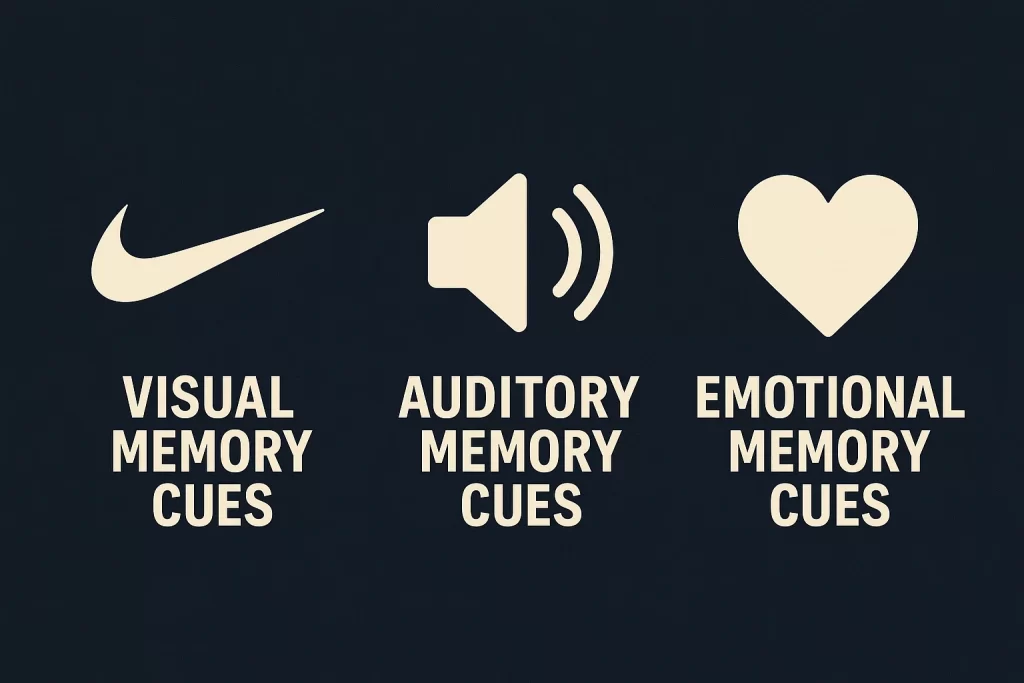
Brand memory cues are not one-size-fits-all. There are various types of cues, each targeting a different sense or emotional trigger. These cues can be visual, auditory, or even emotional. Here’s a breakdown of the most common types:
1. Visual Memory Cues
These cues rely on the visual appearance of the brand. For example, logos, color schemes, fonts, and product packaging all serve as visual triggers. When consumers see the Nike Swoosh, they instantly recognize the brand, often associating it with high-performance sportswear and a sense of achievement. Similarly, the red and white color scheme of Coca-Cola is instantly recognizable and brings to mind feelings of refreshment and enjoyment.
2. Auditory Memory Cues
Brands also use sounds to trigger memory. Think of Intel’s jingle or the iconic McDonald’s “I’m Lovin’ It” song. These auditory cues are powerful because they are often unexpected yet familiar, creating an emotional connection with the listener. Brands like Apple and Coca-Cola also use sound effects in their commercials to trigger recognition and deepen their connection with consumers.
3. Emotional Memory Cues
These cues tap into consumers’ feelings and experiences. For example, the use of nostalgic imagery, family-friendly advertising, or messages that evoke happiness, trust, or warmth can create powerful emotional connections. Disney excels at using emotional cues in their branding, tapping into family values and the sense of wonder and magic. These emotional triggers often influence consumer loyalty and purchasing behavior.
4. Associative Memory Cues
These cues link a brand to an external entity, such as a famous person, cultural moment, or a popular event. Celebrity endorsements are a prime example of associative memory cues. When a brand like Pepsi is associated with a celebrity like Beyoncé, consumers start to link the brand with the star’s persona, values, and image, reinforcing the emotional connection.
Each type of cue plays a specific role in brand recognition and recall, and many successful brands use a combination of these cues to form a well-rounded and memorable brand experience.
How Brand Memory Cues Influence Consumer Behavior
Brand memory cues are not just about recall; they have a significant impact on consumer behavior, influencing how people think, feel, and act towards a brand. Emotional and sensory cues can subtly alter consumer preferences and decisions.
One of the most powerful ways brand memory cues influence behavior is through their emotional impact. Consumers are more likely to purchase products from brands that make them feel good or align with their values. For instance, when consumers associate a brand with positive emotions such as happiness, trust, or nostalgia, they are more likely to choose that brand over others, even if the alternatives are cheaper or more convenient. Emotional branding is a strategy that focuses on creating these positive emotional connections, and memory cues are central to this process.

Brand memory cues also help create consumer loyalty. Repeated exposure to the same cues—whether it’s the jingle, logo, or emotional trigger—reinforces the connection between the consumer and the brand. Over time, this creates a sense of familiarity and trust. Loyal customers are more likely to stick with a brand because it has become ingrained in their memory. For instance, when a consumer sees the Nike Swoosh, they don’t just recognize the logo; they also recall years of emotional associations with the brand, such as empowerment, success, and athletic performance.
Brand memory cues also influence brand recall and recognition. While both are related, recall and recognition are different processes. Brand recall is the ability to remember a brand when prompted with a category or need, whereas brand recognition occurs when the consumer encounters the brand and remembers it from past experiences. Brand memory cues make it easier for consumers to recall a brand when they need it, especially in highly competitive markets like real estate, where a consumer’s decision could be influenced by their memories of past interactions or emotional experiences with a brand.
The Role of Brand Memory Cues in Brand Positioning
Brand positioning refers to how a brand differentiates itself in the market and occupies a unique space in consumers’ minds. Brand memory cues play a critical role in this process by helping brands stand out and establish a distinctive identity.
Effective brand memory cues can differentiate a brand from its competitors. For example, the luxurious feel associated with brands like Rolex or Mercedes-Benz is not just about the products themselves; it’s about the cues—such as premium logos, quality materials, and aspirational advertising—that reinforce the brand’s positioning. These cues help consumers perceive these brands as superior and aspirational, which drives their desire to own their products.
In addition, memory cues are fundamental in helping brands build a unique brand identity. A strong brand identity is one that is consistent and easily recognizable, whether it’s through the logo, color scheme, tone of voice, or overall messaging. Successful brands like Apple have consistently used visual cues, emotional storytelling, and design to create a cohesive brand identity that consumers instantly recognize and trust.
Consistency is crucial when using brand memory cues. Brands that fail to use their cues consistently across all platforms risk confusing consumers and weakening their brand identity. Brand consistency ensures that when consumers encounter a brand, they experience the same message and emotional connection, whether they see it on a billboard, in a store, or on social media.
Practical Applications of Brand Memory Cues in Branding
Brand memory cues are not just theoretical—they have practical applications in marketing, product design, and customer experience. By understanding how these cues work, businesses can craft more effective strategies to engage with their audience.
For example, brands can use visual memory cues in their advertising campaigns to make their messaging more memorable. A clear, memorable logo or color scheme can help consumers recognize the brand quickly, even in a crowded marketplace. Similarly, using sensory memory cues, like distinctive sounds or smells, can evoke emotional responses and deepen the consumer’s connection to the brand.
Effective brand storytelling is another application of memory cues. Brands can use emotional cues in their narratives to evoke specific feelings that resonate with consumers. For example, Nike’s “Just Do It” slogan is not just about sports—it’s about personal empowerment and overcoming challenges. Through storytelling, Nike taps into emotional memory cues that encourage consumers to associate the brand with success, achievement, and perseverance.
Real-world case studies of brands like Coca-Cola and Apple show how memory cues can be leveraged to create powerful, emotionally-driven marketing campaigns that lead to increased consumer loyalty and sales. By creating consistent and impactful brand memory cues, businesses can ensure that their brand remains top of mind and evokes the right emotions when consumers are ready to make a purchase.
How to Leverage Brand Memory Cues for Marketing
Leverage of Brand Memory Cues in marketing is crucial for creating deep emotional connections with consumers and driving brand recognition. Effective use of these cues not only strengthens the brand’s presence but also influences consumer behavior in ways that drive loyalty, trust, and purchasing decisions. Here’s a detailed look at how brands can harness memory cues for marketing
1. Designing Effective Brand Cues
The first step in leveraging brand memory cues is designing cues that are visually, emotionally, and conceptually linked to the brand’s identity. This requires a careful understanding of the audience and the feelings that the brand seeks to evoke.
Visual Cues
Start by creating memorable visual elements such as logos, color schemes, and fonts. These elements should be distinctive and simple, allowing them to be easily recalled by consumers. The key to visual memory cues is consistency—the more consistently the visual elements are used, the more they become ingrained in consumers’ memories. Think of brands like Coca-Cola, whose red-and-white color palette is universally recognizable, or Nike, with its iconic Swoosh logo.
Auditory Cues
Auditory memory cues can be just as powerful as visual ones. Jingles, catchphrases, and sounds that are associated with a brand can evoke emotions and bring memories flooding back. An example is the Intel jingle, which is instantly recognizable in the tech world, creating a positive and memorable experience for listeners. Incorporating unique and catchy sounds into marketing campaigns can build strong auditory brand cues.
Emotional Cues
Beyond logos and jingles, emotional cues are essential in developing a deeper connection with consumers. Emotions like happiness, nostalgia, trust, and excitement can be powerful drivers of brand memory. Marketers can evoke these emotions by telling stories that resonate with the audience’s personal experiences. For example, Apple has masterfully used emotional marketing in its campaigns to evoke feelings of empowerment and creativity, linking its products to moments of personal achievement.
Sensory Cues
Sensory cues—whether they involve smell, taste, or even touch—can also play a key role in creating lasting brand memories. For instance, many food chains like Starbucks have used sensory marketing to create specific smells associated with their brand, such as the scent of freshly brewed coffee. When consumers enter a Starbucks store, the scent triggers their memory of the brand and strengthens their emotional connection to it.
2. Multichannel Consistency
Consistency across multiple marketing channels is key to reinforcing brand memory cues. Whether through TV ads, social media campaigns, or product packaging, brands should use the same visual elements, messaging, and emotional appeals across all touchpoints. This consistency helps consumers recognize and recall the brand effortlessly.
For instance, Coca-Cola maintains the same red and white color scheme across its ads, website, packaging, and even its sponsored events, ensuring that the visual cue becomes synonymous with the brand. This consistency allows consumers to recall the brand quickly, no matter where they encounter it.
Social media platforms, email campaigns, website content, and physical ads should all reflect the same memory cues. By aligning the visuals and messaging in all these spaces, the brand ensures it remains top-of-mind for the consumer, reinforcing its identity and emotional appeal consistently.
3. Creating Memorable Brand Experiences
Marketing is not just about advertising—it’s about creating memorable experiences that consumers associate with a brand. Experiences are powerful memory cues that can trigger strong emotions and recollections. A memorable experience could be a store visit, customer service interaction, or an event.
- Experiential Marketing: Brands can create immersive experiences that tap into the senses and emotions of the consumer. For example, Coca-Cola’s Happiness Truck created an interactive experience where consumers could enjoy a free Coke, while also participating in social media campaigns and events. These types of experiences reinforce brand memory cues by tying them to positive emotions and personal moments.
- Customer Touchpoints: Every interaction a consumer has with the brand—whether through customer service, delivery, or packaging—can act as a memory cue. Marketers should design every customer touchpoint in a way that evokes positive emotions and reinforces the brand’s core values.
4. Storytelling and Content Marketing
One of the most effective ways to leverage memory cues is through brand storytelling. When brands share stories that resonate with the audience’s experiences, they create strong emotional bonds that lead to long-lasting memory cues.
- Brand Stories: Brands can use narratives to evoke memories of shared experiences. For example, Nike’s “Just Do It” campaign focuses on stories of athletes overcoming challenges, connecting the brand with perseverance and personal growth. Storytelling provides a context for memory cues, making them more meaningful and emotionally charged.
- Content Marketing: Content like blogs, videos, podcasts, and social media posts can all be used to create memory cues. By sharing content that tells the brand’s story or highlights customer experiences, marketers can reinforce the emotional and visual cues that are most important to the brand identity. This builds a deeper connection and encourages brand recall at critical moments.
5. Using Influencers and Associations
Celebrity endorsements and influencer marketing can be powerful tools in leveraging brand memory cues. Associating a brand with a well-known personality or figure can trigger immediate recognition and create strong associations in the minds of consumers.
- Celebrity Endorsements: Consider how Pepsi associates itself with famous figures like Beyoncé, creating a memory cue that ties the brand with her iconic, aspirational image. When consumers see Beyoncé’s face in an ad or endorsement, they subconsciously link the brand to her status, success, and trustworthiness.
- Influencer Collaborations: In the age of social media, influencer marketing has become a popular strategy for leveraging brand memory cues. Influencers can bring unique emotional and lifestyle associations to the brand, making the product feel personal and relatable. Whether it’s through Instagram posts, YouTube videos, or TikTok challenges, influencers can generate strong brand recall among their followers by linking the brand to their own personal image.
6. Measuring Effectiveness of Memory Cues
To understand whether memory cues are effective, marketers need to assess how well these cues influence consumer behavior and recall. Metrics such as brand recognition, brand recall, and consumer sentiment analysis can help marketers gauge the success of their memory cues.
- Brand Recall Testing: Running surveys or focus groups can help determine how well consumers remember the brand after being exposed to specific memory cues. Brands can ask participants to recall images, sounds, or messages associated with the brand and evaluate the strength of the association.
- Consumer Sentiment: By tracking consumer sentiment, businesses can understand how emotional memory cues influence brand perception. Tools like social media monitoring and online reviews provide valuable insights into how well a brand’s emotional appeal resonates with its target audience.
Common Pitfalls in Using Brand Memory Cues
While brand memory cues are powerful tools for building consumer recognition and emotional connections, there are several pitfalls brands must avoid:
- Over-Saturation: Using the same memory cues too frequently can lead to consumer fatigue, causing the cues to lose their emotional impact. To avoid this, use cues sparingly and refresh them periodically.
- Inconsistent Use Across Channels: Inconsistent messaging and visual cues across different platforms can confuse consumers and weaken brand recognition. Ensure cues are consistently used across all touchpoints for stronger brand identity.
- Misleading Cues: Using cues that don’t align with the brand’s values or offerings can damage trust and lead to negative associations. Always ensure cues reflect the brand’s true identity.
- Failing to Evolve Over Time: As market trends and consumer preferences change, memory cues should evolve as well. Failing to update cues can make the brand appear outdated.
- Ignoring Consumer Feedback: If consumers aren’t responding positively to the cues, it’s essential to listen and adjust accordingly. Monitoring consumer sentiment helps maintain a positive connection.
- Not Aligning with the Target Audience: Cues must resonate with the brand’s audience. Generic or irrelevant cues can weaken the emotional connection and hinder brand recall.
- Not Measuring Impact: Failing to track the effectiveness of memory cues can result in missed opportunities. Regular measurement through surveys or focus groups ensures cues are driving the desired consumer response.
FAQ
1. Why do I often confuse your brand with a competitor?
Many consumers struggle to distinguish between brands that have similar logos, packaging, or messaging, leading to confusion and potential brand switching.
2. I can’t remember your brand when I need it most?
Despite previous exposure, some brands fail to create strong memory cues, causing consumers to forget them during critical decision-making moments.
3. Your brand’s message doesn’t resonate with me emotionally?
Brands that don’t connect on an emotional level may fail to leave a lasting impression, leading to weak brand recall.
4. I don’t recognize your brand in a crowded marketplace ?
In environments with many similar products, lack of distinctive memory cues can result in a brand being overlooked.
5. Your brand’s identity feels inconsistent across different platforms ?
Inconsistencies in visual elements or messaging across various channels can confuse consumers and dilute brand recognition.
Conclusion
Brand memory cues are powerful tools in building strong emotional connections, enhancing consumer recall, and fostering brand loyalty. When used effectively, they create lasting impressions that can significantly influence purchasing decisions and drive long-term success. However, it is essential for brands to avoid common pitfalls such as over-saturation, inconsistency, and misleading associations. By designing authentic, consistent, and audience-aligned memory cues, and regularly assessing their impact, brands can ensure that their cues remain effective and resonate deeply with consumers. As the market evolves, so should a brand’s memory cues—keeping them fresh and relevant while maintaining a strong, recognizable identity. Ultimately, leveraging brand memory cues strategically allows companies to build lasting relationships with their customers, making them top-of-mind when it matters most.